Category Archives: Culture

Candy Business: ‘How Wrigley’s Dominated Chewing Gum’ (Video)

Gum lines the pockets of most Americans and has been a staple in American culture for centuries. For some, gum is all about flavor, and for others, it’s about fear of bad breath, curbing hunger, or alleviating anxiety. For nearly 130 years, the brand Wrigley’s has become synonymous with chewing gum.

Since its start, the gum maker has dominated the chewing gum market, spawning brands from Juicy Fruit to Orbit to 5 Gum. But it hasn’t always been smooth sailing for the William Wriglely Jr. Co.; over its storied past, the brand has faced turbulent years. Since the early 2000s, the chewing gum market has seen a decline in public sentiment, which hurt significant players. In 2006, the company ended its long-standing tradition of being a family run business with William Wrigley Jr. stepping down as CEO.

By 2008, Wrigley’s faced increasing global competition and was acquired by Mars along with Warren Buffett’s Berkshire Hathaway. According to Euromonitor International, the gum industry’s market value hit $18.6 billion in 2020. Since 2015, Mars Wrigley has held 25% of the global brand share for chewing gum and a 40% portion in the U.S. The Covid-19 pandemic since it began in March 2020 has negatively impacted gum’s most prominent players and could negatively affect Mars Wrigley gum brands’ future.

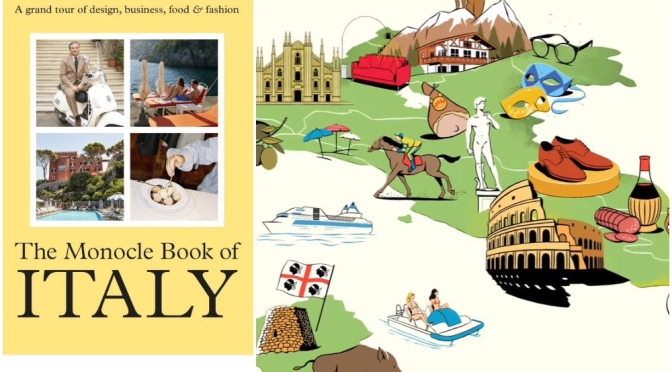
Magazine Previews: ‘Monocle – March 2021’

Monocle’s optimistic March issue challenges us to do it better, whether that be by growing your own forest or running a cleaner, leaner business. We visit the cities bringing the wilderness back to urban life and find out why you can mend almost anything. Plus: nature’s fluffiest film stars.

Available now at The Monocle Shop: https://monocle.com/shop/product/1916…

Arts & Culture: ‘The Azulejos’ – Portugal’s Colored Tiles (Video)

Anyone who has ever been to Portugal will probably know them: the small, mostly blue square ceramic tiles, the so-called ‘azulejos’. Especially in the capital of Lisbon they decorate many houses. Even today, the decorative tiles are still made by hand. The word azulejos does not come from the Portuguese word “azul” for blue – as one might think. It comes from Arabic and means something like “polished little stone”.

Culture: ‘Guinea-Bissau – A Matriarchy Rules’ (Video)

A matriarchy rules on one of the Bijagos Islands off the coast of Guinea-Bissau. The tribe of the same name lives on Orango, one of the most populated islands in the archipelago. Women dominate public and private life there. This documentary focuses on the women of the Bijagos tribe of Guinea-Bissau. Unlike many women in traditional and modern societies elsewhere, they pick their husbands, propose marriage and own their homes.

In addition to being responsible for raising children, they also act as high-priestesses in animist ceremonies, organize work, guard the keys to the rice stores, lead their families and ensure there are descendants to continue the line. The Bijagos revere women, who are believed to be in charge of the balance between the worlds of the living and the dead. A matriarchy of this kind is unusual, not only for Africa but around the world. Even though this culture has persisted for centuries, aspects of Western lifestyles are starting to gain a foothold. Rising rates of school attendance could contribute to the demise of the community’s traditions. Future generations will determine whether the Bijagos can retain their culture.

Guinea-Bissau is a tropical country on West Africa’s Atlantic coast that’s known for national parks and wildlife. The forested, sparsely populated Bijagós archipelago is a protected biosphere reserve. Its main island, Bubaque, forms part of the Orango Islands National Park, a habitat for saltwater hippos. On the mainland, the capital, Bissau, is a port with Portuguese colonial buildings in its old city center. 

Culinary Travel: ‘Street Food In Oujda, Morocco’

The array of street food in Morocco is quite vast and includes tea time and breakfast sweets, simple snacks, sandwiches, soups, grilled meats and seafood, fried fish and hearty main dishes such as stewed lentils, rotisserie chicken and classic tagines. The recipes below are all foods that can found while walking Moroccan streets and souks.

Oujda is a city in northeast Morocco, near the Algerian border. It’s known for its Great Mosque, built in the late 13th century, with intricate carved wood and mosaic tiling. The mosque is in the old town, or medina, behind ramparts and the imposing Sidi Abdelouahab gate. Numerous shops and souks sell fruit, spices, jewelry and traditional clothing. The Art Gallery of Oujda shows modern and traditional Eastern art. 

Morocco, a North African country bordering the Atlantic Ocean and Mediterranean Sea, is distinguished by its Berber, Arabian and European cultural influences. Marrakesh’s medina, a mazelike medieval quarter, offers entertainment in its Djemaa el-Fna square and souks (marketplaces) selling ceramics, jewelry and metal lanterns. The capital Rabat’s Kasbah of the Udayas is a 12th-century royal fort overlooking the water.

Culture & Covid: How Artists & Institutions Are Coping In France (Video)

As cultural institutions struggle to return to a semblance of normality, some spaces are drawing on all sorts of resources to keep fulfilling their role in society. FRANCE 24’s Renaud Lefort took a walk around the French capital, meeting its artists and artisans to see how they’re dealing with these unprecedented circumstances.

Travel Guide: ‘Kanda Neighborhood, Tokyo’

This historic corner of northeast Tokyo was once described as a place for “universities, bookshops and intellectuals”. Academic institutions are still there – along with the Holy Resurrection Cathedral – but Kanda is also home to electronics district Akihabara, a huge shrine and dozens of Japanese curry restaurants too.

Sprawling Kanda covers central districts like neon-lit Akihabara, known for its electronics stores, and Jimbocho, filled with bookshops. Students from the area’s many universities pack into bars, noodle shops, and karaoke rooms at night. Shinto shrines are found on quieter backstreets, including the nearly 1,300-year-old Kanda Myojin Shrine, with its crimson gate and altars to ancient gods of good fortune.

Poetic Short Films: ‘NELLA MIA CITTÀ (In my city)’ – A Tribute To Venice (Video)

Filmed, Edited and Directed by: Milton Kam

NELLA MIA CITTÀ (In my city) is my visual ode to Venice. The film observes the lagoon city and its residents during the relative scarcity of tourists in its streets. From the lustre of its famous spots to the anonymity of its quiet alleys, Venice feels as if ‘the future did not come,’ to borrow a line from the poem, which the film is based on.

Nella mia città is written by Anna Toscano and was taken from her book Doso la polvere, Milan, La Vita Felice, 2012

With music by Federico Toffano (cello), Liesl Odenweller (soprano), and Ivano Zanenghi (lute).

IN MY CITY by Anna Toscano

The future does not exist
the future does not come
in my city:
however long my step is
however much you have the favor of the wind
the number 2 does not go more than 22 km per hour.
How to get beyond the past
how not to look back
(at this speed)
with your neck always at three quarters:
time stops in piazzale Roma
so we live entangled
in the stories of peoples.
We stand, happy,
in a rearview mirror.

Cultural Views: ‘Sacred Islands’ Of The Hauraki Gulf, New Zealand (Video)

New Zealand’s Hauraki Gulf – Tikapa Moana – is a place of spectacular beauty and home to more than 50 islands. Some barely break the high tide mark, others loom large on the horizon, many are now uninhabited. Local Māori tribes like Ngai Tai Ki Tamaki, who have been here for nearly a thousand years, revere these islands. Each and every island has a story to tell.

The Hauraki Gulf / Tīkapa Moana is a coastal feature of the North Island of New Zealand. It has an area of 4000 km², and lies between, in anticlockwise order, the Auckland Region, the Hauraki Plains, the Coromandel Peninsula, and Great Barrier Island. Most of the gulf is part of the Hauraki Gulf Marine Park. 

Culinary: ‘Traditional German Foods & Dishes’

What do the Germans like to eat, what do traditional German dishes look like and how can you give the classic pork schnitzel a crunchy modern twist? Join Rachel for a delicious German feast, rounded off with the classic “Kaffee und Kuchen.”

Rachel moved from the UK to Germany in 2016. As a relative newcomer she casts a fresh eye over German clichés and shares her experiences of settling into German life. Every two weeks she explores a new topic – from unusual bans to meaty cuisine or haunted castles. This week: what’s on the menu in Germany?