
Category Archives: Books

Podcast Interviews: 75-Year Old Travel Writer And Editor Pamela Fiori

Monocle 24 The Stack PodcastPamela Fiori’s career in magazine publishing spans more than forty years. She was editor In chief of Town & Count , America’s premier magazine for the affluent in America, for seventeen years. Before that, she was editor in chief of Travel + Leisure for fourteen years. 

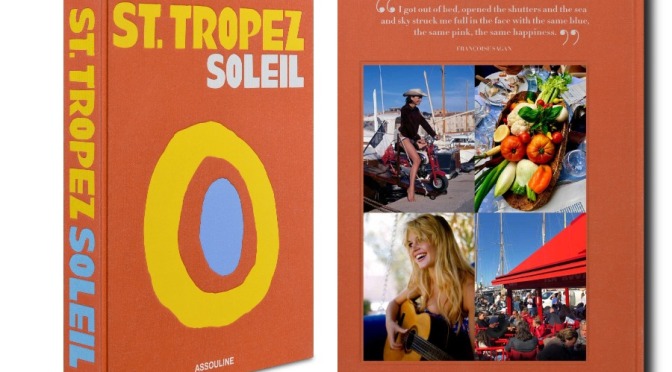
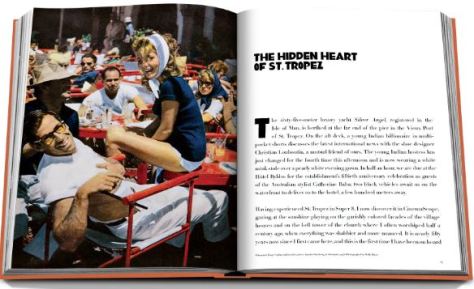
An authority on luxury, travel, style, connoisseurship, and philanthropy, Flori writes and speaks frequently on these subjects. Her first book, Stolen M ents, Is a tribute to the photography of Ronny Jaques, a contemporary of Richard Avedon and Lillian Sassman. She has also written In the Sprit of Capri and in the spirit of St. Barths for Assoullne.

Interviews: 66-Year Old Editor And Journalist Tina Brown (NY Times)

From a New York Times Magazine article (Feb 7, 2020):

Tina Brown New York Time photo Feb 7 2020Is being an editor in chief again something you’d ever think about doing?

 I have to suppress those feelings, because I love content, to use the horrible word, and editors now are so beleaguered that all the fun that I had isn’t there to be had. It’s a shame that editors get so little time now to think about stories and writers. Most of their time is spent having incredibly boring meetings about distribution and platforms and branded digital content. All this stuff, it’s just incredibly miserable. What I love, and what I’ve always loved, is telling stories.

What’s a third-rail conversation that you’re not having or that isn’t happening at Women in the World events? #MeToo is fraught, because anything can be taken and become this flying I.E.D. that can mess you up. It’s difficult to have a debate about that topic, because all the things that people say off-camera they don’t want to say in public.

Unlike most journalists, Tina Brown carries with her an aura of swashbuckling glamour, a remnant of her starry, high-budget run during the 1980s and ’90s as editor in chief of Vanity Fair and then The New Yorker. Like many journalists, Brown, 66, has pivoted in recent years to an adjacent line of work, in her case the live-event business. Her Women in the World Summit, which has hosted speakers like Oprah Winfrey and the Nobel Peace Prize winner Nadia Murad, is held each spring at Lincoln Center. (The New York Times was once a partner in the business.) She has also written two best-selling books, “The Vanity Fair Diaries” and “The Diana Chronicles,” a tell-all about the British royal family.

Read full article

Profiles: 71-Year Old Physicist And Author Alan Lightman’s “Creative Life”

From a New York Times online article (February 13, 2020):

“I love physics, but what was even more important to me was leading a creative life,” Dr. Lightman said. “And I knew that writers could continue doing their best work later in life.”

Alan Lightman Books

Lightman is best known in literary circles for his 1992 novel, “Einstein’s Dreams,” which is all about the vicissitudes – romantic, physical and otherwise – of time. It recounts the nightly visions of a young patent clerk in Bern, Switzerland, as he struggles to finish his theory of relativity.

But before that, Dr. Lightman was an astrophysicist, a card-carrying wizard of space and time, with a Ph.D. from the California Institute of Technology and subsequent posts at Cornell and Harvard In 1989, at the peak of his prowess as a physicist, he began to walk away from the world of black holes to enter the world of black ink and the uncertain, lonely life of the writer.

Recently he was in New York for the opening of “Einstein’s Dreams,” an off-Broadway play based on his book. There have been dozens of such stage adaptations over the last 30 years.

Read full article

New Art Books: “The Art Of Still Life” By Todd M. Casey

The Art of Still Life A Contemporary Guide to Classical Techniques Composition and Painting in Oil Todd M CaseyEvery artist needs to learn and master the still life. Written by a well-known artist and expert instructor, The Art of Still Life offers a comprehensive, contemporary approach to the subject that instructs artists on the foundation basics and advanced techniques they need for successful drawing and painting.

In addition to Casey’s stunning paintings, the work of over fifty past and present masters is included, so that the book will do double duty as a hardworking how-to The Art of Still Life Todd M Casey Feb 2020manual and a visual treasure trove of some of the finest still life art throughout history and being created today.

A Massachusetts native, TODD M. CASEY studied at art schools in Boston and San Francisco before embarking on the classical artistic education offered by Jacob Collins’s famed Water Street Atelier in New York City. A modern master of the still life genre, Casey teaches at several institutions, including the Art Students League of New York. He is represented by Rehs Contemporary Galleries, Inc., New York, and his paintings are held in numerous private collections worldwide. He lives with his wife and daughter in New York’s Hudson Valley. Visit his website at toddmcasey.com.

Read more or purchase

New Art Books: “Cherry Blossoms – Sakura Collections From The Library Of Congress”

Cherry Blossoms Sakura Collections from the Library of Congress book February 11 2020“Cherry Blossoms” reflects on the long tradition of flower viewing in Japanese culture with vivid color woodblock prints by ukiyo-e master artists, photographs, color lithographic posters and Kōkichi Tsunoi’s exquisite watercolor drawings from 1921. The book highlights the rich connections between Japan’s centuries-old traditions and contemporary counterparts. The American public’s affection for the blossoms is revealed in vintage and contemporary photographs of the Tidal Basin, collections related to the National Cherry Blossom Festival and the Cherry Blossom Princess Program, as well as decades’ worth of creatively designed festival posters.

Vibrant springtime traditions of cherry blossom viewing in Japan and Washington, D.C., are explored in the new book “Cherry Blossoms: Sakura Collections from the Library of Congress,” published today by Smithsonian Books, in association with the Library of Congress.

Visual art, including prints, drawings and photographs from the Library’s collections, provide a fresh look at the tradition of cherry blossom celebrations that originated more than 1,200 years ago. Japan shared the tradition with the United States when they presented the nation’s capital with 3,020 cherry trees in 1912. Ever since, D.C. residents and visitors have been mesmerized by the trees and have joined in the festivities of the National Cherry Blossom Festival, which draws more than 1.5 million visitors each year.

Fascinating Facts about Cherry Blossom Traditions:

  • It started over 1,200 years ago…with plum blossoms! The Japanese custom of flower viewing, or hanami, is thousands of years old. Beginning in the 9th century, saplings and trees were brought down from the mountains to grace the gardens of the aristocracy. The practice was first associated with plum (ume) blossoms before it became linked almost exclusively with cherry blossoms during the Heian period (794-1185).
  • A feudal warlord threw some of the most lavish parties. Before it became popular with people at all levels of society, cherry blossom viewing in Japan was reserved for the elite. Legendary feudal warlord and samurai Toyotomi Hideyoshi (1537-98) sponsored some of history’s most lavish cherry blossom-viewing events. His 1594 celebration at Mount Yoshino included a poetry party, a nō play, and a hanami party with 5,000 guests. In 1598, he built hillside teahouses to accommodate guests for his party at Kyoto’s Daigoji temple and transplanted 700 cherry trees to the site.
  • Blossoms Symbolize Fleeting Delights in Life. Cherry blossoms are heralds of spring, but their short blooming period also evokes the ephemeral beauty of life. Edo period (1603-1868) hanami celebrations featured the pleasure of food and drink, poetry and music – tinged with wistful appreciation of the fleeting beauty of both blossoms and earthly delights. This tradition continues. The transitory beauty of life becomes vivid when gusty spring winds end the blooming season with showers of drifting petals, an effect the Japanese call hanafubuki (cherry blossom blizzard).
  • A “Field of Cherries” in Potomac Park? It took the U.S. Army Corps of Engineers three decades to transform the low-lying area known as Potomac Flats into Potomac Park. A 1914 sightseer map of Washington features the new park and labels the road around the west end of the Tidal Basin as the “Speedway.” U.S. Department of Agriculture botanist David Fairchild and cherry tree advocate Eliza Scidmore promoted the site as an ideal place for a “field of cherries.”
  • Not all cherry blossoms are pink. Cherry blossoms varieties include multiple colors: white, pink, yellow – even green. Twelve different varieties of cherry blossom trees were sent from the city of Tokyo to Washington D.C. in 1912. While most were the white-pink Somei Yoshino, there were also 10 different varieties of double-flowered (or manifold) trees, one variety with green blossoms, called Gyoikō, and some varieties with fragrance. The trees around today’s Tidal Basin are limited primarily to Somei Yoshino and Kwan-Zan.

Authors Mari Nakahara and Katherine Blood, both curators in the Library’s Prints and Photographs Division, present a comprehensive view of the history of this annual celebration, illustrated by prints, posters, photographs and artifacts from the Library’s rich collections.

Website

New Photography Books: “Neon Road Trip” By John Barnes (March 2020)

John Barnes Neon Road Trip book March 2020The vivid photographs are arranged according to the signs’ imagery, with sections such as Spirit of the West, On the Road, Now That’s Entertainment, and Ladies, Diving Girls & Mermaids. Sixteen of the most iconic landmark signs include brief histories on how that unique sign came to be. A resource section includes a photography index by location and a Neon Museums Visitor’s Guide.

Take to the road to discover the history and artistry of North America’s disappearing neon signs.

Neon Road Trip chronicles the history of the commercial neon sign with a curated collection of photographs capturing the most colorful and iconic neon still surviving today.

John Barnes studied art, graphic design, sculpture and photography, earning a BFA degree in documentary photography from the University of Delaware 1984. He worked as a commercial advertising photographer for over fifteen years both on the east coast and in San Francisco, and has been a fine art photographer for the last 30 years. He recently spent the last two years traveling around the United States and Canada photographing iconic neon signs. John resides in Seattle but spends most of his time traveling taking photographs.

New Books: “London Life – The Magazine Of The Swinging Sixties” (2020)

London Life The Magazine of the Swinging Sixties Edited by Simon Wells March 2020With imagery from the likes of David Bailey, Duffy and Terence Donovan, designs from Peter Blake, David Hockney, Gerald Scarfe and fledgling artist Ian Dury plus words and opinions from those riding high on the city`s cutting-edge, London Life remains the coolest document from the capital’s most exciting period.

While many books, films and documentaries claim to have captured the phenomenon that was Swinging London, just one magazine was present in the capital during the 1960s to illustrate this extraordinary moment as it unravelled. London Life emerged in October 1965 and, over the next fifteen months, would document the capital s action at its absolute zenith.

Collected for the first time, including forewords from Peter Blake and David Puttnam and a scene-setting introduction from Simon Wells, London Life offers a remarkable and candid view on a period when London was the creative hub of the world.

Video Interviews: 57-Year Old Dani Shapiro, Author Of Memoir “Inheritance”

Inheritance Dani Shapiro 2019What makes us who we are? What combination of memory, history, biology, experience and that ineffable thing called the soul defines us?

In 2016, celebrated writer and memoirist Dani Shapiro took a genetic test on a whim, believing that she knew her history well – the daughter of Orthodox Ashkenazi Jews, raised on her father’s stories of their family and ancestors. But her DNA revealed that the man she’d known as her father for her whole life was not biologically related to her. With this news, her history – and the entire life she had lived – suddenly crumbled beneath her.

Dani Shapiro is an American writer who is the author of five novels and the best-selling memoirs Inheritance, Hourglass, Slow Motion, and Devotion. She has also written for magazines such as The New Yorker, The Oprah Magazine, Vogue, and ELLE.

Top Photography Books: “At Glacier’s End” In Iceland By Chris Burkard

At Glacier's End by Chris Burkard December 2019 Release“Iceland’s glacial rivers are nature’s abstract paintings. It seems obvious that rivers this wild and stunning are protected, yet the harsh reality is that many have been dammed, mainly to provide power for aluminum plants.

A massive conservation movement is underway to preserve these rivers, but will it succeed? At Glacier’s End gives a voice to Iceland’s glacial rivers – providing both a cultural and environmental perspective – on the journey from glacier to sea.”

At Glacier's End by Chris Burkard December 2019 Release

Read more or purchase book

Tributes: 90-Year Old Literary Critic & Novelist George Steiner (1929-2020)

From a New Yorker online article (February 5, 2020):

The New Yorker logoHe was the real thing, the last of the great middle-European intellectual journeyers, one with Benjamin and Cioran and the other exiles, for whom books were the one constant country and reading them a matter of life and death. With him gone, we can only reread his writing, determined to honor the intensity of his commitment by intensifying our own.

The word “awesome” is most easily used by adolescents these days, but the range of learning that the critic and novelist George Steiner possessed was awesome in the old-fashioned, grown-up sense: truly, genuinely awe-inspiring. Steiner, who died on Monday, at the age of ninety, knew modern languages, ancient languages, classical literature, and modern literature. He had memorized the rhymes of Racine and he could elucidate the puns in Joyce and he could tell you why both were, in his thorny but not cheaply won view, superior to the prolixities of Shakespeare. He was what many people call a human encyclopedia—not in the American sense, a blank vault of facts, but in the French Enlightenment one: a critical repository of significant knowledge.

To read more