
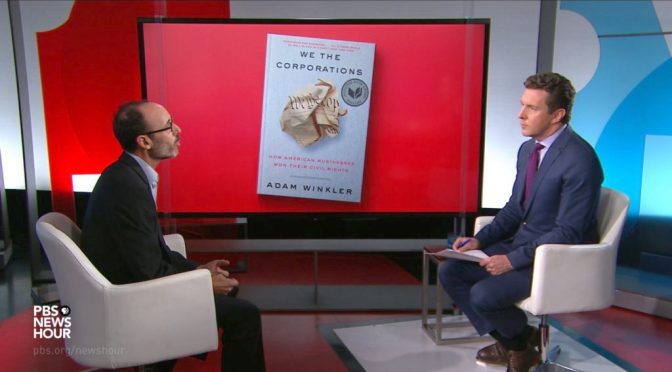
 Adam Winkler, author of our October pick for the NewsHour-New York Times book club, Now Read This, joins William Brangham to discuss “We the Corporations,” and William announces the November book selection.
Category Archives: Books
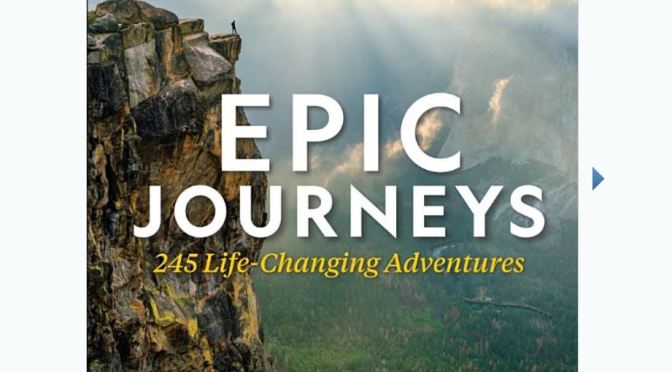
Top New Travel Books: “Epic Journeys – 245 Life-Changing Aventures” (National Geographic)
From a National Geographic online release:
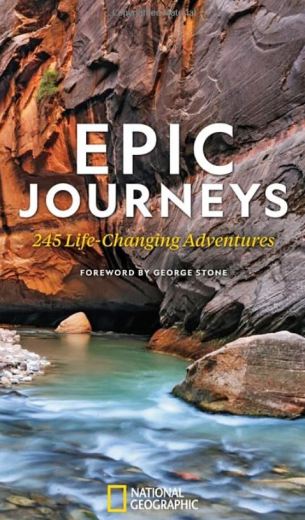 Travelers are dreamers who act on their inspirations. The new National Geographic book Epic Journeys: 245 Life-Changing Adventures is for the people who go beyond their comfort zones to experience the wild beauty of the natural world. The book features adrenaline-fueled forays to all seven continents. (See the most breathtaking national parks around the world.)
While the spirit of exploration spans the globe, being an intrepid traveler doesn’t have to mean summiting Mount Everest or surveying icebergs in Antarctica. Some of the planet’s wildest places—launchpads for all sorts of discoveries about the world and yourself—are in North America’s national parks. We’ve selected 15 mind-blowing adventures to inspire your inner explorer.
To read more: https://www.nationalgeographic.com/travel/national-parks/15-epic-national-park-excursions/

New Books On Food: “American Cuisine” By Paul Freedman – 200 Years Of “Regionalism And Variety”
From a Yale News online review:
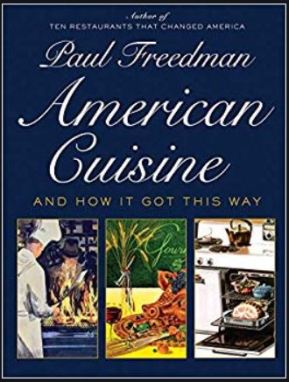 One way to understand American cuisine is through its regions — and the regional traditions that underlie the history of American cuisine. New England, the South, and New Orleans Creole are the regional cuisines of America. Examples of New England cuisine are “Yankee Pot Roast,” the lobster roll, and clam chowder. Southern favorites include grits, collard greens, okra, fried tomatoes, and sweet potato pie. Louisiana’s signature creole dishes are jambalaya, gumbo, and étouffée.
The compensation for that standardization — or at least what the food companies and the food and restaurant industry have offered — is variety. In my opinion, variety is what the food companies offer you in lieu of quality. At least in certain aspects, quality is impossible in an industrial food system.
In his new book, “American Cuisine: And How It Got This Way,” Yale historian Paul Freedman gives readers a window into understanding American history through cuisine spanning more than 200 years, debunking the myth that American cuisine does not, in fact, exist.
Freedman, the Chester D. Tripp Professor of History, approaches his study of American cuisine not by identifying a list of specific national or regional dishes, but rather by looking at the interactions among regionalism, standardization, and variety.
To read more: https://news.yale.edu/2019/10/15/yale-historian-pens-book-defining-what-exactly-american-cuisine
Best New Art Books: “Masterpieces Of Painting J. Paul Getty Museum”(2019)
From a Getty Museum online release:
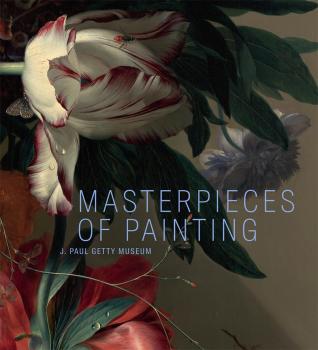 Masterpieces of Painting surveys more than one hundred of the most exquisite and significant paintings displayed in the museum’s famed, daylight-suffused galleries. Vibrant full-color illustrations and engaging descriptions of these masterworks reveal their fascinating histories and cultural, social, and religious meanings. Sure to enchant and edify all art lovers, this book is a spellbinding tour through the history of Western painting.
 Rooted in a passion for the Italian Renaissance as well as Dutch and Flemish Baroque works, the original collection of J. Paul Getty (1892–1976) has been transformed over four decades to include seminal pieces by celebrated masters such as Masaccio, Titian, Parmigianino, Cranach, El Greco, Rubens, van Dyck, Rembrandt, Poussin, Canaletto, Fragonard, Turner, Manet, Degas, Renoir, Monet, van Gogh, Cézanne, and Ensor.
Davide Gasparotto is senior curator in the Department of Paintings at the J. Paul Getty Museum, where Scott Allan is associate curator and Anne T. Woollett is curator. Peter Björn Kerber is curator at the Dulwich Picture Gallery in London.
New Culture Books: “The Sartorialist INDIA” By Scott Schuman (2019)
From an Architectural Digest online interview:
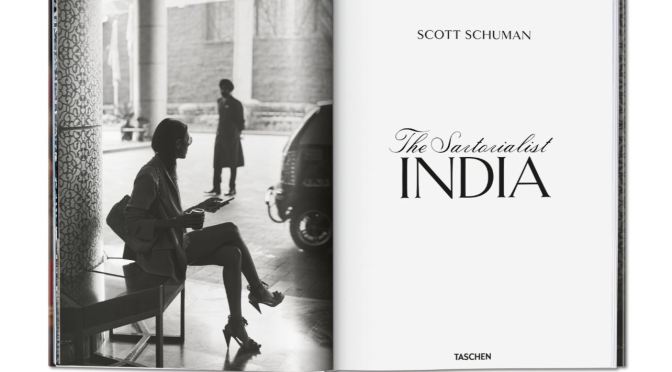
 I wanted this book to be a bit different. It’s not an encyclopaedia of India, but I really tried to go to a lot of different places and photograph whatever I saw that I thought seemed really visually intriguing. I went to music festivals, sporting events, wrestling…and there’s cricket and horse racing in this book too. There’s fashion week, and then small villages in Odisha. As a photographer, if you’re picky like I am, I didn’t want to just include say, a horse racing photograph, but I wanted to put myself in that position, and if I came up with something good, that would be great. I just wanted to try and put myself in a lot of different positions to see different elements of India.
Scott Schuman has been travelling to India for the better part of a decade. For his acclaimed fashion blog, The Sartorialist, Scott has photographed the eye-catching, sometimes strange, effortless whimsy of street fashion all around the world, and India has made a significant appearance too. Now, Scott is releasing a book of photographs specifically dedicated to the country—The Sartorialist: India, published by Taschen. Scott speaks to AD India about his travels to the country, his quest for the cool kids, and what still surprises him about Indian fashion.
To read more: https://www.architecturaldigest.in/content/the-sartorialist-in-conversation/#s-cust0
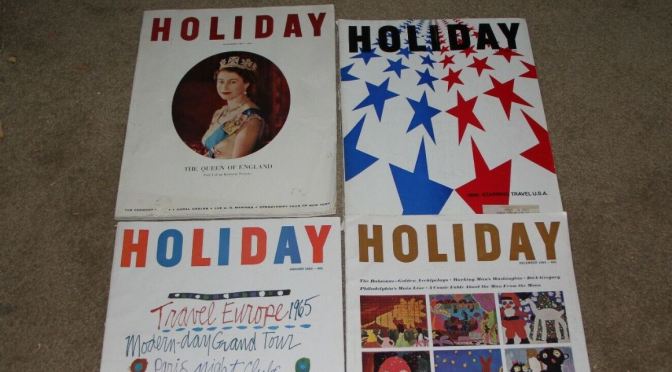
Nostalgia: New Book On “Holiday Magazine” Portrays It’s “Romance Of Travel” From 1946-1977
From the RizzoliUsA.com website:
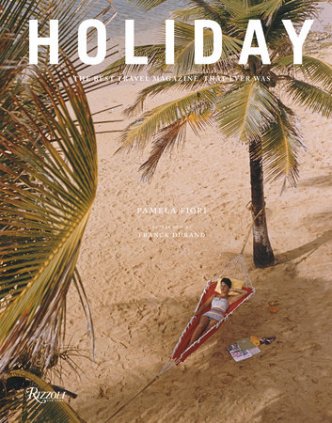 The first book on magazine sensation Holiday, which between 1946 and 1977 was one of the most exciting publications in the world. Renowned for its bold layouts, literary credibility, and ambitious choice of photographers and artists, Holiday portrayed the romance of travel like no other periodical.
At Holiday magazine’s peak, urbane editor, Ted Patrick, and visionary art director, Frank Zachary, invited postwar America to see and read about the world. On the journey, readers joined the magazine’s renowned roster of talent. Some of the most celebrated writing by Jack Kerouac, Ernest Hemingway, Graham Greene, Joan Didion, Truman Capote, Colette, and E. B. White (his piece “Here Is New York” was commissioned for Holiday in 1949) first appeared in its pages. Henri Cartier-Bresson documented a breathtaking Paris and other cities; Slim Aarons captured the glamour of travel around the world; and Al Hirschfeld and Ludwig Bemelmans contributed showstopping illustrations of places and personages.
Pamela Fiori writes about the magazine’s history, giving it context during the era of the jet age, world turbulence, and the rise of Madison Avenue advertising. Holiday was a vibrant original, inspiring travel magazines that followed and leaving glorious photography and art as well as thought-provoking journalism in its wake.
To read more: https://www.rizzoliusa.com/book/9780847866250/
Top Podcasts: US Constitutional Law Expert Brian Kalt On 25th Amendment (Quillette)
 Brian Kalt, an expert on US constitutional law and the presidency, talks to Jonathan Kay about the 25th Amendment and whether it can be used to remove a president. Professor Kalt recently published a book called Unable: The Law, Politics, and Limits of Section 4 of the Twenty-Fifth Amendment.
To read more: https://quillette.com/2019/10/18/podcast-58-professor-brian-kalt-us-constitutional-law-expert-on-the-25th-amendment/
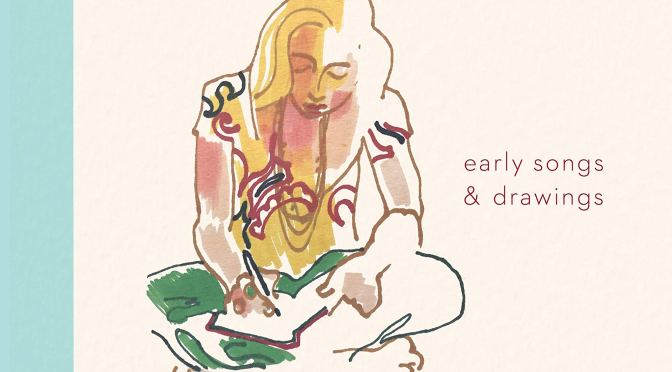
New Art Books: “Morning Glory On The Vine” By Joni Mitchell Is “Vivid, Intimate”
From a New Yorker online article:
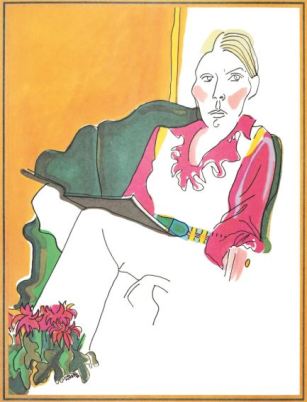 I became engrossed in Mitchell’s drawings while browsing the book—they’re vivid, intimate—but her handwritten lyrics and poems are just as revelatory. It’s hard not to think about art-making of any kind as an alchemical process, in which feelings and experiences go in and something else comes out. Whatever happens in between is mysterious, if not sublime: suddenly, an ordinary sensation is made beautiful. Our most profound writers do this work with ease, or at least appear to. Mitchell’s lyrics are never overworked or self-conscious, and she manages to be precise in her descriptions while remaining ambiguous about what’s right and what’s wrong; in her songs, the cures and the diseases are sometimes indistinguishable.
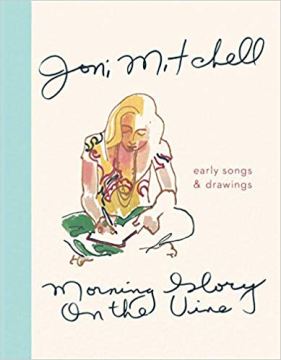 Joni Mitchell, in the foreword to “Morning Glory on the Vine,” her new book of lyrics and illustrations, explains that, in the early nineteen-seventies, just as her fervent and cavernous folk songs were finding a wide audience, she was growing less interested in making music than in drawing. “Once when I was sketching my audience in Central Park, they had to drag me onto the stage,” she writes. Though Mitchell is deeply beloved for her music—her album “Blue” is widely considered one of the greatest LPs of the album era and is still discussed, nearly fifty years later, in reverent, almost disbelieving whispers—she has consistently defined herself as a visual artist. “I have always thought of myself as a painter derailed by circumstance,” she told the Globe and Mail, in 2000. At the very least, painting was where she directed feelings of wonderment and relish. “I sing my sorrow and I paint my joy,” is how she put it.
To read more: https://www.newyorker.com/culture/culture-desk/joni-mitchell-discusses-her-new-book-of-early-songs-and-drawings
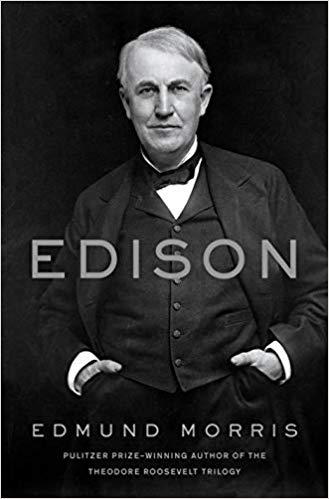
New Books: “Edison” By Pulitzer Prize-Winner Edmund Morris (2019)
From a Wall Street Journal online review:
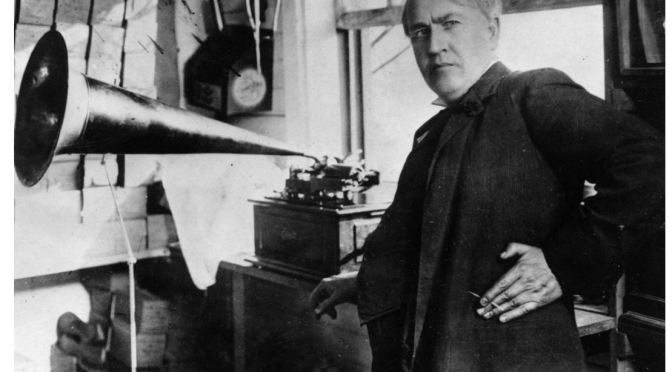
 Not until July 16 did Edison feel that he had a device worth patenting. The application he signed that day specified multiple timpani that “reproduced” vocal inflections and a sibilant-sensitive diaphragm. But a laboratory visitor (spying for Bell) found the instrument more powerful than clear, with the word schism sounding more like kim.
“We have had terrible hard work on the Speaking telegraph,” Batchelor complained to his fellow inventor Ezra Gilliland. For the past five to six weeks, he added, Edison’s team had been “frequently working 2 nights together until we all had to knock off from want of sleep.”
Thomas Alva Edison’s self-proclaimed greatest invention, the phonograph, won him overnight fame. Journalists would marvel that such an acoustic revolution, adding a whole new dimension to human memory, could have been accomplished by a man half deaf in one ear and wholly deaf in the other.
In February 1877, the same month that saw Edison turn 30 and show his first streaks of silver hair, he and his fellow inventor Charles Batchelor began a new series of experiments on what they called, variously, the “telephonic telegraph,” the “speaking telegraph” and the “talking telephone.”
To read more: https://www.wsj.com/articles/the-making-of-thomas-edisons-miraculous-machine-11571324989

Top New Fiction: “Agent Running In The Field” By John le Carré (2019)
From a The Economist online review:
 “Agent Running in the Field” is narrated by Nat, a 47-year-old spy for British intelligence—known not as “the Circus” of yore but, more prosaically, as “the Office”.
After years spent handling secret agents overseas Nat has returned to London to take charge of the Haven, an “outstation” of the Russia department that doubles as “a dumping ground for resettled defectors of nil value and fifth-rate informants on the skids”. With Florence, his number two, Nat throws himself into Operation Rosebud, which involves the surveillance of a London-based Ukrainian oligarch with links to Moscow Centre. Then Florence unexpectedly resigns and won’t return Nat’s calls. Equally abruptly, the powers-that-be pull the plug on the operation.
WHEN JOHN LE CARRÉ’S third book, “The Spy Who Came in From the Cold”, was published in 1963, it presented the world of espionage in a harsh new light. Spies were not brave, suave heroes. “They’re a squalid procession of vain fools, traitors too,” explains the flawed and beleaguered protagonist, Alec Leamas. They are “sadists and drunkards, people who play cowboys and Indians to brighten their rotten lives.” The novel preferred intrigue to adventure, gritty reality to escapist fantasy. Readers expecting a finale in which good conquered evil were instead offered convoluted twists and a bleak denouement.
 Boomers Daily