Stephen Shore’s images from his travels across America in 1972-73 are considered the benchmark for documenting the extraordinary in the ordinary and continue to influence photographers today.
The original edition of American Surfaces, published by Phaidon in 2005, brought together 320 photographs sequenced in the order in which they were originally documented. Now, in the age of Instagram and nearly 50 years after Shore embarked on his cross-country journey, this revised and expanded edition will bring this seminal work back into focus.
Stephen Shore
Stephen Shore is one of the most influential living photographers. His photographs from the 1970s, taken on road trips across America, established him as a pioneer in the use of color in art photography. He is director of the photography program at Bard College, New York.
Teju Cole is a novelist, photographer, critic, curator, and author. He is the Gore Vidal Professor of the Practice of Creative Writing at Harvard.
In motor racing, a win or podium finish is often immortalized with the reward of a trophy but to foster and create the enthusiasm leading up to the race and attract the masses of racing enthusiasts and fans to witness many of the world’s greatest historic motoring races, it was often the beautifully executed imagery that drove people to the tracks.
Often a work of art in itself, historic motor racing posters manage to capture the very spirit of each race, venue, marques and their respective drivers best. What better way to celebrate heritage of motor racing then through this outstanding offering of nearly 60 original posters and artwork, all offered without reserve.
From a Wall Street Journal online article (Feb 21, 2020):
“I don’t have this precious career as an actor that I had to preserve. I’m an older guy, I’ve had a career, and the most personal thing I’ve ever done was Mr. Show, so, in a way I’ve said my piece, so I just don’t have all that much to lose really compared to somebody who’s an actor for a living and dreaming of their own show. My daughter asked me this question. This was a kid who grew up in Hollywood. She said, “If it’s bad, how bad would it be?” And I thought, Well, it’s Vince Gilligan and Peter Gould. The worst thing it would be, would be an experiment that just didn’t pan out, but an interesting one at the very least.”
It’s fair to say that in 1998, no one who saw Bob Odenkirk perform a Mr. Show sketch buck naked on the stage of Radio City Music Hall for Comic Relief VIII—a cupped hand his only nod to decency—would have predicted his turn to drama. Odenkirk is now critically celebrated for his portrayal of greasy lawyer Saul Goodman in AMC’s Better Call Saul.
The 57 year-old stars on the fifth and penultimate season of the show, which premieres this weekend and has moved far away from its first season branding as “a Breaking Bad spinoff.”
The lives and oeuvres of Impressionist pillars Cézanne, Degas, Gauguin, Manet, Monet, Renoir, Rousseau, Seurat, Toulouse-Lautrec, and van Gogh are each explored in-depth in TASCHEN’s Basic Art series. Now, this volume combines all 10 monographs into one for the price of three.
“These seductive books have slick production values, excellent illustrations, and smart texts. Each one is a fast-food, high-energy fix on the topic at hand.” – The New York Times Book Review
This book gathers ten Basic Art monographs into one volume featuring:
Cézanne, Degas, Gauguin, Manet, Monet, Renoir, Rousseau, Seurat, Toulouse-Lautrec, and van Gogh
a detailed chronological summary of the life and oeuvre of each artist, covering their cultural and historical importance
approximately 1,000 illustrations with explanatory captions
With blockbuster exhibitions, record-breaking auction prices, and packed museums, Impressionism remains close contender for the world’s favorite period of painting. Its favorite subjects— from dappled harbor scenes and summer days to vibrant Parisian salons and gardens—brim with optimism and joie de vivre. The works once dismissed as unfinished or imprecise are now beloved for their atmospheric evocation of time and place, as well as the stylistic flair of rapid brushstrokes upon canvas.
What we take for granted today—the relativity of perception depending on the viewer, lighting mood, or location to the object—was then the inspiration for some of the finest paintings in art history. Consider Monet’s 30+ variations of the Rouen Cathedral, Cézanne’s dazzling experimentation with color, Gauguin’s primitivist innovations, or Manet’s scandalous nudes: rarely has a single genre produced so many brilliant artists in such a short time.
Since 1985, TASCHEN’s Basic Art series has published some 200 individual volumes, making it the world’s most successful art-book series. Each title contains an extensive text on the artist’s life and work, a detailed biography, and some 100 high-quality color illustrations with explanatory captions. With Ten in One, TASCHEN now presents ten Basic Art monographs in one volume. A must for every art lover!
Recorded February 14, 2020 at the Columbia Museum of Art.
Daniel Finamore, curator of It’s Alive! Classic Horror and Sci-Fi Art from the Kirk Hammett Collection talks about the exhibition and where these posters fit into the canon of art history. Finamore is the curator of Maritime Art and History at the Peabody Essex Museum. Best known as lead guitarist of the famed rock band Metallica, Kirk Hammett is also an obsessive collector of visually arresting horror and sci-fi film art and has dedicated the last three decades to creating one of the world’s most important collections.
It’s Alive! features more than 100 pieces of graphic art, many hailing back to the days of Boris Karloff and Bela Lugosi, that have seeped into the public imagination and reflected society’s deepest fears and anxieties for nearly a century. Not only do these objects explore the power of graphic art in its own right, they have inspired Hammett’s work throughout his own artistic career.
Organized by the Peabody Essex Museum, Salem, Massachusetts.
Countryside, The Future is an exhibition addressing urgent environmental, political, and socioeconomic issues through the lens of architect and urbanist Rem Koolhaas and Samir Bantal, Director of AMO, the think tank of the Office for Metropolitan Architecture (OMA).
A unique exhibition for the Guggenheim Museum, Countryside, The Future will explore radical changes in the rural, remote, and wild territories collectively identified here as “countryside,” or the 98% of the Earth’s surface not occupied by cities, with a full rotunda installation premised on original research. The project presents investigations by AMO, Koolhaas, with students at the Harvard Graduate School of Design; the Central Academy of Fine Arts, Beijing; Wageningen University, Netherlands; and the University of Nairobi. The exhibition will examine the modern conception of leisure, large-scale planning by political forces, climate change, migration, human and nonhuman ecosystems, market-driven preservation, artificial and organic coexistence, and other forms of radical experimentation that are altering landscapes across the world.
Rem Koolhaas (Rotterdam, 1944) founded OMA in 1975 together with Elia and Zoe Zenghelis and Madelon Vriesendorp. He graduated from the Architectural Association in London and in 1978 published Delirious New York: A Retroactive Manifesto for Manhattan. In 1995, his book S,M,L,XL summarized the work of OMA in “a novel about architecture”. He co-heads the work of both OMA and AMO, the research branch of OMA, operating in areas beyond the realm of architecture. His built work includes the Qatar National Library and the Qatar Foundation Headquarters (2018), Fondation Galeries Lafayette in Paris (2018), Fondazione Prada in Milan (2015/2018), Garage Museum of Contemporary Art in Moscow (2015), the headquarters for China Central Television (CCTV) in Beijing (2012), Casa da Musica in Porto (2005), Seattle Central Library (2004), and the Netherlands Embassy in Berlin (2003). Current projects include the Taipei Performing Arts Centre, a new building for Axel Springer in Berlin, and the Factory in Manchester. Koolhaas directed the 2014 Venice Architecture Biennale, is a professor at Harvard University, and is preparing a major exhibition for the Guggenheim museum to open in 2019 entitled Countryside: Future of the World.
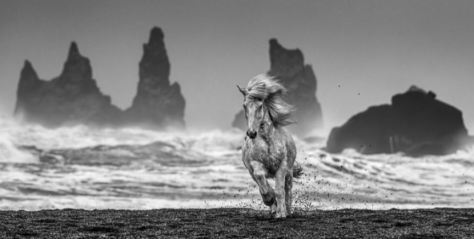
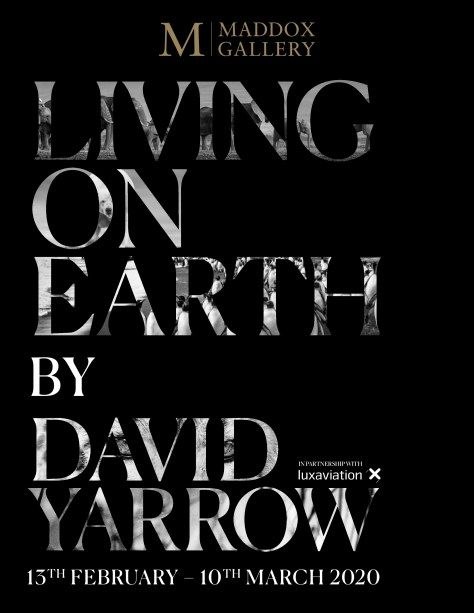
For more than two decades, legendary British photographer David Yarrow has been putting himself in harm’s way to capture immersive photography of the world’s most revered and endangered species.
Featuring a selection of Yarrow’s most iconic photographs, ‘Living On Earth’ highlights the beauty of the endangered planet and the art of narrative as conveyed by one of the most relevant fine art photographers in the world.
‘WHITE HORSES’
David Yarrow’s commitment to ‘capturing the splendour of what remains wild and free in our world’ allowed him to transcend wildlife photography and become one of the world’s leading fine art photographers. He has travelled pole to pole, to the world’s most remote habitats to allow us a glimpse of the truly untamed. The resulting images are unerringly iconic and connect with us on a primal level; of curiosity, desire, and fear.
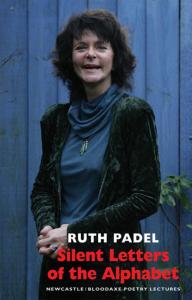
Like Beethoven, the poet Ruth Padel first came to love and understand music through playing the viola. Her great grandfather, a concert pianist, studied music in Leipzig with Beethoven’s friend and contemporary. Her latest collection Beethoven Variations (Chatto) is simultaneously a biography in verse of the great composer and a passionate and highly personal account of how one creative genius can feed, and feed on, another.
She was joined in an evening of readings and conversation about Beethoven, poetry and music by poets Raymond Antrobus and Anthony Anaxagorou, both of whom are currently engaged in creative projects working on and from the life and work of Beethoven.
Ruth Sophia Padel (born 8 May 1946) is a British poet, novelist and non-fiction author, in whose work “the journey is the stepping stone to lyrical reflections on the human condition”. She is known for her explorations through poetry of migration and refugees,science, and homelessness; for her involvement in wildlife conservation, Greece, and music; and for her belief that poetry “connects with every area of life” and “has a responsibility to look at the world”. She is Trustee for conservation charity New Networks for Nature, has served on the Board of the Zoological Society of London, and broadcasts for BBC Radio 3 and 4 on poetry, wildlife and music. In 2013 she joined King’s College London, where she is Professor of Poetry.
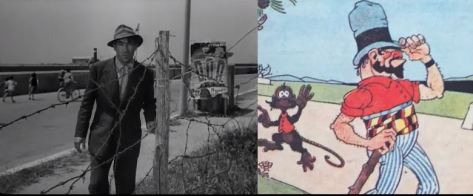
Federico Fellini’s films were bright, surprising and above all, fun. His films are a testament to an extraordinary imagination, but also a deep love of an art form that is often overlooked: comics!
In this video essay, BFI producer Nic Wassell speaks to Fellini experts to draw out the links between the great director’s love of American and Italian comics and the surreal, joyful imagery found in his films.
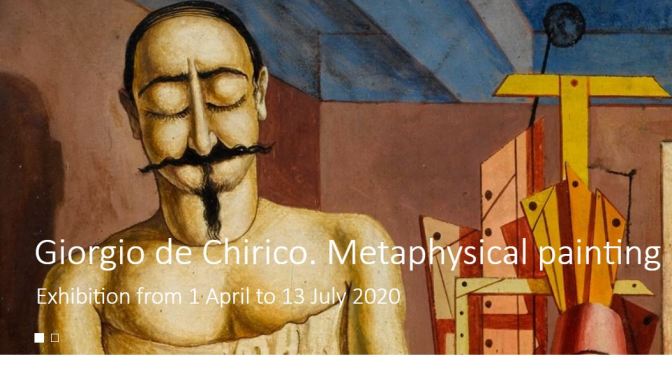
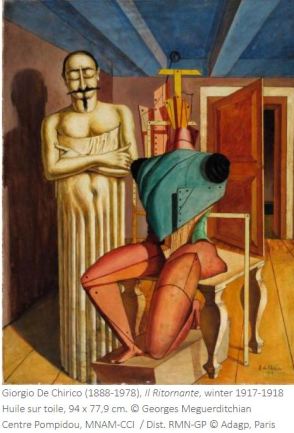
The exhibition Giorgio de Chirico. Metaphysical painting retraces the career and the artistic and philosophic influences of the artist Giorgio de Chirico from Munich to Turin, then to Paris where he discovered the artistic avant-garde of his era, and lastly Ferrare. The connections between the painter – discovered by Apollinaire and subsequently backed by the art dealer Paul Guillaume – and the Parisian cultural and literary circles will be highlighted as never before.
Born in Greece and trained in the fount of classical culture and late German Romanticism, de Chirico developed the foundations of a new artistic exploration alongside his younger brother Alberto Savinio. A student at the Academy of Fine Arts in Munich as of 1908, he discovered the thinking of Nietzsche and Schopenhauer as well as the works of Böcklin and Klinger. After travelling to Milan then Florence, it was in France, and more specifically Paris, as of autumn 1911, that he established his unique visual vocabulary through contact with the modernist artistic revolutions. He was quickly noticed by numerous artistic celebrities of the time, among whom Guillaume Apollinaire, Maurice Raynal, André Salmon, André Breton, Paul Éluard and Jean Paulhan were the first to take an interest in and promote his work.
The exhibition thus comes into its own at the Musée de l’Orangerie alongside the figure of Paul Guillaume, the first art dealer to work with Giorgio de Chirico. On his return to Italy in 1915, he and his brother Savinio were sent to Ferrare for military reasons, where he continued his artistic research. This period (June 1915-December 1918) provided an opportunity for painters Carlo Carrà and Giorgio Morandi to get to know the two brothers, thus resulting in the creation of what was later to be known as the “metaphysical movement” which brings the exhibition to a close.
Exhibition organised by the Musée d’Orsay and the Musée de l’Orangerie, Paris and the Hamburger Kunsthalle, Hamburg

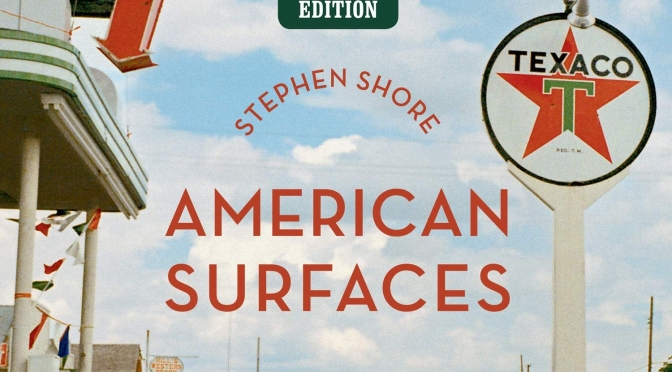
 Stephen Shore’s images from his travels across America in 1972-73 are considered the benchmark for documenting the extraordinary in the ordinary and continue to influence photographers today.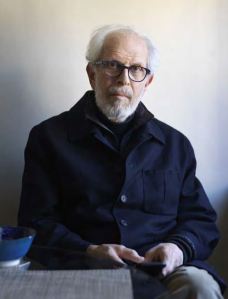
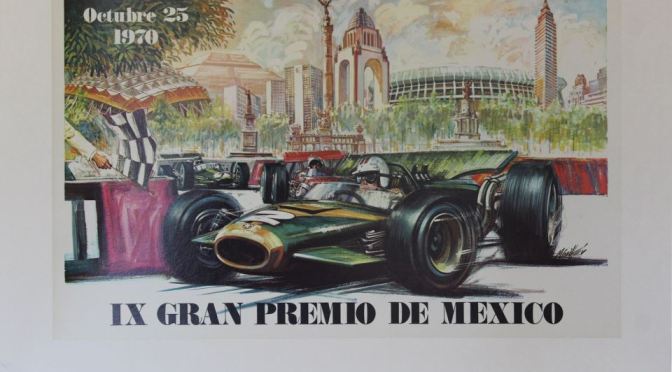
 In motor racing, a win or podium finish is often immortalized with the reward of a trophy but to foster and create the enthusiasm leading up to the race and attract the masses of racing enthusiasts and fans to witness many of the world’s greatest historic motoring races, it was often the beautifully executed imagery that drove people to the tracks.
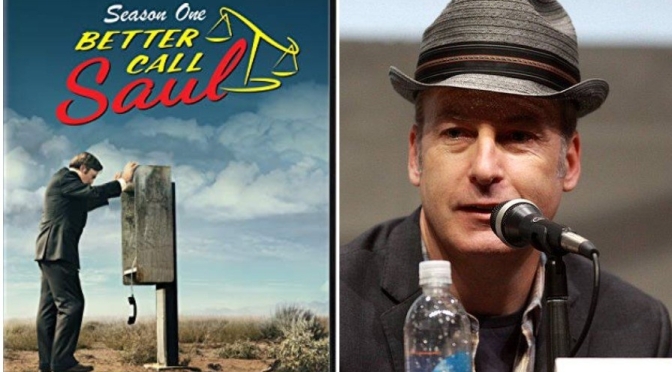
 “I don’t have this precious career as an actor that I had to preserve. I’m an older guy, I’ve had a career, and the most personal thing I’ve ever done was Mr. Show, so, in a way I’ve said my piece, so I just don’t have all that much to lose really compared to somebody who’s an actor for a living and dreaming of their own show. My daughter asked me this question. This was a kid who grew up in Hollywood. She said, “If it’s bad, how bad would it be?” And I thought, Well, it’s Vince Gilligan and Peter Gould. The worst thing it would be, would be an experiment that just didn’t pan out, but an interesting one at the very least.”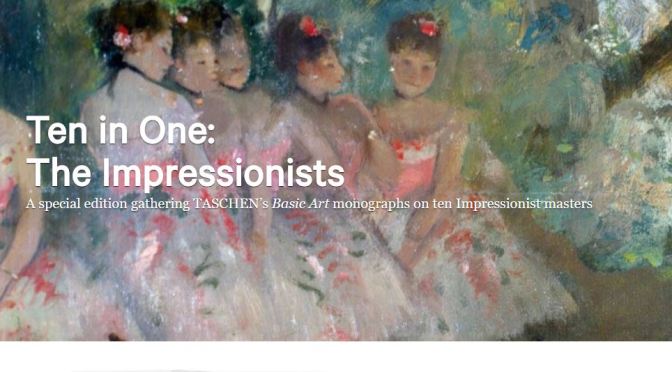
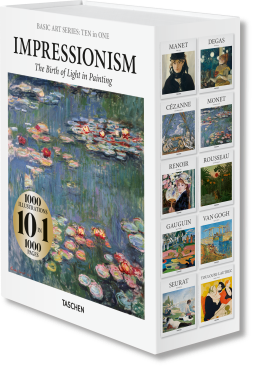 The lives and oeuvres of Impressionist pillars Cézanne, Degas, Gauguin, Manet, Monet, Renoir, Rousseau, Seurat, Toulouse-Lautrec, and van Gogh are each explored in-depth in TASCHEN’s Basic Art series. Now, this volume combines all 10 monographs into one for the price of three.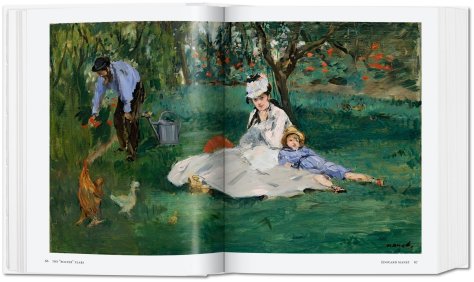
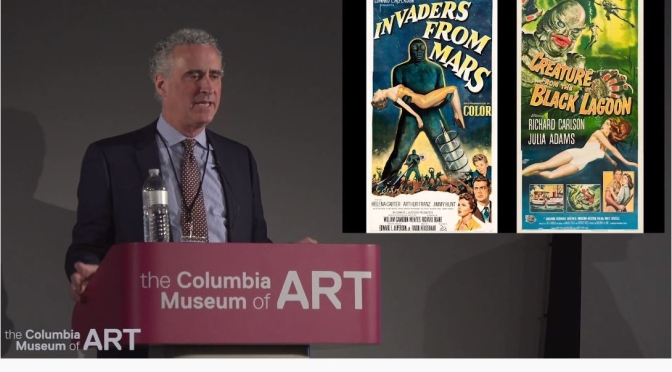
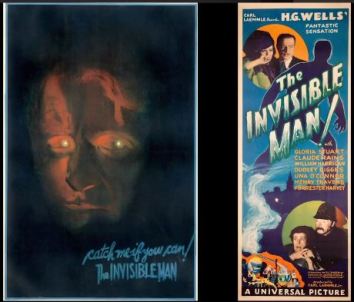 of art history. Finamore is the curator of Maritime Art and History at the Peabody Essex Museum. Best known as lead guitarist of the famed rock band Metallica, Kirk Hammett is also an obsessive collector of visually arresting horror and sci-fi film art and has dedicated the last three decades to creating one of the world’s most important collections.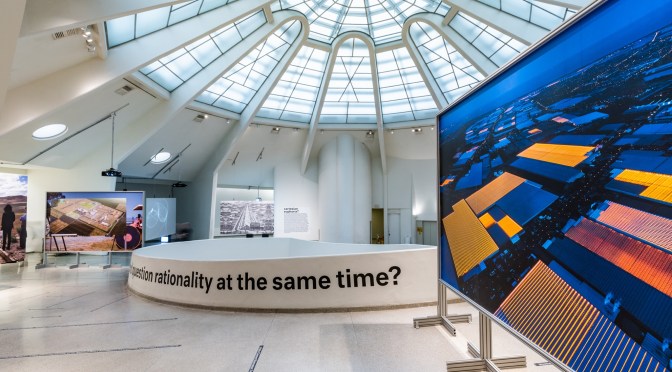
 by AMO, Koolhaas, with students at the Harvard Graduate School of Design; the Central Academy of Fine Arts, Beijing; Wageningen University, Netherlands; and the University of Nairobi. The exhibition will examine the modern conception of leisure, large-scale planning by political forces, climate change, migration, human and nonhuman ecosystems, market-driven preservation, artificial and organic coexistence, and other forms of radical experimentation that are altering landscapes across the world.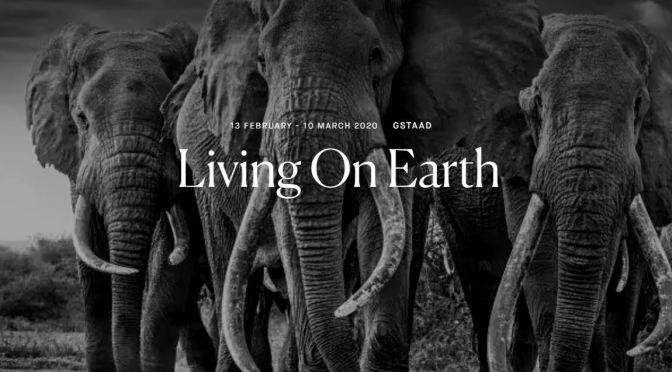
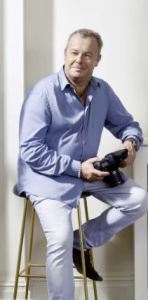
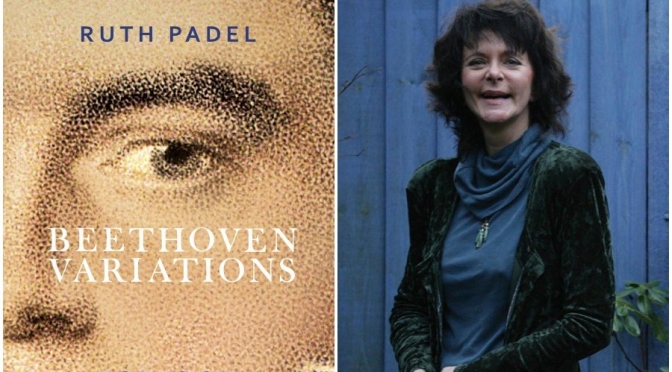
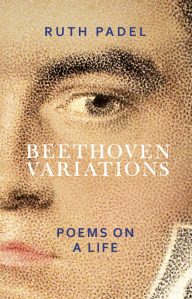 Like Beethoven, the poet Ruth Padel first came to love and understand music through playing the viola. Her great grandfather, a concert pianist, studied music in Leipzig with Beethoven’s friend and contemporary. Her latest collection
  She was joined in an evening of readings and conversation about Beethoven, poetry and music by poets Raymond Antrobus and Anthony Anaxagorou, both of whom are currently engaged in creative projects working on and from the life and work of Beethoven.
 Ruth Sophia Padel (born 8 May 1946) is a British poet, novelist and non-fiction author, in whose work “the journey is the stepping stone to lyrical reflections on the human condition”. She is known for her explorations through poetry of migration and refugees,science, and homelessness; for her involvement in wildlife conservation, Greece, and music; and for her belief that poetry “connects with every area of life” and “has a responsibility to look at the world”. She is Trustee for conservation charity New Networks for Nature, has served on the Board of the Zoological Society of London, and broadcasts for BBC Radio 3 and 4 on poetry, wildlife and music. In 2013 she joined King’s College London, where she is Professor of Poetry.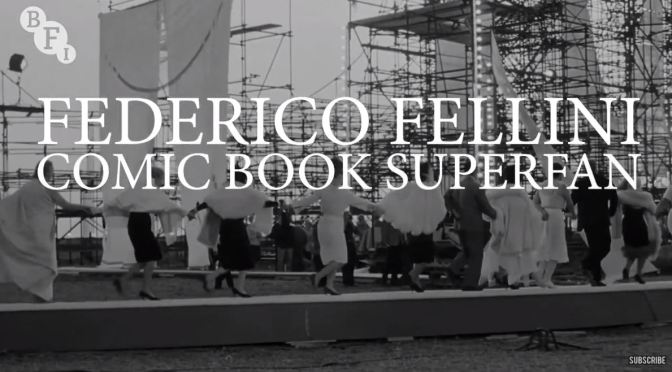
 subsequently backed by the art dealer Paul Guillaume – and the Parisian cultural and literary circles will be highlighted as never before.
 The exhibition thus comes into its own at the Musée de l’Orangerie alongside the figure of Paul Guillaume, the first art dealer to work with Giorgio de Chirico. On his return to Italy in 1915, he and his brother Savinio were sent to Ferrare for military reasons, where he continued his artistic research. This period (June 1915-December 1918) provided an opportunity for painters Carlo Carrà and Giorgio Morandi to get to know the two brothers, thus resulting in the creation of what was later to be known as the “metaphysical movement” which brings the exhibition to a close.
 Boomers Daily