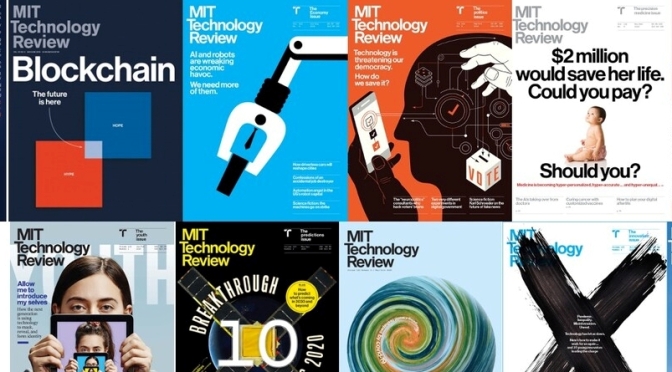
MIT Technology Review (April 29, 2024): The new issue features ‘The Robots Are Coming’ – And they’re here to help; A brief, weird history of brainwashing; Office space in space; AI comes for bodycams…
The Build issue
Who says we can’t still build things? In this issue: a look at the robots we’ve always wanted; a new model for space exploration; and efforts to flood-proof Louisiana’s coastline. Plus a wild, weird history of brainwashing; designing cheese with AI; and glow-in-the dark petunias.
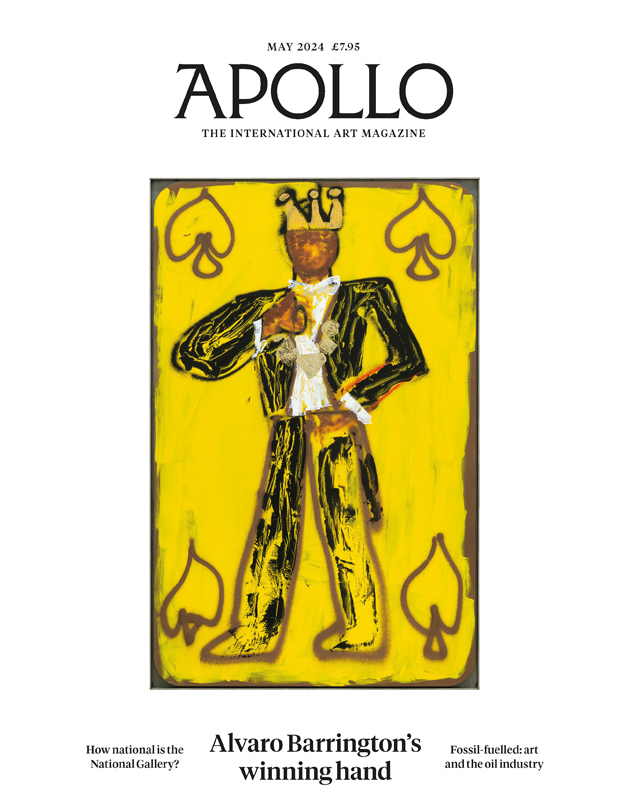
Apollo Magazine (April 29, 2024): The new May 2024 issue features ‘How national is the National Gallery?’; Alvaro Barrington’s winning hand; Fossil-fuelled: art and the oil industry…
The New Yorker (April 29, 2024): The new issue‘s cover featuresFaith Ringgold’s “Sonny’s Bridge, 1986” – The late artist’s work recalls her pioneering spirit through vivid, inventive designs.
Also: Kamasi Washington, “The Outsiders” reviewed, Bang on a Can’s Long Play Festival, and more.
The Return, Again, of the Power Lunch
Four Twenty Five, a luxe new dining room from the mega-restaurateur Jean-Georges Vongerichten, takes square aim at the expense-account crowd.
Donald Trump’s Sleepy, Sleazy Criminal Trial
The most striking aspect of the former President’s hush-money trial so far has been that, for the first time in a decade, Trump is struggling to command attention.
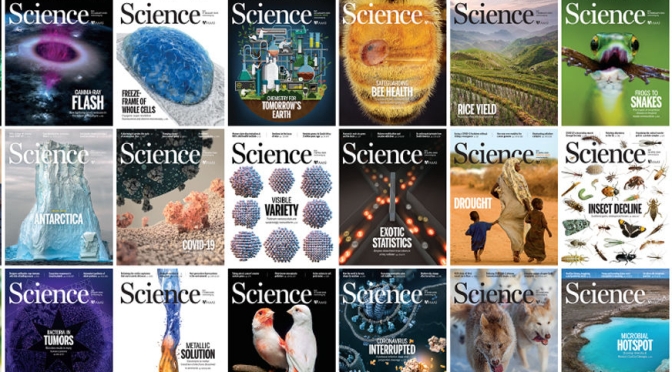
‘Science Magazine – April 25, 2024: The new issue features ‘Born to Explore’ – Exploratory tendency leads to diversification; Can science address loneliness?; Vitamin D, microbiota, and cancer immunity; A safer version of a 140-year-old chemical reaction…
Vitamin D modulates intestinal epithelial cell function to enhance antitumor microbes
The gut microbiome has been shown to modulate the response of cancer patients to therapy, but precisely how microbiota affect anticancer immunity is still being elucidated. Giampazolias et al. report that vitamin D bioavailability in mice influences the composition of the gut microbiome (see the Perspective by Franco and McCoy). After dietary manipulation, vitamin D levels were observed to affect gut bacteria, which in turn improved cancer immunotherapy and antitumor immunity. In humans, low vitamin D levels were correlated with tumor development, and gene signatures of vitamin D activity were associated with improved patient responses to immunotherapy. These findings highlight the connection between vitamin D and the immune system through gut bacteria and may have applications for improving cancer therapies.
The power of curiosity
Lake Tanganyika contains one of the most impressive adaptive radiations, with about 250 species of cichlid occupying a variety of niches. Much research has focused on understanding the drivers of this and other adaptive radiations. Trembo et al. looked in depth at 57 of these cichlid species with regard to their behavior, ecomorphology, and genomics. They found that one behavior in particular, a tendency to explore, was related to niche adaptation, and they identified a regulatory gene that is highly associated with this behavior. These findings suggest the existence of an adaptive syndrome driven in part by a tendency to explore what is new.
Times Literary Supplement (April 24, 2024): The latest issue features ‘The Mormon Conquest’ – Seth Perry on a people of the book; Is ‘green growth’ a mirage; Virginia Woolf’s rural retreat; China’s Shakespeare…
By now, Chinese President Xi Jinping’s ambition to remake the world is undeniable. He wants to dissolve Washington’s network of alliances and purge what he dismisses as “Western” values from international bodies. He wants to knock the U.S. dollar off its pedestal and eliminate Washington’s chokehold over critical technology. In his new multipolar order, global institutions and norms will be underpinned by Chinese notions of common security and economic development, Chinese values of state-determined political rights, and Chinese technology. China will no longer have to fight for leadership. Its centrality will be guaranteed.
































 Boomers Daily