Tomorrow’s Build (November 7, 2023) – The city of Seville in Spain is implementing measures to mitigate the scorching heat. Called the CartujaQanat, it is a €5 million pilot project that aims to reduce average temperatures by around 10°C in a region of the city.
These systems, developed over 1,000 years ago, consist of the construction of underground channels that transport water across a large area that needs to be cooled. Vertical shafts drilled along the channel bring underground air to the surface, lowering above-ground temperatures.
In summer, people don’t leave their house until 8pm and festivals usually start at 10pm. Built on the banks of the Guadalquivir River during the Middle Ages, the Spanish city regularly records temperatures above 40 degrees Celsius (104 degrees Fahrenheit) during July and August. And scientists expecting temperatures above 50°C in the near future.
Country Life Magazine – November 8, 2023:The latest issue features The King’s milestone celebration, Amie Elizabeth White reveals 75 fascinating things you may not know about Charles III; Exclusive access to St James’s Palace in London; the British passion for country-house portraits; the astonishing hidden gardens of bohemian Tangier in Morocco and more….
We can be rural heroes
Julie Harding meets a model, a comedian, a farmer, a hedge-layer and a former retail boss, all united in their praise for The King’s Royal Countryside Fund
A nursery palace
Simon Thurley chronicles the remarkable story of the modern home of the Court, as Country Life is afforded exclusive access to St James’s Palace in London
Elegy in a country churchyard
War memorials on British soil are a poignant means of ‘bringing home’ those who fell in foreign fields, reveals Andrew Green
A right royal ruff
The regal King Charles spaniel once won favour with the nobility — and owners are still falling for this loving and loyal breed, as Katy Birchall discovers
Martha Lytton Cobbold’s favourite painting
The Historic Houses president chooses a captivating work that proved to be an inspiration for her love of art and structure
Native breeds
Sheep are an instrinsic feature of the Welsh landscape — Kate Green introduces the breeds that populate the principality
Home is where the art is
Michael Prodger investigates the British passion for country-house portraits, a craze that started back in the 16th century and shows little sign of abating
Interiors
Arabella Youens marvels at the transformation of an Edwardian sitting room, as Giles Kime revels in the luxury of a daybed
Tangerine dreams
Kirsty Fergusson explores the astonishing hidden gardens of bohemian Tangier in Morocco
It’s only natural
Turning woodland finds into art is a labour of love for Jane Bevan, discovers Natasha Goodfellow
Still standing after all these years
A 188-year-old avenue of beech trees forms a guard of honour for Fiona Reynolds in Dorset
Turbot-charged
Nothing less than perfection will do for Tom Parker Bowles as he savours the most regal of fish
A bundle of energy
Could hydrogen-powered cars be the future? Jane Wheatley motors to Wales to investigate
The good stuff
Hetty Lintell seeks a bit of fluff from some feathery confections
Dare to be square
Mary Miers meets the talented craftspeople reinventing the ancient art of mosaic making
The New Yorker – November 13, 2023 issue: The new issue‘s cover features Kadir Nelson’s “Dumbo” – The artist discusses the seasonal energy of the city, and his sources of inspiration.
On the morning of the Battle of Waterloo, Napoleon Bonaparte was full of catastrophic confidence. His seventy-three thousand troops were camped on a ridge near a tavern called La Belle Alliance. His nemesis, the Duke of Wellington, occupied a slope across the fields, with a mere sixty-seven thousand troops. Over breakfast, Napoleon predicted, “If my orders are well executed, we will sleep in Brussels this evening.” When his chief of staff offered a word of caution, Napoleon snapped, “Wellington is a bad general and the English are bad troops. The whole affair will not be more serious than swallowing one’s breakfast.”
Some people think that we can’t be held responsible for what we do, given that our actions are the inevitable consequence of the laws of nature. They’re only half right.
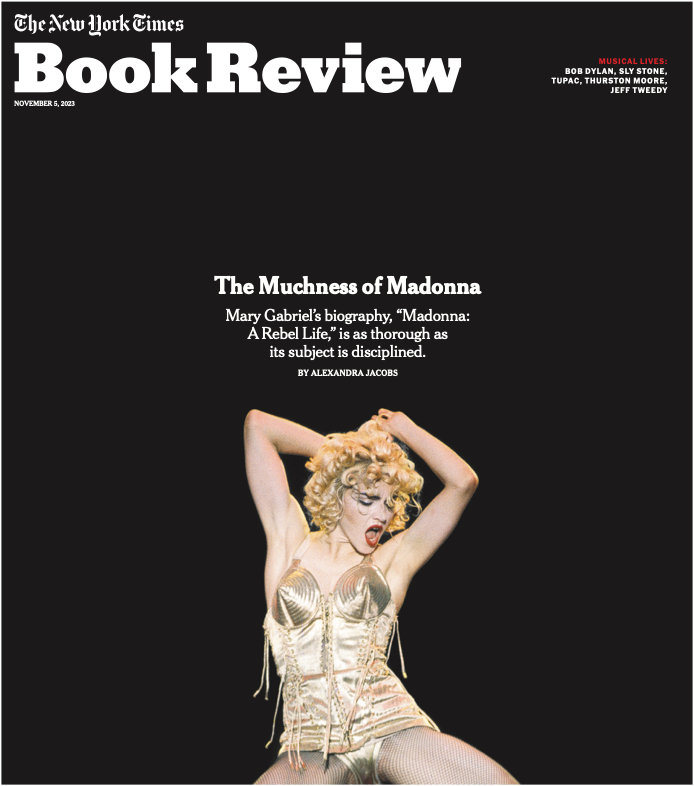
“I want to be alone,” Greta Garbo’s dancer character famously said in “Grand Hotel,” a quote permanently and only semi-accurately attached to the actress after she retreated from public life. Garbo was first on the list of Golden Agers in one of Madonna’s biggest hits, “Vogue,” but the pop star has long seemed to embody this maxim’s very opposite. She wants to be surrounded, as if with Dolby sound.
THANK YOU (FALETTINME BE MICE ELF AGIN): A Memoir, by Sly Stone with Ben Greenman
It is difficult to convey just how astoundingly unlikely it is that this book exists. Sly Stone is one of pop music’s truest geniuses and greatest mysteries, who essentially disappeared four decades ago in a cloud of drugs and legal problems after recording several albums’ worth of incomparable, visionary songs. Fleeting, baffling, blink-and-you-miss-him appearances at his 1993 Rock & Roll Hall of Fame induction and a 2006 Grammy tribute only served as reminders that he was still alive and still not well.
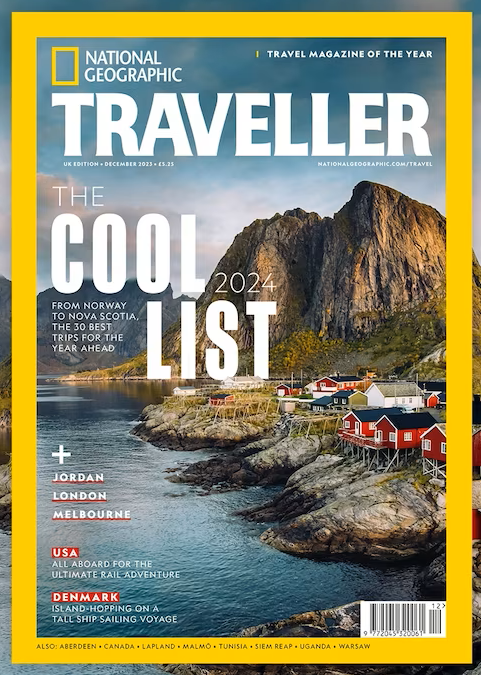
National Geographic Traveller Magazine (December 2023): The latest issue features the 30 best destinations for 2024, Northern Lights in Manitoba, sailing Denmark’s South Funen Archipelago on a tall ship and a long-distance rail trip in the US….
Also inside this issue:
Uganda: The wildlife of Queen Elizabeth National Park. Melbourne: In Victoria’s state capital, local innovators are breathing new life into forgotten spaces. Amman: Culture, cuisine and craft in Jordan’s kaleidoscopic, mountain-fringed capital. Tunisia: From laid-back coastal towns and diving spots to mountain trails in the county’s northern reaches. Warsaw: Traditional Polish flavours have found a new home in fine-dining establishments. Central London: Hotels to escape the crowds at, from budget boutiques to spruced-up luxury boltholes.
Plus, saddling up inGeorgia’s Tusheti region; the salt workers of India’s Habra city; Barcelona’s La Sagrada Família nears completion; Europe’s new UNESCO World Heritage Sites; the flavours of Sierra Leone;a pedal-powered tour of Malmö; design-led stays in Siem Reap; a Christmas break in Lapland; beach views and seafood in Aberdeen; a staycation in Arnside and Silverdale; great illustrated travel books and photography collections; and overnight essentials.
THE NEW YORK TIMES MAGAZINE (November 3, 2023): The latest issue features Bariatric Surgery at 16 – If childhood obesity is an ‘epidemic,’ how far should doctors go to treat it?; Some Ukrainians Helped the Russians. Their Neighbors Sought Revenge; The Eternal Life of the ’90s Supermodel -How did a small group of models manage to stay on top for so long?, and more…
If childhood obesity is an ‘epidemic,’ how far should doctors go to treat it?
By Helen Ouyang
Last fall, Alexandra Duarte, who isnow 16, went to see her endocrinologist at Texas Children’s Hospital, outside Houston. From age 10, she had been living with polycystic ovary syndrome and, more recently, prediabetes. After Alexandra described her recent quinceañera, the doctor brought up an operation that might benefit her, one that might help her lose weight and, as a result, improve these obesity-related problems.
For people in Bilozerka, the invasion began a cat-and-mouse game of collaboration and resistance.
By James Verini
Andriy Koshelev steered his car into the driveway of his home on Pushkin Street in Bilozerka, a lakeside town in Ukraine’s Kherson region. Leaving the car on, Koshelev got out and walked to the entrance gate. He reached down to loosen the latch. When he pulled it, the gate exploded. Koshelev’s parents, who lived on the same property, rushed outside as acrid smoke filled their driveway and the street. The explosion resounded across town.
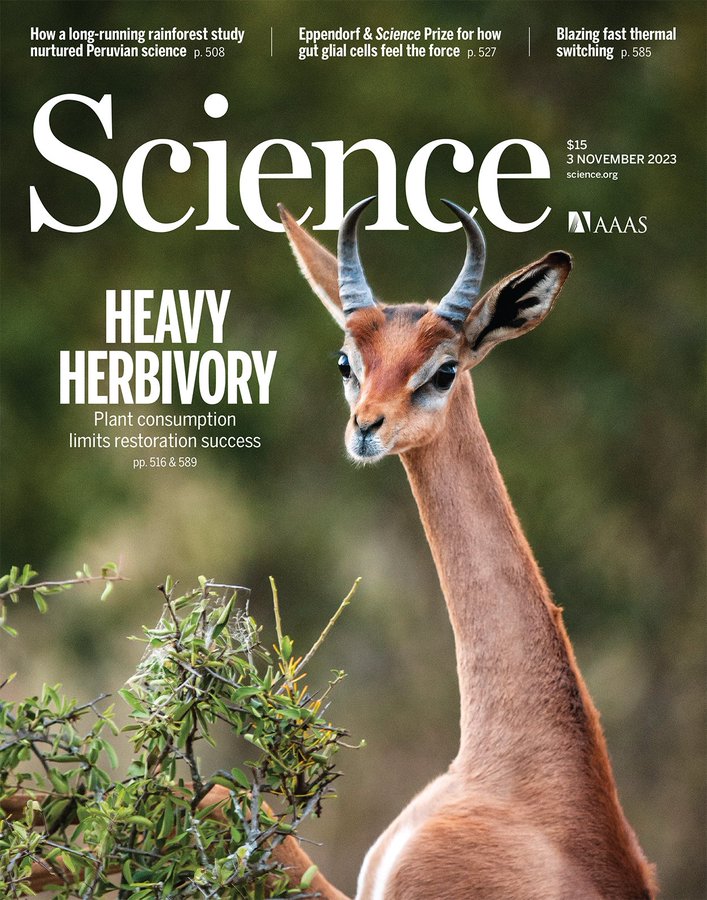
Science Magazine – November 3, 2023: The new issue features Heavy Herbivory – Plant consumption limits restoration success; How a long-running rainforest study nurtured Peruvian science; No easy way to explain cosmic expansion mystery; Ancient fish reveal the origin of the shoulder in vertebrates, and more…
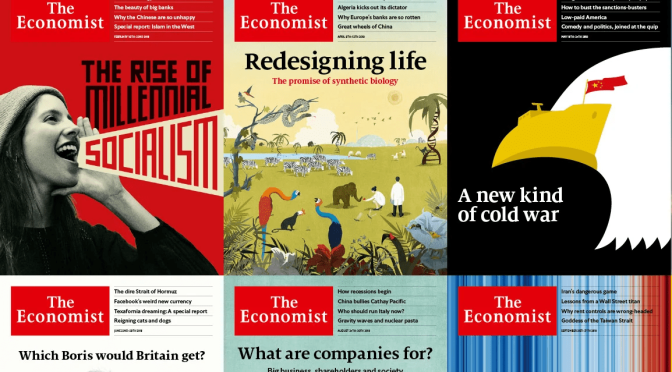
The Economist Magazine (November 2, 2023): The latest issue features The contradiction at the heart of the world economy – Threats abound, including higher-for-longer interest rates; Why Israel must fight on – Unless Hamas’s power is broken, peace will remain out of reach; unless Hamas’s power is broken, peace will remain out of reach; Donald Trump’s tariff plans would inflict grievous damage on America and the world – You may think his worst ideas won’t get far. Sadly, on trade he has been singularly influential…
The world economy is defying gravity. That cannot last. Threats abound, including higher-for-longer interest rates
Even as wars rage and the geopolitical climate darkens, the world economy has been an irrepressible source of cheer. Only a year ago everyone agreed that high interest rates would soon bring about a recession. Now even the optimists have been confounded. America’s economy roared in the third quarter, growing at a stunning annualised pace of 4.9%. Around the world, inflation is falling, unemployment has mostly stayed low and the big central banks may have stopped their monetary tightening. China, stricken by a property crisis, looks likely to benefit from a modest stimulus. Unfortunately, however, this good cheer cannot last. The foundations for today’s growth look unstable. Peer ahead, and threats abound.
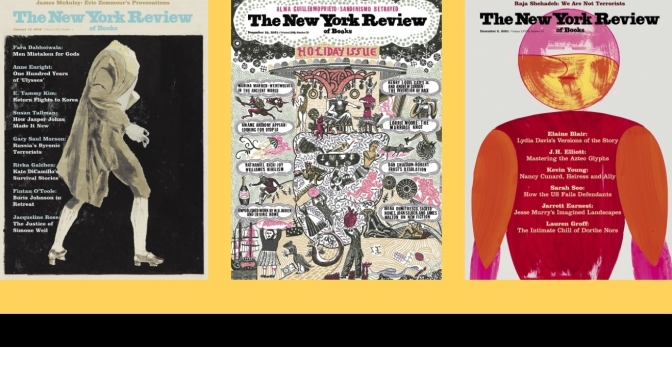
The New York Review of Books (November 23, 2023) – The latest features Inhumane Times – Israel’s current war, the punishment of the Palestinian people and an offensive against Hamas; Camus on Tour – Travels in the Americas: Notes and Impressions of a New World by Albert Camus; Zoning Out – Crack-Up Capitalism: Market Radicals and the Dream of a World Without Democracy by Quinn Slobodian, and more…
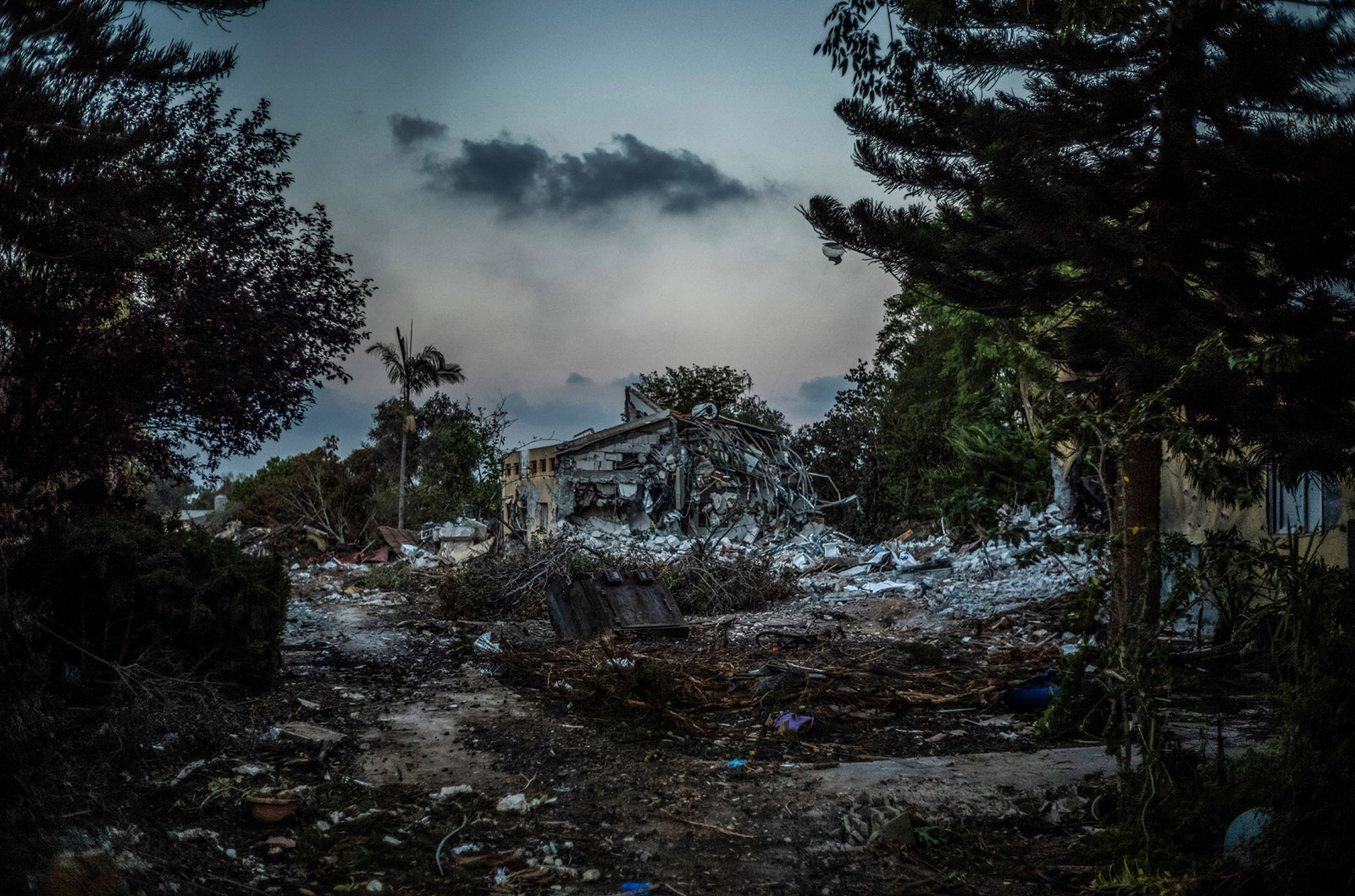
The scenes of devastation in Israel’s south on October 7 were almost beyond description. Children killed in their beds, babies taken from their mothers’ arms, the elderly slaughtered in their kitchens. Kfar Aza, a kibbutz close to the separation barrier with Gaza, was burned nearly to the ground: a charnel house. Between a quarter and a third of nearby Kibbutz Nir Oz’s residents were killed or kidnapped. Roughly 10 percent of Kibbutz Be’eri’s population was murdered. At least a dozen of tiny Kibbutz Holit’s two hundred members are dead. The streets of the city of Sderot were littered with bodies. At an outdoor rave near Kibbutz Reim, more than 260 young men and women were gunned down as they tried to flee.
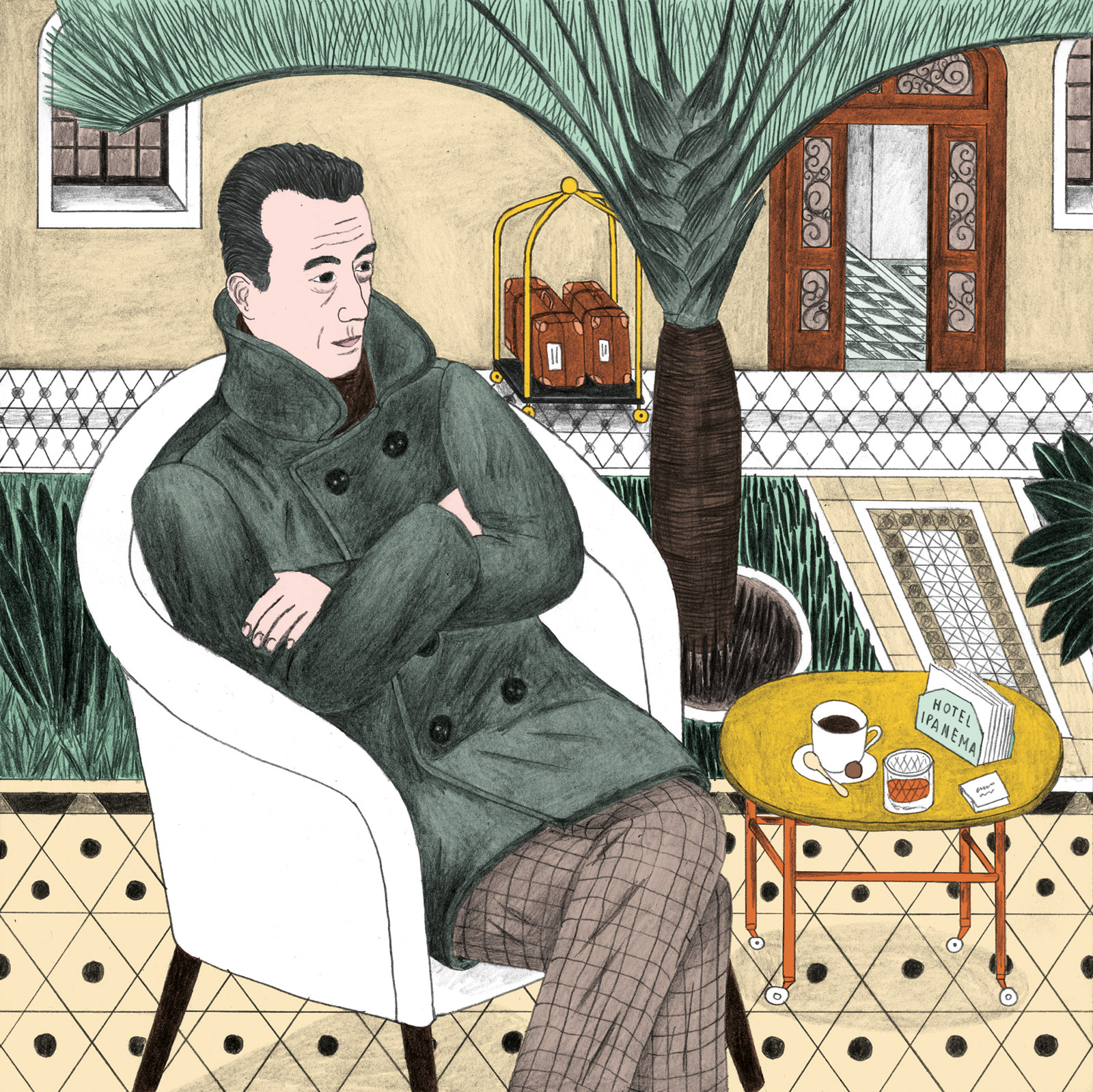
Most of Albert Camus’s evaluations from his promotional trips across the Atlantic are superficial or laughably snotty. What’s intriguing is how quickly he demands that things make sense.
Nothing in a professional writer’s life more resembles the life of a traveling salesman than the literary book tour. The superficial difference between writers on tour and salesmen on the road is that writers are encouraged to imagine themselves prized personae whose pitch is eagerly awaited by the anonymous crowd, whereas salesmen know themselves to be an intrusion, albeit one with an edge. While both are beggars at the gate, each one singing for a bit of supper, salesmen are independent entrepreneurs, pretty much calling their own shots; writers, on the other hand, are performers in someone else’s show—a talk at ten, a class at twelve, a panel at three, a reading at seven, and oh, did I forget the ten or twelve interviews tucked in at every break in the day?—all the while being dragged around by people otherwise known as “handlers” who every half-hour tell them how much they are loved, how much their work is prized, how many lives it has changed, and yes, they know how tired you must be by now, but would you mind giving just one more very small interview, this guy’s been waiting all day to talk to you.
News, Views and Reviews For The Intellectually Curious

























 N
N










 Boomers Daily