From a Wall Street Journal online article (Feb 21, 2020):
“I don’t have this precious career as an actor that I had to preserve. I’m an older guy, I’ve had a career, and the most personal thing I’ve ever done was Mr. Show, so, in a way I’ve said my piece, so I just don’t have all that much to lose really compared to somebody who’s an actor for a living and dreaming of their own show. My daughter asked me this question. This was a kid who grew up in Hollywood. She said, “If it’s bad, how bad would it be?” And I thought, Well, it’s Vince Gilligan and Peter Gould. The worst thing it would be, would be an experiment that just didn’t pan out, but an interesting one at the very least.”
It’s fair to say that in 1998, no one who saw Bob Odenkirk perform a Mr. Show sketch buck naked on the stage of Radio City Music Hall for Comic Relief VIII—a cupped hand his only nod to decency—would have predicted his turn to drama. Odenkirk is now critically celebrated for his portrayal of greasy lawyer Saul Goodman in AMC’s Better Call Saul.
The 57 year-old stars on the fifth and penultimate season of the show, which premieres this weekend and has moved far away from its first season branding as “a Breaking Bad spinoff.”
Domestic sales of craft beers have grown to more than $27 billion annually, representing about a quarter of the American beer market. “Sunday Morning” producer Sara Kugel talked with Marcus Doucet, who opened Manchester, N.H.’s Backyard Brewery, one of more than 7,000 craft breweries in the U.S.
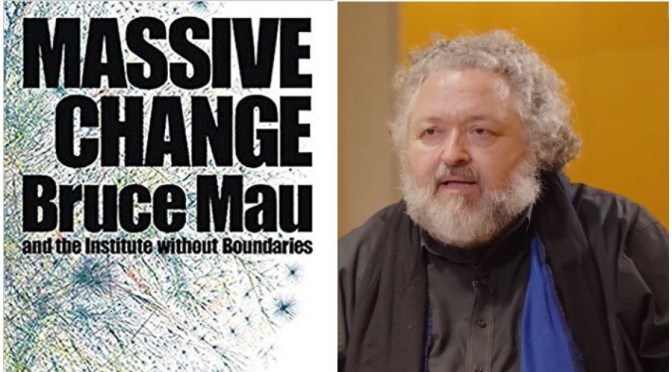
Meet the influential Canadian “design guru”, Bruce Mau, in this short video. Mau, who is the author of quintessential publications on architecture and design, shares his thoughts on how we can bring the book into the technological environment without losing its beauty and richness.
“I think it’s such a brilliant technology that if it didn’t exist today – if somehow we got to the present through technology and computers before the book – we would have to invent the book,” Maus says of the discussion surrounding the alleged ‘death of the book’. The book, he continues, is such a brilliant technology, that no computer can match: “It never crashes, it sequences narrative, which is one of the most important things we need to do to understand the world.”
Mau shares how he is working on a technology platform for books because he realized that “when we moved the book from the physical book to the digital book, we left behind the beauty of the book. We left behind the culture of the book and the experience of the book. We just took the text.” The true experience of the book, he feels, should be better incorporated into the technological environment, while adding the capacity and reach that technology offers.
Bruce Mau (b. 1959) is a Canadian designer. Mau began as a graphic designer but has later extended his creative talent to the world of architecture, art, films, conceptual philosophy and eco-environmental design. From 1985-2010, Mau was the creative director of Bruce Mau Design (BMD), and in 2003 he founded the Institute Without Boundaries in collaboration with the School of Design. In 2010, he went on to co-found The Massive Change Network in Chicago. Mau is the recipient of prestigious awards including the Chrysler Award for Design Innovation in 1998, the American Institute of Graphic Arts Gold Medal in 2007, the Philadelphia Museum of Art’s Collab Design Excellence Award in 2015, and the Cooper Hewitt 2016 National Design Award for Design Mind – for his impact on design theory, design practice and public awareness. In 1998, Mau designed a widely circulated 43 point manifest called ‘The Incomplete Manifesto for Growth’, which assists its users in forming and assessing their design process. Mau is also the author of iconic books such as ‘S, M, L, XL’ (1995) with Rem Koolhaas: an architecture compendium that quickly became a requisite addition to the shelves of creatives. In June 2020, he will publish ‘MC24’, which features essays, observations, project documentation, and design work by Mau and other high-profile architects, designers, artists, scientists, environmentalists, and thinkers of our time.
Bruce Mau was interviewed by Marc-Christoph Wagner in connection with The World Around conference (https://theworldaround.com/) in New York City in January 2020.
Though Gandhi’s projects are dramatically different in form, such consideration of their remote, subarctic backdrop connects them to one another — they “look like they could only be in Nova Scotia,” he says.
EVERY FEW DAYS, the Canadian architect Omar Gandhi migrates between Toronto, his hometown, and Halifax, the capital of Nova Scotia, where he opened his eponymous firm in 2010. A year and a half ago, Gandhi added New Haven to his weekly peregrinations — he was teaching a seminar at the Yale School of Architecture called Where the Wild Things Are, after Maurice Sendak’s 1963 children’s book.
For the final project of the semester, the professor took his class to the wind-swept island of Cape Breton (a glove-shaped appendage separated from Nova Scotia’s main peninsula by the narrow Strait of Canso) to visit Rabbit Snare Gorge — his 2013 project with the New York-based architecture firm Design Base 8 — a slender cabin that stretches 43 feet tall, like a 16th-century Mannerist portrait. Touring the surrounding plot, a 47-acre wooded slope bisected by the creek that gives the house its name, Gandhi, 40, asked his students to conceive a “campus of creatures” — a set of structures that, as he described it when we met at his Halifax studio last summer, “have an attitude and respond and look like they move.”
An inside look at how Amazon CEO Jeff Bezos built one of the largest and most influential economic forces in the world — and the cost of Amazon’s convenience.
Jeff Bezos is not only the richest man in the world, he has built a business that is without precedent in the history of American capitalism. His power to shape everything from the future of work to the future of commerce to the future of technology is unrivaled. As politicians and regulators around the world start to consider the global impact of Amazon — and how to rein in Bezos’ power — FRONTLINE investigates how he executed a plan to build one of the most influential economic and cultural forces in the world.
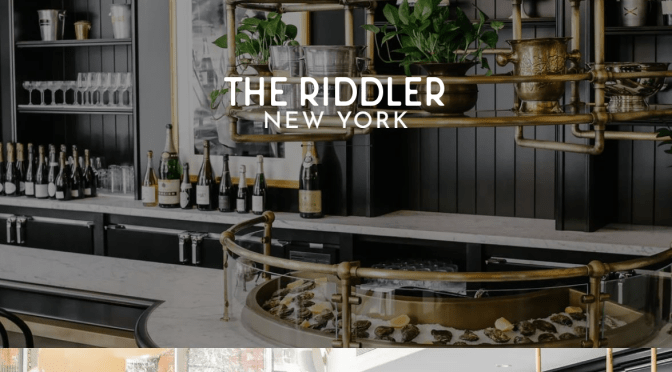
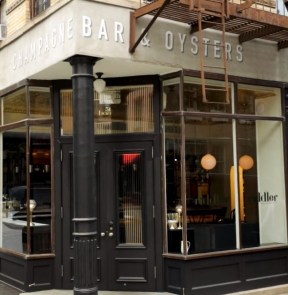
A restaurant funded solely by female investors, The Riddler is a New York City champagne bar from owner Jen Pelka.
The Riddler is a Champagne bar with locations in the heart of New York’s West Village and San Francisco’s Hayes Valley. We have over 150 Champagnes by the bottle and dozens of sparkling wines by the glass to choose from: old and new, traditional classics and unusual discoveries, by the glass and by the bottle (or magnum or 9L). At the center of each space is an old wooden backbar that we’ve lined with a collection of vintage Champagne buckets and glassware that we’ve picked up at flea markets and estate sales over the last decade.
We’re a women-led team: 100% of our investors are women and most of our management team happens to be led by a crew of women. We love serious wines but don’t take ourselves too seriously: we pair our Champagne with French-inspired seasonal comforts, serve our caviar with potato chips, and offer free popcorn all day and all night.
From a New York Times online article (February 13, 2020):
“I love physics, but what was even more important to me was leading a creative life,” Dr. Lightman said. “And I knew that writers could continue doing their best work later in life.”
Lightman is best known in literary circles for his 1992 novel, “Einstein’s Dreams,” which is all about the vicissitudes – romantic, physical and otherwise – of time. It recounts the nightly visions of a young patent clerk in Bern, Switzerland, as he struggles to finish his theory of relativity.
But before that, Dr. Lightman was an astrophysicist, a card-carrying wizard of space and time, with a Ph.D. from the California Institute of Technology and subsequent posts at Cornell and Harvard In 1989, at the peak of his prowess as a physicist, he began to walk away from the world of black holes to enter the world of black ink and the uncertain, lonely life of the writer.
Recently he was in New York for the opening of “Einstein’s Dreams,” an off-Broadway play based on his book. There have been dozens of such stage adaptations over the last 30 years.
Excerpts from a New York Times Style Magazine online article (February 10, 2020)
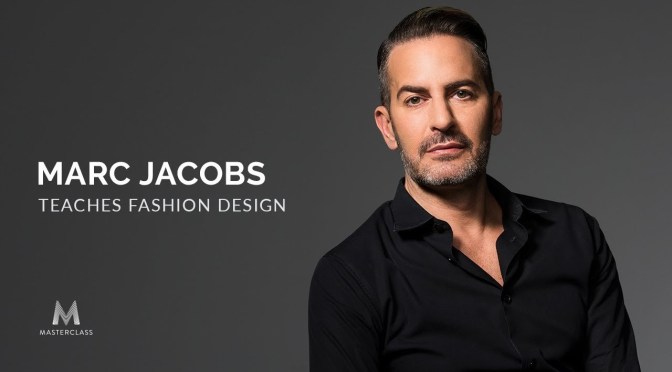
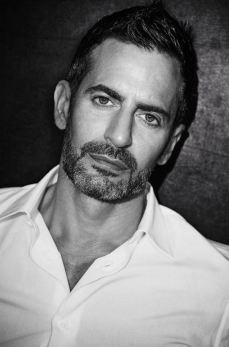
Marc Jacobs
“People want newness, and they want it from a new person. I understand that I’m not the 25-year-old who was given this incredible job at Perry Ellis, or who created the grunge collection, or who was the bad boy of the 1990s,” he said. “I am a 56-year-old man who still has the privilege of doing a collection.” But his voice was calm as he said this, full of acceptance and experience.
“THE DRIVING FORCE in my life is fear,” Marc Jacobs said.
IT WAS A bright December afternoon, a week or so before Christmas, when Jacobs and I met for the last time. I waited in the reception area of his atelier next to a sculpture of Neville, Jacobs’s bull terrier, whom I had recently begun following on Instagram (he has over 200,000 followers). I thought I could finally understand why Jacobs commands such devotion from those around him. He exudes a precariousness that is deeply affecting to anyone even dimly aware of the mysterious connection between creativity and tragedy. If he attracts protectors, it is because one cannot speak at any length to him without feeling that, as Oscar Wilde wrote about his titular character in “The Picture of Dorian Gray,” “a note of doom runs like a purple thread” through “the gold cloth” of his talent.
Monocle 24’s “The Menu” talks to Lisbon’s rising culinary talent, João Sá, owner and chef of SÁLA.
Chef João Sá
It is called SÁLA and it bears the Chef surname because here he wants to receive us as if it were the dinning room of his own house. An intimate space, where the open kitchen invites you to know the chef’s suggestions. Here the flavors will go on to the rhythm of the seasons. In a room that will seat 34 diners with a cleaned and luminous portuguese interior design.
The space is dominated by light and bright wood. This Pombaline room recovered by the ForStudio architecture studio highlights a decorative element, a central area in brushed brass. This element ties in perfectly with the other colors present in the menu and in other remarks: gold over blue.
The kitchen has been going through the life of João Sá since forever. At 12 he was already creating gastronomic events at school and at age 14, his interest in everything that was practical and manual took him to the Estoril Turism and HospitalitySchool. It was an early entry into the demanding kitchen world and the path was intense and pulse-free.

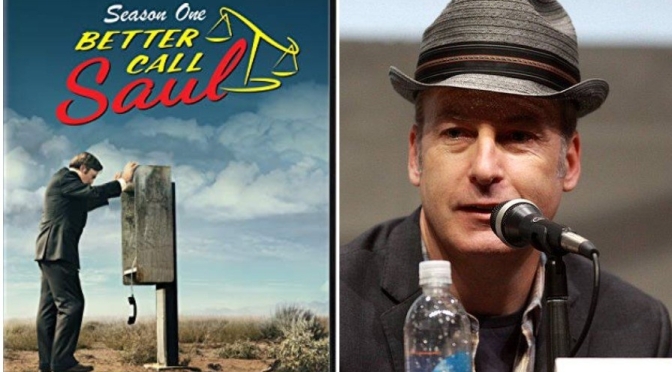
 “I don’t have this precious career as an actor that I had to preserve. I’m an older guy, I’ve had a career, and the most personal thing I’ve ever done was Mr. Show, so, in a way I’ve said my piece, so I just don’t have all that much to lose really compared to somebody who’s an actor for a living and dreaming of their own show. My daughter asked me this question. This was a kid who grew up in Hollywood. She said, “If it’s bad, how bad would it be?” And I thought, Well, it’s Vince Gilligan and Peter Gould. The worst thing it would be, would be an experiment that just didn’t pan out, but an interesting one at the very least.”




 For the final project of the semester, the professor took his class to the wind-swept island of

 A restaurant funded solely by female investors, The Riddler is a New York City champagne bar from owner Jen Pelka.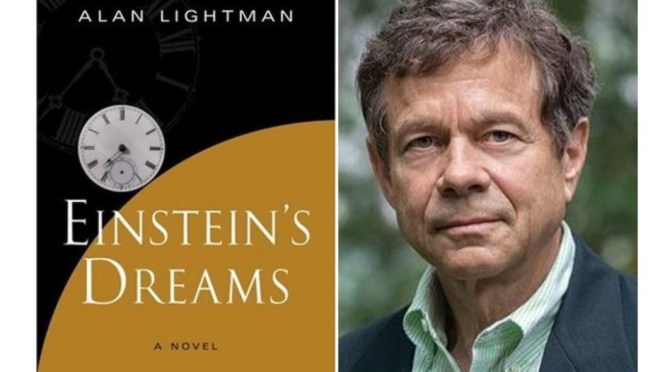

 Monocle 24’s “The Menu” talks to Lisbon’s rising culinary talent, João Sá, owner and chef of SÁLA.
 Boomers Daily