“The art world is the same as the rest of the world,” says British artist, writer, and punk-rocker Billy Childish. “What it requires is new, more, and now.” Childish has worked defiantly and prolifically outside of the mainstream since his expulsion from art school in the early 1980s. To the polymath—whose paintings, poems, novels, and music draw heavily from his autobiography—art is a deeply personal experience that should not rely on external validation, whether from critics or audiences. From his painting studio located on a historic dockyard in Kent, United Kingdom, Childish speaks passionately about the freedom that comes with self-validation. When asked about his perspective on the future of art, he demurs. “People think we’re continually ascending a mountain to success or to enlightenment,” he says. “It’s here and now and this is it.”
The greatest roles of her life were behind the scenes. Natalie Wood: What Remains Behind is an intimate portrait of actor Natalie Wood’s life and career, told through the eyes of her daughter Natasha Gregson Wagner and others who knew her best. The film celebrates the woman behind the iconic imagery and explores the compelling details of Wood’s personal life and illustrious career that are often overshadowed by her tragic death.
From an Apollo Magazine online article (March 31, 2020):
Ultimately he was a humane critic of the contemporary city, a serious, funny and poetic voice defending the powerless against big capital and an articulator of how architecture should be used as a tool of resistance. He is indelibly associated with New York, a city he loved with a fervour despite its faults, and of which he defended every inch as a public good. Number 210 in his list was the medieval German phrase ‘Stadtluft macht frei’ – ‘city air makes you free’. He will survive through his magical writing, which makes us all a little freer.
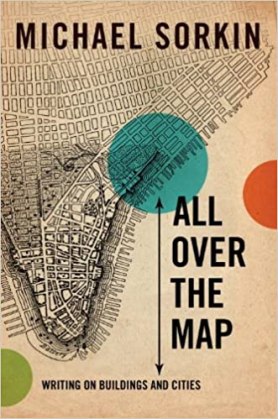
Michael Sorkin, who died last week of complications due to Covid-19, gained his reputation as the architecture critic of The Village Voice in New York, which, in the 1980s, was a publication with a formidable reach and impact on a city just beginning to boom again. He launched fierce attacks against the banality of the contemporary city, the rapacity and greed of developers (notably the current president, including in a 1985 piece entitled ‘Dump the Trump’) and the loss of great landmarks. But he was no nostalgist; he revelled in the potential of architecture to catalyse change and excoriated his contemporaries for caving in to big business, for building prisons and being complicit in a denuded public realm.
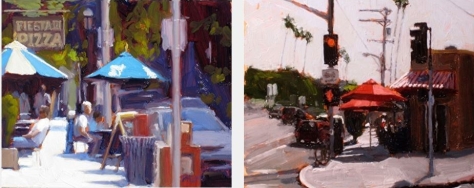
“In my paintings, I try to capture the hidden beauty found in the unexpected places and fleeting moments of everyday life. I continue to be intrigued by the urban landscapes of inner cities – their active streets, time worn buildings and multiple layers of decay, renewal and adaptation – that proudly display the effects of age and use, which I see as testaments to strength, character and authenticity in contrast with modern society’s demand for newness, imitation, disposability and easy duplication.
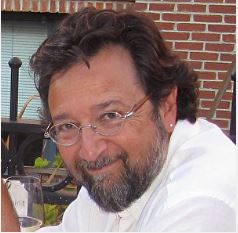
Dan Graziano is an award winning, nationally exhibited artist whose paintings capture the hidden beauty found in the unexpected places and fleeting moments of everyday life. Incorporating dramatic light, shadow, color and perspective, his compositions feature a diversity of subjects – from a simple still life to rugged coastlines, active urban life, lively cafes and bars, small rural towns and forgotten roadside relics. His work has been featured in numerous publications and is in the collections of private and corporate collectors throughout the world.
His artistic vision began taking shape in the 60’s, during America’s explosive political, cultural and artistic awakening. His first formal training focused on advertising and illustration, but a career opportunity in architecture and urban planning altered his original direction.
When he returned to painting, he was drawn to the rich complexity of the urban landscape – inspired by Edward Hopper and other urbanist painters. As an accomplished blues guitarist (his other great passion), he found the city streets, time worn buildings and multiple layers of decay and repair a visual parallel to the spirit and culture of the music.
“My work is influenced by the American realists such as Sargent, Hopper and the three generations of Wyeths along with California painters Wayne Thiebaud and Richard Diebenkorn.”
From a Yatzer.com online article (March 14, 2020):
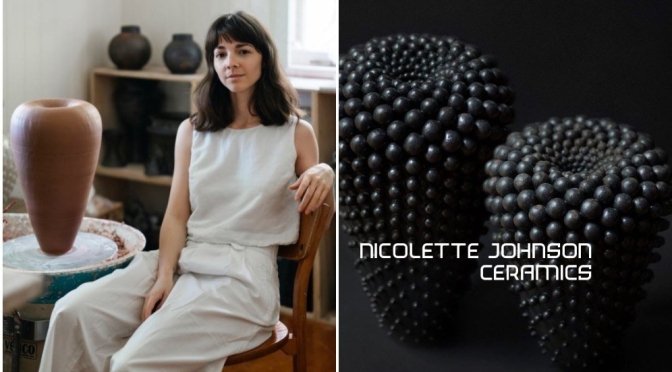
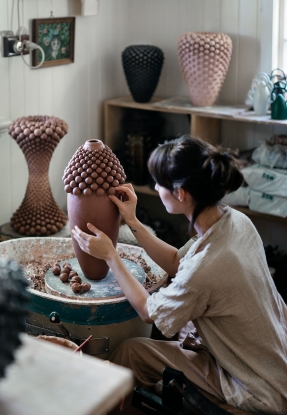
Hand-crafted through a laborious, almost ritualistic process, which sometimes has Nicolette individually sculpting and applying hundreds of protrusions to one vessel for days, her work transcends the dichotomy between artefact and artwork.
Whether it’s a reaction to the intangible aspect of our digital age, or a consequence of the trend-setting power of Instagram, there’s been a resurgence of ceramics in the last few years, both as an art form and a hobby. Perhaps it’s quite telling then that London-born, Australia-based ceramic artist Nicolette Johnson recreationally begun taking pottery classes just a few years ago as a counterbalance to her day job as a photographer.
Fast forward five years and Nicolette has distinguished herself as an acclaimed ceramist artist through the enchanting sophistication and painstaking craftsmanship of her work that channels ancient forms with contemporary precision.
Nicolette Johnson is a ceramic artist whose work explores symmetry, motifs, and the importance of the artefact.
Nicolette was born in London, England in 1990, grew up in Texas, USA, and today is based in Brisbane, Australia. Working in stoneware and employing wheel-throwing, coiling, and sculpting techniques, Nicolette applies a modern aesthetic to re-imagined ancient forms. Her work is included in the permanent collections of The National Gallery of Victoria and the Museum of Brisbane.
With a background in photographic art and social documentary, Nicolette began studying ceramics in 2015 and is continuing her practice-led exploration into functional and sculptural ceramic vessels, hand-making and firing each of her works in her Brisbane home studio.
“I draw literally and figuratively from the natural world. My drawing and mark making refer to and derive from botanical and biological anatomies, including marine life, as well as, the structures of both macro and micro cosmologies and writing systems, such as logograms.”
Sigrid Burton is an American painter, long based in New York City, whose semi-abstract work is known for its use of expressive, atmospheric color fields and enigmatic allusions to natural and cultural realms. Burton has had solo exhibitions in New York City, Los Angeles, San Francisco, Chicago and Osaka, including at Artists Space and the Michael C. Rockefeller Arts Center, and been included in shows at A.I.R. Gallery, the John and Mable Ringling Museum of Art, and the Carnegie Art Museum, Oxnard. Her work belongs to the public collections of the Metropolitan Museum of Art, Rockefeller Foundation, and Palm Springs Desert Museum, and has been reviewed in Arts Magazine, Arts & Antiques, Jung Journal, Chicago Tribune and LA Weekly.
Writers most frequently observe that Burton’s atmospheric works recall artists such as J.M.W. Turner, Odilon Redon, Pierre Bonnard and Mark Rothko, as well as the light of her native California.Art & Antiques described her approach as “chromatic expressionism” in which color is “her undisputed protagonist”. Peter Frank observed, “The dialectic between color and form has always inflected, even impelled” Burton’s painting, with color the more omnipresent element, and form the more persistent. Art historian William C. Agee wrote, “The domains she explores […] meet, intersect, fuse, and then disappear, like apparitions, in liquid pools of mist and color. Her pictorial odyssey refers simultaneously to both a higher order, a timeless cosmic vastness, as well as to a private, interior world, abounding in personal histories and memories.” Burton has lived and worked in Pasadena, California since 2013.
“Kenny Rogers took portraits and western landscape photos like no other. He was passionate and fell in love with the warmth and beauty that captured all that he saw through a lens,” says Patty Wente IPHF CEO and President.
“One Tree” – Kenny Rogers
The International Photography Hall of Fame and Museum mourns the passing of its first Lifetime Achievement Award Winner and 2017 inductee Kenny Rogers. Rogers was a dedicated and talented photographer for nearly four decades. His best-known images are portraits of well-known singers, actors, and dignitaries from around the globe.
“The Thumb” – Kenny Rogers
In addition, he had an ongoing passion for photographing the American landscape. Rogers was skilled with his large format view camera, and loved to make prints in his darkroom. Regarding his photography, he said, “I am an impulsive obsessive. I impulsively get involved with something, and then I get obsessed with it. So that’s what happened with photography.”
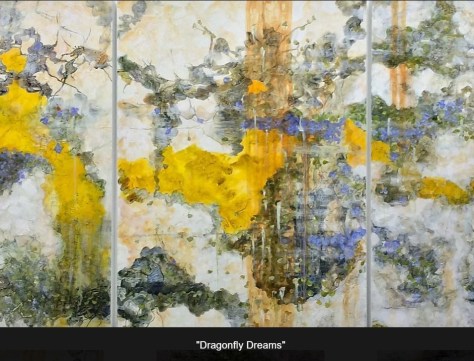
My paintings on clay panels begin with thin veils of paint that drip, pool and congeal, and like nature, move out of my control, beautifully mysterious. I work intuitively within these initial drips and pools, searching for structure. Each successive stroke of paint or pencil mark continues to build a dreamlike otherworldly place. The mood is one of nature untamed, enchanting and rife with hidden secrets.
My paintings are my connection to the Earth, its nature and beautiful mysteries. There is a sadness as I witness the loss of our last wild places. My paintings are an attempt to keep alive those places and offer my audience a sanctuary in which to reflect.
Riitta Klint is from Helsinki, Finland and currently lives in Fort Worth, Texas and maintains a studio in nearby Aledo. Between these two places is a lifetime spent traveling the world thanks to her father’s career with IBM. Living in her native Finland, as well as in Iran, Portugal, Indonesia, Germany, Mexico, and the United States, together with extensive travel in Asia and Europe has shaped her unique vision and palette. Her work offers the viewer a front seat to that journey, and a threshold to cross over into their own imagination.
Klint works primarily in acrylic and pencil on Claybord™, smooth kaolin clay covered panels that offer the ideal surface for her manipulation of color and medium.
Miller’s Penguin book covers and ironic titles catch the art world’s eye
These covers are closer to still life studies, rather than two-dimensional posters. Experimenting with different paper sizes and angles, he occasionally shows their spines, and the shadows they cast. It is a celebration of books as treasured objects. His drawings – in particular his studies for his large-scale oil paintings with their notes scribbled down the margins – are some of his most intimate works to date.
The ensuing images are humorous, sardonic and nostalgic at the same time, while the painting style hints at the dog-eared, scuffed covers of the Penguin classics themselves.
Starting with Jay Jopling in 1996, when Miller exhibited in a group show at London’s Institute of Contemporary Art, his works have garnered many a famous fan. Amongst which are AC/DC’s guitarist Angus Young, David Bailey, and Elton John – whose work amusingly, if a little painfully, bears the title ‘International Lonely Guy.’
George Michael, with his Harland Miller piece ‘Incurable Romantic Seeks Dirty Filthy Whore‘ commanded £237,500 in the posthumous auction of his art collection last year.
Underappreciated in her lifetime, the career of late Irish architect and designer Eileen Gray is the subject of a timely new exhibition at The Bard Graduate Center Gallery in New York. Jennifer Goff, curator of the Eileen Gray collection at the National Museum of Ireland, tells us more.
Eileen Gray (born Kathleen Eileen Moray Smith; 9 August 1878 – 31 October 1976) was an Irish architect and furniture designer and a pioneer of the Modern Movement in architecture. Over her career, she was associated with many notable European artists of her era, including Kathleen Scott, Adrienne Gorska, Le Corbusier, and Jean Badovici, with whom she was romantically involved. Her most famous work is the house known as E-1027 in Roquebrune-Cap-Martin, France.
From 1922/1923 to 1926 Gray created an informal architectural apprenticeship for herself as she never received any formal training as an architect. She studied theoretical and technical books, took drafting lessons, and arranged to have Adrienne Gorska take her along to building sites. She also traveled with Badovici to study key buildings and learned by reworking architectural designs.
In 1926, she started work on a new holiday home near Monaco to share with Badovici. Because a foreigner in France couldn’t wholly own property, Gray bought the land and put it in Badovici’s name, making him her client on paper. Construction of the house took three years and Gray remained on site while Badovici visited occasionally.
Renewed interest in Gray’s work began in 1967 when historian Joseph Rykwert published an essay about her in the Italian design magazine Domus. After the publishing of the article many “students began to ring at her door” as eager to learn from the now famous designer.
At a Paris auction of 1972, Yves Saint Laurent bought ‘Le Destin’ and revived interest in Gray’s career.
The first retrospective exhibition of her work, titled ‘Eileen Gray: Pioneer of Design’, was held in London in 1972. A Dublin exhibition followed the next year. At the Dublin exhibit, the 95 year old Gray was given an honorary fellowship by the Royal Institute of the Architects of Ireland.
In 1973 Gray signed a contract to reproduce the Bibendum chair and many of her pieces for the first time. They remain in production.
Eileen Gray died on Halloween 1976. She is buried in the Père Lachaise cemetery in Paris, but because her family omitted to pay the licence fee her grave is not identifiable.

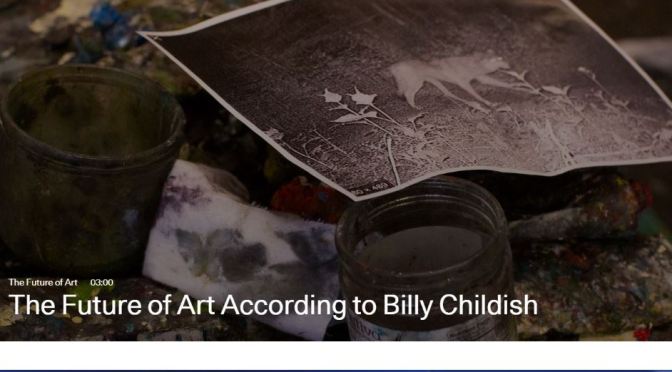
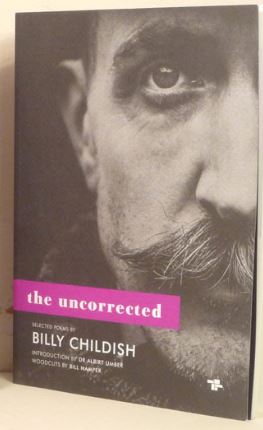 “The art world is the same as the rest of the world,” says British artist, writer, and punk-rocker Billy Childish. “What it requires is new, more, and now.” Childish has worked defiantly and prolifically outside of the mainstream since his expulsion from art school in the early 1980s. To the polymath—whose paintings, poems, novels, and music draw heavily from his autobiography—art is a deeply personal experience that should not rely on external validation, whether from critics or audiences. From his painting studio located on a historic dockyard in Kent, United Kingdom, Childish speaks passionately about the freedom that comes with self-validation. When asked about his perspective on the future of art, he demurs. “People think we’re continually ascending a mountain to success or to enlightenment,” he says. “It’s here and now and this is it.”
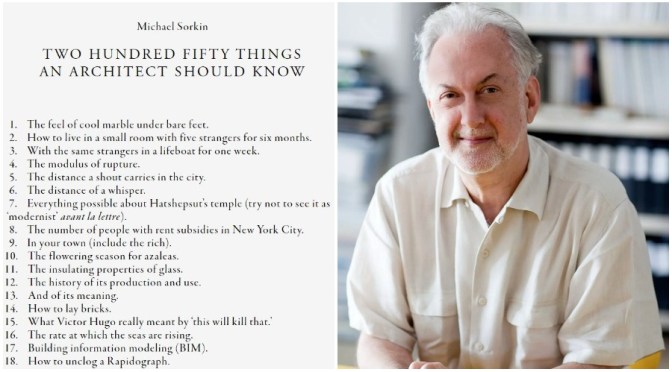
 Ultimately he was a humane critic of the contemporary city, a serious, funny and poetic voice defending the powerless against big capital and an articulator of how architecture should be used as a tool of resistance. He is indelibly associated with New York, a city he loved with a fervour despite its faults, and of which he defended every inch as a public good. Number 210 in his list was the medieval German phrase ‘Stadtluft macht frei’ – ‘city air makes you free’. He will survive through his magical writing, which makes us all a little freer.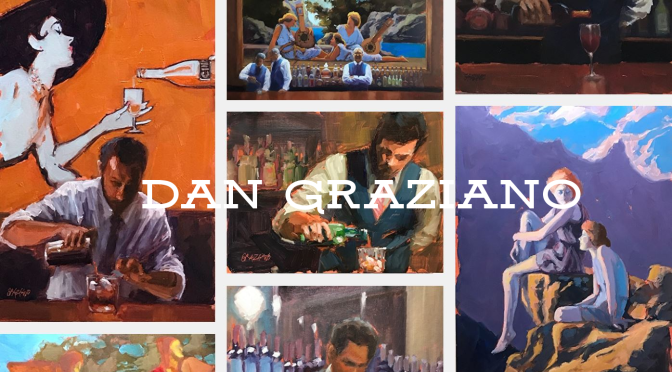
 Whether it’s a reaction to the intangible aspect of our digital age, or a consequence of the trend-setting power of Instagram, there’s been a resurgence of ceramics in the last few years, both as an art form and a hobby. Perhaps it’s quite telling then that London-born, Australia-based ceramic artist


 The International Photography Hall of Fame and Museum mourns the passing of its first Lifetime Achievement Award Winner and 2017 inductee Kenny Rogers. Rogers was a dedicated and talented photographer for nearly four decades. His best-known images are portraits of well-known singers, actors, and dignitaries from around the globe.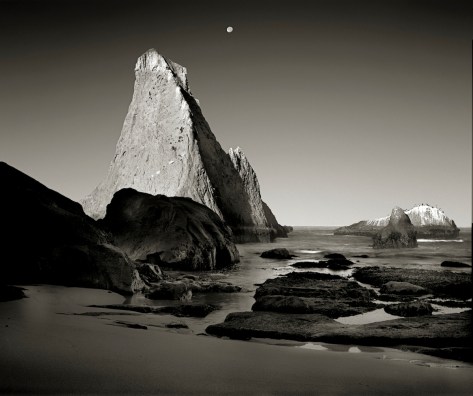

 There is a sadness as I witness the loss of our last wild places. My paintings are an attempt to keep alive those places and offer my audience a sanctuary in which to reflect.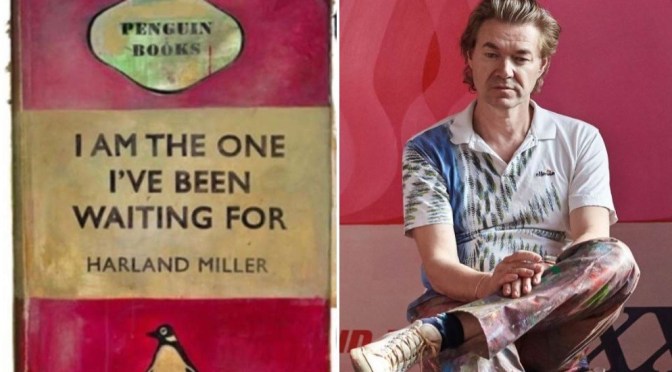
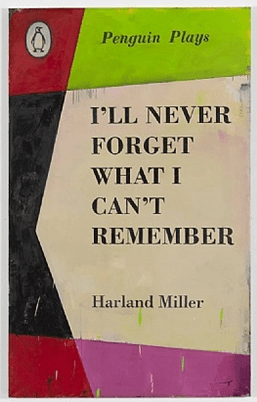 Miller’s Penguin book covers and ironic titles catch the art world’s eye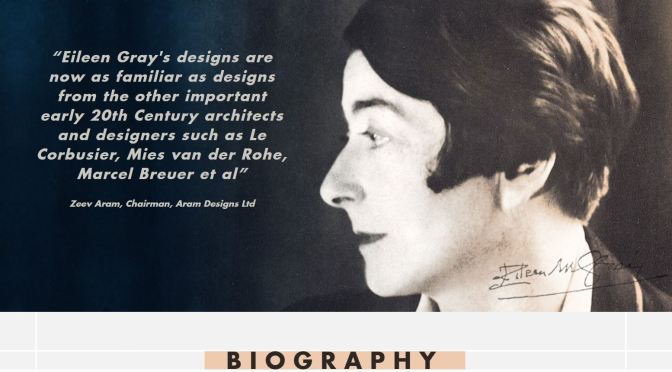
 Underappreciated in her lifetime, the career of late Irish architect and designer Eileen Gray is the subject of a timely new exhibition at The Bard Graduate Center Gallery in New York. Jennifer Goff, curator of the Eileen Gray collection at the National Museum of Ireland, tells us more.
 Boomers Daily