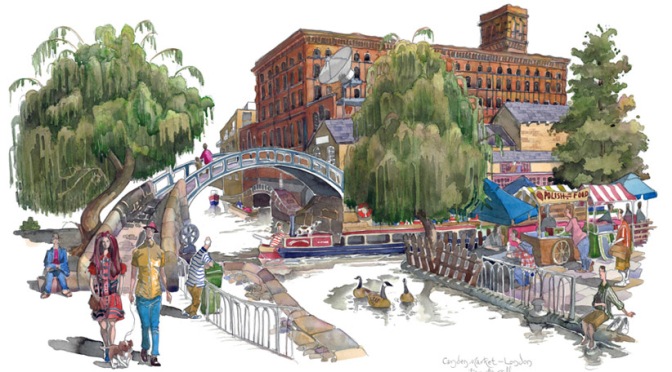
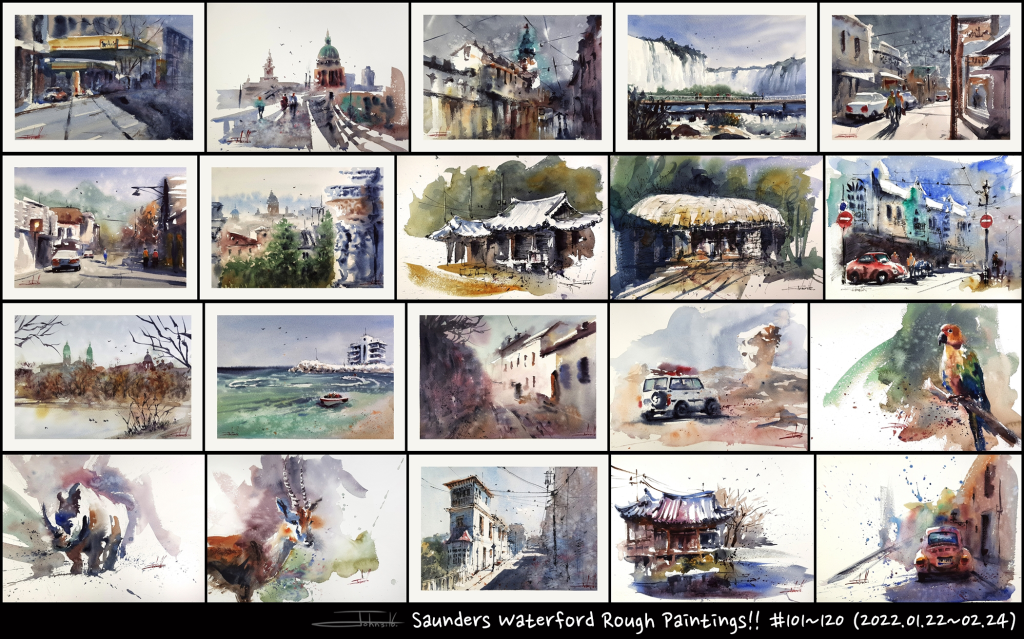
I like to get in front of my subjects “en plein air” if I can. Even in my allotment pictures (which are partly from imagination) the core elements are taken from real allotments. Working on site you get so much more from what you are trying to capture, I also get to chat to passersby who feed into my work with their rich stories and conversation. For me working purely in the studio would be like painting through a letter box.
In regards to perspective, the early part of my career was drawing and airbrushing full 3D cutaways of fighters and ships for the MoD so I know a fair bit about getting perspective right if I need to.
Accurate perspective however is all well and good, although in creative terms it can only deliver so much. I tend to adjust and push things about until it feels right. If that means geometric perspective is abandoned then that’s fine. It’s all about the overall impression.
The MICHELIN Guide takes you on a trip to Slovenia to discover the treasures of this country, its chefs, its products and its producers. Following the launch of the MICHELIN Guide Slovenia in september 2021, we take a closer look at Mahorčič, run by chef Ksenija Mahorčič.
Chef Ksenija’s cuisine is a real homage to these brave women farmers, influenced by the traditional ways to preserve and ferment fresh produce. Her plates are strictly local and seasonal. Thanks to her new MICHELIN Green Star, she hopes to convince more and more food industry professionals, including hygiene inspectors, that there are alternatives to plastic and aluminum in a restaurant’s kitchen.
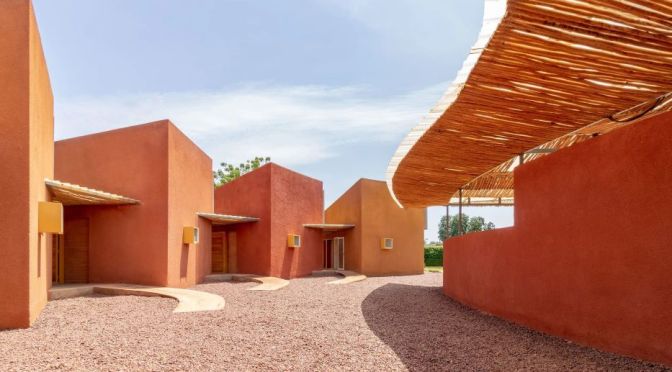
"In a world where architects are building projects in the most diverse contexts -not without controversies- Kéré contributes to the debate by incorporating local, national, regional and global dimensions in a very personal balance…and truly sophisticated multiculturalism." pic.twitter.com/oeZIdEgYae
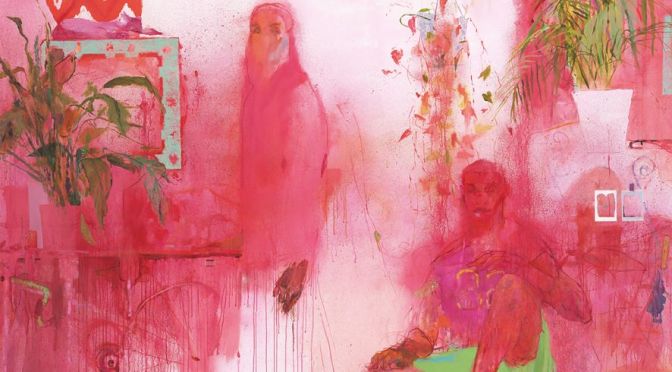
Join Jane Panetta, the Nancy and Fred Poses Curator and Director of the Collection, as she discusses key works from Jennifer Packer’s exhibition of paintings and drawings.
Jennifer Packer is an American painter living and working in New York City. In 2020, she won the Hermitage Greenfield Prize and the Rome Prize. Packer won the Rome Prize at the American Academy in Rome 2020-2021.
Jennifer Packer: The Eye Is Not Satisfied With Seeing was initiated by Serpentine and curated by Melissa Blanchflower, Curator, Exhibitions and Public Art with Natalia Grabowska, Assistant Curator. The presentation at the Whitney is organized by Rujeko Hockley, Arnhold Associate Curator, and Jane Panetta, Nancy and Fred Poses Curator and Director of the Collection, with Ambika Trasi, Curatorial Assistant.
Is Francis Bacon really the greatest painter of the 20th century?
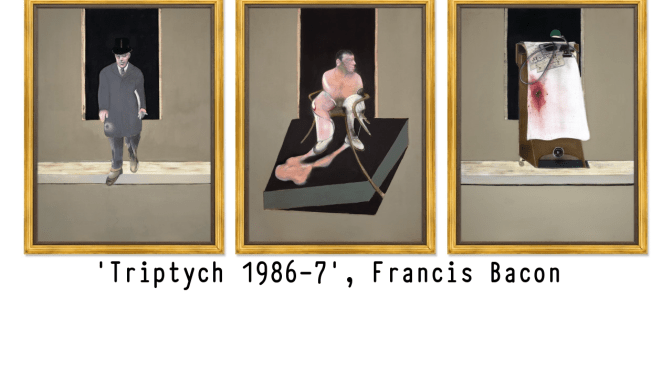
It was not an enormous surprise that an exhibition of works by Francis Bacon at the Royal Academy that is supported by Christie’s should swiftly be followed by an announcement of the auction house offering a large work for sale. Triptych 1986-7, whose central panel depicts the artist’s partner John Edwards, with Woodrow Wilson on one side and the assassinated Trotsky’s study on the other, is being offered in the sale that takes place on 1 March with an estimate of £35m–£55m. Nor is it a surprise that an auction house should drum up interest in one of their lots using superlatives. But Rakewell was a little taken aback by the claim on Instagram from a Christie’s specialist that ‘Francis Bacon is unmistakably on of the greatest painters of the 20th century.’
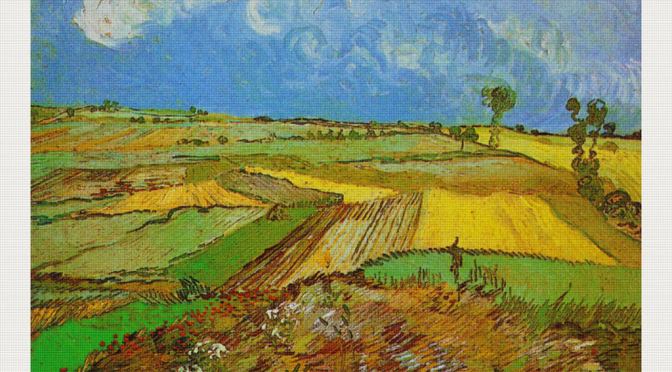
Wheat Fields after the Rain (The Plain of Auvers) – 1890
Wheat Fields is a series of dozens of paintings by Dutch Post-Impressionist artist Vincent van Gogh, borne out of his religious studies and sermons, connection to nature, appreciation of manual laborers and desire to provide a means of offering comfort to others. The wheat field works demonstrate his progression as an artist from the drab Wheat Sheaves made in 1885 in the Netherlands to the colorful and dramatic 1888–1890 paintings from Arles, Saint-Rémy and Auvers-sur-Oise in rural France.
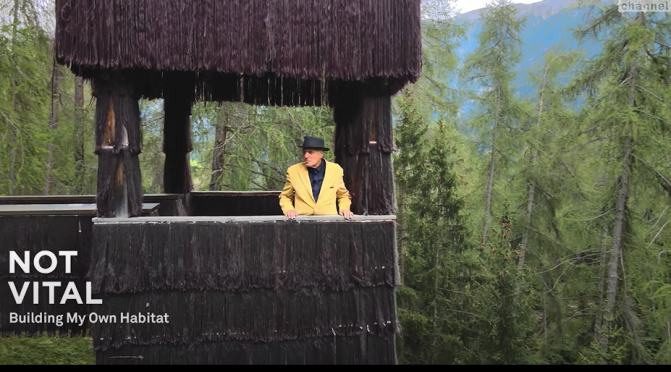
“If you’re a painter, you need a canvas. If you’re a sculptor, you need marble or plaster. And if you build a house, you need a piece of land.” Welcome to the wonderful world of Not Vital. The Swiss multi-faceted artist shows us his sculpture park, foundation, and castle in this video.
We meet Not Vital in his studio in Sent, the town in Switzerland where he grew up and one of the places where he still lives. Building places to live have been with him since childhood: “My first work was more related to trying to build a house or a habitat. The first one was when I was only three years old in 1951. There was so much snow that my brother and I built a tunnel,” he says and continues: “I think that it was the first time I realised that I like to build my own habitat.
Even though it was much more comfortable to live in the house, I spent the day in the tunnel. I remember the light, the smell of the snow. I just felt great.” Through the years, Vital has led a nomadic life, seeking and building homes in various cities around the globe: Paris, New York, Beijing, Rio de Janeiro. He has bought an island made of Marble in Patagonia, called NotOna.
In Niger, he has built a house whose only purpose is to watch the sunset. He calls these hybrids of sculpture and architecture ‘Scarch’: “It opened up a whole new world for me, which became very important. I’m calling that ‘Scarch’ because it’s a kind of sculpture and architecture. Because I’m not an architect, I didn’t want to be an architect or study architecture because I would probably have gone in a different direction.” Buying pieces of land worldwide is essential for his artistic practice.
He explains: “If you’re a painter, you need a canvas. If you’re a sculptor, you need marble or plaster. And if you build a house, you need a piece of land. That’s kind of all related.” ‘Scarch’ is not the only thing Vital makes. He also creates sculptures in silver, makes humorous wordplays with antlers and paints portraits: “I want to show the way I see. I don’t want to change anything.”
The portraits he started painting in 2008. Often they depict the people surrounding him. Other times, it is significant artists such as a young Rembrandt and Nina Simone. “When I paint, I think about a lot of Rothko. The colours. How to put two colours together. But of course, this is figurative,” Vital reflects and continues: “Actually, they have everything in it. They have eyes and noses.
And that’s great by painting that whatever you put in the canvas stays in the canvas. Even though you paint it over, it’s still there.” Not Vital does not differ between the many different artforms he works with: “Art is one. It doesn’t matter if it’s the 15th century or if it’s now. It’s all related.” Not Vital (b. 1948) is a Swiss artist who works in diverse media across installations, paintings, drawings and sculptures, typically integrating architecture. Vital divides his time between the U.S., Niger, Italy, China and Switzerland, and his art is centred on personal impressions and experiences from around the world. This somewhat anthropological approach is also reflected in how his career is structured into sections, e.g. glass blowers in Murano or paper artists in Bhutan. Vital’s work has been featured in the 49th Venice Biennale in Italy (2001), and he has held significant exhibitions at prominent venues such as the Kunsthalle Bielefeld in Germany (2005), The Arts Club of Chicago in the U.S. (2006), Ullens Center For Contemporary Art in Beijing, China (2011), the Museo d’arte di Mendrisio in Switzerland (2014-15) and Galerie Thaddaeus Ropac, London (2021).
News, Views and Reviews For The Intellectually Curious







 Boomers Daily