Tag Archives: Books

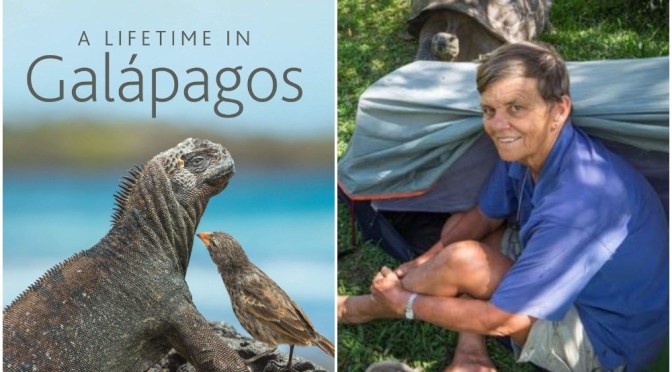
New Wildlife Books: “A Lifetime in Galápagos” By Tui De Roy (Princeton)

Featuring hundreds of breathtaking color photos, this stunning book guides you into labyrinthine mangroves to observe nesting herons, to misty cloud forests to glimpse flycatchers and orchids, high onto erupting volcanoes, and into the ocean to swim with hammerhead sharks. 

A beautifully illustrated and deeply personal chronicle of De Roy’s lifelong connection with these spectacular islands
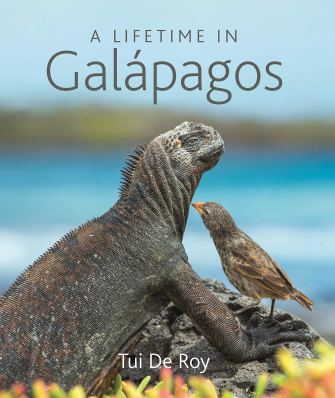
A Lifetime In Galapagos - Tui De Roy - Princeton Press - July 20 2020Tui De Roy was a year old in 1955 when her family left Europe, boarding a banana boat bound for the Pacific to lead a different sort of life in Galápagos, one of self-sufficiency and living close to nature. She grew up on the islands and returned to them often over the next five decades. Discovering photography at a young age, she has dedicated her life to recording the islands’ natural history in infinite detail. A Lifetime in Galápagos is De Roy’s intimate portrait of one of the most spectacular places on Earth, presenting the wildlife and natural wonders of Galápagos as you have never seen them before.

De Roy’s lens provides up-close encounters with orca and sperm whales, colonies of iguanas, and the giant tortoises of Alcedo Volcano. She paints unforgettable portraits of her childhood in Galápagos―the islands at night under the stars of the Milky Way, sea lions at play and on the hunt, the diverse birdlife of Galápagos, and much more.

Blending striking images with vivid prose, A Lifetime in Galápagos also discusses the threats that global warming and other environmental challenges pose to the archipelago’s unique wildlife and fragile habitats.
Read more or purchase

New Arts & Culture Books: “La Colombe d’Or – Saint Paul de Vence” (Assouline)

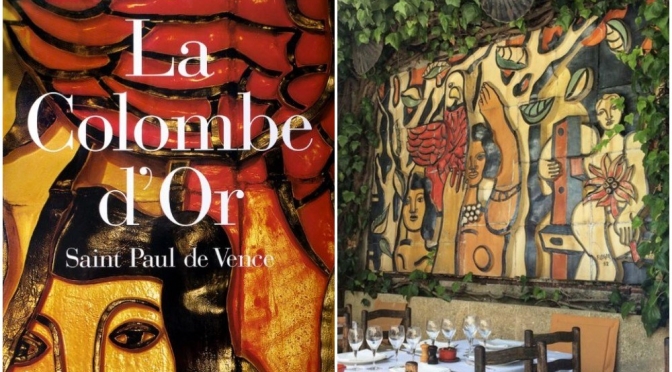
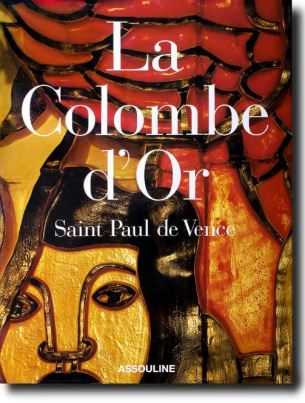
La Colombe d'Or - Assouline“Provence has a treasure; it’s a Colombe d’Or. It has the precious scent of thyme and nostalgia and the golden colour of olive oil and happy days. The Colombe is a part of my life. For me, it’s a place that’s as full of promise as of magnificent memories. The Colombe is indefinable, inimitable. I’m happy that today a book brings back the atmosphere of this place which is like no other in the world.”
La Colombe d’Or hotel and restaurant in the South of France is known all over the world as a privileged place where the Provençal art de vivre goes hand in hand with an astonishing private COLLECTION of modern art.

La Colombe d'Or - Assouline

First opened in 1920 as Chez Robinson, a café-bar with an open-air terrace, it quickly became a very popular meeting place and expanded into a small hotel and restaurant. The friendly atmosphere together with owner Paul Roux’s deep interest in the arts attracted many artists of the day, and the walls were soon covered by paintings, often exchanged for a stay or a few meals. As regular visitors to this beautiful place, Matisse, Braque, Léger, Calder, César, and many other artists have left magnificent works that now form part of the unique setting, including splendid pages in the fascinating guest books—presented to the world for the first time in this volume—in which the greatest artists of our time have drawn and signed moments of happiness. The next generation of the Roux family continues to care for the Colombe d’Or, and the art COLLECTION is still growing today.

Read more or purchase

Top New Art Books: “The Irascibles: Painters Against The Museum – New York, 1950” (July 2020)

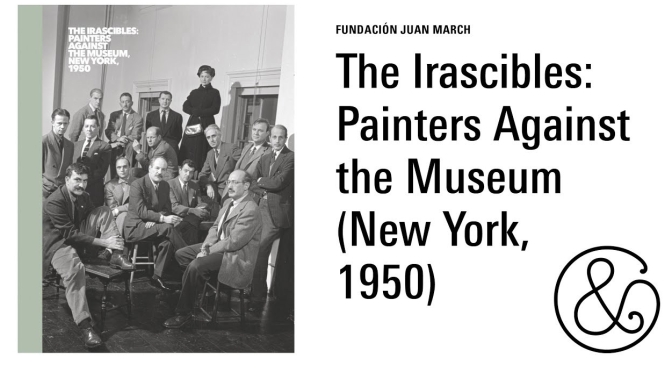
The first documentation of the legendary 1950 showdown between 18 leading abstract expressionists and the Metropolitan Museum of Art

In 1950, 18 American abstract painters signed an open letter addressed to the president of the Metropolitan Museum of Art to express their intense disapproval of the museum’s contemporaneous exhibit American Painting Today: 1950. The artists were William Baziotes, James Brooks, Fritz Bultman, Jimmy Ernst, Adolph Gottlieb, Hans Hofmann, Weldon Kees, Willem de Kooning, Robert Motherwell, Barnett Newman, Jackson Pollock, Richard Pousette-Dart, Ad Reinhardt, Mark Rothko, Theodoros Stamos, Hedda Sterne, Clyfford Still and Bradley Walker Tomlin.

This artistic coalition, which included many members of the New York School and is now considered a watershed movement in mid-20th-century American art history, challenged the museum’s policies for their narrow understanding of what made certain art worth exhibiting. Though they resisted being labeled as a collective, media coverage of the museum boycott, which included a now-famous group portrait in Life magazine taken by photographer Nina Leen, ultimately contributed to the success of the 18 “irascibles” in what became known as the abstract expressionist movement.

This publication collects 18 paintings by the artists, images from Leen’s photoshoot and extensive documentation of the letter-writing process with relevant catalogs and magazines. Featuring more than 230 illustrations alongside original essays by several art historians and curators that examine the complex history of the New York School, this volume serves as a time capsule of the exciting period of early abstract expressionism in the United States.

Read more or purchase

Health & Nature Books: “The Well-Gardened Mind” By Sue Stuart-Smith (2020)

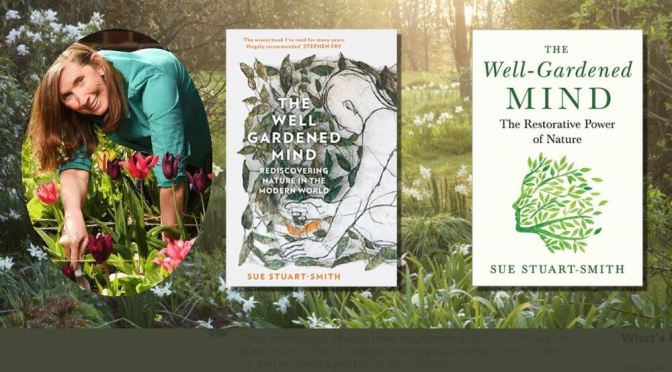
 ‘The Well-Gardened Mind’ provides a new perspective on the power of gardening to change people’s lives. Here, Sue Stuart-Smith investigates the many ways in which mind and garden can interact and explores how the process of tending a plot can be a way of sustaining an innermost self.

A distinguished psychiatrist and avid gardener offers an inspiring and consoling work about the healing effects of gardening and its ability to decrease stress and foster mental well-being in our everyday lives.

The garden is often seen as a refuge, a place to forget worldly cares, removed from the “real” life that lies outside. But when we get our hands in the earth we connect with the cycle of life in nature through which destruction and decay are followed by regrowth and renewal. Gardening is one of the quintessential nurturing activities and yet we understand so little about it.

Stuart-Smith’s own love of gardening developed as she studied to become a psychoanalytic psychotherapist. From her grandfather’s return from World War I to Freud’s obsession with flowers to case histories with her own patients to progressive gardening programs in such places as Rikers Island prison in New York City, Stuart-Smith weaves thoughtful yet powerful examples to argue that gardening is much more important to our cognition than we think. Recent research is showing how green nature has direct antidepressant effects on humans. Essential and pragmatic, The Well-Gardened Mind is a book for gardeners and the perfect read for people seeking healthier mental lives.

Read more or purchase

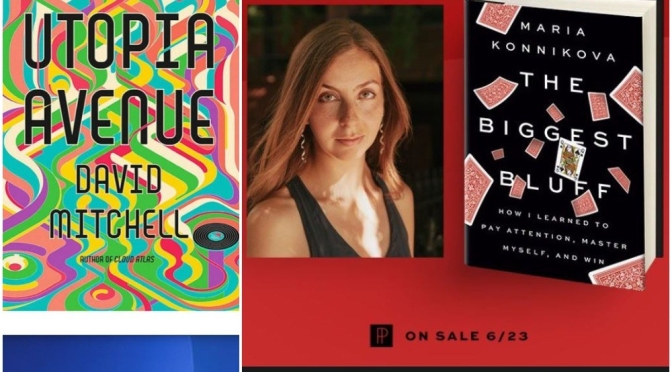
New Book Review Podcast: “Utopia Avenue” And “The Biggest Bluff” (NY Times)

The Book Review - NY TimesDaniel Mendelsohn discusses Mitchell’s career and new novel, “Utopia Avenue,” and Maria Konnikova talks about “The Biggest Bluff.”
New Astronomy Books: “Expanding Universe – The Hubble Space Telescope”

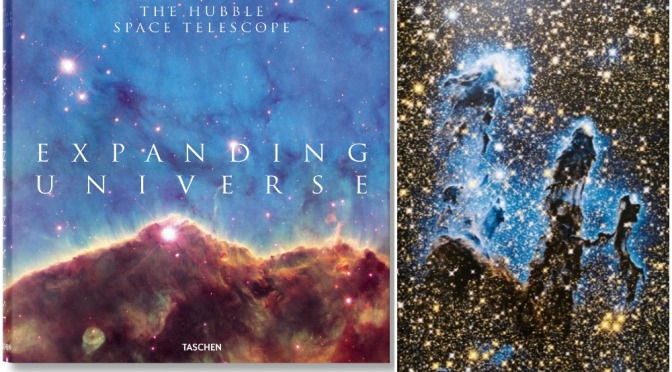
With investigations into everything from black holes to exoplanets, the Hubble Telescope has changed not only the face of astronomy but also our very sense of being in the universe. On the 30th anniversary of its launch into low-earth orbit, this updated edition of Expanding Universe presents 30 brand new images, unveiling more hidden gems from the Hubble’s archives.

Expanding Universe - The Hubble Space Telescope - Taschen June 2020

Ultra-high resolution and taken with almost no background light, these pictures have answered some of the most compelling questions of time and space while also revealing new mysteries, like the strange “dark energy” that sees the universe expanding at an ever-accelerating rate.

The collection is accompanied by an essay from photography critic Owen Edwards and an interview with Zoltan Levay, who explains how the pictures are composed. Veteran Hubble astronauts Charles F. Bolden, Jr. and John Mace Grunsfeld also offer their insights on Hubble’s legacy and future space exploration.

The contributors

Charles F. Bolden, Jr., Major General, USMC (Ret.), is a former Administrator of NASA, where he oversaw the completion of the International Space Station. He spent 14 years as a member of NASA’s Astronaut Corps, and commanded and piloted the Space Shuttle Discovery on STS-31, which launched the Hubble Space Telescope into orbit.

Owen Edwards has written about photography for more than 30 years for numerous publications including American PhotographerNew York Times Magazine, and Smithsonian.

John Mace Grunsfeld, PhD, is an astrophysicist and a NASA astronaut. He has flown five times on the Space Shuttle, including three Hubble servicing missions. He has served as the Associate Administrator for the Science Mission Directorate, the NASA Chief Scientist, and as the Deputy Director of the Space Telescope Science Institute.

Zoltan Levay is a retired principle science visuals developer at the Space Telescope Science Institute, where he worked with astronomers and communicators worldwide to publicize science results from NASA’s Hubble Space Telescope.

Read more or purchase

Art & Photography Books: “Massimo Listri -Cabinet of Curiosities” (Taschen)

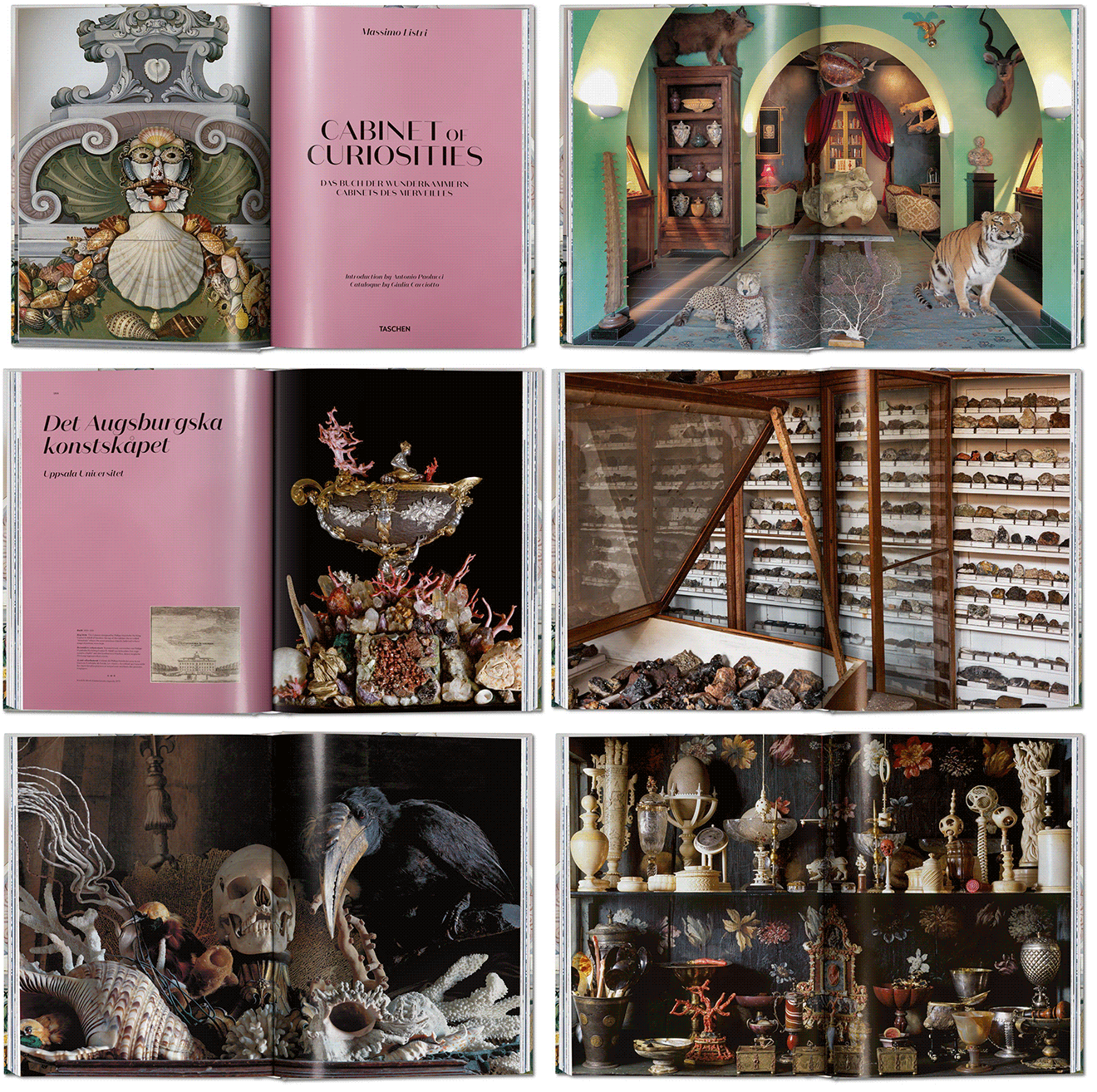
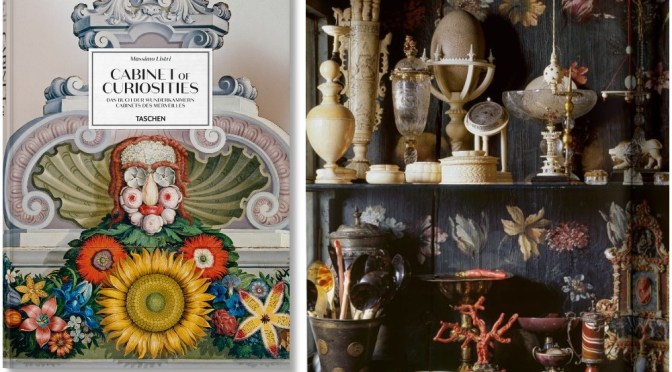
From the Grand Duke Francesco I de’ Medici and Holy Roman Emperor Rudolf II to Archduke Ferdinand II of Habsburg, these aristocratic virtuosos acquired, selected, and displayed the objects in real-life catalogues that represented the entire world—spanning architecture, interior design, painting, sculpture, gemology, geology, botany, biology and taxonomy, astrology, alchemy, anthropology, ethnography, and history.

Listri

The Wunderkammer, or “cabinet of curiosities,” saw collectors gathering objects from many strands of artistic, scientific, and intellectual endeavor, in an ambitious attempt to encompass all of humankind’s knowledge in a single room.

Marvel at the unicorn horns (narwhal tusks), gems, rare coral growths, Murano glasswork, paintings and peculiar mechanical automata. Browse through illustrations of exotic and mythical creatures and discover the famed “Coburg ivories,” an astounding collection of crafted artifacts. These collections are nothing short of a journey through time, from the Renaissance and Age of Discovery, the Mannerist and Baroque periods, up to the present day. Although many of these cabinets of curiosities no longer exist, others have been meticulously reconstructed, and new ones born.

These marvelous cabinets of curiosities can now be explored by all in this XXL collection. To realize this mammoth undertaking, Massimo Listri traveled to seven European countries over several decades; the result is a set of gorgeous photographs, an authoritative yet accessible introduction, and detailed commentary on each of the 19 chambers highlighting the most remarkable items in each collection. Discover how these timeless treasures both describe and defined civilization, the modern concept of the museum, and our very knowledge of the universe.

The authors

Giulia ML Carciotto graduated in art history from the Sapienza University in Rome. She was a Research Fellow at the Warburg Institute in London, where she also worked for Christie’s. She was editor-in-chief of the art publisher Franco Maria Ricci Editore in Milan, and now teaches at the Academy of Fine Arts in Palermo and at the Abadir Academy in Catania.

Antonio Paolucci studied art history under Roberto Longhi in Florence and began his career in the management of cultural heritage. He was the Superintendent of Cultural Heritage in Venice, Verona, and Mantua. He later became Director of the Opificio delle Pietre Dure in Florence and, for almost twenty years, the Superintendent for the Polo Museale Fiorentino. Most recently, Paolucci was the Director of the Vatican Museums from 2007 to 2016. A specialist in Italian Renaissance art, he is the author of museum and exhibition catalogues, as well as publications on Donatello, Piero della Francesca, Michelangelo, Raphael, and Benvenuto Cellini, among others.

Read more or purchase

Podcast Interviews: Alexander Vreeland On His Fashion Journalist Grandmother “Diana”

The StackAlexander Vreeland, grandson of fashion journalist Diana Vreeland, tells us about his new book, ‘Bon Mots: Words of Wisdom from the Empress of Fashion’.
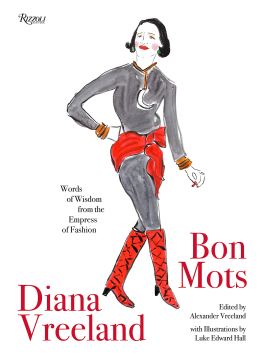
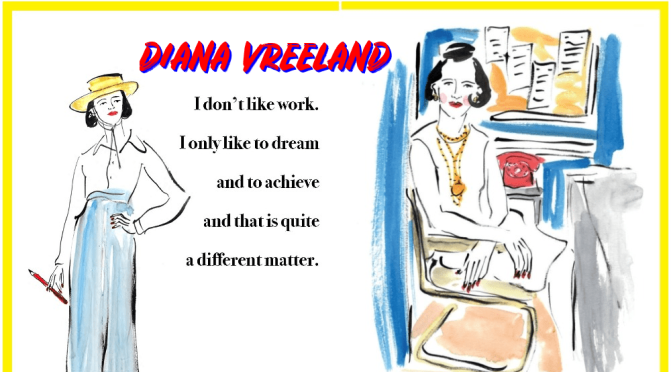
81vcK3Ok10LDiana Vreeland’s insightful edicts and evocative aphorisms remain her strongest legacy. She looked at life as a romantic and lived through dreams and imagination. Showing leadership, vision, and timeless wit, this book celebrates her visionary words that not only transformed the world of fashion, but also gave us sage advice to live by.
Sourced and edited by her grandson Alexander, Diana Vreeland: Bon Mots covers Vreeland’s incisive views of subjects such as allure, fashion, and style (“I mean, a new dress doesn’t get you anywhere; it’s the life you’re living in the dress”); beauty (“The neck is the beginning and end of looking like anybody”); age (“The quickest way to show your age is to try to look young”); color (“Black is the hardest color to get right–except for gray”); and her powerfully creative way of thinking (“I’m looking for the suggestion of something I’ve never seen”) Brought to life by illustrator Luke Edward Hall, Bon Mots vividly displays Mrs. Vreeland’s original thought and speech, which is equally as inspiring and relevant now as it was then.

About the Author

Diana Vreeland (1903-1989) joined Harper’s Bazaar as fashion editor in 1936; was the editor in chief of Vogue from 1962 to 1971; and later oversaw the Costume Institute at the Metropolitan Museum of Art. Alexander Vreeland has had an extensive career in fashion and beauty and is the president of the Diana Vreeland Estate and the author of Diana Vreeland Memos (Rizzoli, 2013) and Diana Vreeland: The Modern Woman (Rizzoli, 2015). Luke Edward Hall is a London-based artist and designer.

Top New Books: “The Language Of Butterflies” By Wendy Williams (2020)

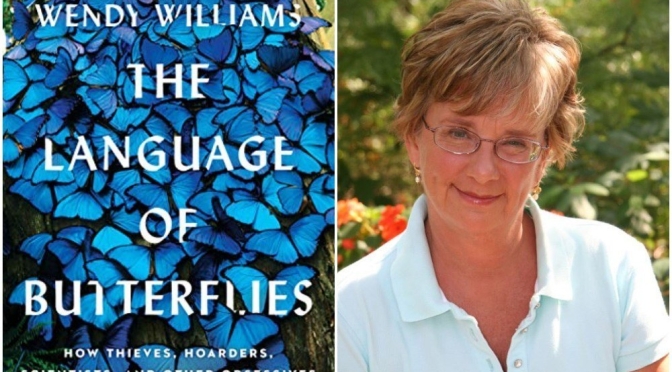
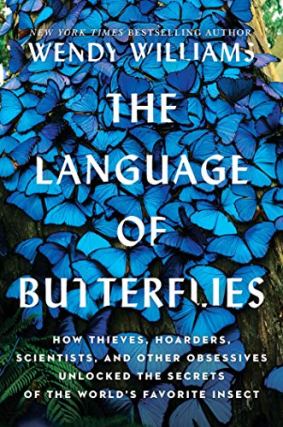
The Language of ButterfliesButterflies are one of the world’s most beloved insects. From butterfly gardens to zoo exhibitions, they are one of the few insects we’ve encouraged to infiltrate our lives. Yet, what has drawn us to these creatures in the first place? And what are their lives really like? In this groundbreaking book, New York Times bestselling author and science journalist Wendy Williams reveals the inner lives of these “flying flowers”—creatures far more intelligent and tougher than we give them credit for.
In this fascinating book from the New York Times bestselling author of The Horse, Wendy Williams explores the lives of one of the world’s most resilient creatures—the butterfly—shedding light on the role that they play in our ecosystem and in our human lives.

Monarch butterflies migrate thousands of miles each year from Canada to Mexico. Other species have learned how to fool ants into taking care of them. Butterflies’ scales are inspiring researchers to create new life-saving medical technology. Williams takes readers to butterfly habitats across the globe and introduces us to not only various species, but to the scientists who have dedicated their lives to studying them.

Coupled with years of research and knowledge gained from experts in the field, this accessible “butterfly biography” explores the ancient partnership between these special creatures and humans, and why they continue to fascinate us today. Touching, eye-opening, and incredibly profound, The Language of Butterflies reveals the critical role they play in our world.

Read more

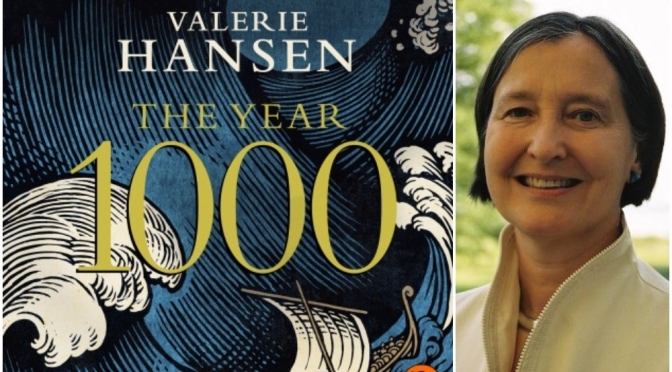
New History Books: “The Year 1000” By Valerie Hansen (Getty Podcast)

Getty Arts+IdeasValerie Hansen explores these early economic and cultural exchanges and their long-term impact in her new book “The Year 1000: When Explorers Connected the World―and Globalization Began”, which originated as a college course co-taught with Mary Miller, director of the Getty Research Institute. In this episode, Hansen and Miller discuss the state of the world around the year 1000.
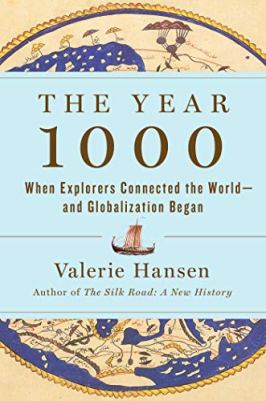
The Year 1000 - When Explorers Connected the World - and Globalization Began - Valerie HansenFrom celebrated Yale professor Valerie Hansen, a groundbreaking work of history showing that bold explorations and daring trade missions connected all of the world’s great societies for the first time at the end of the first millennium.

People often believe that the years immediately prior to AD 1000 were, with just a few exceptions, lacking in any major cultural developments or geopolitical encounters, that the Europeans hadn’t yet reached North America, and that the farthest feat of sea travel was the Vikings’ invasion of Britain. But how, then, to explain the presence of blonde-haired people in Maya temple murals at Chichén Itzá, Mexico? Could it be possible that the Vikings had found their way to the Americas during the height of the Maya empire?

Valerie Hansen, an award-winning historian, argues that the year 1000 was the world’s first point of major cultural exchange and exploration. Drawing on nearly thirty years of research, she presents a compelling account of first encounters between disparate societies, which sparked conflict and collaboration eerily reminiscent of our contemporary moment.

For readers of Jared Diamond’s Guns, Germs, and Steel and Yuval Noah Harari’s SapiensThe Year 1000 is an intellectually daring, provocative account that will make you rethink everything you thought you knew about how the modern world came to be. It will also hold up a mirror to the hopes and fears we experience today.

Read more or buy book