From net-zero houses to plug-and-play dwellings and converted shipping containers, each chapter explores the varied and exciting ways that architects and designers are using pre-fabricated technology to address today’s living and world challenges.
This survey of the world’s most innovative and successful examples of pre-fabricated homes explores the full range of possibilities, open to anyone seeking to find clever and up-to-date solutions for building their own home.
A reference section includes in-depth essays, which explore the latest manufacturing methods, trends and technologies, presenting a wide range of possibilities to suit every need, taste and desire.
Richly illustrated with photography and drawings, with projects selected by a long-time expert in pre-fab architecture, this fresh take on new solutions presents the factory-made house in a new light. Whether designing on a tight budget, crafting something self-sustaining or simply looking for new spatial ideas, this is an essential and future source of inspiration for architects, designers and home-builders.
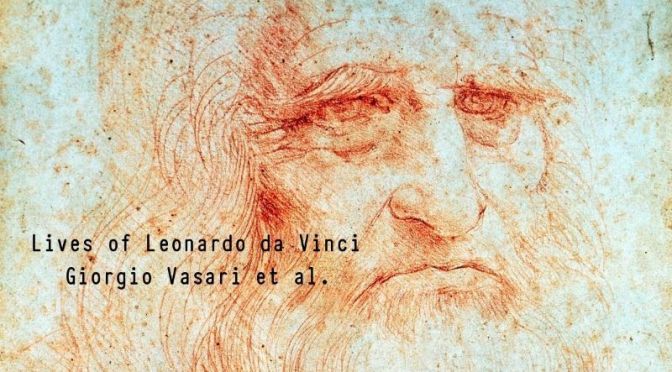
In this episode, Getty curator Davide Gasparotto discusses early accounts of Leonardo’s life and how they shaped our understanding of the artist. Passages from these biographies were recently collected in the Getty Publications book Lives of Leonardo da Vinci.
“He was a great artistic personality, crucial for the development, in some way, of what we think as the modern science. But he was not alone.”
Leonardo da Vinci died more than 500 years ago, but he is still revered as a genius polymath who painted beguiling compositions like the Mona Lisa, avidly studied the natural sciences, and created designs and inventions in thousands of journal pages. Even during Leonardo’s lifetime, contemporaries marveled at the artist’s great skill and wide-ranging pursuits, but many also noted his perfectionism and difficulty completing projects. Since his death, the legends surrounding his life and personality have continued to grow. Today Leonardo’s story inspires novels and his work brings record-breaking prices, demonstrating his enduring relevance and mystique.
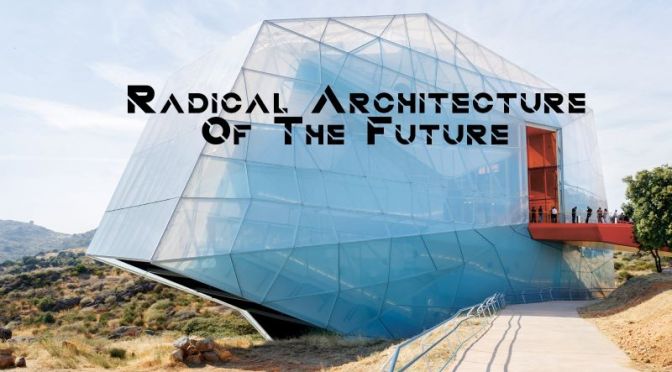
This remarkable book features projects — surprising, beautiful, outrageous, and sometimes even frightening — that break rules and shatter boundaries. In this timely book, the work of award-winning architects, designers, artists, photographers, writers, filmmakers, and researchers — all of whom synthesize and reflect our spatial environments — comes together for the first time.
An important and fascinating collection of original projects by unique thinkers in the world of architecture and spatial design
Architectural practice today goes far beyond the design and construction of buildings — the most exciting, forward-thinking architecture is also found in digital landscapes, art, apps, films, installations, and virtual reality.
About The Author:
How does tomrrow look from your doorstep? For the author, curator, critic and cultural consultant Beatrice Galilee tomorrow’s buildings, building plans, or ways of thinking about our built environment, are already out there.
In her new book, Radical Architecture of the Future, she quotes the American scholar Donna Haraway who asserted, way back in 1985, that “The boundary between science fiction and social reality is an optical illusion.”
Galilee patrols that boundary within the pages of her new book, in which she details works by 79 architects, designers, artists, photographers, writers, filmmakers, and researchers, each of whom are working at the most radical edges of architecture and spatial design today.
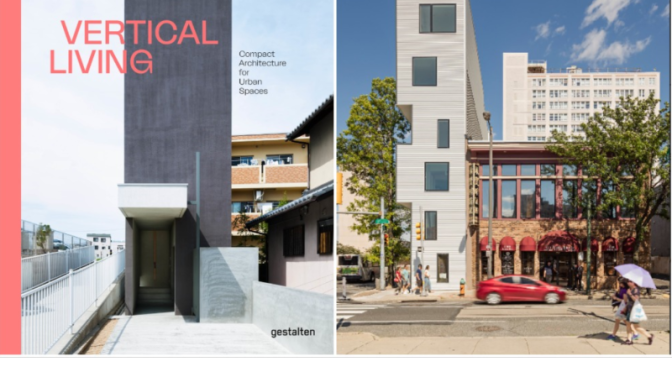
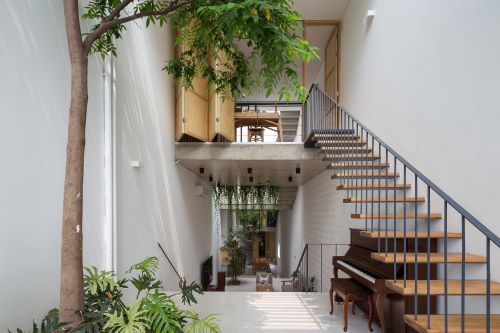
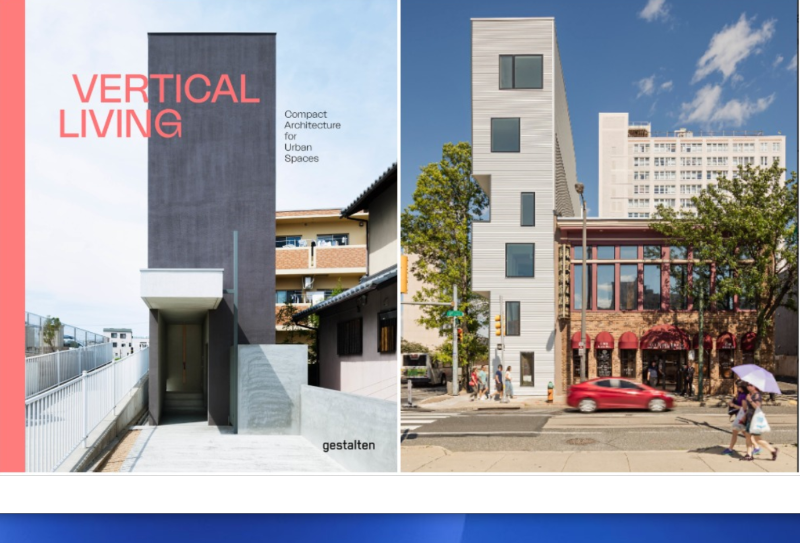
Vertical Living is an introduction to the architecture and interior masterminds using skillful, clever design to conquer compact living wherever there is space. As we continue to expect more of our flats and houses, unexpected approaches are necessary for the future of our urban spaces.
The era of moving to the suburbs is coming to an end. Instead, a growing movement of city dwellers are looking for grand architectural solutions in the smallest of spaces. Slender, slim, and tall structures are soaring in the limited land available, offering innovative solutions to a world with ever-growing urbanization.
The book looks at ingenious architectural solutions: impossibly skinny houses wedged into narrow plots, spacious homes built into neglected infill sites and comfortable homes created in tiny spaces. By combining inspirational projects, in-depth features and engaging profiles of architects around the world, Vertical Living will offer a new way of looking at how we live in the built environment.
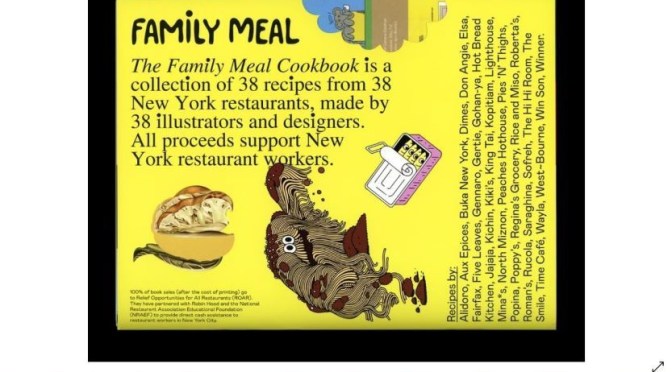
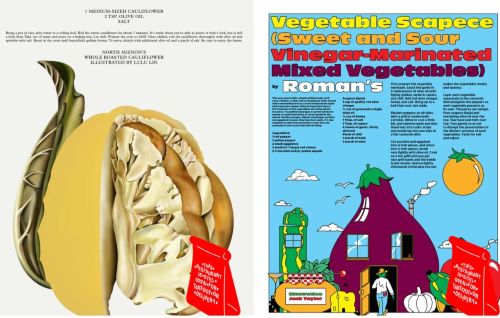
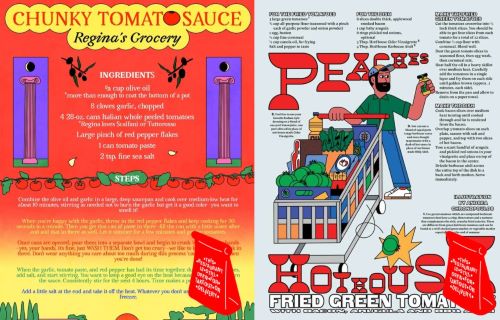
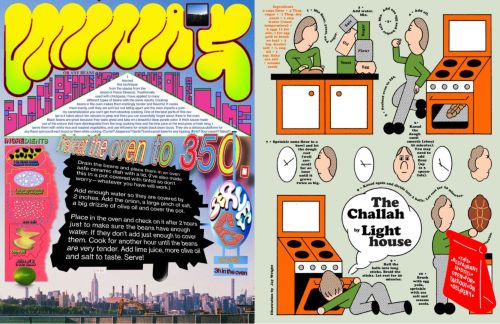
We were a website, and now we’re a cookbook. We’re a project by illustrators and designers to help raise money for New York restaurants and their employees. We’re 38 recipes from 38 restaurants for you to cook at home. And we’re a $20 donation for every book sold to New York City restaurants, through ROAR’s employee relief fund.
Ordering plants by post mostly from Italy, Germany, North Africa, and even the Cape of Good Hope, the Nuremberg merchant Volkamer was a devotee of the fragrant and exotic citrus at a time when such fruits were still largely unknown north of the Alps.
Famous First Edition: First printing of 5,000 numbered copies
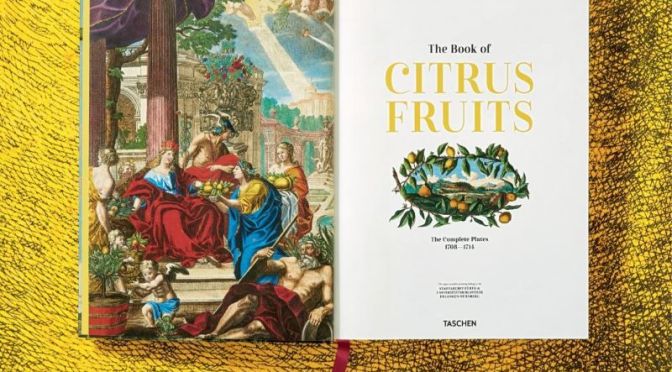
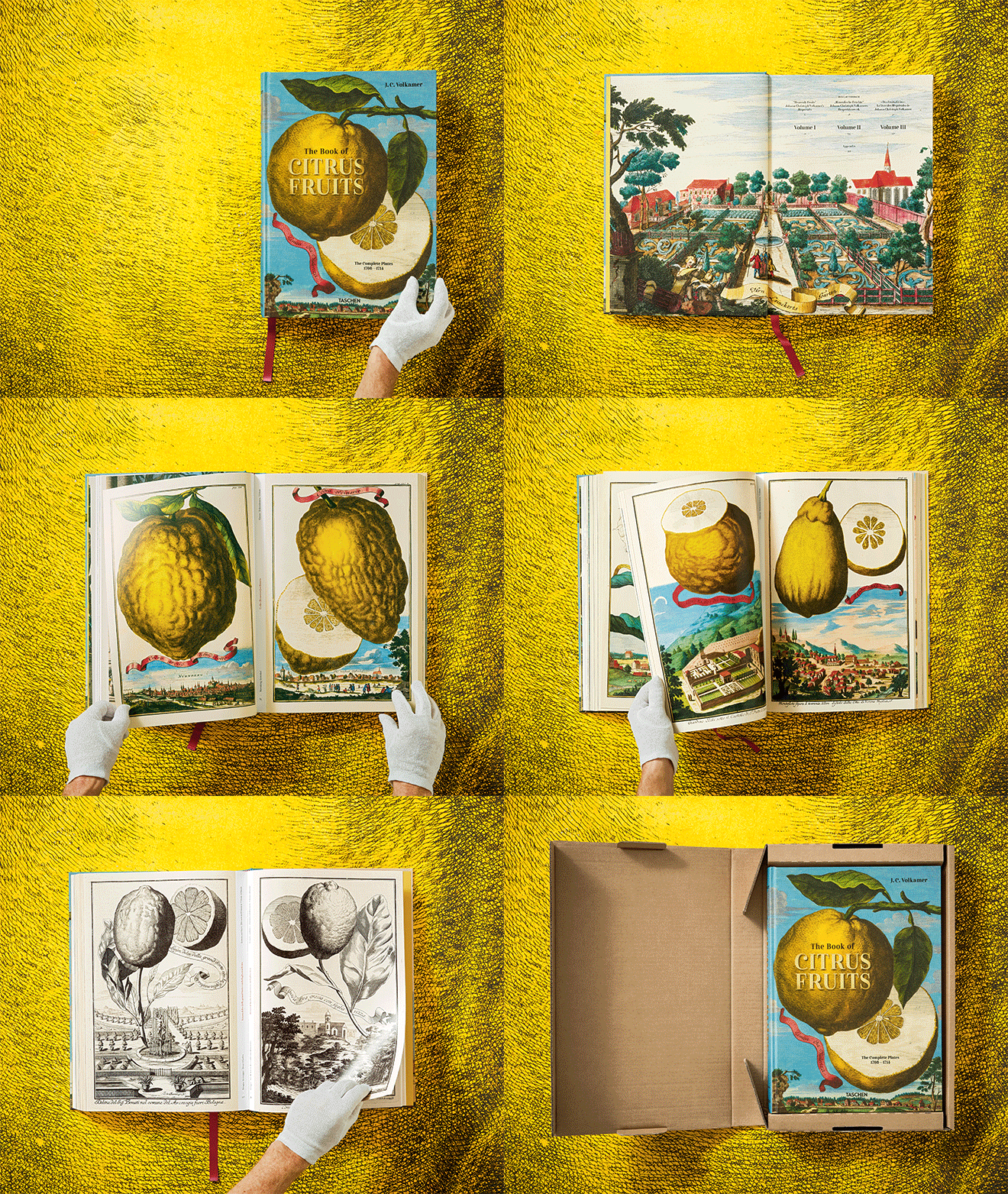
Have you ever thought of citrus fruits as celestial bodies, angelically suspended in the sky? Perhaps not, but J. C. Volkamer (1644–1720) did—commissioning an extravagant and breathtaking series of large-sized copperplates representing citrons, lemons, and bitter oranges in surreal scenes of majesty and wonder.
His garden came to contain a wide variety of specimens, and he became so obsessed with the fruits that he commissioned a team of copperplate engravers to create 256 plates of 170 varieties of citrus fruits, many depicted life size, published in a two-volume work.
In both volumes, Volkamer draws on years of hands-on experience to present a far-reaching account of citrus fruits and how to tend them—from a meticulous walk-through of how to construct temporary orangeries, glasshouses, and hothouses for growing pineapples to commentary on each fruit variety, including its size, shape, color, scent, tree or shrub, leaves, and country of origin.
In each plate, Volkamer pays tribute to the verdant landscapes of Northern Italy, his native Nuremberg, and other sites that captured his imagination. From Genovese sea views to the Schönbrunn Palace, each locale is depicted in the same exceptionaldetail as the fruit that overhangs it. We witness branches heavy with grapefruits arching across a sun-bathed yard in Bologna and marvel at a huge pineapple plant sprouting from a South American town. The result is at once a fantastical line-up of botanical beauty and a highly poetic tour through the lush gardens and places where these fruits grew.
Few colored sets of Volkamer’s work are still in existence today. This publication draws on the two recently discovered hand-colored volumes in the city of Fürth’s municipal archive in Schloss Burgfarrnbach. The reprint also includes 56 newly discovered illustrations that Volkamer intended to present in a third volume.
The author
Iris Lauterbachstudied art history and romance languages and literature in Mainz, Pavia and Paris and obtained her doctorate in 1985. Since 1991 she has been a member of the research department of the Central Institute for Art History in Munich and teaches the history of garden architecture at the Technical University in Munich. Her main areas of research include France during the 18th century and the history of European garden art from the 16th to the 20th century, while she has also carried out extensive research about the restitution of artworks that were looted during the Second World War.
For more than six centuries, the Forbidden City has awed all those who have travelled from near and far to explore its 900 golden-roofed buildings, set amid moats, gardens, and plazas, where thousands of people lived and worked in service of the world’s largest and most sophisticated pre-modern empire. Marco Polo called it “the greatest Palace that ever was;” Simon Leys praised its architectural genius; and Franz Kafka viewed it as an impressive yet alarming symbol of power.
In this compelling addition to Assouline’s Ultimate Collection, Pulitzer Prize-winning author Ian Johnson guides readers through the magnificent and storied palace built by China’s Yongle Emperor to serve as the seat of the Ming dynasty. Weaving in history and events of the past six centuries and featuring more than 100 photographs, artworks, and historical artifacts, this luxury tome conjures life in this imperial sphere—a small city unto itself, in which soldiers, eunuchs, concubines, and merchants resided alongside the royalty they served. A stunning homage to the grand beauty of one of the most complex structures in all of history, Forbidden City reveals that 600 years after its construction, this royal monument endures as the physical and spiritual heart of Chinese civilization. This volume is presented in a regal, glossy red box reminiscent of traditional Chinese lacquerware, and that features a delicately carved map of the Forbidden City’s grounds.
A new original graphic novel, The Final Symphony: A Beethoven Anthology, celebrating Ludwig van Beethoven’s 250th birthday, has been published via Z2 Comics and Deutsche Grammophon.
The Final Symphony: A Beethoven Anthology, written by Brandon Montclare and Frank Marraffino, was inspired by the composer’s life and music. The graphic novel reimagines the life of the legendary composer through striking new visuals created by world-class artists. Readers will be able to experience both masterpieces and lesser-known gems in a brand new light. The deluxe edition will be accompanied by an exclusive double vinyl LP following the story through the composer’s own works.
Featuring Alice Sara Ott, Ezinma and Max Richter
Pianist Alice Sara Ott, violinist Ezinma and composer Max Richter, are all featured in their own chapters in The Final Symphony: A Beethoven Anthology. In the chapter featuring Alice Sara Ott, drawn by Creees Lee, the pianist invites the composer to hear one of his works played in a modern concert hall. The chapter featuring Ezinma, drawn by Jarrett Williams, celebrates Beethoven’s groundbreaking musical personality, and Max Richter has been transformed by artist Dave Chisholm, who also wrote the chapter.
Our last episode of the year is a celebration of science in 2020. First, host Sarah Crespi talks with Online News Editor David Grimm about some of the top online news stories of the year—from how undertaker bees detect the dead to the first board game of death. (It’s not as grim as it sounds.)
Sarah then talks with Online News Editor Catherine Matacic about the Breakthrough of the Year, scientific breakdowns, and some of the runners-up—amazing accomplishments in science achieved in the face of a global pandemic. Finally, Book Review Editor Valerie Thompson joins Sarah to discuss highlights from the books section—on topics as varied as eating wild foods to how the materials we make end up shaping us.
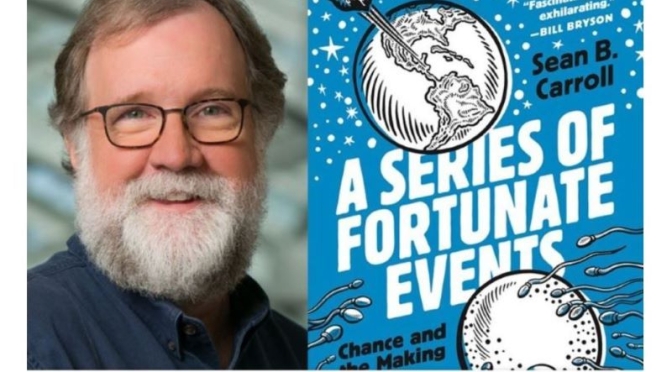
Is simple chance the source of all the beauty and diversity we see in the world? Sean B. Carroll tells the story of the awesome power of chance. Sean’s book “A Series of Fortunate Events” is available now: https://geni.us/mPPrdQH
Why is the world the way it is? How did we get here? Does everything happen for a reason or are some things left to chance? Philosophers and theologians have pondered these questions for millennia, but startling scientific discoveries over the past half century are revealing that we live in a world driven by chance.
Sean B. Carroll is an award-winning scientist, writer, educator, and film producer. He is Vice President for Science Education at the Howard Hughes Medical Institute and the Balo-Simon Chair of Biology at the University of Maryland. His books include The Serengeti Rules (Princeton), Brave Genius, and Remarkable Creatures, which was a finalist for the National Book Award. He lives in Chevy Chase, Maryland. This talk and Q&A was recorded by the Royal Institution on 6 October 2020.
News, Views and Reviews For The Intellectually Curious




















 Boomers Daily