Tag Archives: Arts & Literature

Artist Profiles: 69-Year Old American Painter Sigrid Burton (Video)

“I draw literally and figuratively from the natural world. My drawing and mark making refer to and derive from botanical and biological anatomies, including marine life, as well as, the structures of both macro and micro cosmologies and writing systems, such as logograms.” 

Sigrid Burton is an American painter, long based in New York City, whose semi-abstract work is known for its use of expressive, atmospheric color fields and enigmatic allusions to natural and cultural realms. Burton has had solo exhibitions in New York City, Los Angeles, San Francisco, Chicago and Osaka, including at Artists Space and the Michael C. Rockefeller Arts Center, and been included in shows at A.I.R. Gallery, the John and Mable Ringling Museum of Art, and the Carnegie Art Museum, Oxnard. Her work belongs to the public collections of the Metropolitan Museum of Art, Rockefeller Foundation, and Palm Springs Desert Museum, and has been reviewed in Arts Magazine, Arts & Antiques, Jung Journal, Chicago Tribune and LA Weekly.

Writers most frequently observe that Burton’s atmospheric works recall artists such as J.M.W. Turner, Odilon Redon, Pierre Bonnard and Mark Rothko, as well as the light of her native California. Art & Antiques described her approach as “chromatic expressionism” in which color is “her undisputed protagonist”.  Peter Frank observed, “The dialectic between color and form has always inflected, even impelled” Burton’s painting, with color the more omnipresent element, and form the more persistent. Art historian William C. Agee wrote, “The domains she explores […] meet, intersect, fuse, and then disappear, like apparitions, in liquid pools of mist and color. Her pictorial odyssey refers simultaneously to both a higher order, a timeless cosmic vastness, as well as to a private, interior world, abounding in personal histories and memories.” Burton has lived and worked in Pasadena, California since 2013.

From Wikipedia
“Watercolor In March”: Artist Thomas W. Shaller Releases New Works (2020)

The grasses up north are as blue as jade, Our mulberries here curve green-threaded branches; And at last, you think of returning home”  Li Bai

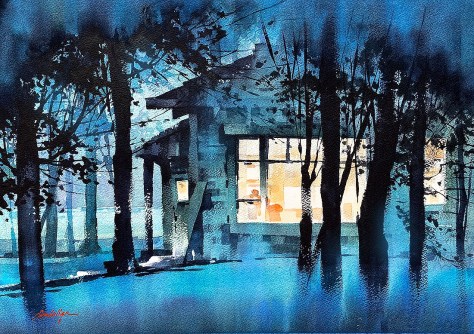
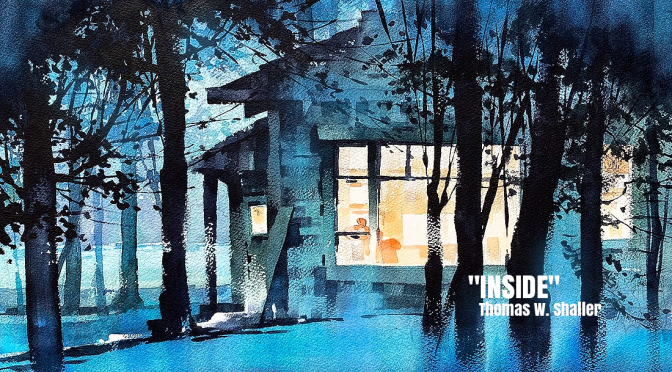
Inside - Thomas W. Schaller
“Inside” – Thomas W. Shaller (March, 2020)

“A feat, this heart’s control
Moment to moment
To scale all love down
To a cupped hand’s size”
Edith Tiempo, Bonsai

Bonsai - Thomas W. Shaller (March 2020)
“Bonzai” – Thomas W. Shaller (March 2020)

Thomas W. Schaller is an award-winning artist, architect, and author based in Los Angeles. As a renowned architectural artist, he received a Graham Foundation Grant and was a two-time recipient of the Hugh Ferris Memorial Prize. He has authored three books; the best-selling, and AIA award winner, Architecture in Watercolor (VNR – McGraw Hill) The Art of Architectural Drawing (J.Wiley and Sons)and  Thomas W. Schaller, Architect of Light : Watercolor Paintings by a Master – a retrospective of his recent artwork released by North Light Books / F+W Media and now Penguin / Random House, NYC  in 2018.

“My work is a study in contrasts: light and dark, vertical and horizontal, warm and cool tones, the real and the imagined, as well as the past, present, and future. These elements and others are designed to collide and sometimes find resolution on the surface of the paper. And by so doing, I invite you to take part in my artistic process – not to determine the stories I am telling – but hopefully, to inspire you to tell stories of your own.”

Website


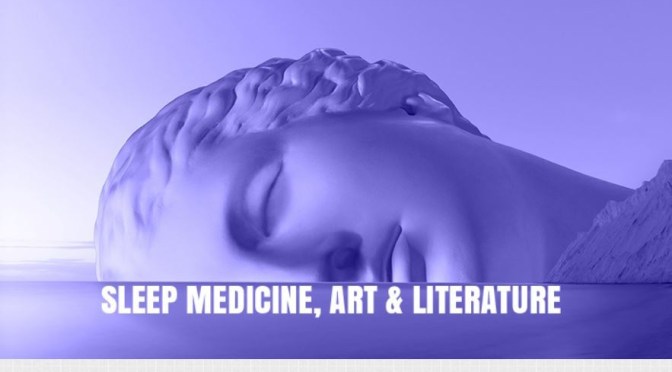
Health Lecture: “Sleep Medicine, Art & Literature” By Professor Meir Kryger

Sleep medicine, art and literature – ars longa, vita brevis. Organised by the Sleep Medicine Section 4 February 2020.

Professor Meir Kryger, Author and Professor, Yale School of Medicine – Sleep Disorders & Effective Treatments.

Lecture: Sleep in art: A 7000 year odyssey

Website

Photography: Singer Kenny Rogers (1938- 2020) Had “Passion For Taking Western Landscapes”

“Kenny Rogers took portraits and western landscape photos like no other. He was passionate and fell in love with the warmth and beauty that captured all that he saw through a lens,” says Patty Wente IPHF CEO and President. 

Kenny Rogers Photographs - One Tree
“One Tree” – Kenny Rogers

International Photography Hall of Fame and Museum logoThe International Photography Hall of Fame and Museum mourns the passing of its first Lifetime Achievement Award Winner and 2017 inductee Kenny Rogers. Rogers was a dedicated and talented photographer for nearly four decades. His best-known images are portraits of well-known singers, actors, and dignitaries from around the globe.
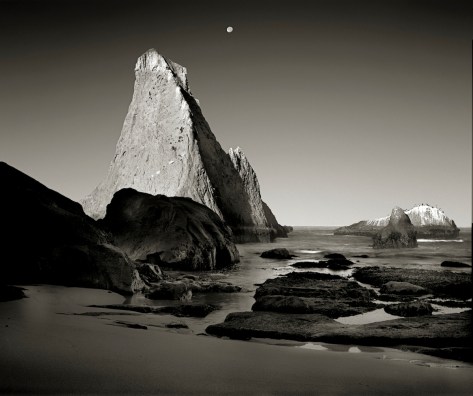
Kenny Rogers Photographs
“The Thumb” – Kenny Rogers

In addition, he had an ongoing passion for photographing the American landscape. Rogers was skilled with his large format view camera, and loved to make prints in his darkroom. Regarding his photography, he said, “I am an impulsive obsessive. I impulsively get involved with something, and then I get obsessed with it. So that’s what happened with photography.”

Website

Smartphone Books: The New York Public Library’s Interactive “Insta Novels”

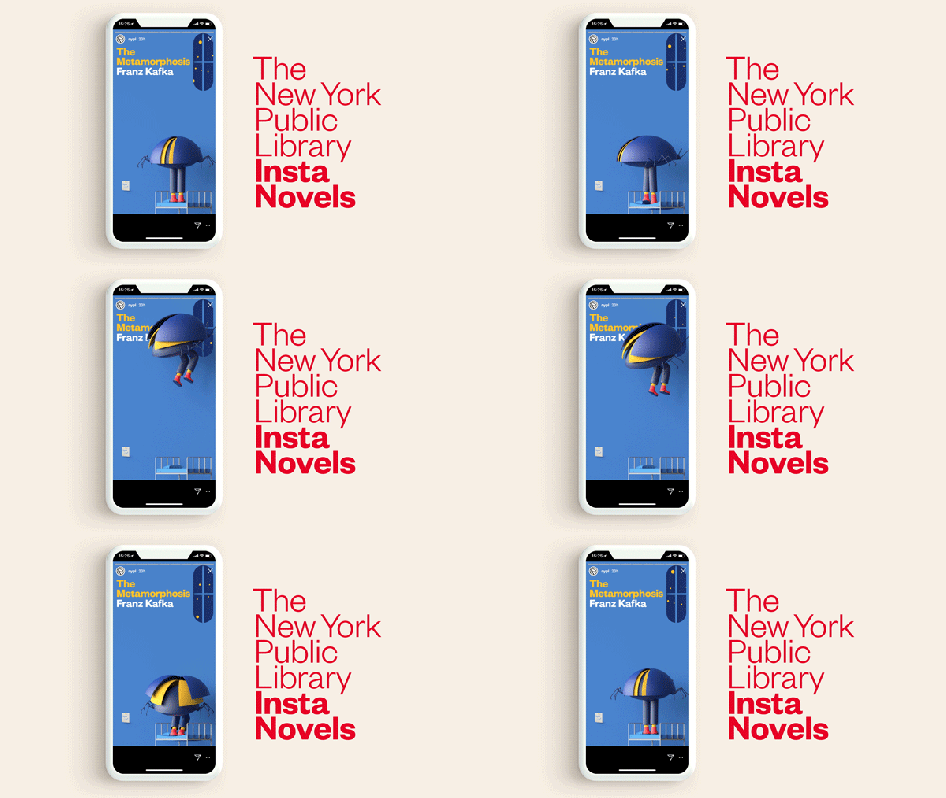
Insta Novels launched August 22, 2018 on the Library’s Instagram account (@nypl) with Part 1 of a newly digitized version of Alice’s Adventures in Wonderland by Lewis Carroll. The novel is illustrated by well-known designer Magoz (@magoz).

The New York Public Library Insta Novels The Metamorphosis Franz Kafka

First, go to the Library’s Instagram account (@nypl) and tap Part 1 of Alice’s Adventures in Wonderland in the Highlights section, right under the bio.

Rest your thumb on lower right part of the screen to hold the page, and lift your thumb to turn the page. (The lower right thumb holder is designed to double as a flip book: if you lift your thumb and let the pages flip, you’ll see an animation.)

As more stories are added, the NYPL Instagram account’s Highlights will turn into a digital bookshelf.

Artist Profiles: Finnish-American Riitta Klint – “Dreamlike” Drips Of Paint With Pencil On Clay Panels

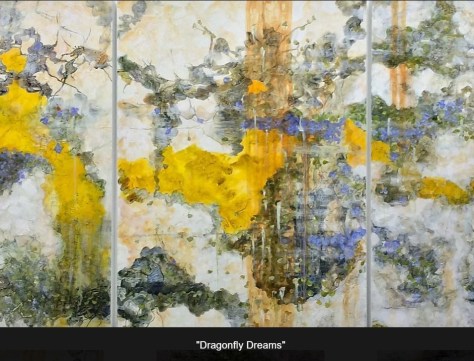
My paintings on clay panels begin with thin veils of paint that drip, pool and congeal, and like nature, move out of my control, beautifully mysterious. I work intuitively within these initial drips and pools, searching for structure. Each successive stroke of paint or pencil mark continues to build a dreamlike otherworldly place. The mood is one of nature untamed, enchanting and rife with hidden secrets.

Riitta Klint Dragonfly Dreams Triptych Acrylic and Pencil on Claybord

My paintings are my connection to the Earth, its nature and beautiful mysteries. Riitta Klint PaintingsThere is a sadness as I witness the loss of our last wild places. My paintings are an attempt to keep alive those places and offer my audience a sanctuary in which to reflect.
Riitta Klint is from Helsinki, Finland and currently lives in Fort Worth, Texas and maintains a studio in nearby Aledo. Between these two places is a lifetime spent traveling the world thanks to her father’s career with IBM. Living in her native Finland, as well as in Iran, Portugal, Indonesia, Germany, Mexico, and the United States, together with extensive travel in Asia and Europe has shaped her unique vision and palette. Her work offers the viewer a front seat to that journey, and a threshold to cross over into their own imagination.

Klint works primarily in acrylic and pencil on Claybord™, smooth kaolin clay covered panels that offer the ideal surface for her manipulation of color and medium.

Website

Painters Of The 1920’s & 1930’s: “Moonlight Ballad – The Art Of Martin Lewis”


Born in Victoria, Australia, Martin Lewis was a printmaker who is known for his scenes of urban life in New York during the 1920s and 1930s. As a youth Lewis held a variety of jobs that ranged from working on cattle ranches in the Australian Outback, in logging and mining camps, to being a sailor. In 1898, he moved to Sydney for two years where he received his only formal art training. During this period he may have been introduced to printmaking; a local radical paper, The Bulletin, published two of his drawings.

Lewis left Australia in 1900 and first settled in San Francisco. He eventually worked his way eastward to New York. Little is known about his life during the following decade except that he made a living as a commercial artist and produced his first etching in 1915. Lewis’ skill as an etcher was noticed by Edward Hopper, who became a lifelong friend. In 1920, dissatisfied with his job, Lewis used his entire savings to study art and to sketch in Japan. He returned to New York after a two-year stay and resumed his commercial art career, but also pursued his own work as a painter and printmaker.

During the Depression, Lewis moved to Newtown, Connecticut, but later returned to Manhattan, where he helped establish a school for printmakers. From 1944-1952 Lewis taught a graphics course at the Art Students League in New York.

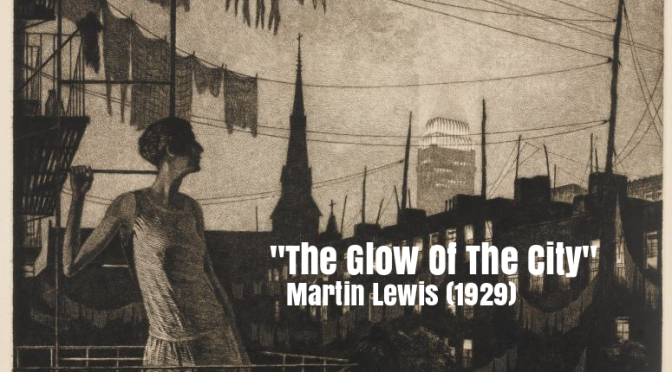
During his thirty-year career, Lewis made about 145 drypoints and etchings. His prints, like Shadow Dance and Stoops in Snow, were much admired during the 1930s for their realistic portrayal of daily life and sensitive rendering of texture. The artist’s skill in composition and his talent in the drypoint and etching media have received renewed attention in recent years. Lewis is one of the few printmakers of this era who specialized in nocturnal scenes. Some scholars consider his print Glow of the City his most significant work because of the subtlety of handling. A minute network of dots, lines, and flecks scratched onto the plate creates the illusion of transparent garments hanging in the foreground, while the Chanin Building, an art deco skyscraper, towers over the nearby tenements.

nga.gov/collection/artist-info.4704.html

en.wikipedia.org/wiki/Martin_Lewis_(artist)

Art & Humor: National Park Posters Based On Visitors’ “1 Star Reviews”

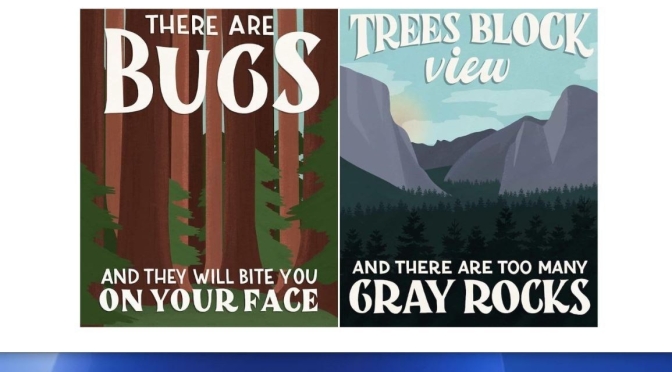
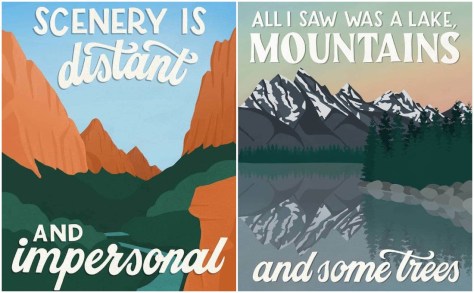
Subpar Parks is a snarky love letter to the National Parks System. When I discovered that there were 1-star reviews for every single one of the 62 national parks, I set out to illustrate each park along with a hand lettered 1-star review as a way to put a positive, fun spin on such a negative mindset.

Humorous National Park Posters based on Visitors 1 star reviews by Amber Share

Amber Share website logo

New Environment Books: “Koolhaas. Countryside, A Report” (Taschen, Apr 2020)

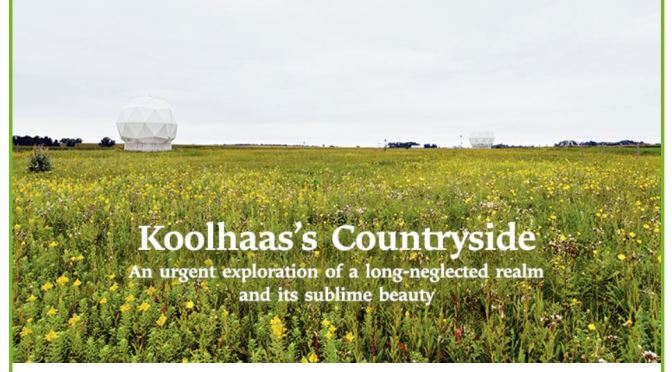
The rural, remote, and wild territories we call “countryside”, or the 98% of the earth’s surface not occupied by cities, make up the front line where today’s most powerful forces―climate and ecological devastation, migration, tech, demographic lurches―are playing out. Increasingly under a ‘Cartesian’ regime―gridded, mechanized, and optimized for maximal production―these sites are changing beyond recognition.

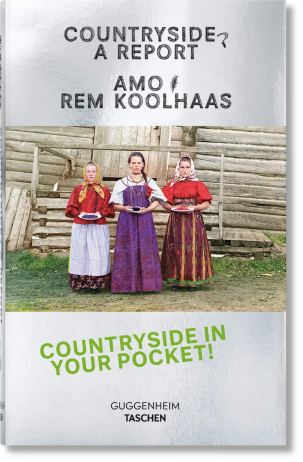
Koolhaas Countryside A Report Guggenheim Museum Taschen Books April 2020

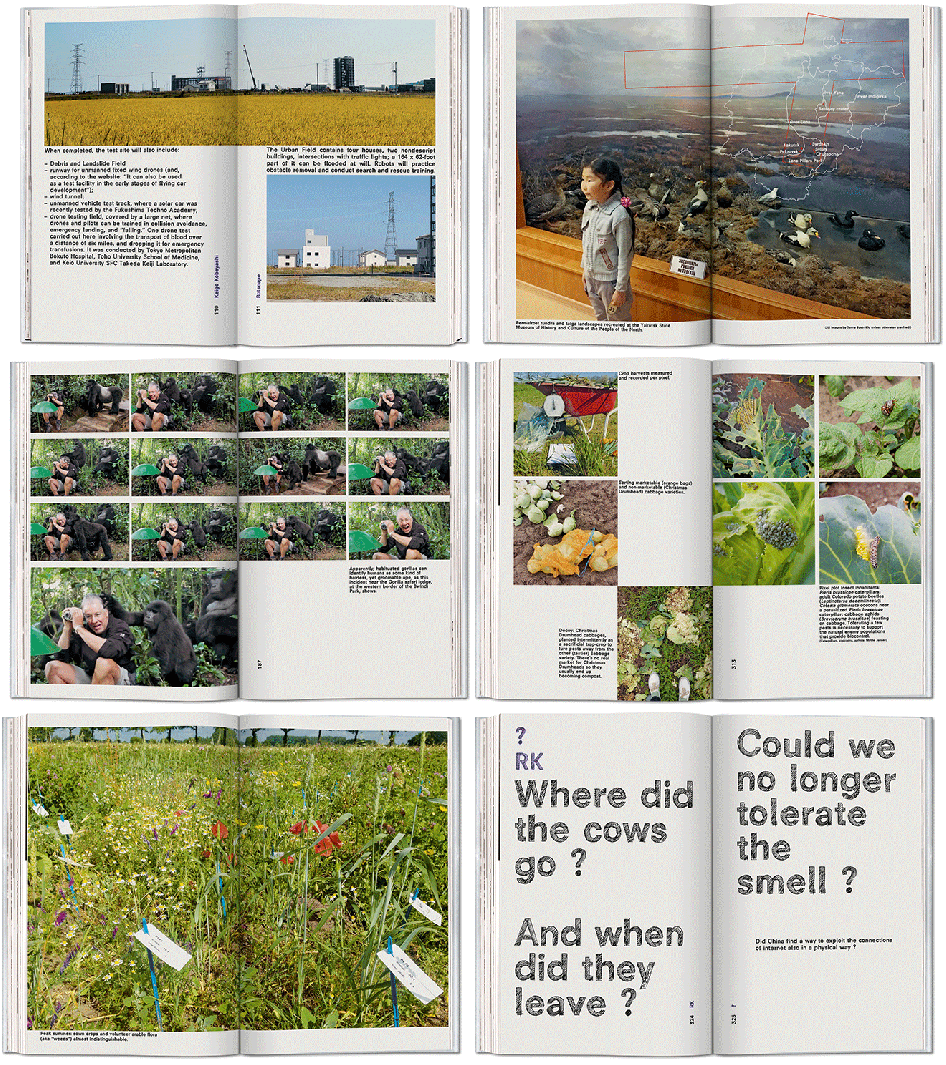
Countryside A Report Rem Koolhaas Taschen April 2020In his latest publication, Rem Koolhaas explores the rapid and often hidden transformations underway across the Earth’s vast non-urban areas.Countryside, A Report gathers travelogue essays exploring territories marked by global forces and experimentation at the edge of our consciousness: a test site near Fukushima, where the robots that will maintain Japan’s infrastructure and agriculture are tested; a greenhouse city in the Netherlands that may be the origin for the cosmology of today’s countryside; the rapidly thawing permafrost of Central Siberia, a region wrestling with the possibility of relocation; refugees populating dying villages in the German countryside and intersecting with climate change activists; habituated mountain gorillas confronting humans on ‘their’ territory in Uganda; the American Midwest, where industrial-scale farming operations are coming to grips with regenerative agriculture; and Chinese villages transformed into all-in-one factory, e-commerce stores, and fulfillment centers.

This book is the official companion to the Guggenheim Museum exhibition Countryside, The Future. The exhibition and book mark a new area of investigation for architect and urbanist Rem Koolhaas, who launched his career with two city-centric entities: The Office for Metropolitan Architecture (1975) and Delirious New York (1978). It’s designed by Irma Boom, who drew inspiration for the book’s pocket-sized concept, as well as its innovative typography and layout, from her research in the Vatican library.

The book brings together collaborative research by AMO, Koolhaas, and students at the Harvard Graduate School of Design; the Central Academy of Fine Arts, Beijing; Wageningen University in the Netherlands; and the University of Nairobi. Contributors also include Samir Bantal, Janna Bystrykh, Troy Conrad Therrien, Lenora Ditzler, Clemens Driessen, Alexandra Kharitonova, Keigo Kobayashi, Niklas Maak, Etta Madete, Federico Martelli, Ingo Niermann, Dr. Linda Nkatha Gichuyia, Kayoko Ota, Stephan Petermann, and Anne M. Schneider.

Read more or purchase