Depot Boijmans Van Beuningen (in Rotterdam, Netherlands) is the first art storage facility in the world that offers access to a museum’s complete collection. The Depot has a different dynamic to that of the museum: there are no exhibitions, but you can browse amongst 151,000 artworks, alone or with a guide, and get behind-the-scenes glimpses of – among other things – conservation and restoration.
The design – a reflective round volume – responds to its surroundings, Rotterdam’s Museumpark in which it will be completed in 2020, doors will open in 2021.
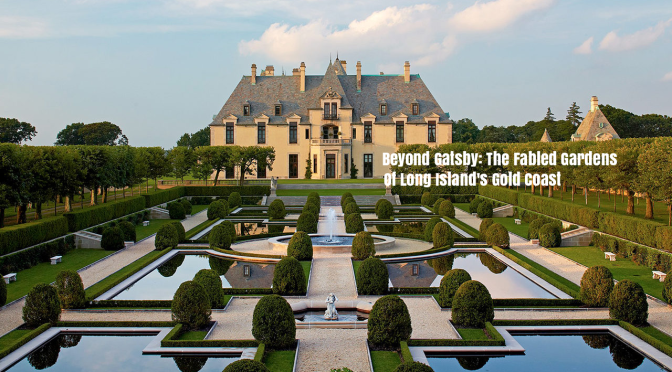
Originally comprising vast areas of the North Shores of Long Island, the Gold Coast was a favorite retreat of the rich and famous. Beginning around the turn of the century and through the 1920’s, the North Shore was the place to be for some of the most notable Americans. Along with grand houses, they built elaborate gardens, hiring such notable architects and landscape architects as Delano and Aldrich, Carrere and Hastings, the Olmsted Brothers, and Beatrix Farrand. Discover the gardens, as they were originally built, and learn about their history, landscape design, and present condition. This event was presented through the generous support of the Boston Design Center as part of the ICAA-NE Design Series.
CeCe Haydock graduated from Princeton University (BA English) and received a master’s degree in landscape architecture from the SUNY School of Environmental Science and Forestry. After working for the New York City Parks Department, she joined the firm, Innocenti and Webel in Locust Valley, NY, before starting her private practice. In 2007, she did research as a Visiting Scholar at the American Academy in Rome on Edith Wharton and Italian villas. She has lectured and written on historic Italian, French, and American gardens for Old Westbury Gardens, Maryland’s Ladew Topiary Gardens, Princeton University, and numerous garden and horticultural clubs. A trustee of Planting Fields Arboretum and a member of the International Council of The Preservation Society of Newport County, she is a visiting lecturer at the New York Botanic Garden and an adjunct professor at Long Island University. CeCe is currently expanding her private practice to include landscape sustainability.
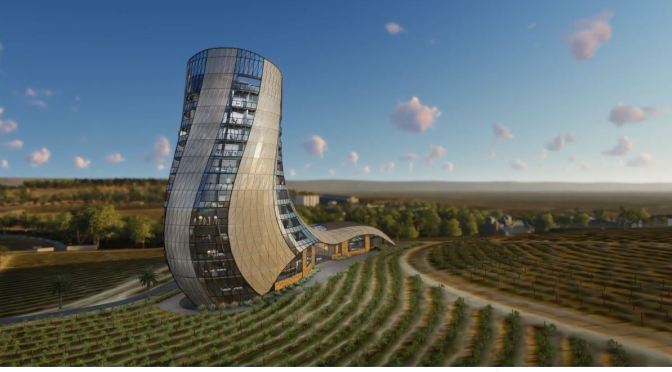
The 12-storey Oscar Seppeltsfield hotel will have 70 rooms, each with a private balcony. The design of the building, which was conceived by Intro Architecture, is said to be inspired by the history of the winery and the wine barrels in its Centennial Cellar, which contains barrels of fortified wine dating back to 1878.
It will be constructed in the middle of Seppeltsfield’s Great Terraced Vineyard, which contains 60 to 80-year-old Grenache bush vines.
The hotel is named after winemaker and viticulturalist Oscar Benno Seppelt (1873-1963), a member of the family that founded the winery.
…a stairway and greenery gently connected the upper and lower floors along a diagonal line, creating a space where all three generations could take comfort in each other’s subtle presence. Not only does the stairway connect the interior to the yard, or bond one household to another, this structure aims to expand further out to join the environs and the city —connecting the road that extends southward on the ground level, and out into skylight through the toplight.
A two-family home in a quiet residential area of Tokyo. With other houses and apartment buildings pressing around the site, the architectural volume was pushed to the north to take in daylight, ventilation, and greenery of the yard into the living environment by a large glass front southern façade. The layout plan made it possible to preserve the existing persimmon tree beloved by the previous generations. Considering the potential difficulties of going up and down the stairs, the rooms for the older couple were arranged on the 1st floor. The eight cats living with the older couple roam in and outdoors more freely, and encourages the mother to enjoy her hobby of gardening more freely. The younger couple and their child reside on the 2nd and 3rd floors. To avoid the two households being completely separated at the top and bottom, a “stairway-like” structure was designed in the south yard, continuing upward into the building and penetrating the 1st through 3rd floors. Enclosed inside the “stairway” are functional elements, such as bathrooms and a staircase for actual use, with the upper part taking on the look of a semi-outdoor greenhouse with abundant greenery as well as a sun-soaked perch for the cats to enjoy climbing.
Charmaine Chan, design editor for ‘South China Morning Post’ believes that courtyards offer an excellent urban solution to domestic solitude. She explains how they can be hubs of community and calm.
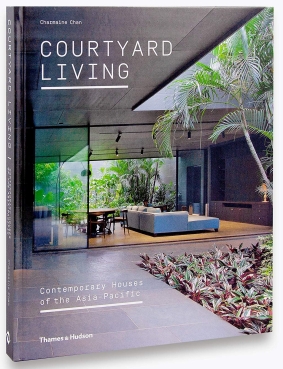
Courtyards have long played an important function in residential design, regulating light, shade, and the use of space. With thousands of years of tradition as inspiration, contemporary architects are now realizing courtyard living afresh. This lavish survey of twenty-five residences across the Asia-Pacific region features homes from Australia, Taiwan, Malaysia, Indonesia, Thailand, the Philippines, Singapore, India, Vietnam, and Sri Lanka.
Structured by courtyard function, the book’s five chapters—on privacy; multigenerational living; sightlines; light and ventilation; and living with nature—are richly illustrated with photography and architectural illustrations showing courtyard positions within floor plans.
Showcasing the unique lifestyle opportunities afforded by contemporary courtyard design, this is an inspirational resource for anyone interested in indoor-outdoor living.
Charmaine Chan is Design Editor at the South China Morning Post. She began her journalism career in Sydney, pursued it in Tokyo and moved to Hong Kong in 1997 to join the Post. Her writing focuses on design and architecture in Asia.
From an Architectural Digest article (April 3, 2020):
Whimsical, wild, and wacky are but a few words that most aptly describe Bill Bensley’s unique design aesthetic and the exceptional hotels born from it. Credited with upping the ante on Southeast Asia’s hospitality design, he is one of the most intriguing artists in the field today.
Originally from California, Bill has called Asia home since 1984 when he lived in Singapore and Hong Kong before moving to Bangkok and setting up Bensley, a full-service hospitality design atelier made up of architects, landscape architects, interior designers, and artists.
“I can take you around the house and say, ‘The base of this column exists at Capella Ubud, and the top of this bathroom door is Four Seasons Chiang Mai, and this lantern is the prototype for all the lamps that we used at Four Seasons Koh Samui.’ There are still remnants of pieces here from probably 100 different projects,” says Bensley.
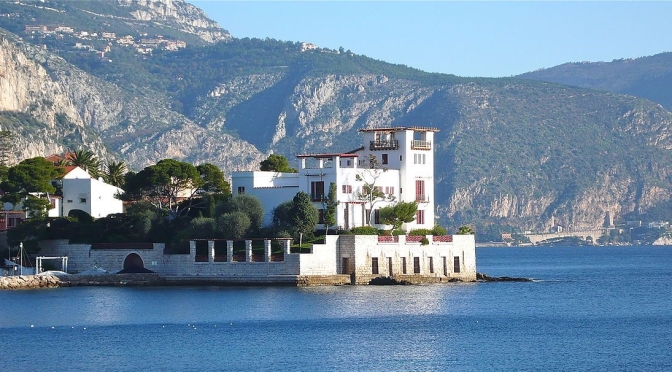
Throughout, the attention to detail is meticulous: mosaic floors of mythical beasts; intricately painted ceilings of interlocking wooden beams. The walls of the Andron, traditionally the male quarters of an ancient Greek household, are streaked with three types of Tuscan marble: ochre Siena, mauve Fleur de Pêcher, and grey-white Carrara. In Mrs Reinach’s bathroom, an immense bathtub weighing one tonne is balanced on two lion paws. Above its ornamental bronze taps, a low-relief frieze depicts the chariot of Demeter. From every window stretches a panorama of glittering blue.
“THE GREEK SPIRIT WAS FOR HIM BOTH DREAM AND REALITY, MEMORY AND PRESENT…”
The descent is steep, winding, and impossibly verdant for mid-winter. It is a clear blue day in the aptly named Beaulieu-sur-Mer, a pastel-hued seaside village on the outskirts of Nice. The road is lined with climbing vines and succulents, the air redolent of pine trees in the heat. Then, after a short drive alongside a golden bay, it appears, perched atop a promontory, jutting defiantly from the Côte d’Azur.
From an Apollo Magazine online article (March 31, 2020):
Ultimately he was a humane critic of the contemporary city, a serious, funny and poetic voice defending the powerless against big capital and an articulator of how architecture should be used as a tool of resistance. He is indelibly associated with New York, a city he loved with a fervour despite its faults, and of which he defended every inch as a public good. Number 210 in his list was the medieval German phrase ‘Stadtluft macht frei’ – ‘city air makes you free’. He will survive through his magical writing, which makes us all a little freer.
Michael Sorkin, who died last week of complications due to Covid-19, gained his reputation as the architecture critic of The Village Voice in New York, which, in the 1980s, was a publication with a formidable reach and impact on a city just beginning to boom again. He launched fierce attacks against the banality of the contemporary city, the rapacity and greed of developers (notably the current president, including in a 1985 piece entitled ‘Dump the Trump’) and the loss of great landmarks. But he was no nostalgist; he revelled in the potential of architecture to catalyse change and excoriated his contemporaries for caving in to big business, for building prisons and being complicit in a denuded public realm.
From an Architectural Digest online article (March 14, 2020):
“Tangier is the crossroads of so many civilizations,” says AD100 talent Frank de Biasi of the evocative Moroccan port city that he and his partner, the multifaceted designer Gene Meyer, have made their home. “There’s a central energy here,” he explains, “where the Atlantic meets the Mediterranean, where Europe meets Africa. It’s a psychic point like no other place.”
Many of the traditional houses here, however, have a claustrophobic lack of light, so when the couple found a ruinous place on a little open square, with exposures on three sides, they knew they could make it their own. Their renovation ultimately took four years as they rebuilt paper-thin walls, replaced a life-threateningly vertiginous staircase with one inspired by the Old Fort Bay clubhouse in the Bahamas, and installed a light-well based on one de Biasi had seen in India and such mod cons as under-floor heating.





 …a stairway and greenery gently connected the upper and lower floors along a diagonal line, creating a space where all three generations could take comfort in each other’s subtle presence. Not only does the stairway connect the interior to the yard, or bond one household to another, this structure aims to expand further out to join the environs and the city —connecting the road that extends southward on the ground level, and out into skylight through the toplight.
 A two-family home in a quiet residential area of Tokyo. With other houses and apartment buildings pressing around the site, the architectural volume was pushed to the north to take in daylight, ventilation, and greenery of the yard into the living environment by a large glass front southern façade. The layout plan made it possible to preserve the existing persimmon tree beloved by the previous generations. Considering the potential difficulties of going up and down the stairs, the rooms for the older couple were arranged on the 1st floor. The eight cats living with the older couple roam in and outdoors more freely, and encourages the mother to enjoy her hobby of gardening more freely. The younger couple and their child reside on the 2nd and 3rd floors. To avoid the two households being completely separated at the top and bottom, a “stairway-like” structure was designed in the south yard, continuing upward into the building and penetrating the 1st through 3rd floors. Enclosed inside the “stairway” are functional elements, such as bathrooms and a staircase for actual use, with the upper part taking on the look of a semi-outdoor greenhouse with abundant greenery as well as a sun-soaked perch for the cats to enjoy climbing.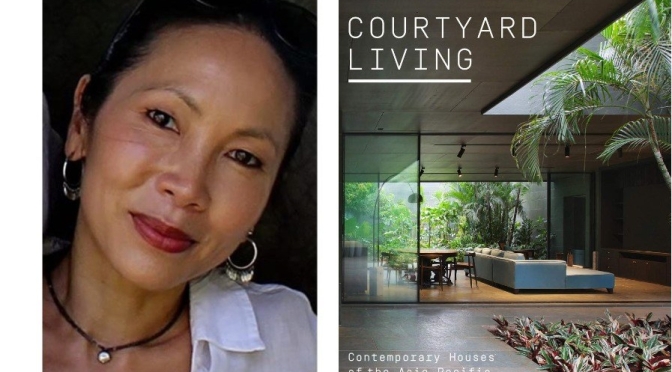
 Charmaine Chan, design editor for ‘South China Morning Post’ believes that courtyards offer an excellent urban solution to domestic solitude. She explains how they can be hubs of community and calm.
 Courtyards have long played an important function in residential design, regulating light, shade, and the use of space. With thousands of years of tradition as inspiration, contemporary architects are now realizing courtyard living afresh. This lavish survey of twenty-five residences across the Asia-Pacific region features homes from Australia, Taiwan, Malaysia, Indonesia, Thailand, the Philippines, Singapore, India, Vietnam, and Sri Lanka.

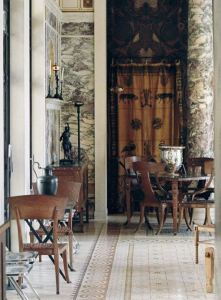 Throughout, the attention to detail is meticulous: mosaic floors of mythical beasts; intricately painted ceilings of interlocking wooden beams. The walls of the Andron, traditionally the male quarters of an ancient Greek household, are streaked with three types of Tuscan marble: ochre Siena, mauve Fleur de Pêcher, and grey-white Carrara. In Mrs Reinach’s bathroom, an immense bathtub weighing one tonne is balanced on two lion paws. Above its ornamental bronze taps, a low-relief frieze depicts the chariot of Demeter. From every window stretches a panorama of glittering blue.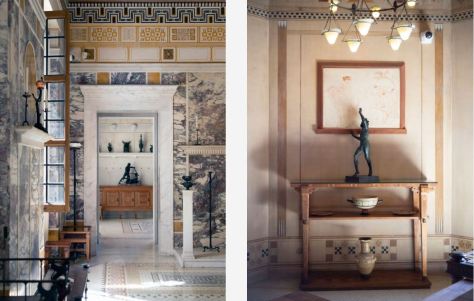
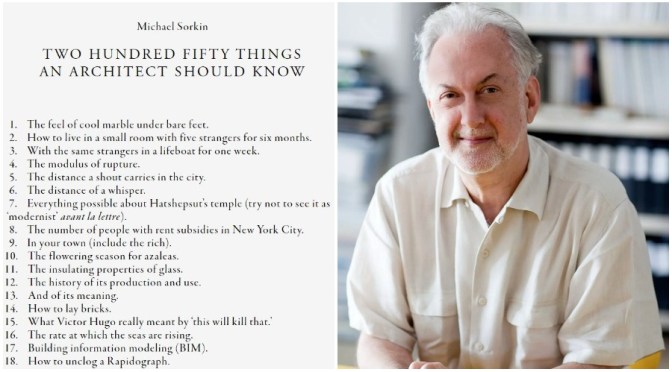
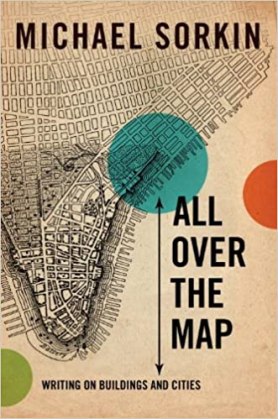 Ultimately he was a humane critic of the contemporary city, a serious, funny and poetic voice defending the powerless against big capital and an articulator of how architecture should be used as a tool of resistance. He is indelibly associated with New York, a city he loved with a fervour despite its faults, and of which he defended every inch as a public good. Number 210 in his list was the medieval German phrase ‘Stadtluft macht frei’ – ‘city air makes you free’. He will survive through his magical writing, which makes us all a little freer.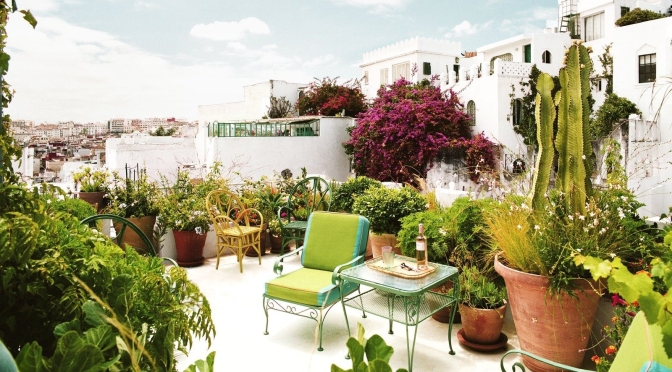
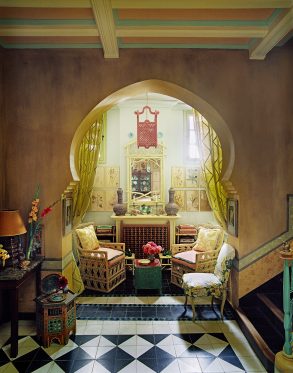 “Tangier is the crossroads of so many civilizations,” says AD100 talent Frank de Biasi of the evocative Moroccan port city that he and his partner, the multifaceted designer Gene Meyer, have made their home. “There’s a central energy here,” he explains, “where the Atlantic meets the Mediterranean, where Europe meets Africa. It’s a psychic point like no other place.”
 Boomers Daily