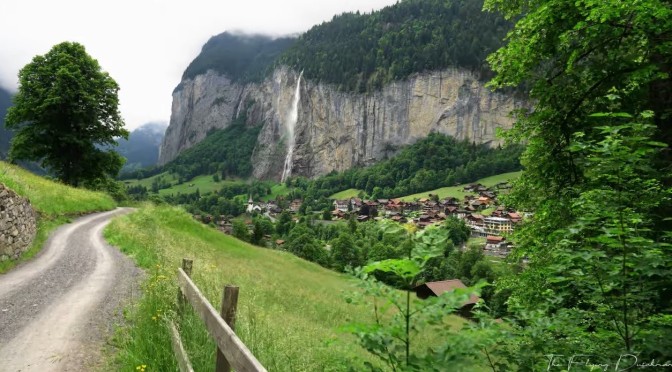
Lauterbrunnen is situated in one of the most impressive trough valleys in the Alps, between gigantic rock faces and mountain peaks. With its 72 thundering waterfalls, secluded valleys, colourful alpine meadows and lonely mountain inns, the Lauterbrunnen Valley is one of the biggest nature conservation areas in Switzerland.
– Description The very name ‘Lauter Brunnen’ (‘many fountains’) suggests the magnificence of this landscape. There are 72 waterfalls in the Lauterbrunnen Valley, the most famous being the Staubbach Falls. Plunging almost 300 metres from an overhanging rock face, they are one of the highest free-falling waterfalls in Europe.
In 1779, Johann Wolfgang von Goethe visited the valley, and was inspired by the roaring waters to write his well-known poem ‘Spirit song over the waters’.
Another deafening natural phenomenon are the Trümmelbach Falls in the ‘Black Monk’ mountain, hidden behind mighty rock faces. Up to 20,000 litres of water per second cascade over the ten glacier falls from a total height of about 200 metres. This spectacle can only be reached in summer by tunnel lift.
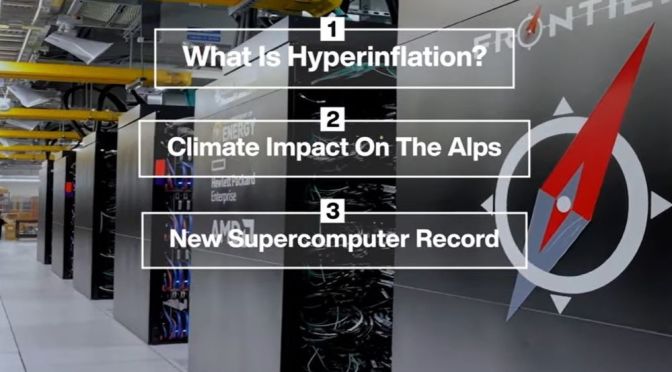
This week The World Economic Forum are highlighting 4 top stories:
What is hyperinflation,
the impact of climate change on the Alps,
a record breaking super computer and
the world’s first autonomous ship.
The World Economic Forum is the International Organization for Public-Private Cooperation. The Forum engages the foremost political, business, cultural and other leaders of society to shape global, regional and industry agendas. We believe that progress happens by bringing together people from all walks of life who have the drive and the influence to make positive change.
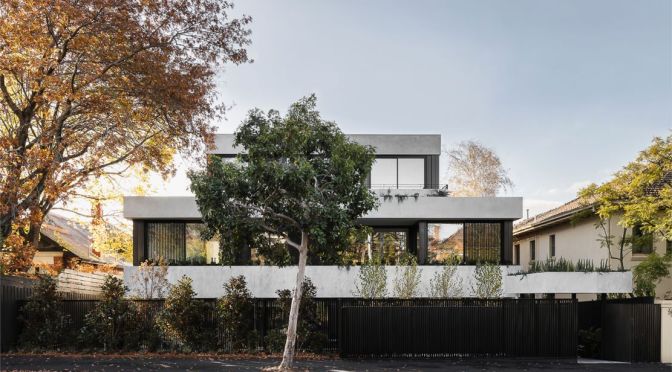
The exact sum of its parts, The Gallery House features spaces both grand and small, each expressing their own narrative. Crafted by Workroom, the super house stands as an exemplary piece of interior design and architecture. Situated in the well-established suburb of Toorak,
00:00 – The Local Project Print Publication 00:10 – Introduction to the Super House 01:27 – Creating Continuity with Materials 02:30 – Use of Stone in the House 02:47 – Landscape Design 03:21 – Natural Light 03:50 – A Sense of Timelessness 04:27 – What the Architect is Most Proud Of
The Gallery House sits amongst other large family homes and gardens. Despite its spatial openness, the super house is designed in allusion to experiences yet to come, flowing towards other aspects of itself and its context. A house tour of the property reveals the extent of its size. A true super house, the residence contains 4 bedrooms, 2 lounge rooms and vast, double-height voids. Workroom purposely conceals the size of the home from the street, creating anticipation and intrigue, using a curved concrete wall to the entry as a reveal of what is to come. The modern materials of concrete, terrazzo, timber and stone feature consistently in the super house. Subverting expectations, Workroom uses the characteristically heavy concrete to craft an elegant staircase that appears effortlessly lightweight, whilst timber and green stone facilitate an open connection to the lush landscaping. Embracing a raw materiality, Workroom creates a super house that will gracefully express the passage of time. With the capacity to visually evolve with age, The Gallery House is a successful interpretation of modern refinement.
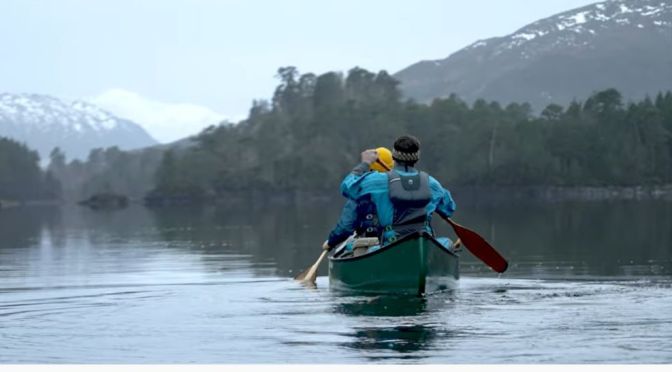
In February 2022, the British Isles were hit by three consecutive storms, some of the strongest seen in decades. In the days before the storms arrived, we decided to change the plan for our canoeing expedition whilst we were already on our way to Scotland. Instead of paddling the exposed lochs along the west coast, we opted for a more sheltered location. A glen tucked away right in the heart of the highlands. This film showcases the highlights of our journey.
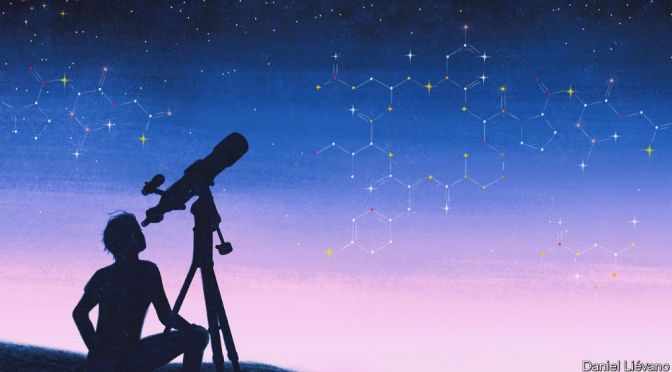
The thought of finding alien life has fascinated people since the time of the ancient Greeks—but developments in astrobiology could be about to turn this possibility into reality. How do you hunt for life beyond Earth—and might this be the decade when we find it?
Chapters: 00:00 – Is there life beyond Earth? 00:56 – How has the search for life evolved? 02:36 – What signs of life are scientists looking for? 03:48 – What are biosignatures? 04:28 – How to find intelligent life 06:03 – How telescopes today have improved our search 07:52 – Expanding the search beyond Earth
Read more of Alok Sharma’s coverage on the search for life in space: https://econ.st/3zw1Hxt
Exotic destinations, or staycations? As we make choices like these, we ask ourselves: Will we ever be able to fly without feeling guilty again? This film examines the tourism business today, and asks how the industry envisages the future.
The pandemic brought the tourist industry to a standstill. But it also highlighted something we have long suspected: Namely, too much travel is bad for the environment.
Not only that, but tourism transforms entire regions – not always for the better. It profoundly impacts communities and often brings benefits for only a very few. But our wanderlust remains. So, do travelers have to decide between the two extremes: exotic destinations (and high carbon footprints) or holidays at home? Given the climate emergency, can we fly without feeling guilty? How environmentally damaging are cruises? And what does it mean to have a sustainable holiday?
This documentary examines an industry that had gotten ahead of itself, even before it was hit by the pandemic. We hear from mayors, tourism managers, a climate expert, an internet activist and a sociologist. The film travels to the European tourist hotspots of Barcelona, Venice and Dubrovnik. The tiny island of Palau in the Pacific Ocean demonstrates how sustainable travel can be sensibly organized, and a Parisian start-up develops a concept for virtual travel experiences.
Portland, Oregon’s largest city, sits on the Columbia and Willamette rivers, in the shadow of snow-capped Mount Hood. It’s known for its parks, bridges and bicycle paths, as well as for its eco-friendliness and its microbreweries and coffeehouses. Iconic Washington Park encompasses sites from the formal Japanese Garden to Oregon Zoo and its railway. The city hosts thriving art, theater and music scenes.
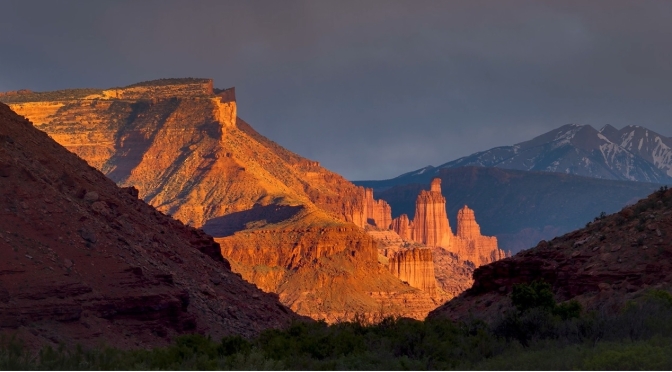
This is Moab is a film that was designed to highlight the wide variety of landscapes that you can experience when you visit Moab, Utah – and most of these locations are not located in Arches or Canyonlands National Parks.
Moab Utah is a many things to many people, but what ever it is that brings you to Moab (vacation, off-roading, rock climbing, biking, hiking, photography, painting, rafting, camping) you may not realize that if you just visit the two national parks (Arches and Canyonlands) you’re missing out on 98% of what Moab has to offer.
The Bureau of Land Management (BLM) in Moab manages over 1.8 MILLION acres of breathtaking red rock canyons, cliffs, fins, spires and hoodoos – and all of this public land is located outside of the National Parks.
Then there’s the LaSal Mountains, the second largest in all of Utah – with elevations reaching 13,000 feet. Tired of the 100 degree desert heat? Take a drive on the LaSal Mountain Loop Rd and enjoy cooler weather and spectacular mountain scenery.
Moab, Utah is one of the most amazing locations you can visit – whether you’re seeking adventure, solitude, or anything in between. If you’re a painter, photographer, hiker, biker, rock climber, rafter, off-roader, or traveling in an RV or camper – Moab has what you’re looking for. As a photographer Moab offers some of the finest landscapes anywhere on earth – with millions of acres of red-rock sandstone arches, spires, fins, canyons, and hoodoos.
Moab is also home to the second tallest mountain range in Utah – the La Sal Mountains with peaks reaching over 13,000 feet in elevation. Often these peaks are snow-capped even in the spring and early Summer – making for a beautiful contrast between desert landscape and mountains. In summer take a short 1 hour drive from the desert climate of Moab with temperatures near 100 degrees to sitting under an Aspen grove on the La Sal mountains with temperatures in the mid 70’s.
Love stargazing? You’ll love the dark skies around Moab. Head into Arches National Park, Canyonlands National Park, or Dead Horse Point State Park and enjoy some of the darkest skies in the country. The International Dark Sky Association has designated these locations as dark-sky parks, and you’ll soon discover why. But don’t stop there – anytime you leave town, you’ll discover that the lack of any significant light pollution and the dry high-desert climate ensures a wonderful view of the night sky on most nights. You’ll also be happy to know that Moab is also one of the safest places to hang outdoors – as there really isn’t much in the way of predatory wildlife.
Ancient food in the Merzouga Region of Morocco. Merzouga is a small Moroccan town in the Sahara Desert, near the Algerian border. It’s known as a gateway to Erg Chebbi, a huge expanse of sand dunes north of town. West of Merzouga, Dayet Srji is a seasonal salt lake that’s often dry in summer. When full, it attracts a wide range of migratory and desert birds, including desert warblers, Egyptian nightjars and, occasionally, flamingos.
Restaurants: Dar Aytma Restaurant and Dar Gnaoua Bambara.
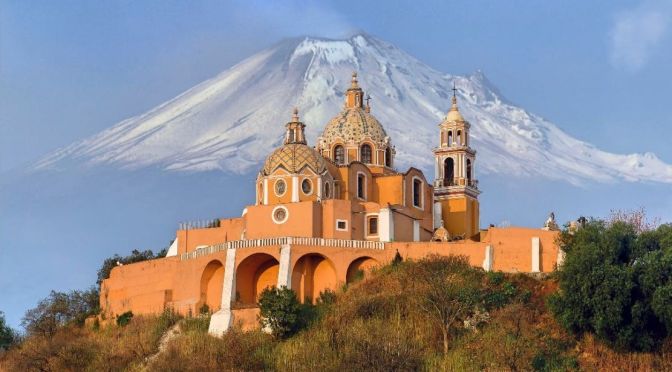
@Eva zu Beck takes you on a journey to Cholula and Puebla, two cities in central Mexico designated as Pueblos Mágicos, or Magical Towns. These are places that offer visitors a very special experience, owing to their typical historic character and in some cases, colonial-era architecture. As well as a spectacular pyramid and a miniature volcano, the towns are a great place to experience the Danza de los Voladores, or Dance of the Flyers.
News, Views and Reviews For The Intellectually Curious




 Boomers Daily