Category Archives: Technology

Smartphone Books: The New York Public Library’s Interactive “Insta Novels”

Insta Novels launched August 22, 2018 on the Library’s Instagram account (@nypl) with Part 1 of a newly digitized version of Alice’s Adventures in Wonderland by Lewis Carroll. The novel is illustrated by well-known designer Magoz (@magoz).

The New York Public Library Insta Novels The Metamorphosis Franz Kafka

First, go to the Library’s Instagram account (@nypl) and tap Part 1 of Alice’s Adventures in Wonderland in the Highlights section, right under the bio.

Rest your thumb on lower right part of the screen to hold the page, and lift your thumb to turn the page. (The lower right thumb holder is designed to double as a flip book: if you lift your thumb and let the pages flip, you’ll see an animation.)

As more stories are added, the NYPL Instagram account’s Highlights will turn into a digital bookshelf.

Archaeology: “Blombos Cave”, South Africa – First Human “Technological Innovations” (Video)

See the first laboratory on Earth – Blombos Cave. Here our ancestors conducted the first chemistry experiments.

Blombos Cave is an archaeological site located in Blomboschfontein Nature Reserve, about 300 km east of Cape Town on the Southern Cape coastline, South Africa. The cave contains Middle Stone Age (MSA) deposits currently dated at between c. 100,000 and 70,000 years Before Present (BP), and a Late Stone Age sequence dated at between 2000 and 300 years BP. The cave site was first excavated in 1991 and field work has been conducted there on a regular basis since 1997, and is ongoing.

The excavations at Blombos Cave have yielded important new information on the behavioural evolution of anatomically modern humans. The archaeological record from this cave site has been central in the ongoing debate on the cognitive and cultural origin of early humans and to the current understanding of when and where key behavioural innovations emerged among Homo sapiens in southern Africa during the Late Pleistocene. Archaeological material and faunal remains recovered from the Middle Stone Age phase in Blombos Cave – dated to ca. 100,000–70,000 years BP – are considered to represent greater ecological niche adaptation, a more diverse set of subsistence and procurements strategies, adoption of multi-step technology and manufacture of composite tools, stylistic elaboration, increased economic and social organisation and occurrence of symbolically mediated behaviour.

The most informative archaeological material from Blombos Cave includes engraved ochre, engraved bone ochre processing kits, marine shell beads, refined bone and stone tools and a broad range of terrestrial and marine faunal remains, including shellfish, birds, tortoise and ostrich egg shell and mammals of various sizes.[20][21][22] These findings, together with subsequent re-analysis and excavation of other Middle Stone Age sites in southern Africa, have resulted in a paradigm shift with regard to the understanding of the timing and location of the development of modern human behaviour.

From Wikipedia

“Telemedicine” Is The Way To Treat “Coronavirus / Covid-19” Pandemic (NEJM)

From a New England Journal of Medicine article (March 11, 2020):

New England Journal of Medicine logoA central strategy for health care surge control is “forward triage” — the sorting of patients before they arrive in the emergency department (ED). Direct-to-consumer (or on-demand) telemedicine, a 21st-century approach to forward triage that allows patients to be efficiently screened, is both patient-centered and conducive to self-quarantine, and it protects patients, clinicians, and the community from exposure. 
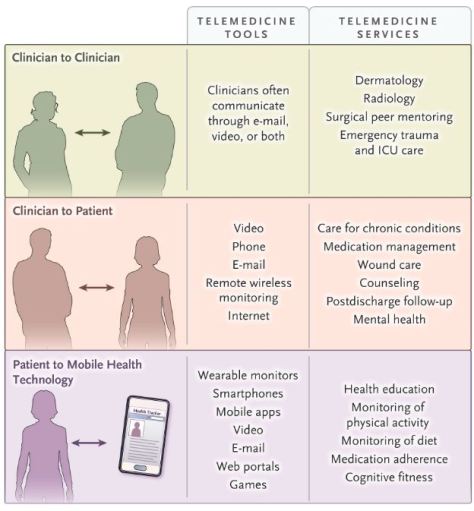
It can allow physicians and patients to communicate 24/7, using smartphones or webcam-enabled computers. Respiratory symptoms — which may be early signs of Covid-19 — are among the conditions most commonly evaluated with this approach. Health care providers can easily obtain detailed travel and exposure histories. Automated screening algorithms can be built into the intake process, and local epidemiologic information can be used to standardize screening and practice patterns across providers.

Telemedicine for Coronavirus Covid-19 New England Journal of Medicine March 11 2020

More than 50 U.S. health systems already have such programs. Jefferson Health, Mount Sinai, Kaiser Permanente, Cleveland Clinic, and Providence, for example, all leverage telehealth technology to allow clinicians to see patients who are at home. Systems lacking such programs can outsource similar services to physicians and support staff provided by Teladoc Health or American Well. At present, the major barrier to large-scale telemedical screening for SARS-CoV-2, the novel coronavirus causing Covid-19, is coordination of testing. As the availability of testing sites expands, local systems that can test appropriate patients while minimizing exposure — using dedicated office space, tents, or in-car testing — will need to be developed and integrated into telemedicine workflows.

Read full article

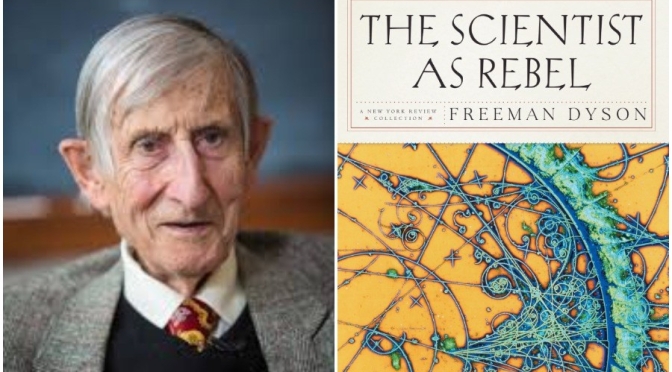
Tributes: “Maverick Genius” Freeman Dyson Dies At 96 (1923-2020); Said That “Life Begins At 55”

Excerpts from a New York Times article (Feb 28, 2020):

The Pioneering Odyssey of Freeman Dyson Maverick Genius Book“Life begins at 55, the age at which I published my first book,” he wrote in “From Eros to Gaia,” one of the collections of his writings that appeared while he was a professor of physics at the Institute for Advanced Study — an august position for someone who finished school without a Ph.D. The lack of a doctorate was a badge of honor, he said. With his slew of honorary degrees and a fellowship in the Royal Society, people called him Dr. Dyson anyway.

Freeman J. Dyson, a mathematical prodigy who left his mark on subatomic physics before turning to messier subjects like Earth’s environmental future and the morality of war, died on Friday at a hospital near Princeton, N.J. He was 96.

As a young graduate student at Cornell University in 1949, Dr. Dyson wrote a landmark paper — worthy, some colleagues thought, of a Nobel Prize — that deepened the understanding of how light interacts with matter to produce the palpable world. The theory the paper advanced, called quantum electrodynamics, or QED, ranks among the great achievements of modern science.

Read full article

Health: “Amazon Care” Virtual Medical Service Smartphone App Launches

From a Becker’s Hospital Review release (02/19/2020):

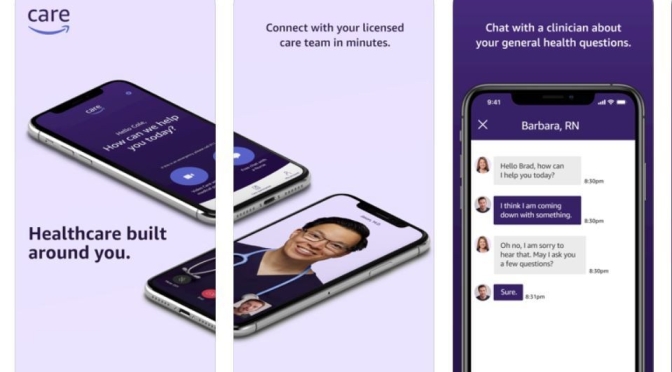
Amazon Care Virtual Medical Service app for Smartphones February 19 2020Amazon’s virtual medical clinic that offers in-person follow-ups is now available to Amazon employees in Seattle.
Five things to know:

1. The virtual medical service, called Amazon Care, went live via the company’s employee benefits portal on Feb. 18. It is available to Amazon employees who work at the company’s headquarters and their dependents.

2. Amazon Care offers employees virtual medical consultations with physicians and nurse practitioners. Patients can use the app to schedule a follow-up visit in their home or office.

Amazon Care Virtual Medical Service app for Smartphones February 19 20203. Medications prescribed via Amazon Care can be delivered to a patient’s home.

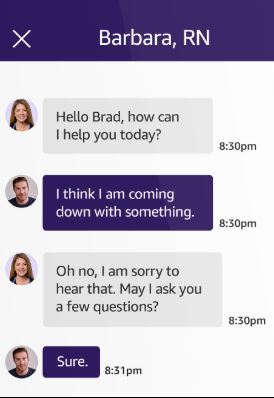
4. “Amazon Care eliminates travel and wait time, connecting employees and their family members to a physician or nurse practitioner through live chat or video, with the option for in-person follow up services from a registered nurse ranging from immunizations to instant strep throat detection,” an Amazon spokesperson told CNBC.

5. Amazon first shared information about Amazon Care in September, noting that it planned to pilot the service in Seattle.

Amazon Care website

Read full article

Digital Health: Americans Open To 24/7 Monitoring Devices, AI Technology To Lower Health Care Costs

Center for the Digital Future at USC Annenberg (Feb 19, 2020):

Center for a Digital Future USCMany Americans are willing to make significant personal tradeoffs to lower their health insurance rates or medical costs, such as agreeing to 24/7 personal monitoring or working with artificial intelligence instead of a human doctor, the Center for the Digital Future at the USC Annenberg School for Communication and Journalism finds.

Among the study’s findings:

  • Nearly 1 in 4 Americans (24%) would work with an artificial intelligence-based technology if it lowered the cost of their health care.
  • Most Americans (80%) think that access to health care is a basic right that should be available to all citizens regardless of their ability to pay. This is a view shared even by a majority of citizens who identify themselves as very conservative (56%).
  • Significant percentages of Americans are willing to make profound lifestyle choices in exchange for lower insurance rates. For example, one-third of Americans would agree to 24/7 personal monitoring by insurance companies or health care professionals if their insurance rates were reduced.
  • Twenty-one percent of Americans said they would stay in their current job if leaving it meant losing their current health coverage.
  • Almost all Americans say health care is a key issue in the 2020 presidential election (92%).
  • Even though Americans say they are satisfied with their current health insurance, they are open to alternatives. Thirty percent of Americans would consider buying health coverage from any company that offers lower costs, including a variety of non-insurance companies such as Amazon, Google, or Costco.

Read more

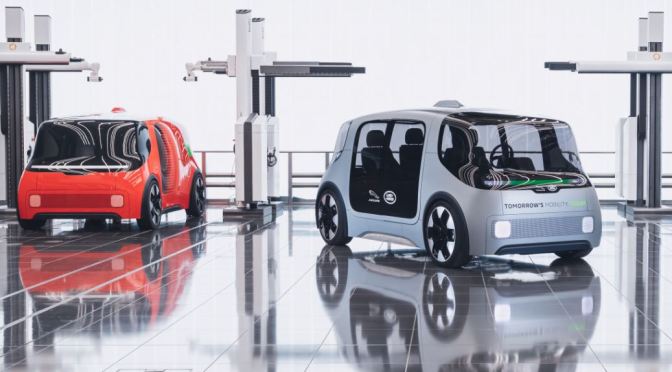
Future Mobility: Jaguar Land Rover’s “Project Vector” Self-Driving Electric Vehicle Unveiled

18th February 2020: Jaguar Land Rover has today unveiled the bold new concept vehicle, Project Vector, as part of the company’s Destination Zero journey, offering its vision of an autonomous, electric, connected future for urban mobility. 

Vector 6 Jaguar Land Rover’s Destination Zero

Jaguar Land Rover’s Destination Zero mission is an ambition to make societies safer and healthier, and the environment cleaner. Delivered through relentless innovation, the company’s focus is on achieving a future of zero emissions, zero accidents and zero congestion – through its products, services and across its facilities. As the next stage of that journey, the Project Vector concept showcases an advanced, flexible, multi-use electric vehicle that is ‘autonomy-ready’.

The compact, flexible vehicle concept measuresjust four metres in length and is designed for the city, packaging all its battery and drivetrain components into a flat floor, to allow a variety of uses. The revolutionary interior cabin space allows seating configurations for private, or shared use and even the opportunity for commercial applications, such as last mile deliveries.

Website

Technology: “Amazon Empire” (Frontline Video)

An inside look at how Amazon CEO Jeff Bezos built one of the largest and most influential economic forces in the world — and the cost of Amazon’s convenience.

Jeff Bezos is not only the richest man in the world, he has built a business that is without precedent in the history of American capitalism. His power to shape everything from the future of work to the future of commerce to the future of technology is unrivaled. As politicians and regulators around the world start to consider the global impact of Amazon — and how to rein in Bezos’ power — FRONTLINE investigates how he executed a plan to build one of the most influential economic and cultural forces in the world.