Category Archives: Technology

Health: “Amazon Care” Virtual Medical Service Smartphone App Launches

From a Becker’s Hospital Review release (02/19/2020):

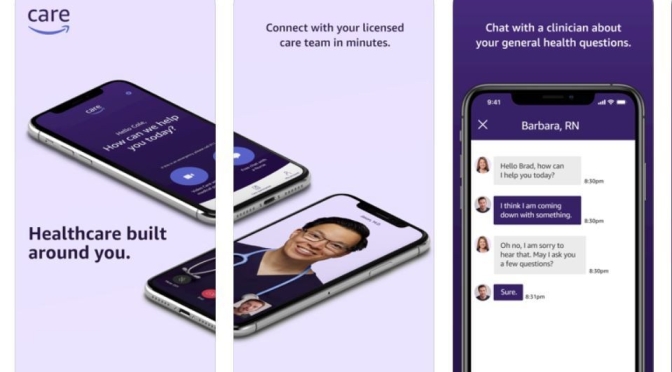
Amazon Care Virtual Medical Service app for Smartphones February 19 2020Amazon’s virtual medical clinic that offers in-person follow-ups is now available to Amazon employees in Seattle.

Five things to know:

1. The virtual medical service, called Amazon Care, went live via the company’s employee benefits portal on Feb. 18. It is available to Amazon employees who work at the company’s headquarters and their dependents.

2. Amazon Care offers employees virtual medical consultations with physicians and nurse practitioners. Patients can use the app to schedule a follow-up visit in their home or office.

Amazon Care Virtual Medical Service app for Smartphones February 19 20203. Medications prescribed via Amazon Care can be delivered to a patient’s home.


4. “Amazon Care eliminates travel and wait time, connecting employees and their family members to a physician or nurse practitioner through live chat or video, with the option for in-person follow up services from a registered nurse ranging from immunizations to instant strep throat detection,” an Amazon spokesperson told CNBC.

5. Amazon first shared information about Amazon Care in September, noting that it planned to pilot the service in Seattle.

Amazon Care website

Read full article

Digital Health: Americans Open To 24/7 Monitoring Devices, AI Technology To Lower Health Care Costs

Center for the Digital Future at USC Annenberg (Feb 19, 2020):

Center for a Digital Future USCMany Americans are willing to make significant personal tradeoffs to lower their health insurance rates or medical costs, such as agreeing to 24/7 personal monitoring or working with artificial intelligence instead of a human doctor, the Center for the Digital Future at the USC Annenberg School for Communication and Journalism finds.

Among the study’s findings:

  • Nearly 1 in 4 Americans (24%) would work with an artificial intelligence-based technology if it lowered the cost of their health care.
  • Most Americans (80%) think that access to health care is a basic right that should be available to all citizens regardless of their ability to pay. This is a view shared even by a majority of citizens who identify themselves as very conservative (56%).
  • Significant percentages of Americans are willing to make profound lifestyle choices in exchange for lower insurance rates. For example, one-third of Americans would agree to 24/7 personal monitoring by insurance companies or health care professionals if their insurance rates were reduced.
  • Twenty-one percent of Americans said they would stay in their current job if leaving it meant losing their current health coverage.
  • Almost all Americans say health care is a key issue in the 2020 presidential election (92%).
  • Even though Americans say they are satisfied with their current health insurance, they are open to alternatives. Thirty percent of Americans would consider buying health coverage from any company that offers lower costs, including a variety of non-insurance companies such as Amazon, Google, or Costco.

Read more

Future Mobility: Jaguar Land Rover’s “Project Vector” Self-Driving Electric Vehicle Unveiled

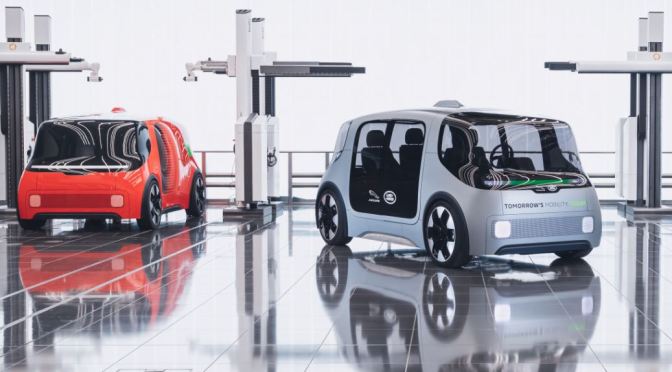
18th February 2020: Jaguar Land Rover has today unveiled the bold new concept vehicle, Project Vector, as part of the company’s Destination Zero journey, offering its vision of an autonomous, electric, connected future for urban mobility. 

Vector 6 Jaguar Land Rover’s Destination Zero

Jaguar Land Rover’s Destination Zero mission is an ambition to make societies safer and healthier, and the environment cleaner. Delivered through relentless innovation, the company’s focus is on achieving a future of zero emissions, zero accidents and zero congestion – through its products, services and across its facilities. As the next stage of that journey, the Project Vector concept showcases an advanced, flexible, multi-use electric vehicle that is ‘autonomy-ready’.

The compact, flexible vehicle concept measuresjust four metres in length and is designed for the city, packaging all its battery and drivetrain components into a flat floor, to allow a variety of uses. The revolutionary interior cabin space allows seating configurations for private, or shared use and even the opportunity for commercial applications, such as last mile deliveries.

Website

Technology: “Amazon Empire” (Frontline Video)

An inside look at how Amazon CEO Jeff Bezos built one of the largest and most influential economic forces in the world — and the cost of Amazon’s convenience.

Jeff Bezos is not only the richest man in the world, he has built a business that is without precedent in the history of American capitalism. His power to shape everything from the future of work to the future of commerce to the future of technology is unrivaled. As politicians and regulators around the world start to consider the global impact of Amazon — and how to rein in Bezos’ power — FRONTLINE investigates how he executed a plan to build one of the most influential economic and cultural forces in the world.

Health: New “Digital AI Device” Helps Identify Patients With Atrial Fibrillation (Mayo Clinic)

Mayo Clinic LogoThis small device may change how doctors identify and manage patients with atrial fibrillation, an irregular heart rhythm that increases risk of stroke.

And the past. The device uses artificial intelligence, or AI, to not only determine if a person is in the midst of an episode of atrial fibrillation, but also it can reveal if they’ve had the irregular rhythm before or will have it in the future.

Dr. Paul Friedman and his team trained the device to detect subtle changes in the heart’s electrical signals. Then in a study, they found it can identify patients with episodic atrial fibrillation. Even when they record the heart while the rhythm is normal – something no current wearable heart monitor can do.

That’s because a heart monitor won’t detect atrial fibrillation unless you have an episode while wearing it. But in a matter of moments, the AI device can identify people with atrial fibrillation, even if their heart is in normal rhythm. Then they can get on the right treatment to help prevent life-threatening strokes from happening.

Energy Trends: Beaming Solar Power, Brine, Wind & Living Solar Cells (WSJ)

From a Wall Street Journal online article (Feb 13, 2020):

Beaming Solar Power Wall Street Journal
Beaming Solar Power – Wall Street Journal

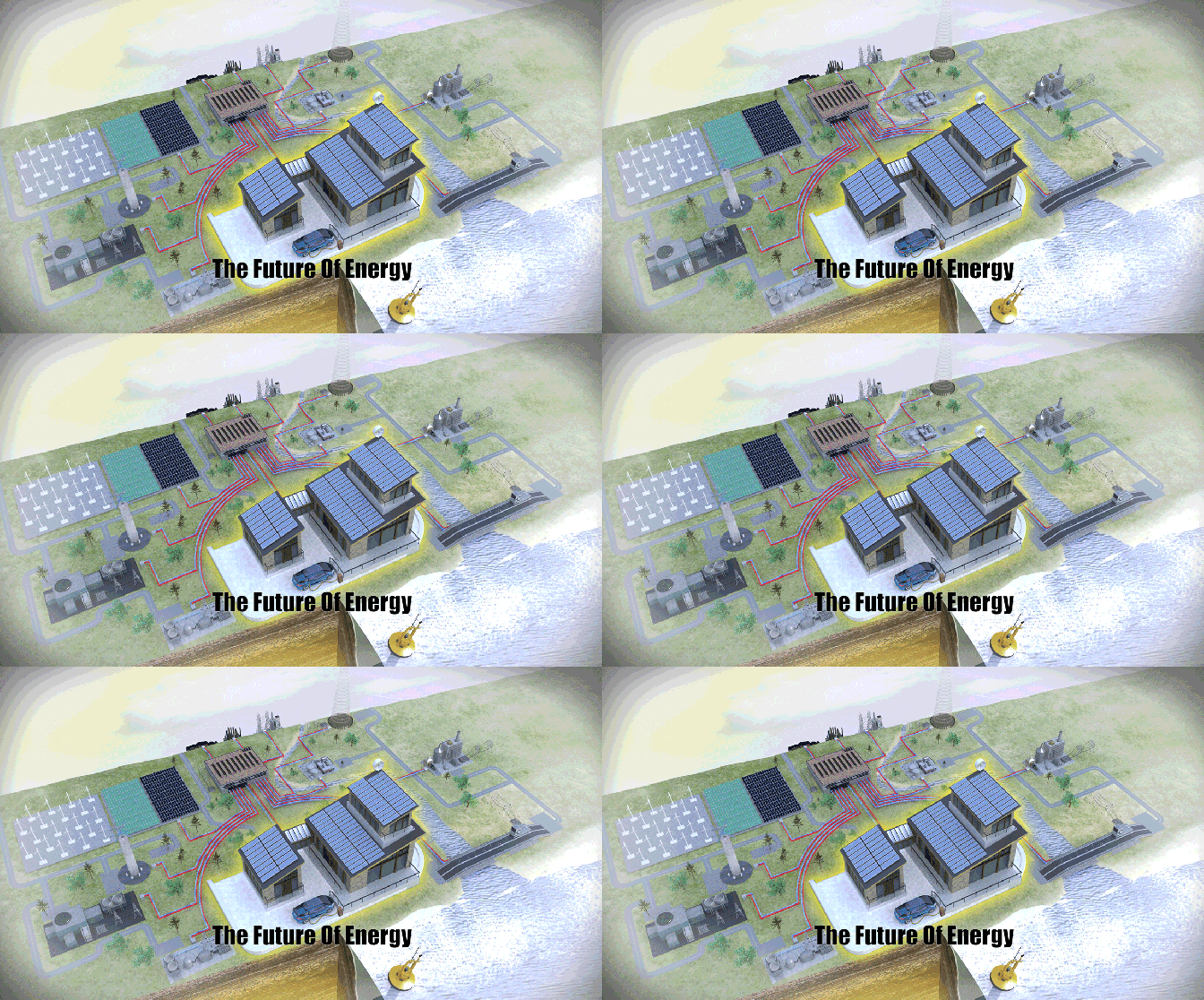
To meet the surge in demand projected by 2050, innovative engineers, utility operators and grid architects are planning for a future that blurs the distinctions between energy consumers and producers. Homeowners, businesses and other traditional utility customers are beginning to take on a new role as energy producers, through small-scale solar arrays, wind turbines and other new affordable technologies.

To coordinate so many different power sources and demands, the future power grid will depend on artificial intelligence, automated two-way communications and computer control systems to continuously collect and synthesize data from millions of smart sensors.

  • Beaming Solar Power – Scientists and engineers are working on spacecraft to capture sunlight and transform it into electricity that is wirelessly beamed to Earth. A prototype from the California Institute of Technology transmits power in a steerable beam. Japan’s space agency JAXA demonstrated a unit that converted 1.8 kilowatts of electricity into microwaves and then beamed it about 100 yards. China is planning an orbital solar power station.
  • Living Solar Cells – Researchers are exploring how to exploit the ability of many microorganisms to generate electric current through photosynthesis. Solar cells using microbes would be cleaner and cheaper than those based on conventional semiconductors. So far, the current is only about enough to drive a small fan. By using two kinds of microbes instead of one, scientists in China recently found a way to boost the electrical energy.
  • The Power of Brine – Scientists in Norway, the Netherlands, Japan and the U.S. are generating electricity by harnessing the difference in salt concentration between seawater and freshwater. In one experiment, a semipermeable membrane allows seawater ions to pass into the fresh water. The movement of the ions generates an electric current.

Read full article

Top New Camper Vans: “2020 Storyteller Overland Mode 4X4”

The all new MODE 4×4™ is built on the rugged Mercedes-Benz Sprinter 144 4×4 platform. Authentically designed with daily drivers, weekend warriors, full time vanlifers, and long-range overlanders in mind… with an infinitely adaptive floor plan.

The MODE 4×4™ is equipped with a forward thinking, user friendly feature set that includes the industry first LiveFree™ OTG sustainable, automotive grade energy management system (powered by Volta).

With this 12kw clean energy lithium battery system you will have all the power you need to enjoy life on the road and off the grid without the noise, inconvenience, and fumes that accompany the fossil fuel generator setups of traditional RVs.

Website

Future Of Housing: Kajstaden Tall Timber Building In Sweden By C.F. Møller Architects (2019)

Kajstaden Tall Timber Building C.F. Møller Architects 2019The Tall Timber Building residence has become a landmark and, during construction, became Sweden’s tallest solid wooden building in the new district of Kajstaden at Lake Mälaren in Västerås. All parts of the building consist of cross-laminated wood, which includes the walls, joists and balconies as well as the lift and stairwell shafts.

Kajstaden – Tall Timber Building is an important landmark for sustainable construction and a reference project that shows that conversion to climate conscious architecture is possible. Through research projects and several active wood projects, C.F. Møller Architects has focused on innovation as well as developing and implementing multi-storey buildings with solid wood frames. In Kajstaden, an active decision was made to prioritise industrial timber techniques for the building material to influence and take responsibility for the impact of the construction industry on the environment and climate change. A crucial advantage of wood, unlike other building materials, is that the production chain for the material produces a limited amount of carbon dioxide emissions. Instead, it is part of a closed cycle, where carbon is retained in the frame of the building.

Kajstaden Tall Timber Building C.F. Møller Architects Diagram 2019

Research also shows that buildings with a wooden frame make a positive contribution to human health and well-being- thanks to better air quality and acoustic qualities.

Website