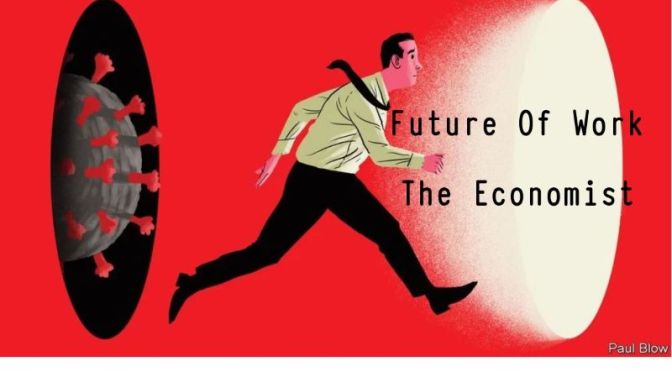
The pandemic has fuelled an explosion of unemployment and a transformation in how many people work, especially in richer countries. Many of these changes are promising and there are many reasons for optimism about the labour market.
Also, the prospects for working from home and MIT labour economist David Autor on the effect of covid-19 on automation. Simon Long hosts
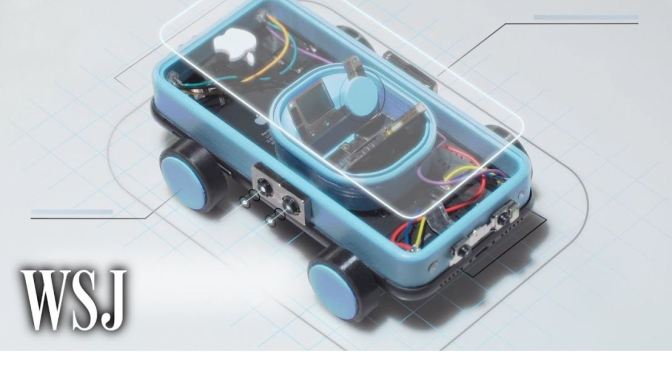
As tech companies become a key part of the auto industry, cars are looking more like giant computers on wheels. To understand why a tech giant like Apple might want to make a car, we built one out of iPhone parts. Photo illustration: Alex Kuzoian/WSJ
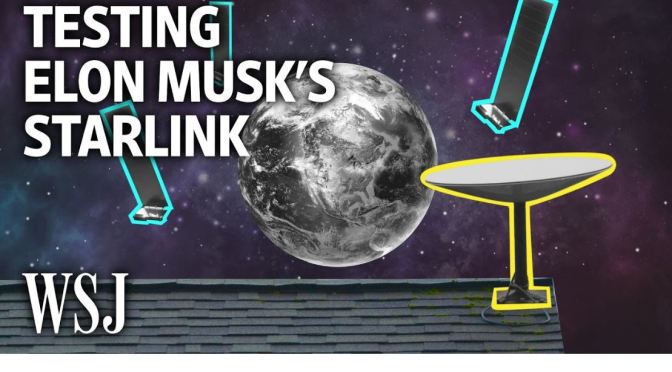
SpaceX’s new Starlink satellite internet service is being touted as a rural internet game changer. WSJ spent time with a few beta testers in a very remote area of Washington state to see if it’s truly the solution to the global broadband gap. Photo Illustration: Laura Kammermann
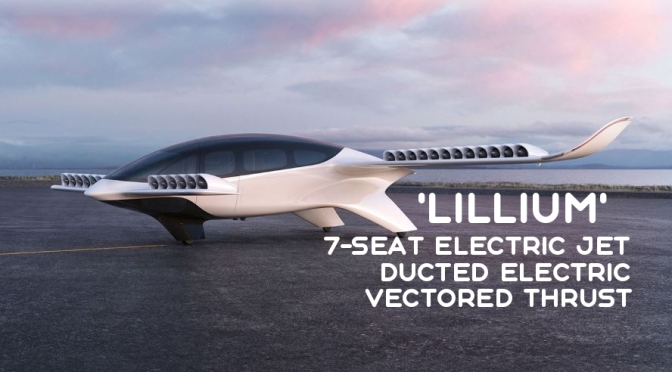
Lilium can revolutionize regional travel, saving people hours not minutes. Using its 7-Seater Lilium Jet, revealed March 30, 2021. Lilium’s regional shuttle service will enable sustainable, high-speed transportation. The 7-Seater Lilium Jet has market-leading capacity and is the first of Lilium’s serial aircraft.
It is capable of quiet vertical take-off, allowing Lilium access to more landing sites and the opportunity to build higher network density, avoiding the need for expensive ground infrastructure. The 7-Seater Lilium Jet and regional shuttle service business model are projected to deliver the best unit economics, with passenger and enterprise opportunities.
The Lilium 7-Seater Jet
The Lilium 7-Seater Jet has a projected cruise speed of 175 mph at 10,000 feet and a range of 155+ miles, including reserves. It is the culmination of five years of technology development across four generations of technology demonstrators, including Lilium’s full-scale 5-Seater.
Lilium applied for concurrent type certification for a high-capacity aircraft with EASA and the FAA in 2018. Development of the 7-Seater Lilium Jet began in stealth mode following this milestone. In 2020 the 7-Seater Lilium Jet received CRI-A01 certification basis from EASA.
Lilium has successfully developed, tested and refined the underlying technology for electric vertical take-off and landing jets – Lilium’s proprietary Ducted Electric Vectored Thrust (“DEVT”) technology, along with key control systems, aircraft and battery architecture. DEVT technology enables Lilium to scale to higher-capacity aircraft and keep noise emissions and ground footprint low.
While indoor dining has dropped way down during the pandemic, food delivery has grown considerably. DoorDash and Uber Eats, the two largest delivery apps by market share both saw their sales double from the end of 2019 to the end of 2020.
But while it might be an easy decision for customers to use these third-party delivery apps, the decision for restaurants is not so easy. There is a lot to consider, and it’s not a one-size-fits-all solution.
Bitcoin’s volatility has limited its adoption for payments, so entrepreneurs created stablecoins: cryptocurrencies pegged to assets such as the U.S. dollar. But the recent settlement of a probe into the most popular stablecoin, tether, shows the need for transparency in the growing industry. Photo illustration: Sharon Shi/WSJ
The dream of mRNA persevered in part because its core principle was tantalizingly simple, even beautiful: The world’s most powerful drug factory might be inside all of us.
Like so many breakthroughs, this apparent overnight success was many decades in the making. More than 40 years had passed between the 1970s, when a Hungarian scientist pioneered early mRNA research, and the day the first authorized mRNA vaccine was administered in the United States, on December 14, 2020. In the interim, the idea’s long road to viability nearly destroyed several careers and almost bankrupted several companies.
NASA is partnering with SpaceX, Blue Origin and others to search for water on the moon. Water is the foundation for rocket propellant, which could supply refueling stations in the cosmos and make Mars trips cheaper. Photo illustration: Crystal Tai
A selection of three essential articles read aloud from the latest issue of The Economist. This week: science after the pandemic, Rwanda: paragon or prison? (9:10) And Herbie goes electric (33:55)









 Boomers Daily