


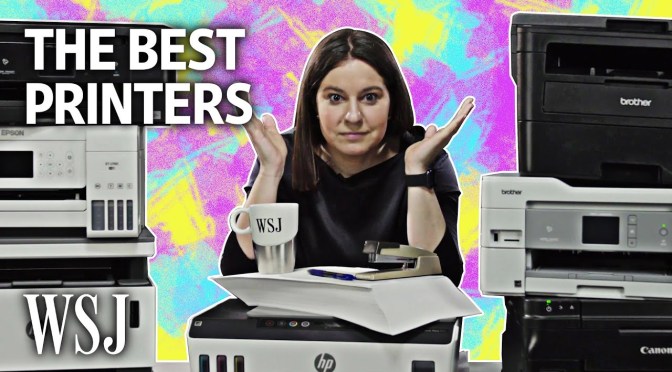
Printers are still the worst but at least new ink-tank printers help you save money on ink. WSJ’s Joanna Stern survived testing 10 home printers from Epson, HP, Brother and Canon to tell you which are worth buying. Personal Technology With Joanna Stern
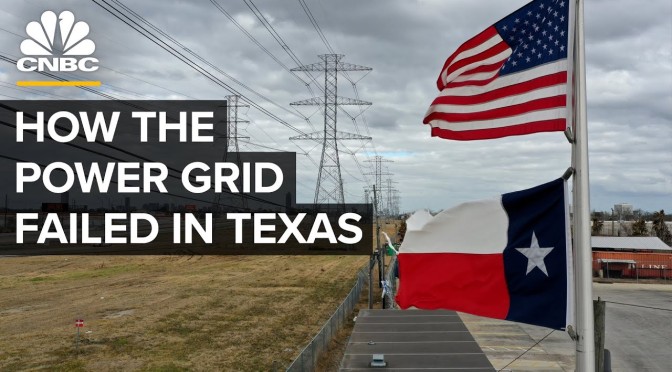
Texas had a rough winter in 2021. In mid-February, with temperatures dropping to the single digits, demand for electricity hit a record high throughout Texas. Supply ran short, causing the state’s electric grid operator to implement rolling power outages.
At the height of the crisis, more than 4.5 million customers lost power. The freak winter storm caused neighboring states such as Louisiana, Oklahoma, Arkansas and Kansas to also impose rolling blackouts. Texas residents shivered in the cold, as outages lasted for days at a time. They lost access to water. Some resorted to turning on their cars in their garages to keep warm then died due to carbon monoxide poisoning.
The historic breakdown was a wake-up call — if the power grid in Texas was so fragile, what about the rest of the United States? The U.S. has faced a 67% increase in weather-related power outages since 2000, according to data from Climate Central. Part of the problem is an aging infrastructure. Most of today’s power grid was built in the 1950s and ’60s, with the hopes that it would last for 50 years.
Vaccine passports are likely to become a feature of everyday life as lockdowns are lifted across the world. But as “green passes” kick-start economies, what are the potential drawbacks? Read more of our coverage on coronavirus : https://econ.st/397Mkxq
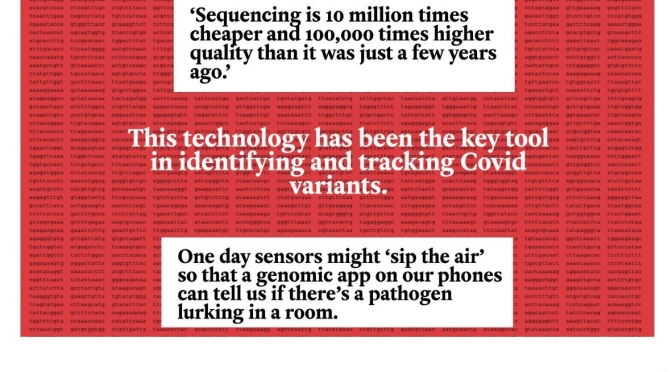
The advent of commercial genome sequencing has recently, and credibly, been compared to the invention of the microscope, a claim that led me to wonder whether this new, still relatively obscure technology, humming away in well-equipped labs around the world, would prove to be the most important innovation of the 21st century.

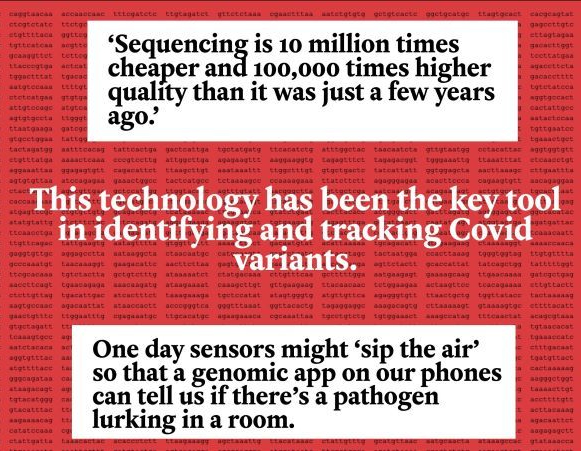
And unexpectedly, Covid-19 has proved to be the catalyst. “What the pandemic has done is accelerate the adoption of genomics into infectious disease by several years,” says deSouza, the Illumina chief executive. He also told me he believes that the pandemic has accelerated the adoption of genomics into society more broadly — suggesting that quietly, in the midst of chaos and a global catastrophe, the age of cheap, rapid sequencing has arrived.
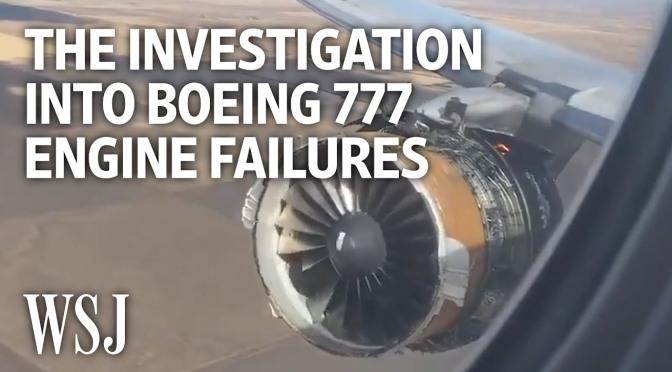
A type of Pratt & Whitney engine on Boeing 777s has failed catastrophically three times in a three-year span. Federal investigators are trying to figure out why.
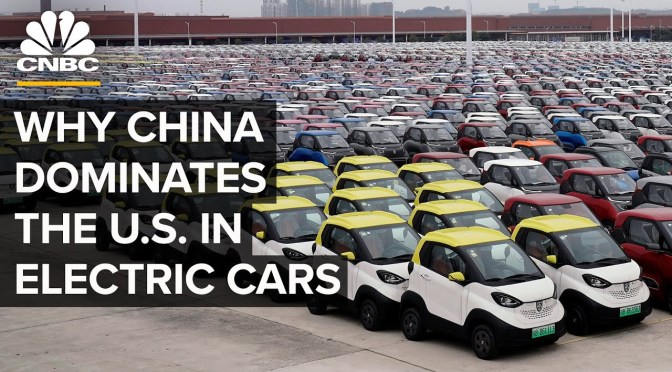
The global electric vehicle market is heating up and China wants to dominate. The country has invested at least $60 billion to support the EV industry and it’s pushing an ambitious plan to transition to all electric or hybrid cars by 2035. Tesla entered the Chinese market in 2019 and has seen rapid growth.
China sold roughly one million more EVs than the U.S. in 2020. But there are signs the U.S. is getting more serious about going electric. President Joe Biden announced a goal to reach net-zero emissions by 2050 and investments in green infrastructure. Watch the video to find out how China came to dominate the market and whether it’s too late for the U.S. to catch up.
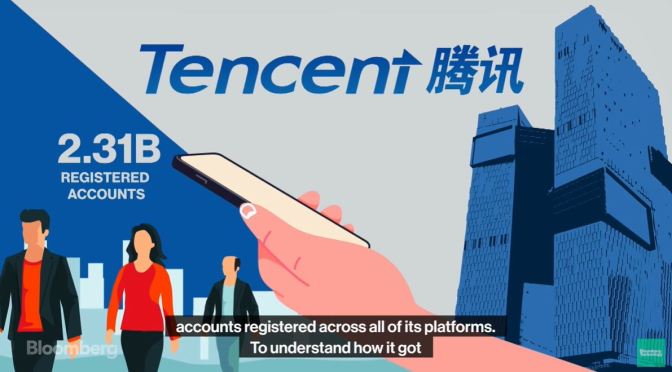
Mar.23 — In the space of two decades, Tencent Holdings Ltd. has become China’s most valuable company and Asia’s largest conglomerate. But with Chinese authorities stepping up scrutiny of the internet sector and cracking down on monopolies. it’s not clear if the WeChat owner will still have the same freedom to expand. Bloomberg Television’s David Ingles reports.
In the skies above our heads, humanity’s titanic geopolitical superpowers are yet again duking it out for supremacy among the stars. Only this time, unlike the 1960s, there’s three of them. Or is there? It’s complicated. Join us today as we helmet up and examine the new space race unfolding right now between the US, China and Russia.
What you might call the oldschool or ‘classic’ space race started in the 1950s, peaked during the 60s, and petered out by the mid 70s. It was, to be sure, an unofficial race. Nobody waved a novelty green flag to set things off. But the two largest economic and technological powers of the day – the United States of America and the Soviet Union – fought bitterly to be the first to make meaningful headway into the cosmos.
The Lawrence Lab? The Berkeley Lab? Lawrence Livermore Berkeley Lab? Luther Burbank Laboratory? Berkeley Countrywide Laboratory? Nope. Not quite. We’re Lawrence Berkeley National Laboratory, or Berkeley Lab for short. But we do understand the confusion — it’s hard to remember names, especially when so many sound alike! So we jammed 90 years of history into less than 3 minutes to help you get it right.
The Lawrence Berkeley National Laboratory, commonly referred to as Berkeley Lab, is a United States national laboratory that conducts scientific research on behalf of the Department of Energy. Located in the hills of Berkeley, California, the lab overlooks the campus of the University of California, Berkeley.



 Boomers Daily