From silent one-man midget subs to U-boats on secret missions, both sides used secret submersibles of all shapes and sizes to conduct clandestine warfare in the war. An examination of the murky world of underwater “sneak craft” in WWII.
Category Archives: History
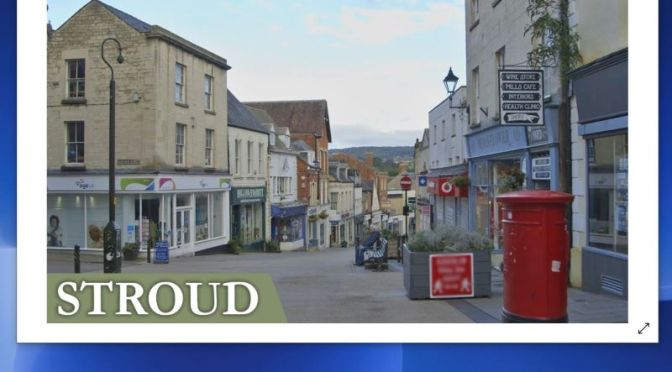
Travel In The Cotswolds: ‘Stroud’, Gloucestershire
Stroud is a market town on the western side of the Cotswolds in Gloucestershire, England. It is the meeting point for the surrounding five valleys and is renowned both for its steep streets and highly political culture. It was heavily involved in the industrial revolution and produced cloth, powered by small rivers which flow through the five valleys. Although not often considered a classic Cotswold town, it is well worth a visit.
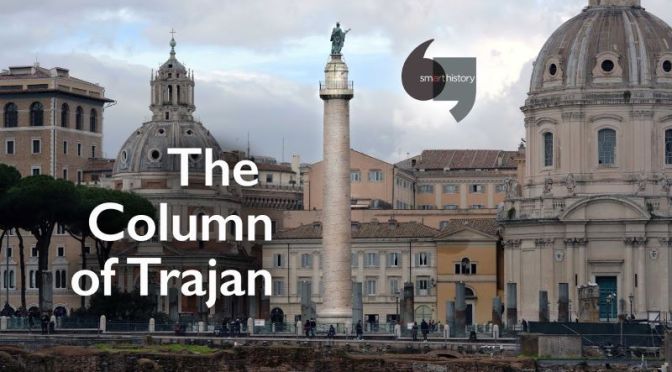
History: ‘The Column Of Trajan’ In Rome (Video)
Trajan’s Column is a Roman triumphal column in Rome, Italy, that commemorates Roman emperor Trajan’s victory in the Dacian Wars. It was probably constructed under the supervision of the architect Apollodorus of Damascus at the order of the Roman Senate. It is located in Trajan’s Forum, built near the Quirinal Hill, north of the Roman Forum. Completed in AD 113, the freestanding column is most famous for its spiral bas relief, which artistically represents the wars between the Romans and Dacians (101–102 and 105–106). Its design has inspired numerous victory columns, both ancient and modern.
Italian Gardens: ‘Giardino Giusti in Verona’ and ‘Villa Fracanzan Piovene’ near Vicenza – “Shakespearean”
Giardino Giusti in Verona and Villa Fracanzan Piovene: The centuries-old Italian gardens that evoke the romance of Romeo and Juliet.

The name Giusti has been synonymous with one of Italy’s most celebrated Renaissance gardens since the late 16th century. Originally wool-dyers from Prato in Tuscany, the Giusti family had moved its business north in the previous century, settling in an unglamorous industrial suburb of Verona. Within a few generations, its members were rich and had also acquired the requisite antiquarian and artistic tastes of true Renaissance gentlefolk.
The garden created by Agostino Giusti between 1565 and 1580 was intended to fulfil various functions. It had to showcase his collection of Roman inscriptions and to serve as a setting for the lavish theatrical and musical productions—the predecessors of opera—then in vogue. To this day, the garden retains the surprise element of a stage set, presenting a magnificent and entertaining spectacle that totally confounds one’s expectations of a city garden.
Cocktails With A Curator: ‘Chardin’s “Still Life With Plums”‘ (The Frick Video)
In this week’s episode of “Cocktails with a Curator,” join Deputy Director and Peter Jay Sharp Chief Curator Xavier F. Salomon as he explores the magical brushstrokes of the first still life painting to enter The Frick Collection—one that will be very familiar to devotees of this series. Acquired at the end of World War II by the museum’s trustees, Jean-Siméon Chardin’s “Still Life with Plums” is a beautiful example of the artist’s skilled portrayal of light refracted and reflected by everyday objects. Xavier has paired this episode with a Gin Martini with a twist.
To view this painting in detail, please visit our website: https://www.frick.org/chardinstilllife
Buildings: ‘Battle To Build Transamerica Pyramid’ – San Francisco, 1969 (Video)
Unwelcome when it was first proposed, San Francisco’s Transamerica Pyramid has overcome public opinion, economics and the extreme challenges of its location to become one of the world’s most famous buildings.
Full story here – https://www.theb1m.com/video/the-batt…
The Transamerica Pyramid at 600 Montgomery Street between Clay and Washington Streets in the Financial District of San Francisco, California, United States, is a 48-story futurist building and the second-tallest skyscraper in the San Francisco skyline.
Cocktails With A Curator: ‘Romney’s “Lady Hamilton”
In this week’s episode of “Cocktails with a Curator,” join Curator Aimee Ng on a fascinating journey as she traces the life of Lady Hamilton (née Amy Lyon), who was seventeen years old when she posed for this painting by George Romney. Lady Hamilton’s great strength was her ability to transform herself: the daughter of a blacksmith, she married Sir William Hamilton, the British ambassador to the Kingdom of Naples, and fell in love with Lord Horatio Nelson (apparently with her husband’s blessing). Along the way, she became a darling of the court of Naples and a favorite of Maria Carolina, sister of Marie Antoinette. As an homage to her time spent in Naples, this week’s complementary cocktail is a Limoncello Spritz.
To view this painting in detail, please visit our website: https://www.frick.org/ladyhamiltonSHOW LESS
Travel & Archaeology: ‘Skara Brae’ Stone Age Settlement In The Orkney Islands, Scotland (Video)
The Orkneys, an archipelago of islands off the northern coast of Scotland, are home to some of the greatest neolithic treasures in western Europe: from the settlement of Skara Brae to the Ness of Brodgar.
Skara Brae is a stone-built Neolithic settlement, located on the Bay of Skaill on the west coast of Mainland, the largest island in the Orkney archipelago of Scotland. Consisting of eight clustered houses, it was occupied from roughly 3180 BC to about 2500 BC and is Europe’s most complete Neolithic village.
Art History: ‘Fragonard’s Painted Portraits’ (Video)
Jean-Honoré Fragonard delighted in painting fascinating portraits. In this episode of Sotheby’s Stories, learn how he captured the true essence of character, through his mastery of observation and light.
Jean-Honoré Fragonard was a French painter and printmaker whose late Rococo manner was distinguished by remarkable facility, exuberance, and hedonism. One of the most prolific artists active in the last decades of the Ancien Régime, Fragonard produced more than 550 paintings, of which only five are dated.
Art: Monet’s ‘Islands At Port-Villez, 1897’ (Video)
“I want to paint like a bird sings,” Claude Monet once stated. In this episode of Expert Voices, Simon Shaw describes Monet’s direct and unmediated response to his subject matter. In The Islands in Port-Villez, one can feel just that – Monet sitting on his boat on the seine, absorbing his surroundings.