In this episode of Expert Voices, Brooke Lampley describes Pablo Picasso’s remarkable love affair with Jacqueline Roque. A classically beautiful portrayal, Picasso married Rocque in 1961 – leading her to be an omnipresent constant in his life.
Sail through the network of canals winding their way through Omi-hachiman, a once bustling castle town overlooking Lake Biwa. Retrace the steps of the past surrounded by a unique amalgamation of European and feudal Japanese architecture combined with carefully-preserved historic townscapes.
Michelangelo, David, 1501–04, marble, 17 feet high (The Galleria dell’Accademia, Florence), a conversation with Dr. Steven Zucker and Dr. Beth Harris.
This astonishing Renaissance sculpture was created between 1501 and 1504. It is a 14.0 ft marble statue depicting the Biblical hero David, represented as a standing male nude. Originally commissioned by the Opera del Duomo for the Cathedral of Florence, it was meant to be one of a series of large statues to be positioned in the niches of the cathedral’s tribunes, way up at about 80mt from the ground. Michelangelo was asked by the consuls of the Board to complete an unfinished project begun in 1464 by Agostino di Duccio and later carried on by Antonio Rossellino in 1475. Both sculptors had in the end rejected an enormous block of marble due to the presence of too many “taroli”, or imperfections, which may have threatened the stability of such a huge statue. This block of marble of exceptional dimensions remained therefore neglected for 25 years, lying within the courtyard of the Opera del Duomo (Vestry Board).
The true story of the suicidal mission of British forces to overrun the Imperial Russian fortifications with a courageous but foolhardy mass charge.
The Charge of the Light Brigade was a failed military action involving the British light cavalry led by Lord Cardigan against Russian forces during the Battle of Balaclava on 25 October 1854 in the Crimean War.
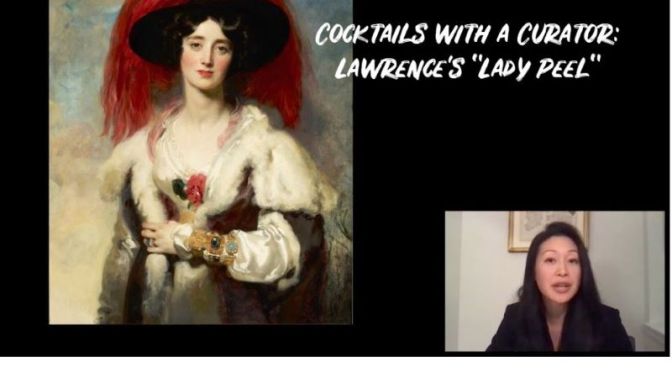
In this week’s episode of “Cocktails with a Curator,” Curator Aimee Ng explores the history behind Sir Thomas Lawrence’s celebrated portrait of Julia, Lady Peel. When it was shown at the Royal Academy, in 1827, this painting was hailed as Sir Thomas’s greatest portrait—and one of the great works of modern art at the time.
It’s easy to see why: the sitter projects authority, confidence, and ease despite her flamboyant, over-the-top outfit. Sir Thomas’s depiction of Lady Peel is closely related to Peter Paul Rubens’s famous “Chapeau de Paille,” which had recently entered the collection of her husband, Sir Robert Peel. In recognition of the lavish bracelets and rings worn by the sitter, this week’s complementary cocktail is the Bijou (French for “jewel”).
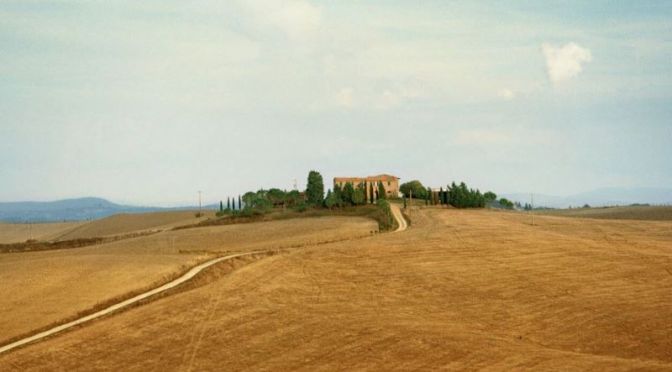
Even now, the approach to the 1,200-acre property is just as it must have been centuries ago: a long, winding ride through pale, undulating fields, leading to a dignified hilltop retreat. The three-story ivy-wrapped building is ringed by 20-foot obelisk-like cypress trees — a private citadel entered through a wrought-iron gate. Beyond the vista of olive groves, another fortresslike outcropping is visible in the distance: the mottled russet city of Siena, three miles away.
WHEN RENÉ CAOVILLA, the 82-year-old Venetian shoe designer, was first shown the Tuscan villa he bought in 1977, he fell in love with it instantly. He wasn’t only taken with the house, a 15th-century red brick monastery that had undergone a slow transformation into an austere 20-bedroom private home in the 17th century, but the Chianti landscape as well — the whole of classical history evoked in a flash.
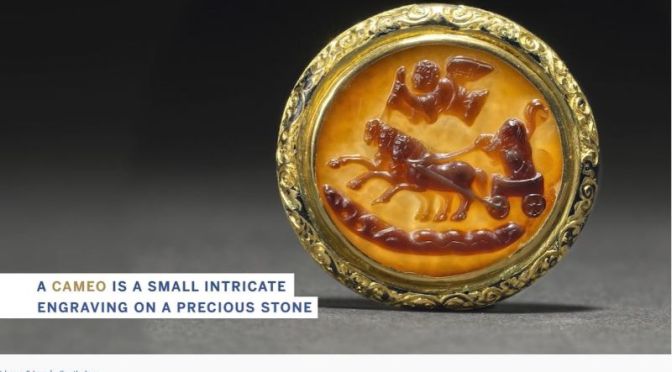
This intricately delicate cameo features a very detailed story of the prophet Elijah ascending to heaven. In this episode of Sotheby’s Stories, discover how this delightful miniature work of art is part of a very small group of rare cameos which feature Hebrew inscriptions. Learn how it was crafted by Jewish artisans in the court of a 13th century Holy Roman Emperor.
Autumn Rhythm (Number 30) is a 1950 abstract expressionist painting by American artist Jackson Pollock in the collection of the Metropolitan Museum of Art in New York City. The work is a distinguished example of Pollock’s 1947-52 poured-painting style, and is often considered one of his most notable works.
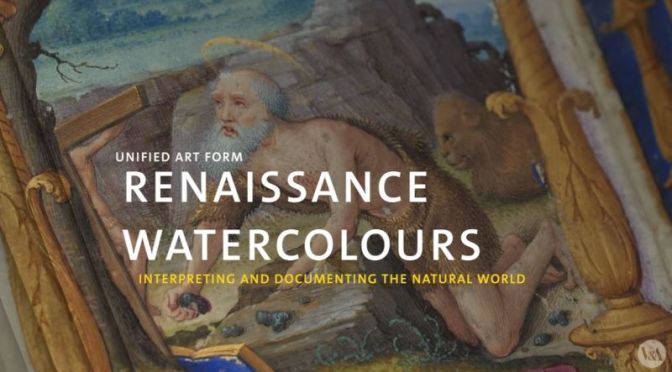
Focussing on the three types of object featured in the V&A display Renaissance Watercolours: illuminated manuscripts, portrait miniatures and coloured drawings, this film showcases the qualities that made watercolour the medium of choice for many artists during the Renaissance.
A modern-day painting of a pomegranate, using traditional watercolour techniques, by artist Lucy Smith, also demonstrates how watercolour painting remains a versatile medium, ideal for capturing life-like details that help us to record our diverse world.









 Boomers Daily