
What’s new about the new Nutrition Facts label? Watch this Q&A with Susan T. Mayne, Ph.D., Director of FDA’s Center for Food Safety and Applied Nutrition.
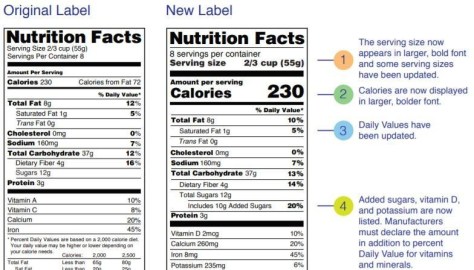

What’s new about the new Nutrition Facts label? Watch this Q&A with Susan T. Mayne, Ph.D., Director of FDA’s Center for Food Safety and Applied Nutrition.
From a BMJ Open Heart online study (March 8, 2020):
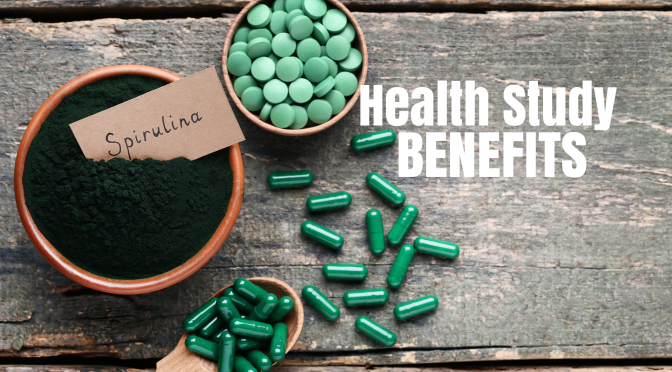
 Overall, the evidence in the literature suggests that spirulina improves several well-established CVD risk factors including hyperlipidaemia and seems to provide benefits around weight loss.
Although caloric restriction and exercise are the mainstay treatments for obesity, spirulina has shown significant benefits in aiding weight loss. The phycocyanin in spirulina contains a light-harvesting chromophore called phycocyanobilin, which is capable of inhibiting nicotinamide adenine dinucleotide phosphate hydrogen (NADPH) oxidase, a significant source of oxidative stress in adipocytes playing a key role in inducing insulin resistance and shifting adipokine and cytokine production in hypertrophied adipocytes. Thus, by suppressing adipocyte oxidative stress, spirulina may lead to systemic anti-inflammatory and insulin-sensitising effects.
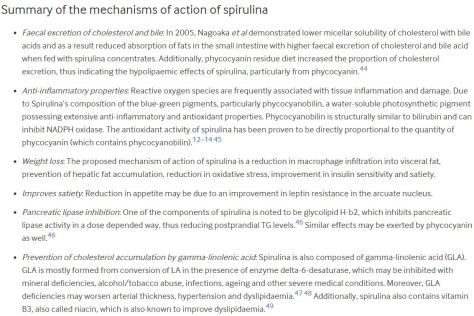
Spirulina is both a salt and fresh water blue-green algae, which is being increasingly studied recently. Spirulina was initially classified under the plant kingdom due to its rich plant pigments and its ability to photosynthesize, but was later placed into bacterial kingdom (cyanobacteria) due to its genetic, physiological and biochemical makeup. Spirulina grows naturally in high salt alkaline water reservoirs in subtropical and tropical areas of America, Mexico, Asia and Central Africa.
From a BMJ Research online study (March 4, 2020):
 We found no association between egg consumption and risk of cardiovascular disease in three large US cohorts. Results from the updated meta-analysis lend further support to the overall lack of an association between moderate egg consumption (up to one egg per day) and cardiovascular disease risk.
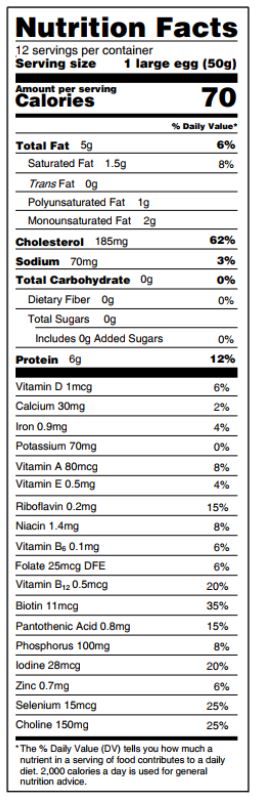 Eggs are a major source of dietary cholesterol, but they are also an affordable source of high quality protein, iron, unsaturated fatty acids, phospholipids, and carotenoids.
Introduction: In the United States, cardiovascular disease is the leading cause of death in men and women. Diet and lifestyle undisputedly play a major part in the development of cardiovascular disease. In the past, limiting dietary cholesterol intake to 300 mg per day was widely recommended to prevent cardiovascular disease. However, because of the weak association between dietary cholesterol and blood cholesterol, and considering that dietary cholesterol is no longer a nutrient of concern for overconsumption, the most recent 2015 dietary guidelines for Americans did not carry forward this recommendation.
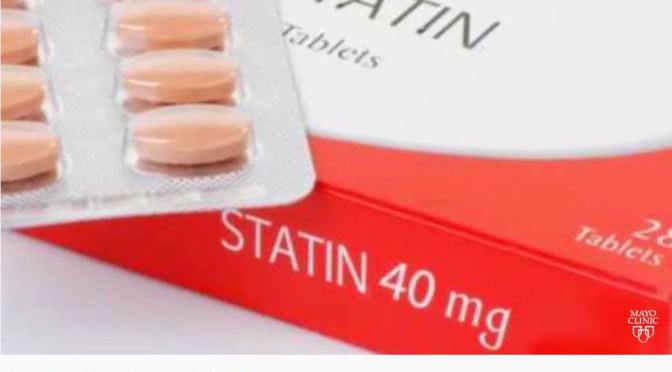
Taking a statin helps keep your cholesterol levels in check. How can that be?
 Dr. Stephen Kopecky explains that some people ask to be put on a statin. That’s because statins, while important and effective, are just one part of the whole heart-healthy picture. When you combine a statin with regular exercise, maintaining a healthy weight, controlling stress, not smoking and eating foods based on the Mediterranean diet, you can improve your heart health.
Dr. Kopecky says if you work in lifestyle changes slowly over time, you’ll be on your way to better heart health.
Statins are drugs that can lower your cholesterol. They work by blocking a substance your body needs to make cholesterol. Statins may also help your body reabsorb cholesterol that has built up in plaques on your artery walls, preventing further blockage in your blood vessels and heart attacks.
Several statins are available for use in the United States. They include:
Sometimes, a statin is combined with another heart health medication. Examples are atorvastatin/amlodipine (Caduet) and simvastatin/ezetimibe (Vytorin).
Increasing evidence suggests that statins do more than just lower bad cholesterol. Research has found that the medicines can safely prevent heart disease in certain adults ages 40 to 75. But the benefits aren’t entirely clear for the elderly. And doctors still want to know more about the side effects of statins.
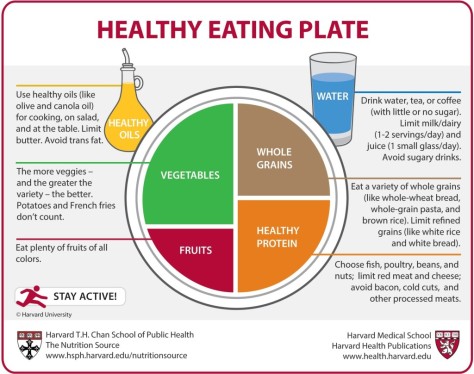
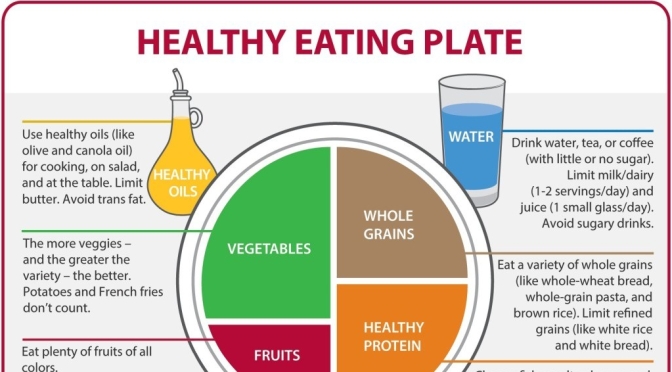
Aim for color and variety, and remember that potatoes don’t count as vegetables on the Healthy Eating Plate because of their negative impact on blood sugar.
Whole and intact grains—whole wheat, barley, wheat berries, quinoa, oats, brown rice, and foods made with them, such as whole wheat pasta—have a milder effect on blood sugar and insulin than white bread, white rice, and other refined grains.
Fish, poultry, beans, and nuts are all healthy, versatile protein sources—they can be mixed into salads, and pair well with vegetables on a plate. Limit red meat, and avoid processed meats such as bacon and sausage.
Choose healthy vegetable oils like olive, canola, soy, corn, sunflower, peanut, and others, and avoid partially hydrogenated oils, which contain unhealthy trans fats. Remember that low-fat does not mean “healthy.”
Skip sugary drinks, limit milk and dairy products to one to two servings per day, and limit juice to a small glass per day.
The red figure running across the Healthy Eating Plate’s placemat is a reminder that staying active is also important in weight control.
The main message of the Healthy Eating Plate is to focus on diet quality.
From a New York Times article by Jane E. Brody (Feb 17, 2020):
“It takes 10 to 12 hours to use up the calories in the liver before a metabolic shift occurs to using stored fat,” Dr. Mattson told me. After meals, glucose is used for energy and fat is stored in fat tissue, but during fasts, once glucose is depleted, fat is broken down and used for energy.
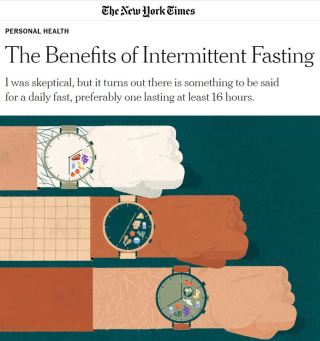 I was skeptical, but it turns out there is something to be said for practicing a rather prolonged diurnal fast, preferably one lasting at least 16 hours. Mark P. Mattson, neuroscientist at the National Institute on Aging and Johns Hopkins University School of Medicine, explained that the liver stores glucose, which the body uses preferentially for energy before it turns to burning body fat.
For example, human studies of intermittent fasting found that it improved such disease indicators as insulin resistance, blood fat abnormalities, high blood pressure and inflammation, even independently of weight loss. In patients with multiple sclerosis, intermittent fasting reduced symptoms in just two months, a research team in Baltimore reported in 2018.
“Our findings show dining out is a recipe for unhealthy eating most of the time,” said Dariush Mozaffarian, senior author and dean of the Friedman School.
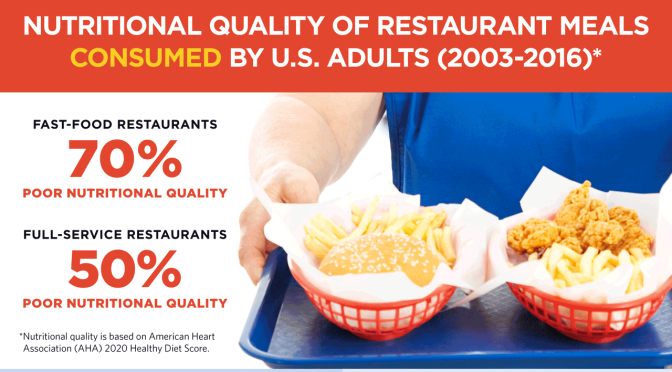
At fast-food restaurants, 70 percent of the meals Americans consumed were of poor dietary quality in 2015-16, down from 75 percent in 2003-04. At full-service restaurants, about 50 percent were of poor nutritional quality, an amount that remained stable over the study period. The remainder were of intermediate nutritional quality.
BOSTON (Jan. 29, 2020, 9:00 a.m. EST)—The typical American adult gets one of every five  calories from a restaurant, but eating out is a recipe for meals of poor nutritional quality in most cases, according to a new study by researchers at the Friedman School of Nutrition Science and Policy at Tufts University.
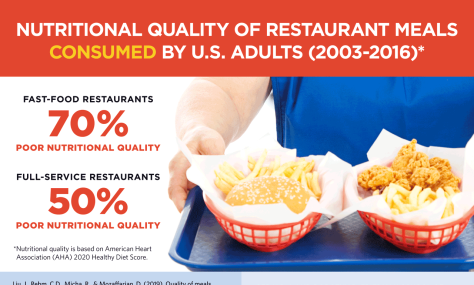
Published today in The Journal of Nutrition, the study analyzed the dietary selections of more than 35,000 U.S. adults from 2003-2016 in the National Health and Nutrition Examination Survey (NHANES) who dined at full-service (those with wait staff) or fast-food restaurants, which included pizza shops and what has become known as fast-casual. The researchers assessed nutritional quality by evaluating specific foods and nutrients in the meals, based on the American Heart Association 2020 diet score.
Did you know the food choices you make every day could help you feel younger? Try these 8 diet tips for feeling your best at any age.
Get more healthy living tips from the Mayo Clinic App: http://mayocl.in/2tbMb57
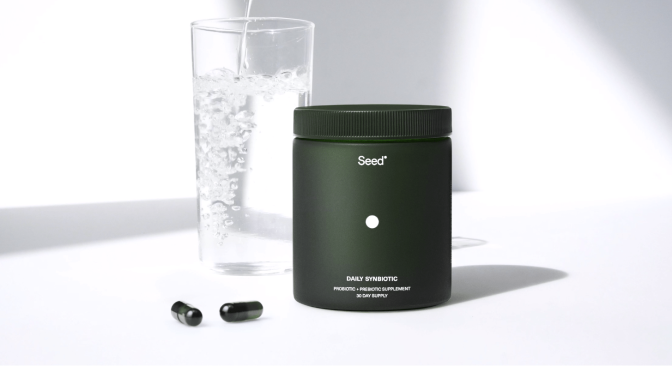
Raja Dhir is the co-founder of microbiome company Seed. Based in LA, Seed is a collective of scientists and doctors, researching how bacteria can improve human health and that of our planet. Its first product, a daily synbiotic, focuses on the stomach.
Raja Dhir is a life sciences entrepreneur and Co-Founder of Seed, a venture-backed  microbiome company pioneering the application of bacteria for both human and planetary health. He leads Seed’s R&D, academic collaborations, technology development, clinical trial design, supply chain, and intellectual property strategy.
 Together with Dr. Jacques Ravel, he Co-Chairs Seed’s Scientific Advisory Board–an interdisciplinary group of scientists and doctors who lead research teams and teach at institutions including the teaching hospital of Harvard Medical School and the Trial Innovation Unit of Mass. General Hospital (MGH). Raja has designed clinical trials with leading academic institutions including the teaching hospital of Harvard Medical School and the Trial Innovation Unit of Mass. General Hospital (MGH).
Raja has unique expertise translating scientific research for product development with a track record that includes patented inventions to stabilize sensitive compounds to improve alpha-diversity of the gut microbiome (derived from micro-algae) and most recently, the co-invention of microbial technologies to protect honeybee populations (Apis mellifera) from neonicotinoid pesticides and pathogen colonization. His work also includes biofermentation and scale-up for both facultative and strict anaerobic organisms.
From an Imbibeinc.com online release:
 Omega-3s have a variety of health benefits that consumers want. Consuming omega-3s is suggested to help fight against depression, anxiety, mental decline and heart disease as well as promote brain health during early child development. Expect several omega-3 enhanced beverages in 2020.
Many consumers are reducing their intake of beverages once lauded for having nutrient benefits like orange juice and dairy milk, so there’s a lot of opportunity for brands to fortify products with vitamins and minerals. Expect to see beverages fortified with zinc, calcium, potassium, sodium, and vitamins B-12, C, and D.
Awareness about the advantages of a healthy microbiome for overall health has increased significantly over the last decade. Since prebiotics and probiotics both play an important role in maintaining a healthy gut, expect several launches of synbiotic beverages (i.e. have prebiotics and probiotics).
To read more: https://imbibeinc.com/food-and-beverage-industry-media/blog-postings-from-the-drink-tank/trendspotting-2020-trend-predictions




 Boomers Daily