

Inventories of the wide-body planes are piling up, as deliveries remain halted A new defect on Boeing’s Dreamliner aircraft surfaced in July, the latest in a series of issues that arose late last summer. Deliveries of the popular plane are now halted, pressuring Boeing’s profits. WSJ’s Andrew Tangel explains how Boeing got here. Photo: Bloomberg News
Category Archives: Analysis
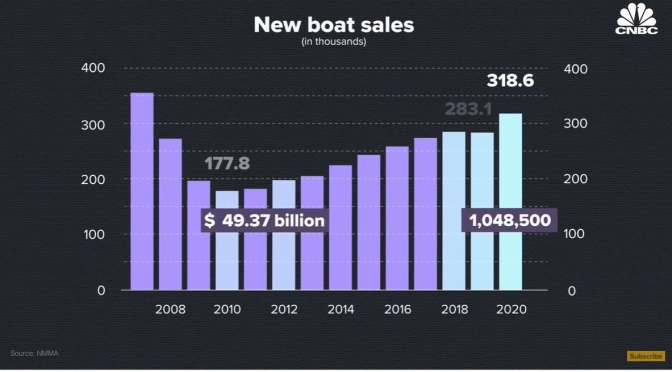
Recreation: Why U.S. Boat Sales Are Booming (CNBC)
Every year, about a third of Americans spend at least some time on a boat. In the landscape of recreational power sports, which includes boats, some categories have seen their fair share of struggles in recent years. But boat industry revenues have been mostly growing. Boat sales have seen a boost during Covid, but some analysts think the growth is poised to continue.
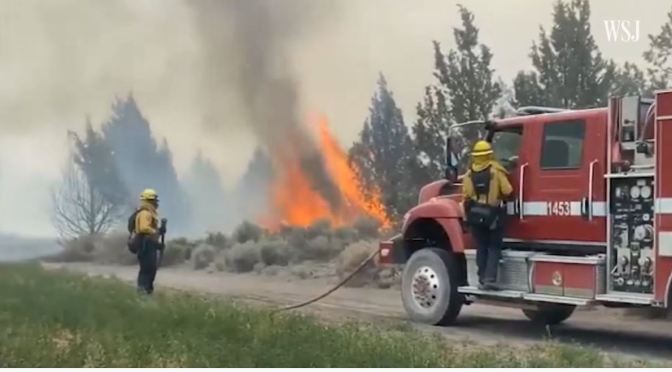
Views: California Fights Worsening Wildfires
The state is increasing funding and preventative measures, but it may not be enough. A year after one of the worst wildfire seasons in California’s history, the state is taking more preventive measures to reduce wildfire risks. But experts worry it still doesn’t have the firefighting and land management resources to adequately fight worsening blazes. Photo: Noah Berger/AP

Political Analysis: Tamara Keith And Amy Walter On Covid-19, Infrastructure
NPR’s Tamara Keith and Amy Walter of the Cook Political Report join John Yang to discuss the latest political news, including COVID-19 vaccine hesitancy, congressional debate on a bipartisan infrastructure deal, and the Jan. 6 Capitol insurrection investigation.

Political Analysis: Brooks & Capehart On Capitol Hill Attack Investigation
New York Times columnist David Brooks and Washington Post columnist Jonathan Capehart join Judy Woodruff to discuss the week in politics, including the Jan. 6 insurrection investigation, the infrastructure and budget negotiations in Congress, and vaccination efforts in America.

Western Drought: Expect More Fires & Water Wars
As of mid-June, nearly three-quarters of the US’s West has been experiencing “severe,” “extreme,” or “exceptional” drought conditions. In addition to the states above, it also includes northern states like North Dakota and Montana.
Overall, climate change is playing a role. But there are smaller factors at play that are tied to climate change as well. Including…
- Not enough rain. The National Oceanic and Atmospheric Association (NOAA) said the Southwest’s 2020 monsoon season (read: ‘nonsoon’) was “the hottest and driest summer/monsoon season on record.” And the decrease in rainfall is having an impact on today’s drought (think: not enough water for crops, lakes, or reservoirs). And for the little rain that has fallen, it could dry up faster because of…
- Warmer temps. The NOAA dubbed 2020 the second-hottest year on record. And in late June, a record-breaking heat wave hit the Pacific Northwest, with the temperature reaching up to 112 degrees Fahrenheit in places like Portland, OR. (Psst…if you’re dealing with hot weather, here are some tips to stay safe.) Hotter, drier weather creates a thirsty environment, which speeds up evaporation. Rising temps are also causing snowpacks to melt faster, and they’re reportedly producing less runoff – a vital water resource. All of which means there’s less water available for communities and ecosystems.
Experts are also worried that the current dry and hot conditions will have a ripple effect, which brings us to wildfires. Last year’s West Coast wildfire season was the worst ever. Fires in California killed 31 people, burned more than 4 million acres, and destroyed thousands of buildings and structures. And this year, states like Arizona have seen an early start to their wildfire season. But the effects of the drought stretch even further.

Covid-19: How The Delta Variant Spread Globally
Covid-19’s Delta variant is proliferating world-wide threatening unvaccinated populations and economic recovery. WSJ breaks down events in key countries to explain why Delta spreads faster than previously detected strains. Composite: Sharon Shi
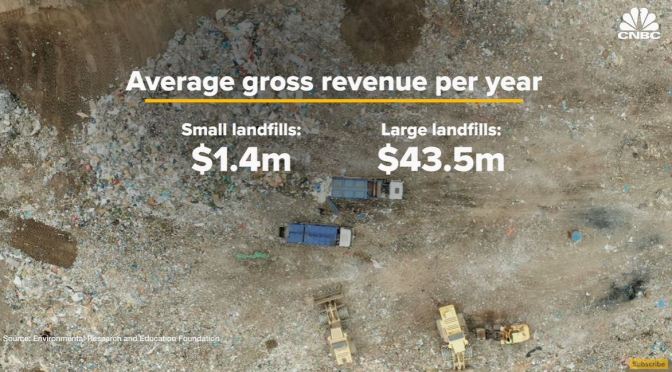
Analysis: How Landfills Make Millions From Trash
In 2019, the North American waste management market reached $208 billion. Thanks to advancements in modern chemistry and support from municipal governments, landfills have seen astonishing financial success in recent years. Private companies like Waste Management and Republic Services now own a majority of landfills across the U.S., their stocks outperforming the market every year since 2014. So how exactly are landfills turning a profit out of garbage and just how much money can be made? Watch the video to find out.

Social Media: Tik Tok’s Algorithms Know ‘You’
The Wall Street Journal created dozens of automated accounts that watched hundreds of thousands of videos to reveal how the social network knows you so well A Wall Street Journal investigation found that TikTok only needs one important piece of information to figure out what you want: the amount of time you linger over a piece of content. Every second you hesitate or rewatch, the app is tracking you. Photo illustration: Laura Kammermann/The Wall Street Journal

Politics: Biden’s China Doctrine, South Africa, Carbon Border Taxes
A selection of three essential articles read aloud from the latest issue of The Economist. This week: Biden’s new China doctrine, a jailed ex-president won’t go quietly in South Africa (8:44), and carbon border taxes (14:32).
 Boomers Daily