
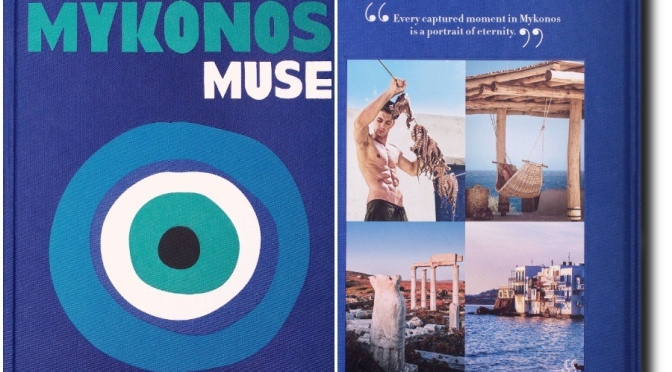
 With such names as ‘Paradise’ and ‘Super Paradise,’ the sands of these shores have captured the imaginations and hearts of industry titans, artists, and party-goers alike from all around the globe, marking it as a stable cosmopolitan destination and as a paramount it haven on the jet-set circuit.
Located in the Cyclades and surrounded by the blue-green water of the Aegean sits whitewashed, windmill-strewn Mykonos, the island of the winds. This ancient island and those surrounding it, mythologized as the bodies of gods felled by Hercules in the time of antiquity, are older than legend and have played host to countless cultures for more than millennia. At forty-square-miles and boasting a population of only ten-thousand, the ‘Ibiza of Greece’ has become prized for gorgeous architecture, welcoming and open-minded locals, and fantastic beaches.

This book chronicles the culture and society that has defined Mykonos over the past century—from its days as a hideout for such luminaries and elites as Le Corbusier and Antonis Benakis, to its moment as a sanctuary for the gay community,to its predominant party scene—all the while indulging the reader with the ruins and myths hidden there.
Lizy Manola is a Greek photographer. A freelancer, her focus is on documentary photography. For more than fifteen years, she has traveled and shot in distant places, where culture and everyday life preserve their natural authenticity. She has published two books with Assouline, Certain Realities and Ethiopian Highlands. Her work has featured in solo and group exhibitions in Greece and worldwide. She lives and works in Athens and New York. Thirty years ago, she bought a house on Mykonos; she has spent endless summers holidays on the island ever since.

 More than 6 million people worldwide have Parkinson disease. Even though it is classically associated with tremors, the disease has many manifestations and is very treatable for most patients.




 The Amphicar Model 770 is an amphibious automobile, launched at the 1961 New York Auto Show, manufactured in West Germany and marketed from 1961 to 1968. Production stopped in 1965.
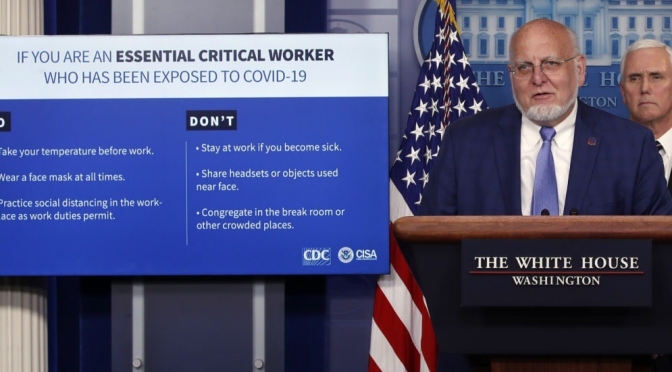
 Historically, the U.S. Centers for Disease control and Prevention has been the agency in charge of predicting, and containing outbreaks of disease. But as Covid 19 ravaged the country, the agency took a backseat to the White House.
 What might that mean for the bathrooms of the post-coronavirus world? Americans have already demonstrated a keen fixation with this household feature: In the last 50 years, the number of home bathrooms per person has doubled. One could easily see the lavatory-building boom accelerate further as future homeowners keep the needs of the self-quarantined in mind. And many have speculated that sales of bidet attachments will surge as toilet-paper shortages encourage Americans to embrace this more sustainable alternative.
 Boomers Daily