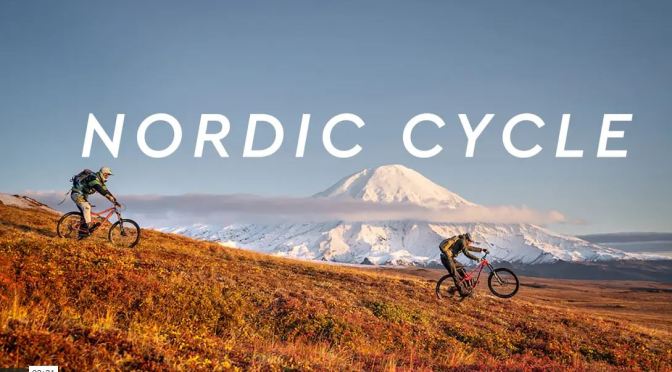
Feel the cool of glaciers as we pedal through Greenland and follow us into the Faroe Islands as we roam remote Nordic corners by bike.
Cyclist Tobias Woggon is a specialist mountain biker who has traveled the world, experiencing out-of-this-world settings while embedding himself with the local culture. Using footage from his trips, this is a look and feel of what to expect from the adventures.
In this week’s episode of “Travels with a Curator,” explore the history of St. James’s Park with Curator Aimee Ng. This popular attraction in London serves as the backdrop for Thomas Gainsborough’s “Mall in St. James’s Park,” which he painted about 1783 for George III. Originally a cockleshell-strewn court for playing pall-mall, a precursor of croquet, the Mall was a place of visual encounters, where fashionable 18th-century Londoners (and their pets) could see and be seen.
Washington is home to some of America’s wildest spaces and also its most modern cities. The Evergreen State is a story of mirror opposites: a wet, mountainous, tree-covered west and a dry, flat, open east. It is home to high-tech industries and America’s oldest Native American tribes. Experience all sides of Washington State, from thousands of feet in the air, and witness its conflicting worlds merging to form a land of remarkable beauty.
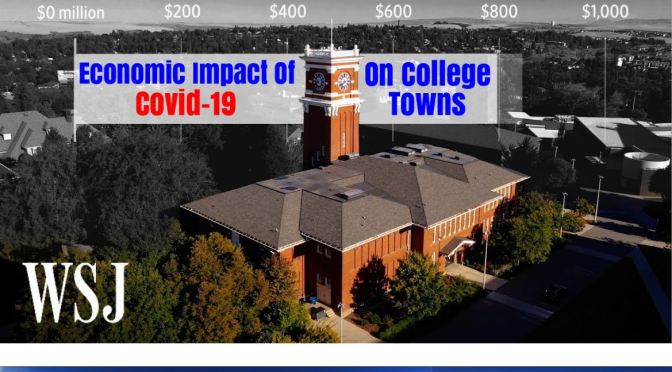
The coronavirus has pushed nearly half of U.S. colleges and universities into some degree of remote learning, a change that’s sending shock waves through small college town economies. WSJ’s Carlos Waters explains.
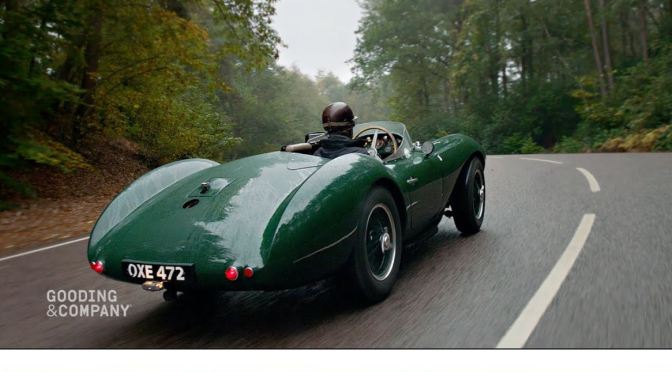
Gooding & Company proudly presents this beautiful 1955 Aston Martin DB3S. This car, chassis 102, is one of three Almond Green customer cars ordered for the the Australian racing team, the Kangaroo Stable.
As their lead car, 102 was campaigned throughout Europe, England, and New Zealand during 1955 and 1956, with the most notable result being a 2nd Overall finish at the 12 Hours of Hyères.
Today, this DB3S stands as a wonderful reminder of the glory days of international sports car racing – a halcyon period when eager amateurs could find themselves locked in battle with the works racing teams on the world’s great circuits.
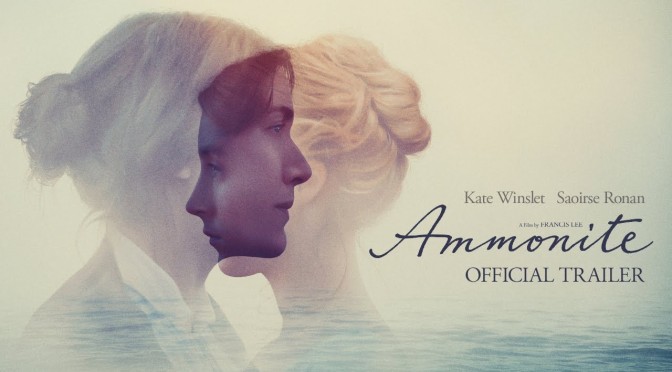
1840s England, acclaimed but overlooked fossil hunter Mary Anning and a young woman sent to convalesce by the sea develop an intense relationship, altering both of their lives forever.
Starring Kate Winslet and Saoirse Ronan with Gemma Jones, James McArdle, Alec Secareanu and Fiona Shaw
Produced by Iain Canning, Emile Sherman, Fodhla Cronin O’Reilly
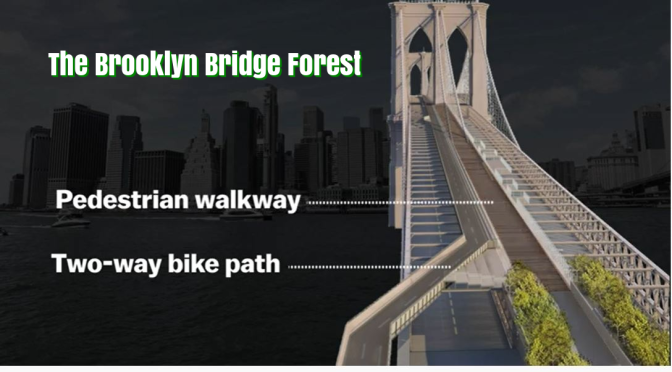
Brooklyn Bridge Forest reimagines the bridge as an icon of climate action and social equity, improving mobility while respecting the landmark structure. The historic wooden walkway is expanded using planks sustainably sourced from a “partner forest” community in Guatemala that protects a 200,000-acre rainforest.
A dedicated bike path and reclaimed traffic lane create new space for cyclists and low-carbon transit, while biodiverse “microforests” at either end of the bridge bring nature to New York City and serve as green spaces for underserved communities.
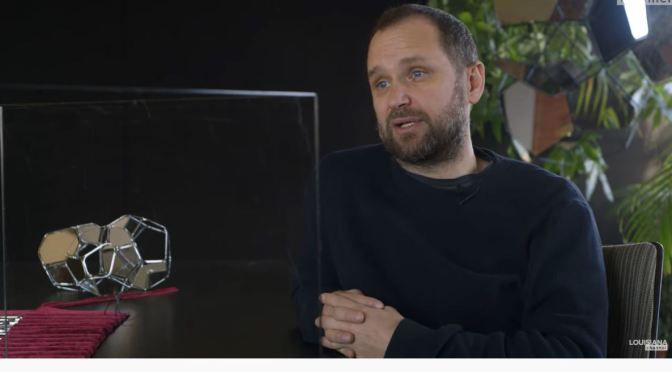
Join us – if you dare – as we follow the acclaimed Argentinian artist Tomás Saraceno into his installations of intricate spider webs inhabited by solitary, social and semi-social spiders, bridging the architectures of each other’s webs.
In the video, Saraceno talks about how spiders mirror human beings and help us understand ourselves and the way we live. “Every day, I try to enter territories, or thoughts, or ways of working, which might challenge ourselves and might challenge how we see the world.”
Observing a spider in its web for more than twenty minutes, Saraceno argues, can completely change your life and way of noticing things, revealing an unseen world. In connection to this, he feels that art and science – as well as other forms of knowledge – combined, can help us “form new alliances between disciplines and lose our comfort zone of operating and seeing and perceiving and being in the world. To try to find new ways to work and to be.”
Tomás Saraceno (b. 1973) is an Argentinian artist. Saraceno is particularly known for his large-scale, interactive installations and floating sculptures, as well as his interdisciplinary approach to art. With his practice, he explores new sustainable ways of inhabiting the environment.
His work has been exhibited at prominent venues all over the world, including the 58th La Biennale di Venezia in Venice, Palais de Tokyo in Paris, and Museo de Arte Moderno in Buenos Aires. Saraceno’s work is also part of international collection such as Bauhaus Museum in Weimar, Walker Art Center in Minneapolis, and SFMoMA in San Francisco.
In 2015, he launched the Aerocene Foundation – an open-source community project for artistic and scientific exploration of environmental issues. Relating to arachnology research, Saraceno is the first person to have scanned, reconstructed and re-imagined spiders’ woven spatial habitats.
For more see: https://studiotomassaraceno.org/about/ Tomás Saraceno was interviewed by Helle Fagralid at his studio in Berlin in November 2019. Camera: Rasmus Quistgaard Edited by Klaus Elmer Produced by Helle Fagralid Cover photo: Tomás Saraceno. ‘Social… Quasi Social… Solitary… Spiders… On Hybrid Cosmic Webs’, 2013. Installation view. Detail. Courtesy of the artist and Esther Schipper Gallery, Berlin Copyright: Louisiana Channel, Louisiana Museum of Modern Art, 2020
NPR’s Tamara Keith and Amy Walter of the Cook Political Report join Judy Woodruff to discuss the latest in politics, including last week’s Democratic National Convention and whether Joe Biden achieved his objectives during it and how President Trump will approach this week’s Republican National Convention in response.
Ben Boudreaux, policy researcher with the RAND Corporation, describes how contact tracing can be used to track the spread of COVID-19 and explains the differences between manual and automated contact tracing.







 Boomers Daily