Tag Archives: Reviews

Covid Vaccination Spots: ‘Disneyland To Vacci’Bus’ Around The World (Video)

As the rollout of #Covid​-19 vaccinations gathers pace, the mammoth task of inoculating billions of people across the globe has seen a number of unusual sites and buildings converted into #vaccination​ centres, from Disneyland in California, to an ancient UK cathedral and a bus converted into a mobile vaccination unit.

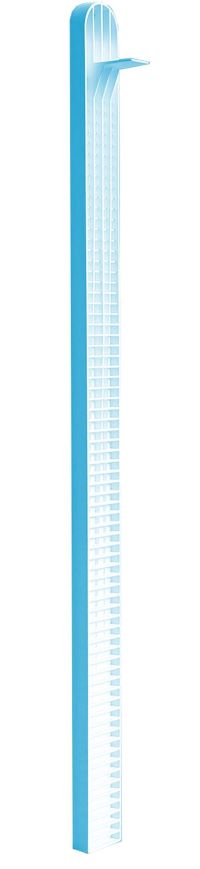
Design: 20 Ft. Wide ‘Pencil Tower Hotel’ In Sydney

An improbably narrow, six meter wide site is envisaged for a 100m tower in the downtown area of Sydney near its central station. 

Our proposal embraces this extraordinary attenuated quality, proposing a ‘column’ tower on a low scale podium. 

The podium references the delicacy and detail of its heritage neighbours, using the language of grand arching brickwork. A three story urban room houses multiple levels of lobby, cafe & lounge, visible through a large scale keyhole window. A walled courtyard garden for shared use overlooks the street. 

The tower simulates the compression and extension of a column, through a continuous abstraction of the elements of a column: base, shaft and capital.
 

The facade begins with compressed horizontal screening, slowly transforming into exaggerated verticals at the top. Horizontals begin wide and flush with the outside frame, slowly thinning and receding at the height of the tower. Each horizontal is at the height of the slab, handrail and door head height. 

The capital is joyfully expressed as a flying balcony and shell curves of a rooftop sundeck, pool and “hammam” spa. The soffit of the curved ceiling  is brightly tiled, visible from both the street below and the city beyond.
 
Each floor houses compact hotel rooms, gathering light from the street, rear court or internal shapely voids. The voids are tiled to reflect light and colour into the rooms. Key hole windows provide a framed vignette of the seamless tiled surface.

Testing the boundaries of construction and design, the ‘pencil’ tower adds both a generous street room and  a heroic skyline to its neighbourhood.

Read and see more

Science Podcast: Social Costs Of Carbon & The Chirps Of Mole-Rats

On its first day, the new Biden administration announced plans to recalculate the social cost of carbon—a way of estimating the economic toll of greenhouse gases. Staff Writer Paul Voosen and host Sarah Crespi discuss why this value is so important and how it will be determined.

Next up, Alison Barker, a postdoctoral researcher at the Max Delbrück Center for Molecular Medicine, talks with Sarah about the sounds of naked mole-rats. You may already know naked mole-rats are pain and cancer resistant—but did you know these eusocial mammals make little chirps to identify themselves as colony members? Can these learned local dialects make naked mole-rats a new research model for language learning? 

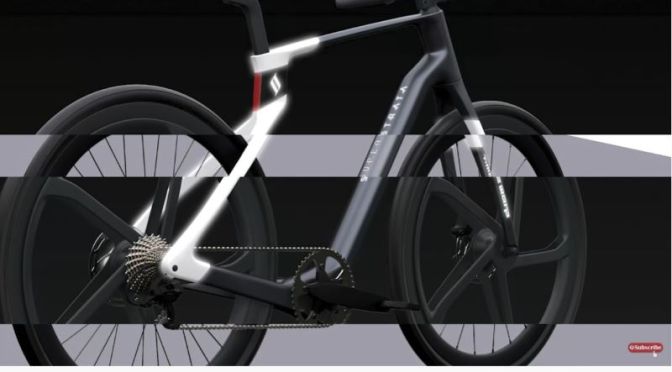
2021 Tech: ‘Top Ten Most Innovative Electric Bikes’

The saying goes that there are no new ideas out there. Every new invention is just a mashup of other things. But when it comes to E-bikes, who’s complaining? Extra juice to go with your pedal power? We’ll take it. And some serious breakthrough designs are coming in the industry, too. Let’s take a look at the contenders for the title of most innovative e-bike of 2021.

Top Ten Bike timeline: 00:00 Intro 00:37 10. STROMER ST5 ABS http://www.stromerbike.com 01:41 9. JUGGERNAUT HD DUO http://www.biktrix.com 02:44 8. SHUTTLE V2 http://www.pivotcycles.com 03:50 7. REEVO http://www.beno.io 04:45 6. CNC E-FANES 29/275 http://www.alutech-cycles.com 05:40 5. GRIZZLY – 52V DUAL MOTOR http://www.arielrider.com 06:26 4. VALEO SMART E-BIKE SYSTEM http://www.valeo.com 07:18 3. SUPERSTRATA E TIME WARP http://www.superstrata.bike 08:09 2. 2021 TYPHOON PRO 8.0 http://www.hpcbikes.com 09:04 1. SERIAL 1 E-BIKES http://www.serial1.com

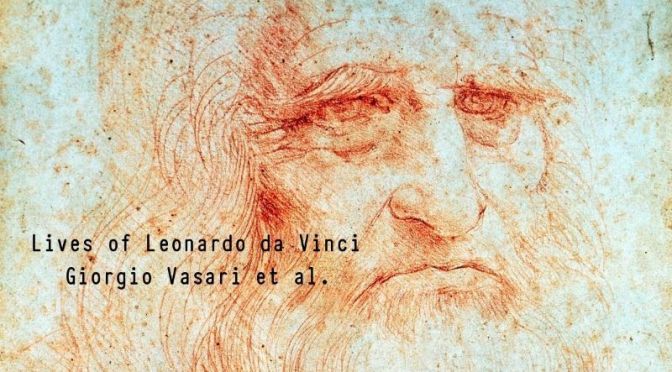
Arts Podcast: ‘Lives Of Leonardo da Vinci’ (Getty)

In this episode, Getty curator Davide Gasparotto discusses early accounts of Leonardo’s life and how they shaped our understanding of the artist. Passages from these biographies were recently collected in the Getty Publications book Lives of Leonardo da Vinci.

“He was a great artistic personality, crucial for the development, in some way, of what we think as the modern science. But he was not alone.”

Leonardo da Vinci died more than 500 years ago, but he is still revered as a genius polymath who painted beguiling compositions like the Mona Lisa, avidly studied the natural sciences, and created designs and inventions in thousands of journal pages. Even during Leonardo’s lifetime, contemporaries marveled at the artist’s great skill and wide-ranging pursuits, but many also noted his perfectionism and difficulty completing projects. Since his death, the legends surrounding his life and personality have continued to grow. Today Leonardo’s story inspires novels and his work brings record-breaking prices, demonstrating his enduring relevance and mystique.

Read more at Getty Museum Store

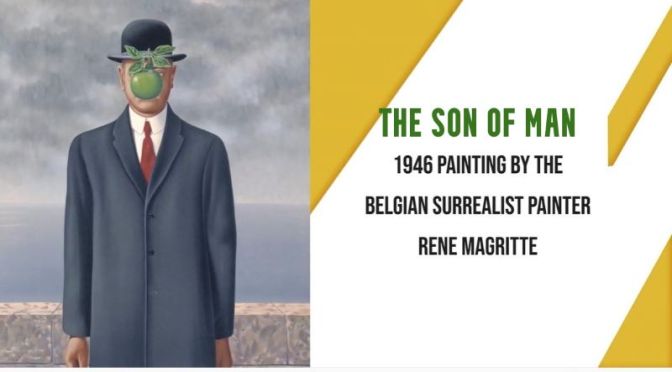
Paintings: ‘The Son Of Man’ By Belgian Surrealist Rene Magritte In 1946 (Video)

The “Son of Man” is an iconic painting by Belgian Surrealist artist Rene Magritte.

Rene Magritte was an internationally acclaimed surrealist artist of all time, yet it was not until his 50s, when he was finally able to reach some form of fame and recognition for his work. Rene Magritte described his paintings saying, “My painting is visible images which conceal nothing; they evoke mystery and, indeed, when one sees one of my pictures, one asks oneself this simple question, ‘What does that mean?’ It does not mean anything, because mystery means nothing, it is unknowable.”

Magritte was born in 1898, to a wealthy manufacturer father. In 1912, his mom was found drowned in the River Sambre. She had committed suicide, and the family was publicly humiliated because of it. From 1916 to 1918, Rene decided to study at the Academie des Beaux-Art, which was located in Brussels. He left the school, because he thought that it was a waste of time. All his paintings afterward reflect cubism, the movements which were introduced by Pablo Picass and was very popular at the time. In 1922 he married Georgette, and took a number of small jobs, including painting cabbage roses for a wallpaper company, in order to be able to pay the bills.

During the early period of his career, shortly following his marriage, Rene Magritte would spend the free time that he had, creating art forms and worked on a number of pieces; it was during this time period that he realized surrealism was the art form which he most enjoyed. The Menaced Assassin was one of his earliest pieces in 1926, which showcased the surrealist style which he had been working on; The Lost Jockey was another piece that he introduced in 1925, which also showcased this art form. Over the course of his career, he produced a number of variants on this piece, and changed the format to recreate what the viewer was experiencing.

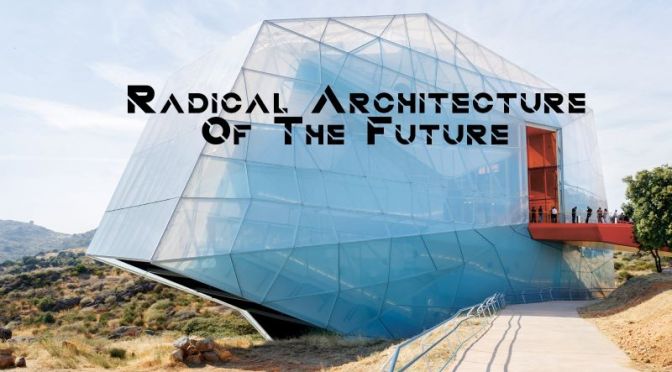
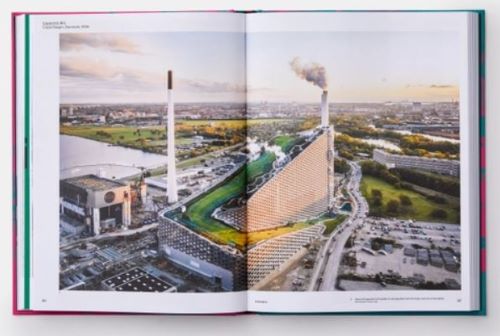
2021 Books: ‘Radical Architecture Of The Future’ – (Phaidon)

This remarkable book features projects — surprising, beautiful, outrageous, and sometimes even frightening — that break rules and shatter boundaries. In this timely book, the work of award-winning architects, designers, artists, photographers, writers, filmmakers, and researchers — all of whom synthesize and reflect our spatial environments — comes together for the first time.

An important and fascinating collection of original projects by unique thinkers in the world of architecture and spatial design

Architectural practice today goes far beyond the design and construction of buildings — the most exciting, forward-thinking architecture is also found in digital landscapes, art, apps, films, installations, and virtual reality.

About The Author:

How does tomrrow look from your doorstep? For the author, curator, critic and cultural consultant Beatrice Galilee tomorrow’s buildings, building plans, or ways of thinking about our built environment, are already out there.

In her new book, Radical Architecture of the Future, she quotes the American scholar Donna Haraway who asserted, way back in 1985, that “The boundary between science fiction and social reality is an optical illusion.”

Galilee patrols that boundary within the pages of her new book, in which she details works by 79 architects, designers, artists, photographers, writers, filmmakers, and researchers, each of whom are working at the most radical edges of architecture and spatial design today.

Read more

Science Podcast: Aracibo Observatory Research, Environment & Behavior

Science Senior Correspondent Daniel Clery regales host Sarah Crespi with tales about the most important work to come from 57 years of research at the now-defunct Arecibo Observatory and plans for the future of the site. 

Sarah also talks with Toman Barsbai, an associate professor in the school of economics at the University of Bristol, about the influence of ecology on human behavior—can we figure out how many of our behaviors are related to the different environments where we live? Barsbai and colleagues took on this question by comparing behaviors around finding food, reproduction, and social hierarchy in three groups of animals living in the same places: foraging humans, nonhuman mammals, and birds. 

Science Podcast: Dire Wolf Extinction, Pluto’s Blue Haze & Mice Empathy

DNA clues point to how dire wolves went extinct, and a round-up of the main impacts of Brexit on science.

In this episode:

00:45 Dire wolf DNA

Dire wolves were huge predators that commonly roamed across North America before disappearing around 13,000 years ago. Despite the existence of a large number of dire wolf fossils, questions remain about why this species went extinct and how they relate to other wolf species. Now, using DNA and protein analysis, researchers are getting a better understanding of what happened to these extinct predators.

Research Article: Perri et al.

11:43 Research Highlights

The secret to Pluto’s blue haze, and the neural circuitry underlying mice empathy.

Research Highlight: Ice bathes Pluto in a blue haze

Research Highlight: Brain maps show how empathetic mice feel each other’s pain

13:31 Post-Brexit science

In December, a last minute trade-deal between the UK and EU clarified what the future relationship between the two regions would look like, after Brexit. We discuss the implications of this trade-deal for science funding, the movement of researchers, and data sharing.

News Explainer: What the landmark Brexit deal means for science

23:18 Briefing Chat

We discuss some highlights from the Nature Briefing. This time, concerns about contaminating water on the moon, and the spy satellites that spied out environmental change.

Nature News: Will increasing traffic to the Moon contaminate its precious ice?

The New York Times: Inside the C.I.A., She Became a Spy for Planet Earth