
Tag Archives: Previews

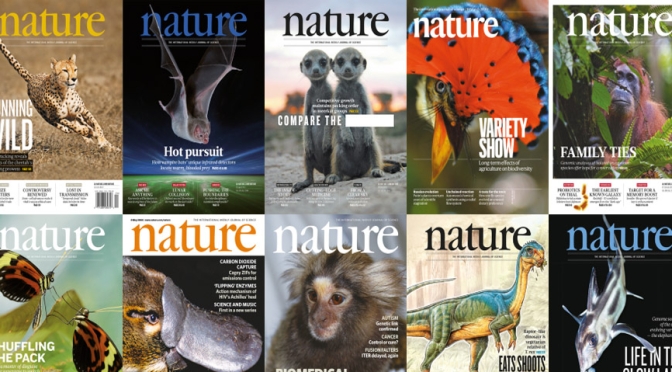
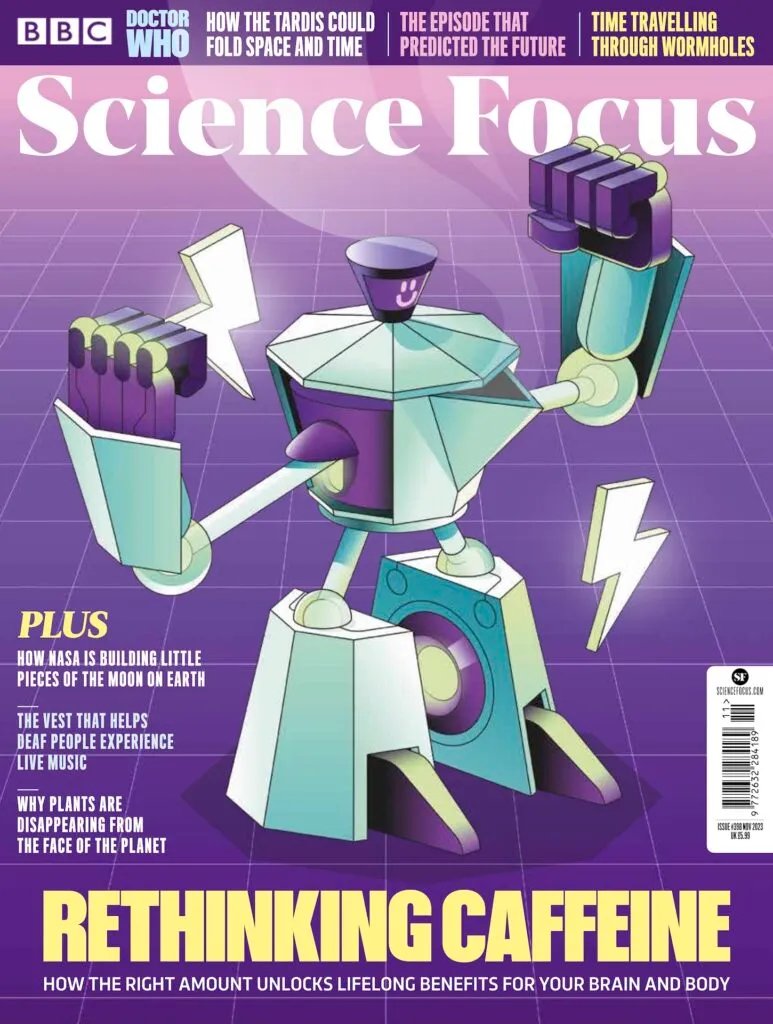
Science Focus Magazine – November 2023 Preview

Image

BBC Science Focus Magazine (November 2023) The latest issue features ‘Rethinking caffeine’ – How the right amount unlocks lifelong benefits for your brain and body.

The science of Doctor Who

At 60 years old, Doctor Who, the BBC show following the adventures of the regenerating Time Lord, continues to be highly enjoyable fiction. But it’s science fiction. The Gallifreyan takes science seriously… so we take a closer look at some of the science of Doctor Who, from time travel and the TARDIS to invading Cybermen and rogue planets.

How to make the Moon on Earth

The expense and prestige involved in sending landers and rovers to the Moon means you can’t afford for them not to work when they get there. But the lunar landscape is like nothing here on Earth. So how, and where do you test equipment that’s bound for the Moon?

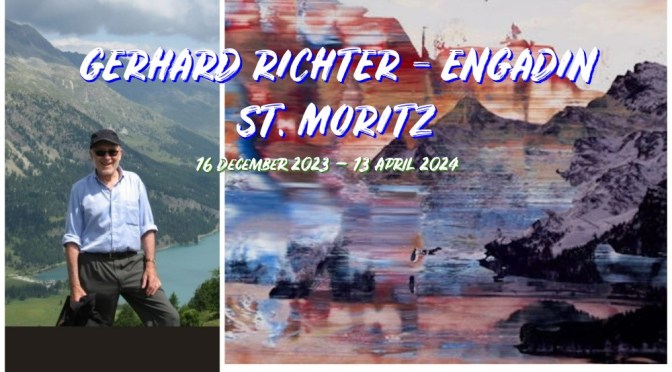
Art Exhibitions: ‘Gerhard Richter – Engadin’, Hauser & Wirth St. Moritz Gallery

Hauser & Wirth – Art Gallery (November 11, 2023) = Gerhard Richter, born in 1932, is one of the most important and celebrated artists of our time. His works can be found in international collections and have been exhibited in numerous museums and galleries in Europe and the United States. Richter first vacationed in the Swiss Alpine village Sils, located in the Upper Engadin region, in 1989, a location he has regularly visited during both summer and winter holidays for over 25 years.
Silsersee (Lake Sils) – Gerhard Richter 1995

GERHARD RICHTER
ENGADIN

St. Moritz

16 December 2023 – 13 April 2024

25.3.15 – Gerhard Richter

Curated by Dieter Schwarz and presented across three venues in the Upper Engadin—Nietzsche-Haus, the Segantini Museum and Hauser & Wirth St. Moritz—this momentous exhibition is the first to explore Gerhard Richter’s deep connection with the Engadin’s alpine landscape. More than seventy works from museums and private collections—including paintings, overpainted photographs, drawings and objects—are testament to the artist’s fascination with the Upper Engadin. Opening 16 December 2023, ‘Engadin’ will be on view through 13 April 2024.

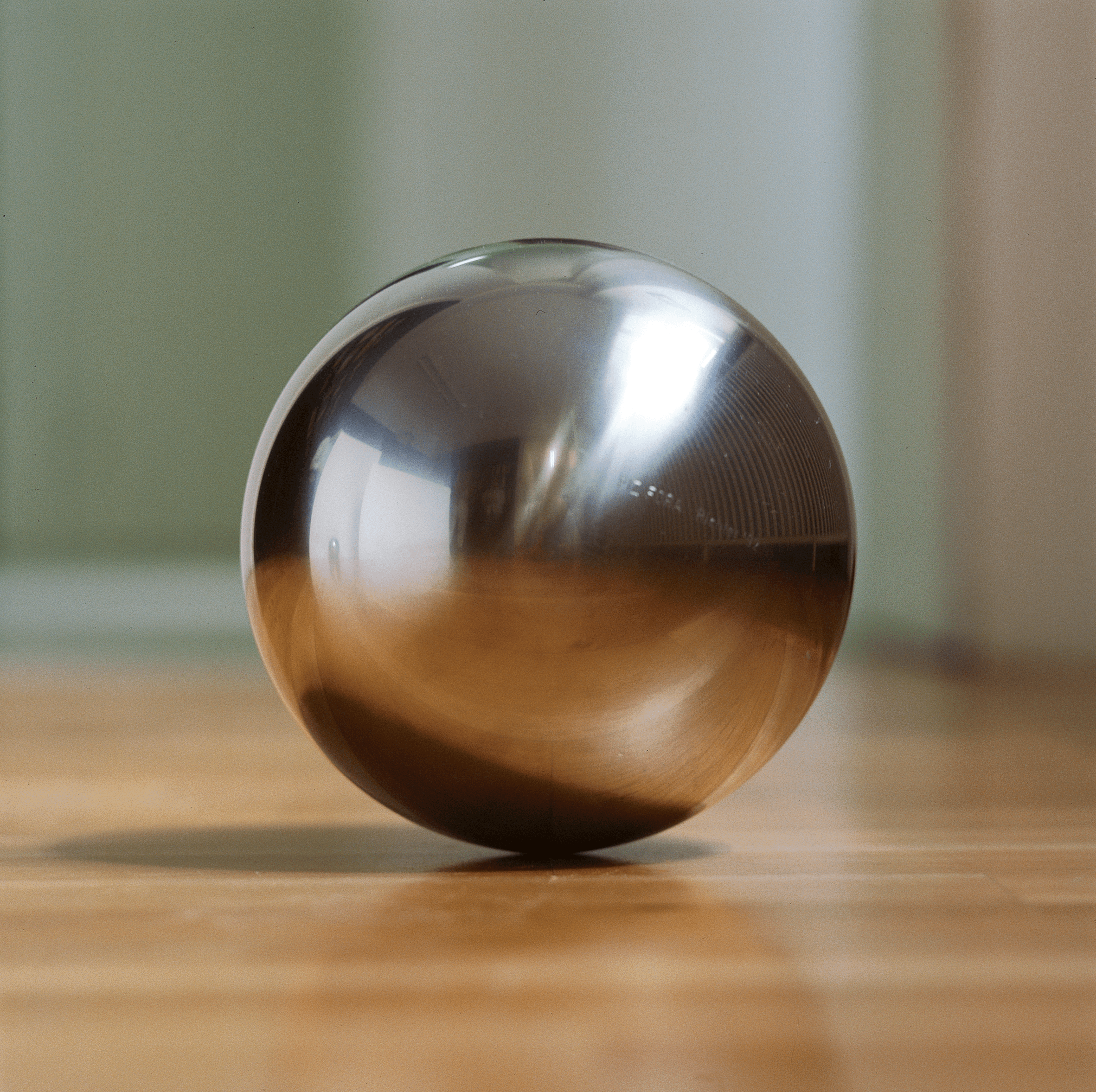
The work connecting the three exhibition venues is a steel sphere that Richter had produced as an edition, on view at each site. He first presented it at Nietzsche-Haus in 1992, in an exhibition curated by Hans Ulrich Obrist. Each unique sphere bears the name of a mountain in the Upper Engadin. The matte, subtly reflective, almost surreal sphere delicately reflects all that surrounds it. It symbolizes the sublime yet inhospitable manifestations of nature, which are especially conspicuous in the mountains.

St. Moritz – Gerhard Richter – 1992

Kugel III (Piz Fora) [Sphere III (Piz Fora)] – Gerhard Richter – 1992

On view at the Segantini Museum and Hauser & Wirth are paintings that Richter created from photographs taken during his hikes in the Upper Engadin. These works mark a new chapter in his landscape painting—a genre that had always appealed to him for its supposed untimeliness. Richter’s Engadin landscapes are exemplary of the ambiguity in his painting, oscillating between a seductive transfiguration of nature and a reflection of its alienness. Particularly noteworthy is the painting ‘Wasserfall (Waterfall)’ (1997) from Kunst Museum Winterthur, a work that clearly traces Richter’s engagement with 19th-century painting, from romanticism to realism. The artist later overpainted some of the Engadin motifs, including depictions of Piz Materdell and Lake Sils, transforming them into abstract paintings with a melancholic atmosphere that responds to impressions of the landscape.

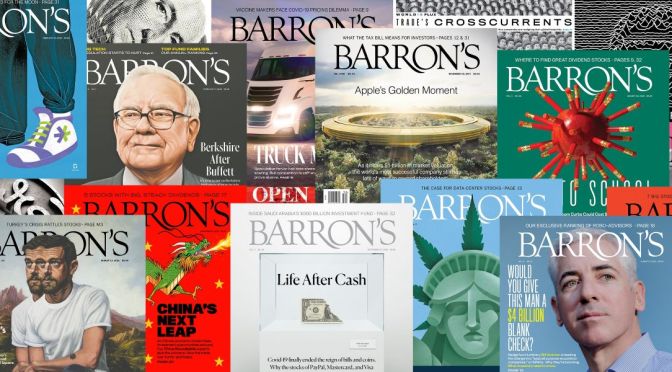
Finance Preview: Barron’s Magazine – Nov 13, 2023

Image

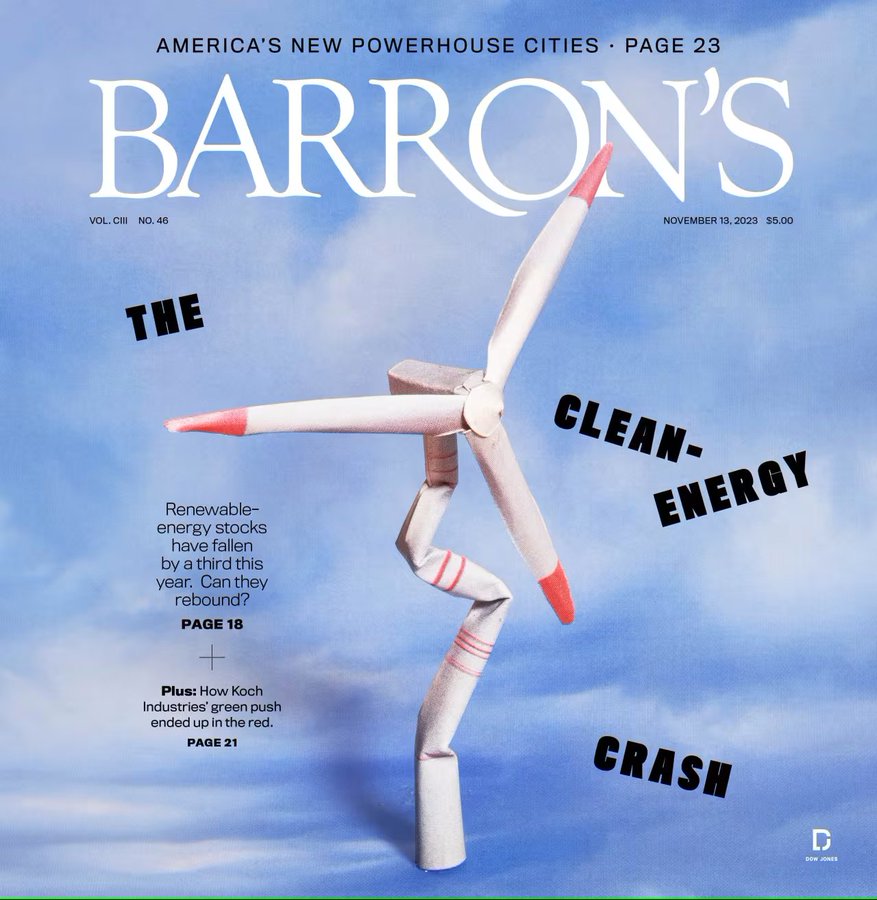
BARRON’S MAGAZINE – November 13, 2023 ISSUE:

Couples Fight More About Money After They Retire. 3 Ways to Avoid Squabbles.

Couples Fight More About Money After They Retire. 3 Ways to Avoid Squabbles.

The three biggest areas of dispute are spending priorities, worries about running out of money, and legacy questions.4 min read

Clean-Energy Stocks Have Collapsed. What’s Next.

Clean-Energy Stocks Have Collapsed. What's Next.

Stocks related to wind, solar and other forms of renewable energy have fallen by a third this year. Only a handful may be ready to rebound.

A Costly Lesson: How Koch’s Green Push Ended in the Red

A Costly Lesson: How Koch's Green Push Ended  in the Red

Since early 2021, Koch’s environment picks have posted an average loss of 58% on a cap-rated basis, Barron’s calculates.Long read

Citi Is in the Doghouse. How It Could Break Out.

Citi Is in the Doghouse. How It Could Break Out.

CEO Jane Fraser is cutting jobs and downsizing globally. With a 5% yield and cheap stock, Citi could pay off.3 min read

The New York Times Book Review – November 12, 2023

Image

THE NEW YORK TIMES BOOK REVIEW (November 12, 2023): This week’s issue features ‘Fear of Flying’ turns 50 – With its feminist take on sexual pleasure, Erica Jong’s novel caused a sensation in 1973; The 2023 New York Times/New York Public Library Best Illustrated Children’s Books, and more…

‘Fear of Flying’ Is 50. What Happened to Its Dream of Freedom Through Sex?

This color photo is a close-up of a woman’s face near a window. She is wearing a cream-colored blouse and pearls, and her face, partly concealed by her thick blond shoulder-length hair, is turning toward the camera.

With its feminist take on sexual pleasure, Erica Jong’s novel caused a sensation in 1973. But the revolution Jong promoted never came to pass.

By Jane Kamensky

Fifty years ago last month, Erica Jong published a debut novel that went on to sell more than 20 million copies. “Fear of Flying,” a book so sexually frank that you may have found it hidden in your mother’s underwear drawer, broke new ground in the explicitness of writing by and for women. Jong’s heroine, Isadora Wing, was a live wire. She was also a dead end, certainly for Jong, and maybe for feminism, too.

6 New Paperbacks to Read This Week

Recommended reading from the Book Review, including titles by John Edgar Wideman, Yasunari Kawabata, Allegra Goodman and more.

The New York Times Magazine – Nov 12, 2023

Image

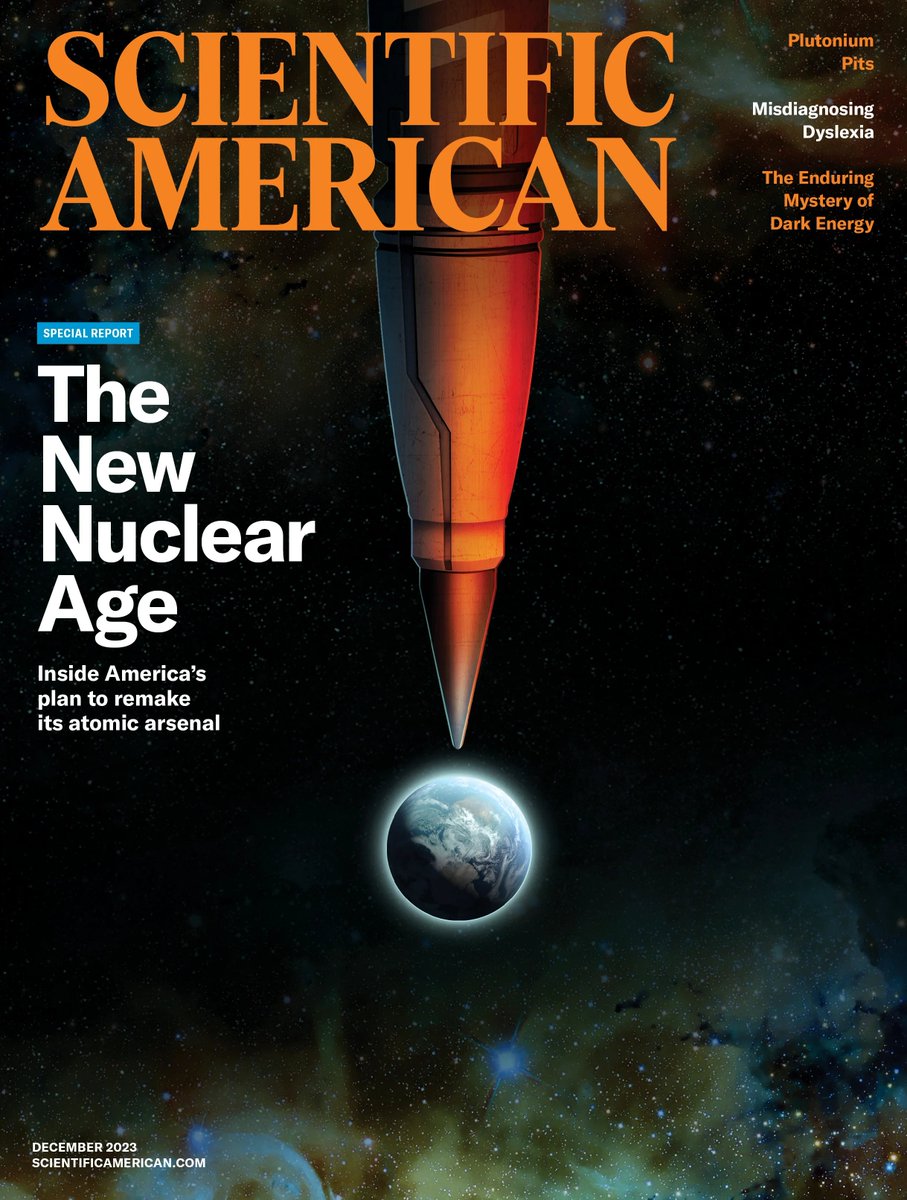
THE NEW YORK TIMES MAGAZINE (November 10, 2023): The latest issue features A Beginner’s Guide to Looking at the Universe; What Does the U.S. Space Force Actually Do? – Inside the highly secretive military branch responsible for protecting American interests in a vulnerable new domain; Their Final Wish? A Burial in Space. – Why some people decide to send their remains into orbit.

A Beginner’s Guide to Looking at the Universe

A stunning advancement in a long history of stargazing, the James Webb telescope reveals light where once we saw only darkness. Our view of the universe will never be the same.

By KATE LARUE

Arts & Culture: The New Criterion — Dec 2023

Image
The New Criterion – December 2023 issue:

Art  a special section

Absinthe minded  by Barnaby Conrad III
The three faces of Lafayette  by Michele H. Bogart
Matisse & Derain: a study in contrasts  by James Panero
Rodin & Michelangelo: a speculation  by Eric Gibson
A German restoration drama  by Michael J. Lewis
Notes on “Le Serf”  by William Tucker
Thirties at the Met  by Karen Wilkin

New poems  by Kieron Winn & Richard Tillinghast

The Arts: Brick Literary Journal – Autumn 2023

Image

BRICK LITERARY JOURNAL (AUTUMN 2023)

  • Leanne Betasamosake Simpson goes to the breathing lands
  • Paul Holdengräber and Merve Emre visit Mrs. Dalloway
  • Douglas Kearney rescues the earth from the world
  • Jessica Moore on the smarginatura of motherhood
  • Jan Zwicky approaches Wittgenstein’s silence
  • Tina Campt defines Black gravity

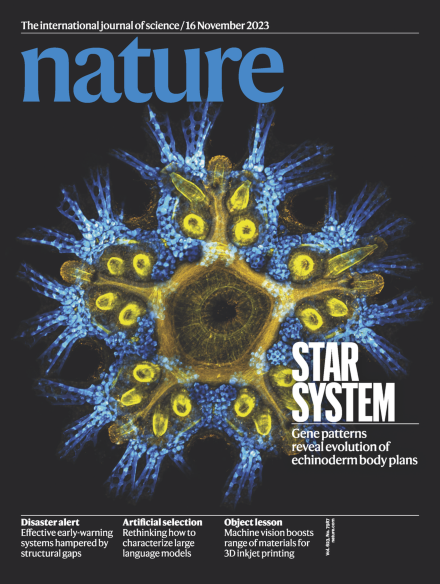
Covers: Science Magazine November 10, 2023 Preview

Image

Science Magazine – November 10, 2023: The new issue features Mode-locked “chip lasers” generating intense ultrashort pulses of light have been the backbone of ultrafast sciences and technologies. 

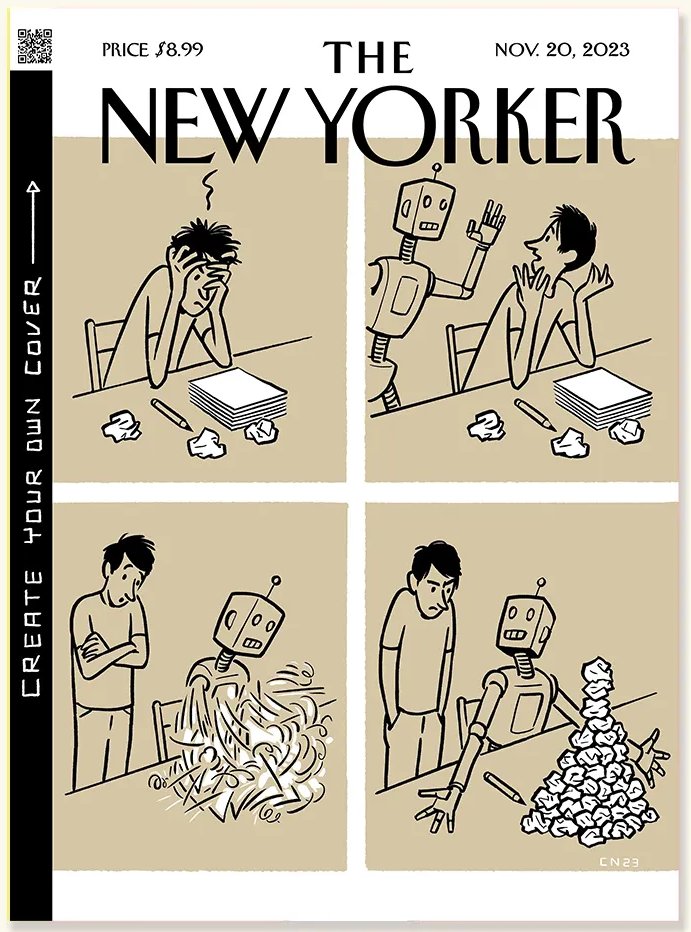
AI’s challenge of understanding the world

By MELANIE MITCHELL

In thinking about the challenge of getting artificial intelligence (AI) to understand our complex world, I recalled a Twitter post from a user of Tesla’s self-driving system. The user tweeted that his car kept stopping abruptly at a particular location for no apparent reason. Then he noticed a billboard advertisement on the side of the road, featuring a sheriff holding up a stop sign. The car’s vision system had interpreted this as an actual stop sign, and slammed on the brakes.

The Scottish wildcat has been wiped out by breeding with domestic cats

three captive Scottish wildcats
This trio of captive Scottish wildcats is part of the Royal Zoological Society’s Saving Wildcats Project.

After 2000 years of isolation, a few decades of interbreeding have rendered the animal “genomically extinct”

BY DAVID GRIMM

Though it lies in ruins on the northeast coast of England, Kilton Castle was once an imposing stone fortress, home to several noble families, and—it appears—at least eight cats. Archaeological excavations in the 1960s uncovered a well, at the bottom of which lay the bones of several felines dating back to the 14th century. The animals were an odd mix: Some were domestic cats, but other, larger specimens appeared to be European wildcats, a fierce, burly species that has inhabited the continent for hundreds of thousands of years.

Previews: The Economist Magazine – Nov 11, 2023

Image

The Economist Magazine (November 11, 2023): The latest issue features How Scary is China? – America must understand China’s weaknesses as well as its strengths; The Omnistar is born – How artificial intelligence will transform fame; Giorgia Meloni’s “mother of all reforms” is a power grab – Italians should reject their prime minister’s demagogic proposal, and more….

How artificial intelligence will transform fame

The omnistar is born – Those complaining the loudest about the new technology stand to benefit the most

How scary is China?

Superpower politics – America must understand China’s weaknesses as well as its strengths

Giorgia Meloni’s “mother of all reforms” is a power grab

Constitutional chicanery – Italians should reject their prime minister’s demagogic proposal

The New York Times Style Magazine – Nov 12, 2023

Image

THE NEW YORK TIMES STYLE MAGAZINE (November 12, 2023) T’S TRAVEL ISSUE features the writer Aatish Taseer embarked on an epic 40,000-mile journey through Bolivia, Mongolia and Iraq. What he learned was less a life-altering revelation and more a lesson in curiosity itself.

The Enduring, Transformational Power of Pilgrimage

Rows of tents and cabins on grassy terrain, next to steep clusters of rocks.
A tourist camp about 50 miles east of Erdene Zuu monastery in Mongolia. Richard Mosse

The writer Aatish Taseer embarked on a journey through Bolivia, Mongolia and Iraq. What he learned was less a life-altering revelation and more a lesson in curiosity itself.

By Hanya Yanagihara

Travel, the movement of people from one place to another, has always existed. But long before we thought to travel for pleasure, we traveled for purpose: for commerce, and for faith.

Even the most casual student of the Silk Road, that fearsome, wondrous network of routes that people began plying in the second century B.C. (and did so for approximately the next 1,600 years) knows that the two — business and God, whoever or whatever your god was — often intermingled. Merchants and adventurers returned with new kinds of goods, but also with new kinds of ideas: of art, of architecture, of ideology, of faith. The Silk Road brought Islam to India, and Buddhism to Japan. It’s why travel has always been both thrilling and dangerous. You never know how a new land is going to change you; it never knows how you’re going to change it.

Behind the Story: How a Writer Prepared for a 40,000-Mile Trip

A few bands of terraced land, descending to a lake. The sky is blue with wide clouds.
The Island of the Sun in Bolivia’s Lake Titicaca, a pilgrimage site since before the Inca Empire.Credit…Stefan Ruiz

The dozens of books that T writer Aatish Taseer read before his journey through Bolivia, Mongolia and Iraq, and what he learned from each pilgrimage.

Eighteen months ago, when the New York-based T writer at large Aatish Taseer began planning his reporting trips for this month’s three-part feature story — an exploration of religious travel in Bolivia, Mongolia and Iraq — he was already well acquainted with the idea of pilgrimage. His first book, the 2009 memoir “Stranger to History,” opens with what is arguably the world’s best-known faith-motivated journey, the hajj to Mecca, and ends with what he describes as a personal pilgrimage to meet his estranged father in Pakistan. In Delhi, India, where Taseer grew up, quick trips for the purpose of worship were commonplace. “People would do a pilgrimage on an ordinary Sunday,” he says, “instead of going to an amusement park.”