 From reception pavilion to proper house, 2m26’s houses are unique pieces. They are produced made to measure, on demand. They absolutely fit to the landscape. The houses are made of pine planks, rough cuted. The structure is protected with linseed oil to resist to weather conditions and walnut stain can be added to obtain a dark color.
 The building process / prefab gives the opportunity to prepare all the pieces at the Atelier. Moreover, it reduces on site time of construction, damages on plants and minimizes noise pollution. On site construction can be scheduled from a week to a month.
Techniques used are mostly cutting, drilling, screwing, so that the assembly work can be done together with the customer, reducing costs for him.
About 2m26: Born in 2015, 2m26 summarizes ten years of researches and experiments about inhabiting.
Proceeding between design and architecture, 2m26 offers tools for living / handmade, thrifty and luxury / unique pieces designed and produced on demand / raw materials, natural processings and mastered development / simple, handsome and functional.
The crew :
mélanie heresbach / artist / architect.
sébastien renauld / artist / architect.
Website


 What might that mean for the bathrooms of the post-coronavirus world? Americans have already demonstrated a keen fixation with this household feature: In the last 50 years, the number of home bathrooms per person has doubled. One could easily see the lavatory-building boom accelerate further as future homeowners keep the needs of the self-quarantined in mind. And many have speculated that sales of bidet attachments will surge as toilet-paper shortages encourage Americans to embrace this more sustainable alternative.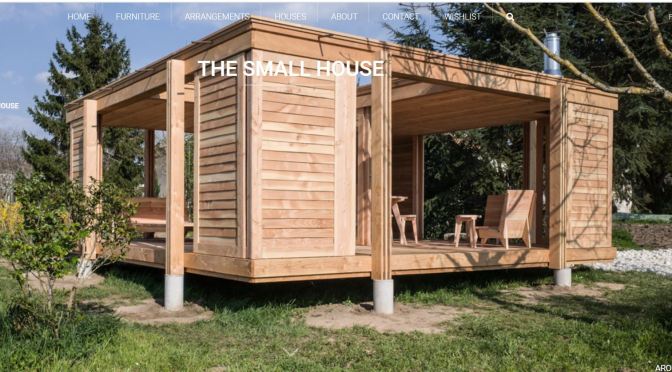

 Lady when her husband John F. Kennedy was elected President.
 …a stairway and greenery gently connected the upper and lower floors along a diagonal line, creating a space where all three generations could take comfort in each other’s subtle presence. Not only does the stairway connect the interior to the yard, or bond one household to another, this structure aims to expand further out to join the environs and the city —connecting the road that extends southward on the ground level, and out into skylight through the toplight.
 A two-family home in a quiet residential area of Tokyo. With other houses and apartment buildings pressing around the site, the architectural volume was pushed to the north to take in daylight, ventilation, and greenery of the yard into the living environment by a large glass front southern façade. The layout plan made it possible to preserve the existing persimmon tree beloved by the previous generations. Considering the potential difficulties of going up and down the stairs, the rooms for the older couple were arranged on the 1st floor. The eight cats living with the older couple roam in and outdoors more freely, and encourages the mother to enjoy her hobby of gardening more freely. The younger couple and their child reside on the 2nd and 3rd floors. To avoid the two households being completely separated at the top and bottom, a “stairway-like” structure was designed in the south yard, continuing upward into the building and penetrating the 1st through 3rd floors. Enclosed inside the “stairway” are functional elements, such as bathrooms and a staircase for actual use, with the upper part taking on the look of a semi-outdoor greenhouse with abundant greenery as well as a sun-soaked perch for the cats to enjoy climbing.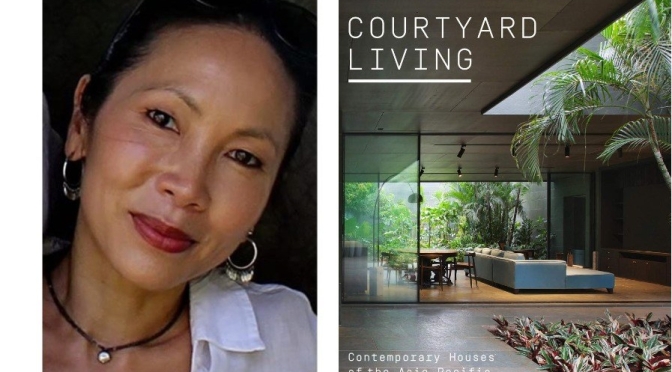
 Charmaine Chan, design editor for ‘South China Morning Post’ believes that courtyards offer an excellent urban solution to domestic solitude. She explains how they can be hubs of community and calm.
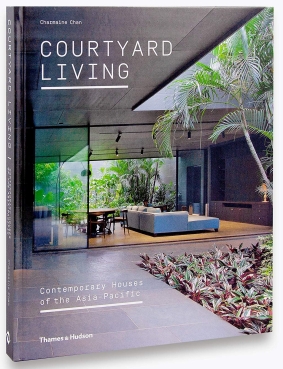 Courtyards have long played an important function in residential design, regulating light, shade, and the use of space. With thousands of years of tradition as inspiration, contemporary architects are now realizing courtyard living afresh. This lavish survey of twenty-five residences across the Asia-Pacific region features homes from Australia, Taiwan, Malaysia, Indonesia, Thailand, the Philippines, Singapore, India, Vietnam, and Sri Lanka.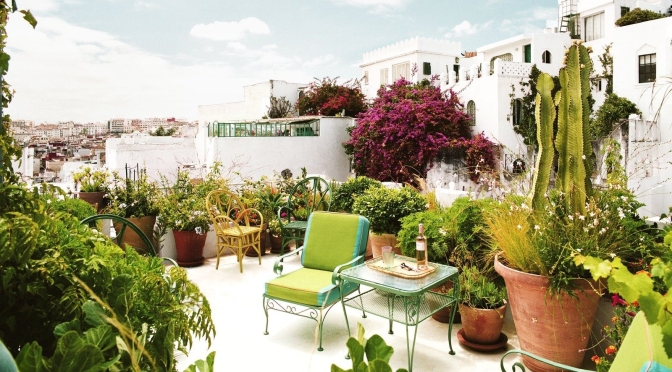
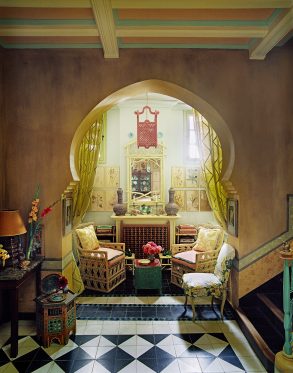 “Tangier is the crossroads of so many civilizations,” says AD100 talent Frank de Biasi of the evocative Moroccan port city that he and his partner, the multifaceted designer Gene Meyer, have made their home. “There’s a central energy here,” he explains, “where the Atlantic meets the Mediterranean, where Europe meets Africa. It’s a psychic point like no other place.”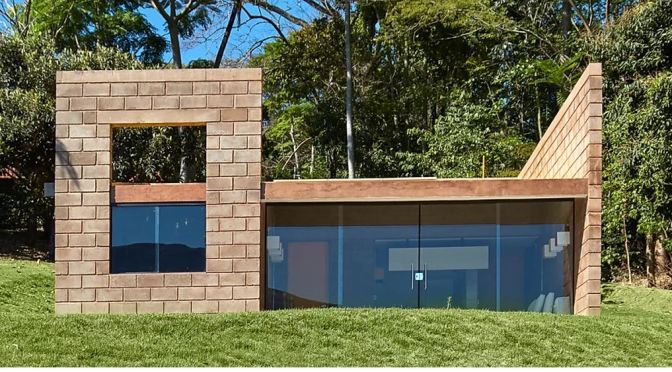
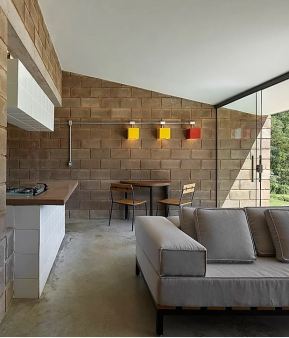 “Our SUSTAINABLE HOME is made of matter and spirit. The raw material, the unused by-products of the mining activity, is the main component: from it we take advantage of its qualities and properties. Finding an ecologically suitable use for this waste determines the unique character of the housing unit. In its spirit, the housing unit intends, in addition to its technical function, to be a home, a place for each person to feel valued, welcomed in their dreams, hopes and desire to live together. Each house, even in its simplicity, must be able to create a sense of pride and self-esteem ”, adds Gustavo Penna.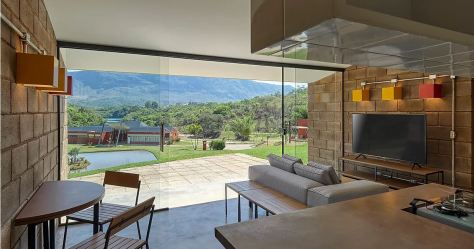
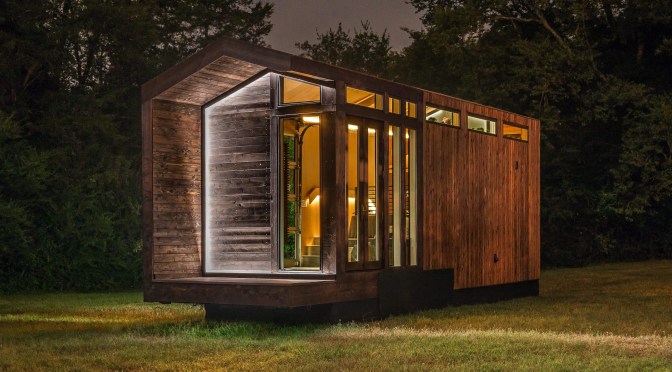
 LED Valance Lighting – The Orchid has received global praise for its dimmable, independently switched lighting. Skylights, clerestory windows and large glass front wall give this home a lovely aesthetic day or night.
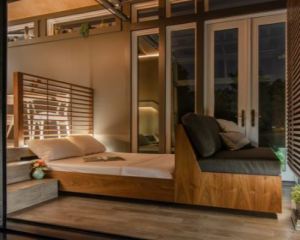 Ground Floor Bed and King Loft – Sleep four comfortably with the Orchid’s private king bed loft and sofa bed.
 Full Size Tile Shower – Spacious, chic, and comfortable. The floating mirrors with LED valance lighting give extra dimension to this modern bathroom.
 Boomers Daily