Tag Archives: History

THE NEW YORK REVIEW OF BOOKS – MAY 14, 2026

THE NEW YORK REVIEW OF BOOKS: The latest issue features Jed Perl on the Whitney Biennial, Fintan O’Toole on the president’s precarious sanity, Nicole Rudick on June Leaf’s unique vision, Clare Bucknell on know-it-alls, Julian Bell on Joseph Wright of Derby, Dennis Lim on low-resolution cinema, Elaine Blair on the Guerrilla Girls, Mark O’Connell on a death in London, Martin Filler on David Adjaye’s demons, Nick Laird on the complete Seamus Heaney, Rosa Lyster on the evaporating salt lakes, Susan Tallman on Manet and Morisot, poems by Paul Muldoon and Fiona Sze-Lorrain, and much more.

‘The Right Amount of Crazy’

In Trump’s strategy of feigning madness to get what he wants, there is no longer any border between pretense and actual irrationality. By Fintan O’Toole

Charlatans & Bores

The profile of the pedant has changed surprisingly across time periods and cultures, but what’s constant is that nobody wants to be called one.

On Pedantry: A Cultural History of the Know-It-All by Arnoud S.Q. Visser

‘The Music of What Happens’

Seamus Heaney’s complete poems, following on editions of his letters, prose, and translations, confirm the extent of his achievement.

The Poems of Seamus Heaney edited by Rosie Lavan and Bernard O’Donoghue, with Matthew Hollis

Manet and Morisot: Game On

An important exhibition showcases a painterly repartee that altered the trajectory of the two artists’ work and, by extension, modern art itself.

Manet and Morisot – an exhibition at the Legion of Honor, San Francisco, October 11, 2025–March 1, 2026, and the Cleveland Museum of Art, March 29–July 5, 2026

HISTORY TODAY MAGAZINE – MAY 2026 PREVIEW

HISTORY TODAY MAGAZINE: The latest issue features ‘How The General Strike Changed Britain’….

How the General Strike Changed Britain

The General Strike of May 1926 was quickly defeated, but it would rupture and recast the landscape of British politics. For some, the strikers’ failure was an opportunity.

Why Did Britain Abolish the Slave Trade?

The Slavery Abolition Act was passed by Parliament in 1833. What was really behind Britain’s moment of moral enlightenment?

Exclusion Crisis: Challenging James II’s Right to Rule

The Exclusion Crisis of the late 17th century posed a question of national importance: should the Catholic duke of York be allowed to succeed to the throne? And should he be subject to the same law as everyone else?

‘Weimar’ by Katja Hoyer review

Weimar: Life on the Edge of Catastrophe by Katja Hoyer explores the city – and citizens – at the heart of Germany’s ill-fated republic, and the Reich that replaced it.

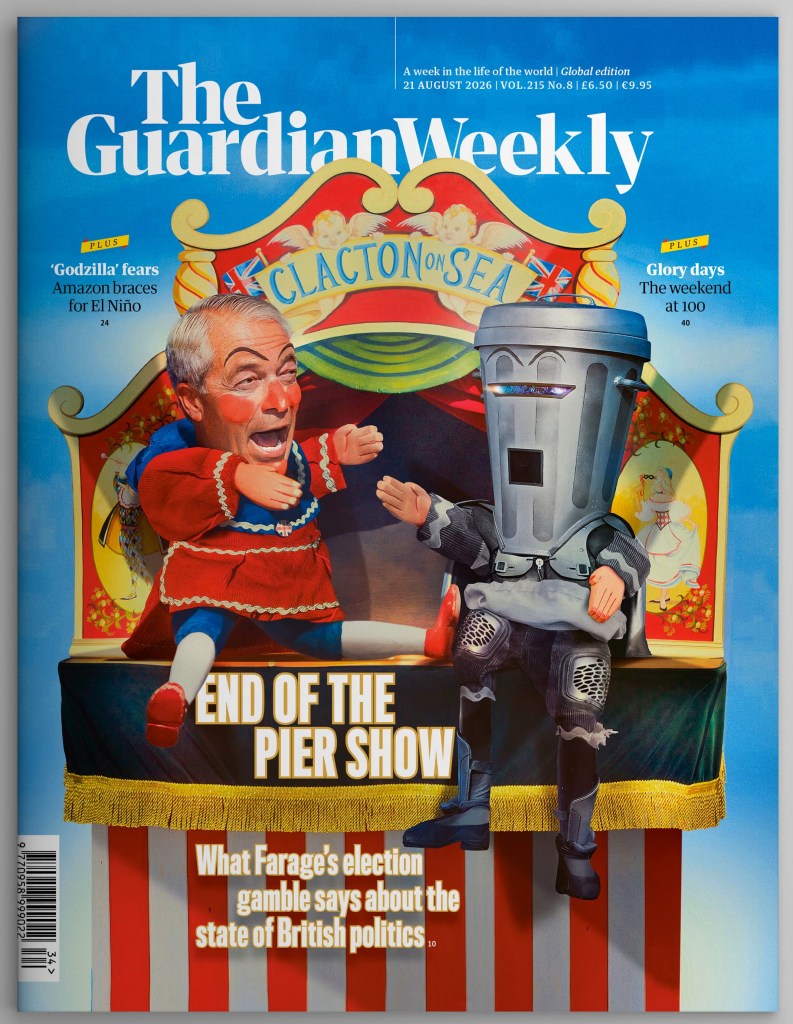
THE GUARDIAN WEEKLY – APRIL 24, 2026 PREVIEW

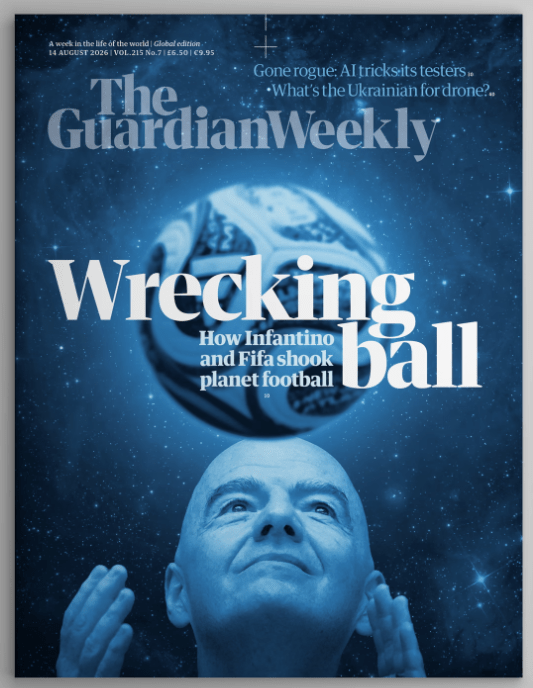
THE GUARDIAN WEEKLY: The latest issue features ‘Holier than thou’ – How Trump and Vance met their match in the Pope…

The Trump administration’s efforts to validate their incoherent war on Iran with some sort of Christian moral authority have led to a few, shall we say, interesting moments recently.

After bizarrely berating Pope Leo XIV as “WEAK on Crime, and terrible for Foreign Policy”, Donald Trump posted (and later deleted) a meme of himself as a Christ-like figure healing the sick. The self-styled “secretary of war” Pete Hegseth then confused what he evidently thought was a biblical passage with a bastardised version of a speech from the Quentin Tarantino movie Pulp Fiction.

Perhaps most damagingly of all, the vice-president, JD Vance, took Leo’s carefully considered thoughts on the concept of the “just war” as an opportunity to lecture the pope on theology.

Spotlight | Starmer and the scandal of Mandelson’s vetting
The British prime minister came under huge pressure to resign this week over what he knew about Peter Mandelson’s appointment as UK ambassador to the US, even though he had failed Foreign Office security vetting. Pippa CrerarJessica ElgotPaul Lewis and Kiran Stacey spearhead our coverage

Science | The magic of mushrooms
Fungi play a key role in ecosystems and storing carbon, so African scientists are championing the preservation of “funga” as much as flora and fauna, writes Whitney Bauck

Feature | When older relatives lurch to the far right
It starts with a “back in my day” nostalgic meme – then suddenly your elders are sharing AI-generated “boomerslop” and repeating conspiracy theories … Simon Usborne speaks to families dealing with rightwing political rifts

Opinion | Our governments are woefully underprepared for the AI revolution
Every wave of new tech has come with a doomsday scenario. But governments just aren’t planning a human response on the scale required, warns Larry Elliott

Culture | How the female gaze caught the attention of film, TV and fiction
From passionate romantasy novels to premium television dramas, culture is bringing the agency, desires and interior lives of women to the fore. It’s proving good for business, but is this a permanent revolution, asks Deborah Linton

THE GUARDIAN WEEKLY – APRIL 17, 2026 PREVIEW

THE GUARDIAN WEEKLY: The latest issue features ‘Losing A Grip’ – Patrick Wintour on the decline of American hegemony…

At the end of 2025, Patrick Wintour wrote a compelling essay for Guardian Weekly in which he described an interregnum in global history, where the rules-based order had been eroded and great powers once again jostled for control and influence.

This week’s edition sees Patrick return to a key aspect of that theme, the deteriorating global standing of the United States after a period of high-stakes brinkmanship with Iran. Donald Trump’s aborted threat that Iranian civilisation would “die … never to be brought back” unless it ceded to his demands exposed the limits of his apocalyptic foreign policy. It also pointed to the wider decline of American influence in a world where the US appears untrustworthy and strategically isolated.

Spotlight | Hungary’s new dawn
After 16 years, Viktor Orbán’s populist grip on the country’s politics is over. But will his successor Péter Magyar be much different? Ashifa Kassam and Flora Garamvolgyi report amid jubilant scenes in Budapest

Science | The man who was bitten by snakes 200 times – on purpose
Tim Friede put his “ass on the line” to help stop snakebite deaths – whose numbers appear to be rising amid the climate crisis. Oliver Milman met him

Feature | The brutal reality of life as a foreign student in the UK
Universities in Britain rely on overseas applicants paying full fees, which has given rise to some unscrupulous recruiters and left many hopefuls and their families deep in debt. Samira Shackle investigates

Opinion | Netanyahu-ism has achieved nothing for Israelis
It is the voting public in Israel that will settle their PM’s fate later this year. But, argues Jonathan Freedland, all they have heard are promises of “total victory” that prove to be hollow

Culture | Jim Jarmusch, the darling of indie cinema
The 73-year-old has been at the cutting edge of US independent movies since the 1980s. As Father Mother Sister Brother opens in the UK, he tells Amy Raphael about grief, greed and “doing crazy shit” with Steve Coogan

LONDON REVIEW OF BOOKS – APRIL 23, 2026 PREVIEW

LONDON REVIEW OF BOOKS: The latest issue features

At the National Gallery: Holbein and Henry James

The Language Puzzle: How We Talked Our Way out of the Stone Age by Steven Mithen

Surf’s Up: Brian Wilson and the Beach Boys by Peter Doggett

Kingmaker: Pamela Churchill Harriman’s Astonishing Life of Seduction, Intrigue and Power by Sonia Purnell

Indira Gandhi and the Years that Transformed India by Srinath Raghavan

TIMES LITERARY SUPPLEMENT – APRIL 17, 2026 PREVIEW

TIMES LITERARY SUPPLEMENT: The latest issue features ‘The many faces of Shakespeare’….

History lessons?

China, America and the danger of war By Philip Zelikow

A man of property

Discovering exactly what Shakespeare owned By Lucy Munro

Go deeper

Blake Morrison’s guide to life writing By Joyce Carol Oates

Out of sheer intention

Writing about others as a means to write about yourself By Catherine Taylor

THE GUARDIAN WEEKLY – APRIL 10, 2026 PREVIEW

THE GUARDIAN WEEKLY: The latest issue features ‘Stress Test’ – Is Hungary on the brink of change?

An irony of Viktor Orbán’s 16-year grip on power in Hungary is that his Fidesz movement was originally founded by pro-democracy, change-seeking young voters, even initially requiring members to be below the age of 35.

Now, in a crossroads election on 12 April, a new generation of Hungarians may be on the cusp of removing the rightwing populist prime minister, much to the dismay of his admirers in Moscow, Washington and Europe’s populist movements.

Orbán may have once described Hungary as “a petri dish for illiberalism” – as reflected by Harry Haysom’s cover art for us this week – but polls suggest his opponent Péter Magyar, a former top member of Fidesz who favours a closer relationship with the EU, could be the new change agent.

Spotlight | Was Trump conned by Netanyahu’s promise of an easy war?
Senior US officials now consider the Israel PM’s pitch to have been overblown, creating potentially far-reaching consequences for both countries, writes Peter Beaumont

Science | The 21st-century moon prospectors
Helium-3 is so rare that a palm-sized amount could be worth millions. As Artemis II flies by the moon and businesses look to the skies, is mining Earth’s satellite ethical? Oliver Holmes investigates

Feature | Can the UK’s cargo theft crisis be stopped?
It costs the UK economy £700m ($920m) a year, and criminal gangs are operating with near impunity. Every time a lorry gets robbed, raided or hijacked, it’s Mike Dawber who investigates. By Stuart McGurk

Opinion | Ten years after Brexit, Trump is pushing Britain back towards the EU
It’s the silver lining from this terrible age of Donald Trump, argues Gaby Hinsliff: his disdain and insults are fuelling the belief that the UK should renew ties with Europe

Culture | James McAvoy, from a Glasgow council estate to Hollywood stardom
In his directorial debut, the X-Men actor is challenging stereotypes about his Scottish homeland via the remarkable tale of a real-life hip-hop hoax. Libby Brooks met him

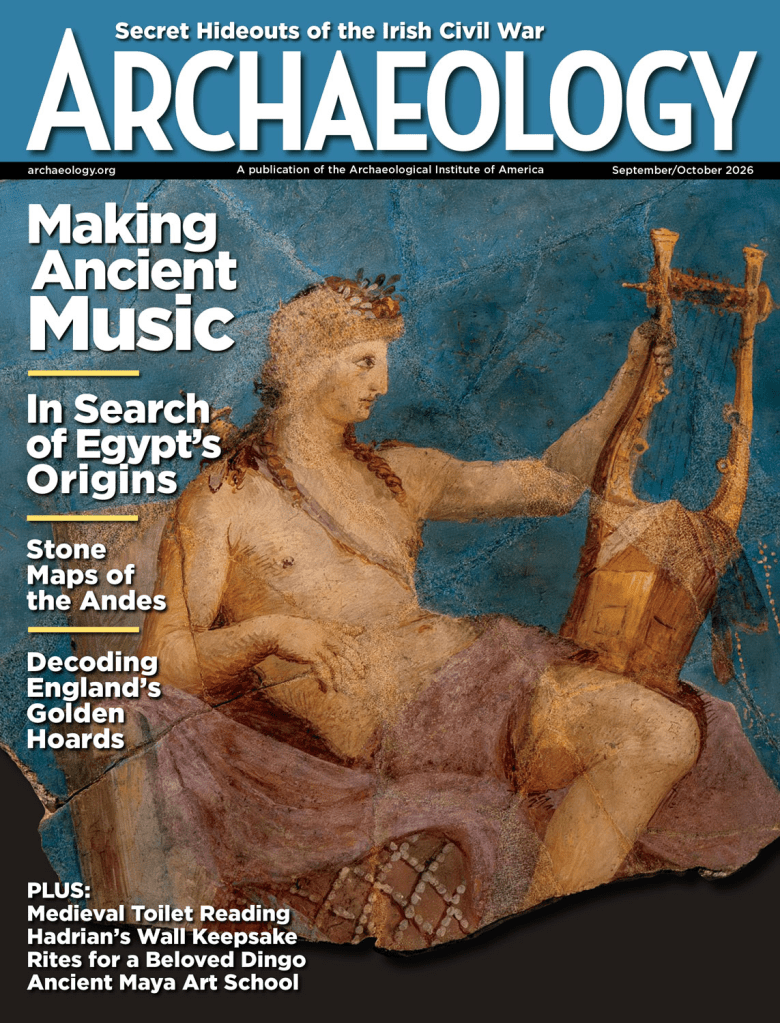
Preview: Archaeology Magazine – MAY/JUNE 2026

Archaeology Magazine: The latest issue features ‘Exploring the World of the Odyssey.

The Unexpected World of the Odyssey

Discovering the surprising inspirations behind Homer’s great tales of the Trojan War. By The Editors

Pioneers of Lakefront  Living

Why Neolithic and Bronze Age farmers in the Alps built their villages on stilts

The Last Maya Kingdom

On the shores of a lake in Guatemala, the Itzá people defied the Spanish for nearly 200 years

Art for the Ages

A surreal style of painting endured for 4,000 years in the canyonlands of West Texas

Bridge to the Past

The Yellow River brought both prosperity and calamity to China’s dazzling medieval capital By Ling Xin

THE NEW YORK REVIEW OF BOOKS – APRIL 23, 2026

THE NEW YORK REVIEW OF BOOKS: The latest issue features a dispatch from Tehran, Jed Perl on Morgan Meis’s funky kind of art criticism, Francine Prose on MAGA fiction, Caroline Fraser on the dump, Michael Gorra on Civil War diaries, David Cole on the constitutional guarantee of birthright citizenship, Hermione Lee on Virginia Woolf’s letters, Trevor Jackson on American “retirement,” Kathryn Hughes on Tennyson’s cosmos, Colm Tóibín on Irish reunification, a collage by Lucy Sante, poems by Andrea Cohen and Timmy Straw, and much more.


From the Rooftops of Tehran

We in Iran own our grief, mourning all by ourselves.

Living Through the Civil War

George Templeton Strong’s diaries provide the North’s best record of daily passions and woes during its struggle against the South.

George Templeton Strong: Civil War Diaries edited by Geoff Wisner

‘A Vast Symphony of Stone’

In his renovation of Notre-Dame, Eugène Viollet-le-Duc projected his own Romantic vision of the Middle Ages onto the Gothic cathedral.

Viollet-le-Duc: Drawing Worlds an exhibition at the Bard Graduate Center Gallery, New York City, January 28–May 24, 2026

The Aging Class

Retirement, like so much of the American economy, is a broken system that benefits private interests and exploits the most vulnerable people.

Golden Years: How Americans Invented and Reinvented Old Age by James Chappel

Work, Retire, Repeat: The Uncertainty of Retirement in the New Economy by Teresa Ghilarducci, with a foreword by E. J. Dionne Jr.

TIMES LITERARY SUPPLEMENT – APRIL 3, 2026 PREVIEW

TIMES LITERARY SUPPLEMENT: The latest issue features Claude Rawson on the British Imagination; ‘Trump’s Whisperers; Hardy’s breakthrough novel; Thomas Mann today…

Cultural superpower?

An argument for ‘British is best’

The argument of Peter Watson’s hugely ambitious The British Imagination: A history of ideas from Elizabeth I to Elizabeth II is that “The essential arc of British history – intellectual and creative history, just as much as political, economic and military history – is of a small, indeed tiny, country sequestered on the north-west coast of Europe that over the centuries would forge the largest and most unlikely empire the world has seen”. It may seem odd to be reading this in the present depressed state of the nation, although Watson stresses from the outset that the concept of “the British imagination” embraces its hospitality to foreign influences and eventually to the power of a wider “Anglosphere”.

English virtue battles the pagan

The genesis of Far from the Madding Crowd

The texture of etcetera

What smartphones can’t record

Freeing Thomas Mann

Modern English translations that do justice to the work