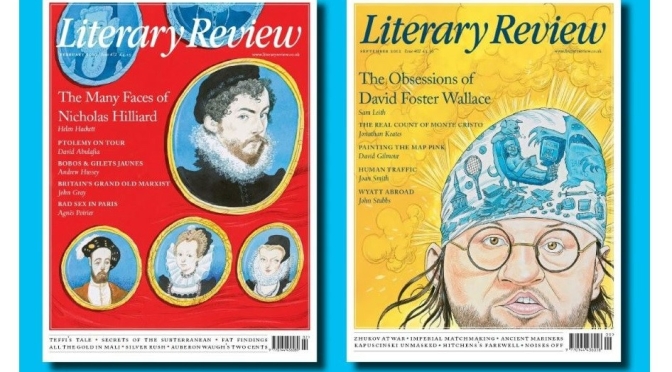
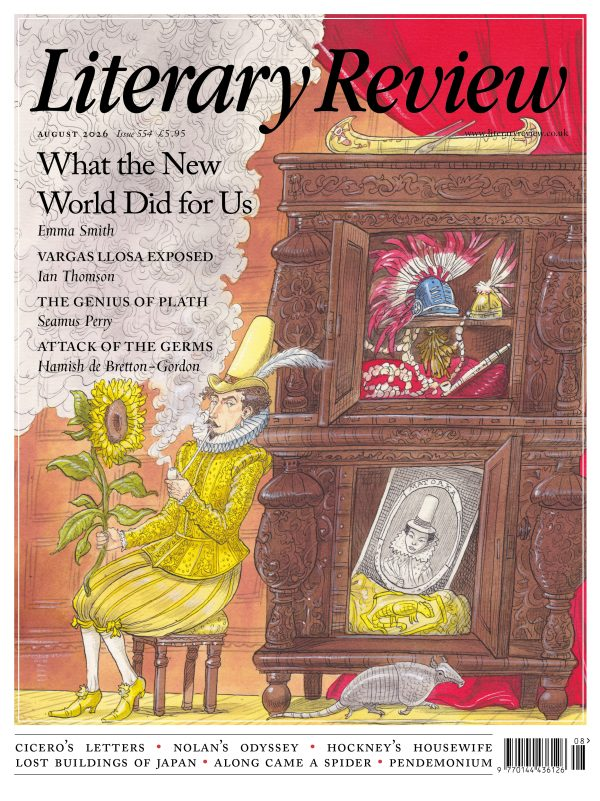
LITERARY REVIEW : The latest issue features ‘What the New World did for Us’
An Epic for the Ages
The Odyssey By Christopher Nolan (dir)

The Odyssey By Christopher Nolan (dir)
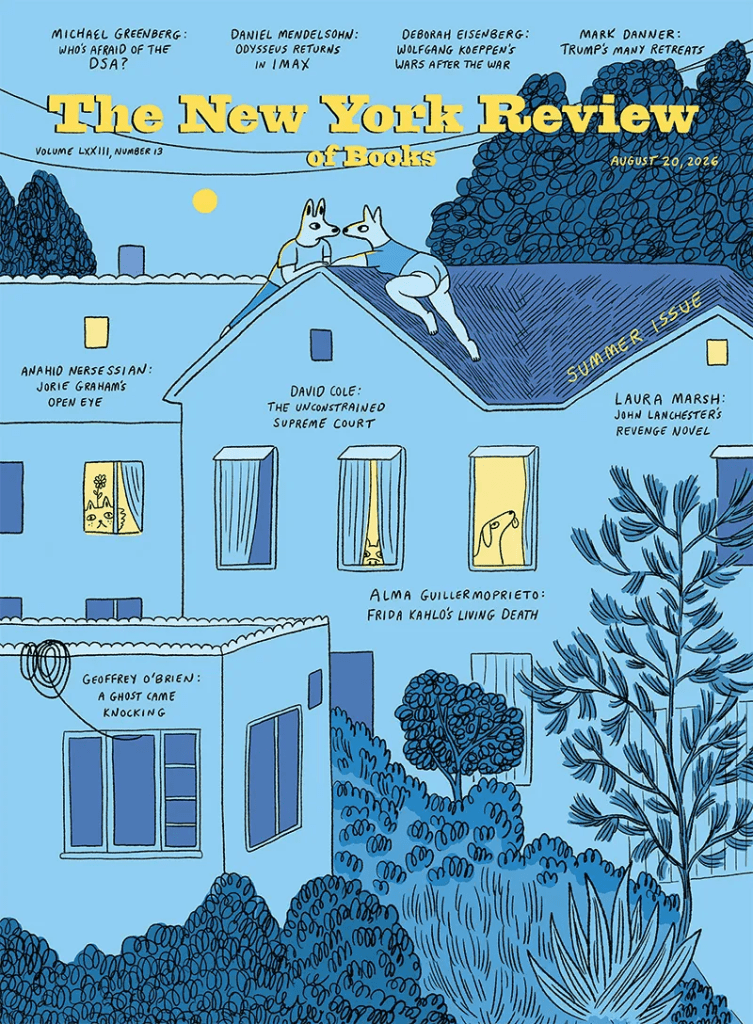
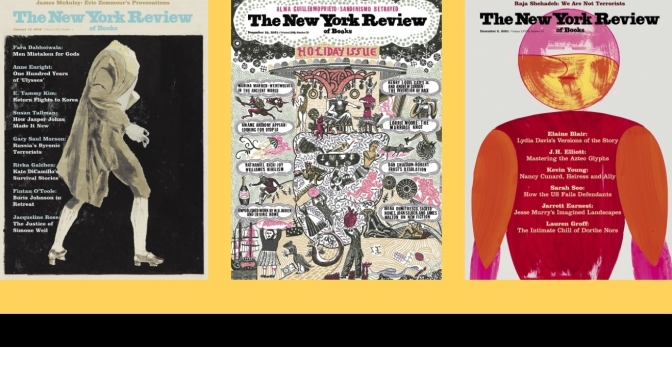
THE NEW YORK REVIEW OF BOOKS: The latest issue features…
The most authentic thing about Christopher Nolan’s Odyssey is its densely braided narrative, but its tormented hero sounds like the heroes of Christopher Nolan movies.
As Democratic Socialists rack up primary victories, the moderate wing of the Democratic Party looks increasingly out of touch.
Maggie Haberman and Jonathan Swan’s inside account of the Trump administration portrays a president with a vast appetite for power but who repeatedly backs down when the costs of his actions become too high.
Regime Change: Inside the Imperial Presidency of Donald Trump by Maggie Haberman and Jonathan Swan
In novels written immediately after World War II, Wolfgang Koeppen mined the conscience of Germany.
Pigeons on the Grass by Wolfgang Koeppen, translated from the German by Michael Hofmann
The Hothouse by Wolfgang Koeppen, translated from the German and with an afterword by Michael Hofmann, with an introduction by Pankaj Mishra
Death in Rome by Wolfgang Koeppen, translated from the German and with an afterword by Michael Hofmann, with an introduction by Joshua Cohen

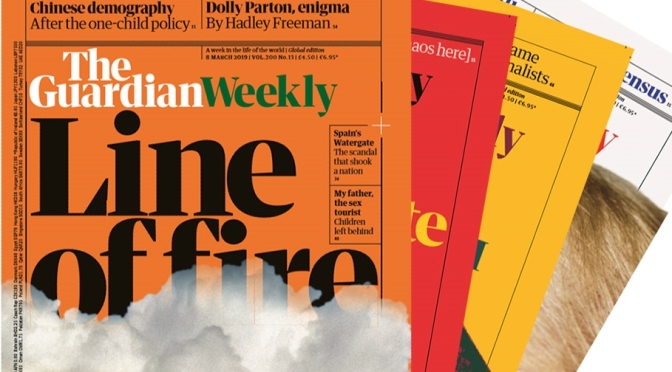
THE GUARDIAN WEEKLY: The latest issue features ‘Bugs in the System’ – How India’s Cockroach Movement Undermined Modi….
The news agenda has been so dominated for many months by a few big stories about perennial global hotspots and the biggest figures on the international stage, that one could accuse journalists of missing what was happening outside the US, Middle East or Ukraine. But as our south-east Asia correspondent, Hannah Ellis-Petersen, explains for this week’s big story, the rapid rise and sudden explosion on to the streets of India’s Cockroach Janta party took everyone – especially Narendra Modi’s government – by surprise.
What began as a satirical protest when the chief justice of India compared the country’s unemployed youth to cockroaches has damaged prime minister Modi’s image as a “strongman” leader and loosened his grip over the media. But as Hannah explains, it’s not just that the joke has “legs” and strong visuals; young people want a viable future and change.
Spotlight | ‘Smoke covered the sun’
Angelique Chrisafis hears from people evacuated from France’s Gironde region near Bordeaux as southern Europe battles wildfires, the spread and ferocity of which have shocked everyone
Spotlight | Blue horizons for Gaza’s children
Sea pools made out of sandbags and rubble are part of Amjed Tantesh’s project to give traumatised children a brief respite from war, reports his niece and our Gaza reporter Seham Tantesh
Feature | A Hiroshima journey from anger to peace
Simon Hattenstone meets Koko Kondo, who survived the dropping of the atom bomb on Hiroshima and hears about the publication of her father’s long-forgotten diary written in the aftermath of that horrific day in 1945
Opinion | Andy Burnham’s ticket to major change
The UK prime minister’s first policy announcement on cut-price bus fares signals more than a cheap gimmick, says Jonathan Freedland
Culture | John Carpenter interview
The uncompromising film director talks to Steve Rose about his shock and horror Hollywood career and his new music album
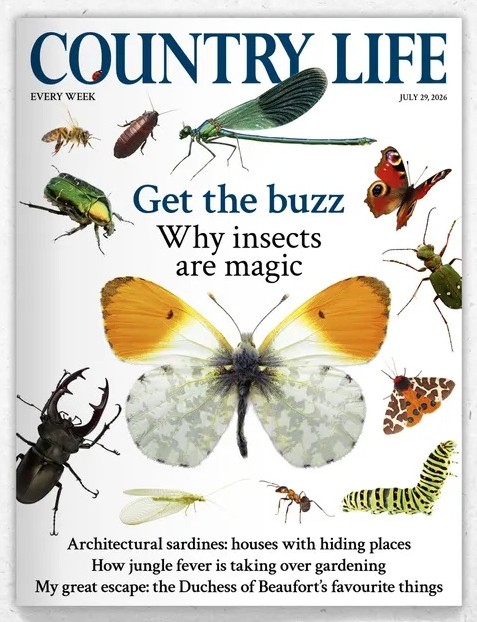
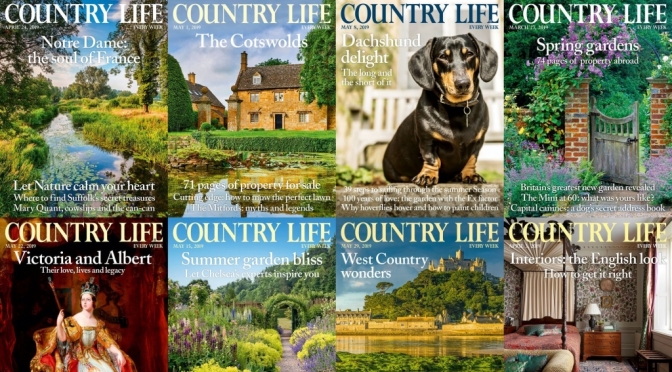
COUNTRY LIFE MAGAZINE: The latest issue features…
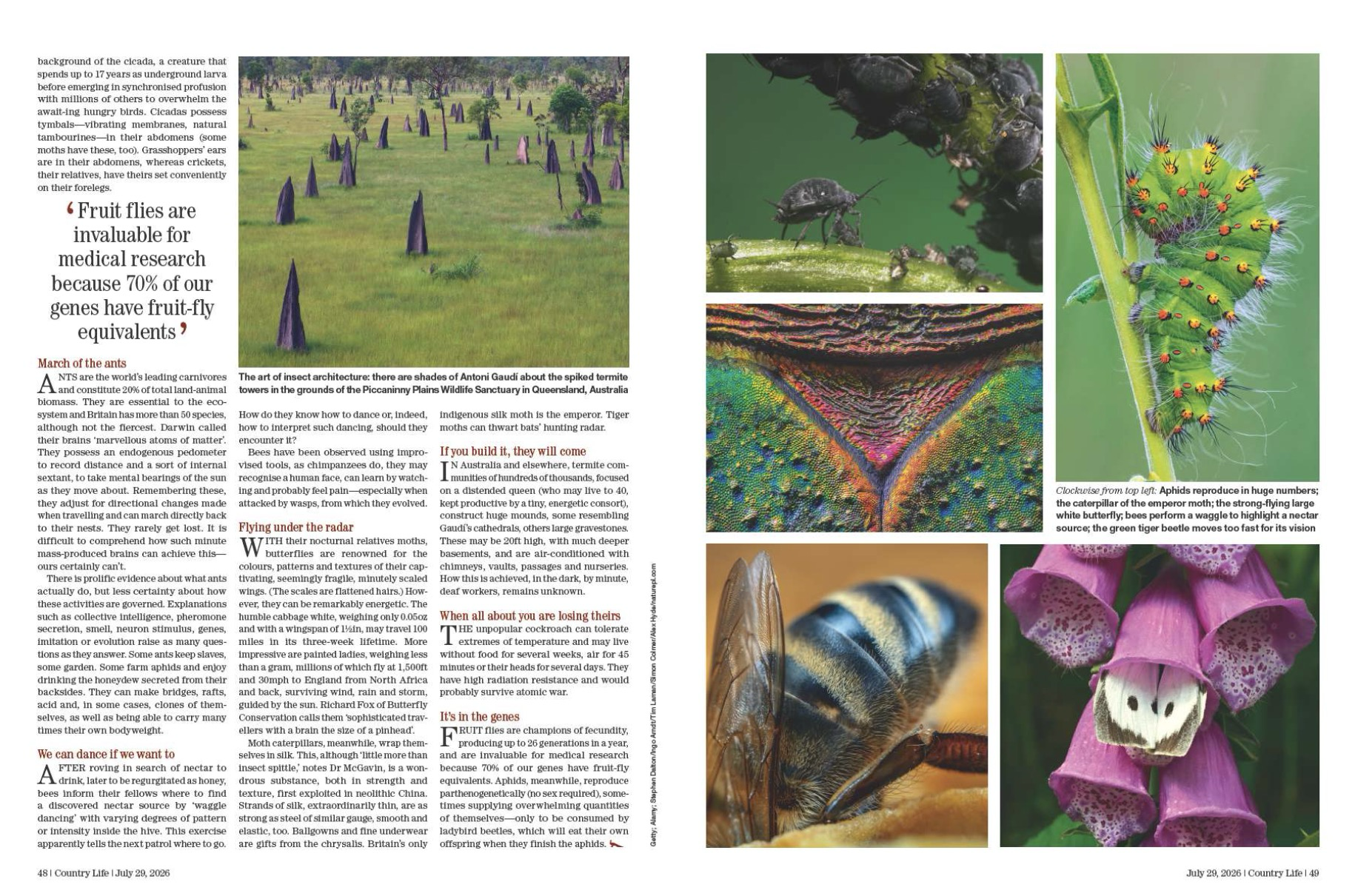
All the small things
We overlook the importance of insects at our peril, says Charles Harris, as he marvels at the fruit flies that share our genes and the moths that supply strands of silk
A room with a clue
Deborah Nicholls-Lee searches high and low for the concealed rooms and secret spaces that are an intriguing quirk of so many British country houses
Luxury
Facials, fragrance and bold and beautiful summer jewellery with Amie Elizabeth White, plus a few of the Duchess of Beaufort’s favourite things
Born to be wild
Charles Quest-Ritson visits East Lambrook Manor in Somerset and is heartened to find the home of Margery Fish’s ‘jungle gardening’ in good hands
Vicki Anstey’s favourite painting
The adventurer chooses a work showcasing human resilience
Country-house treasure
John Goodall surveys artworks by the Staithes Group — the first English Impressionists — at Brockfield Hall, North Yorkshire
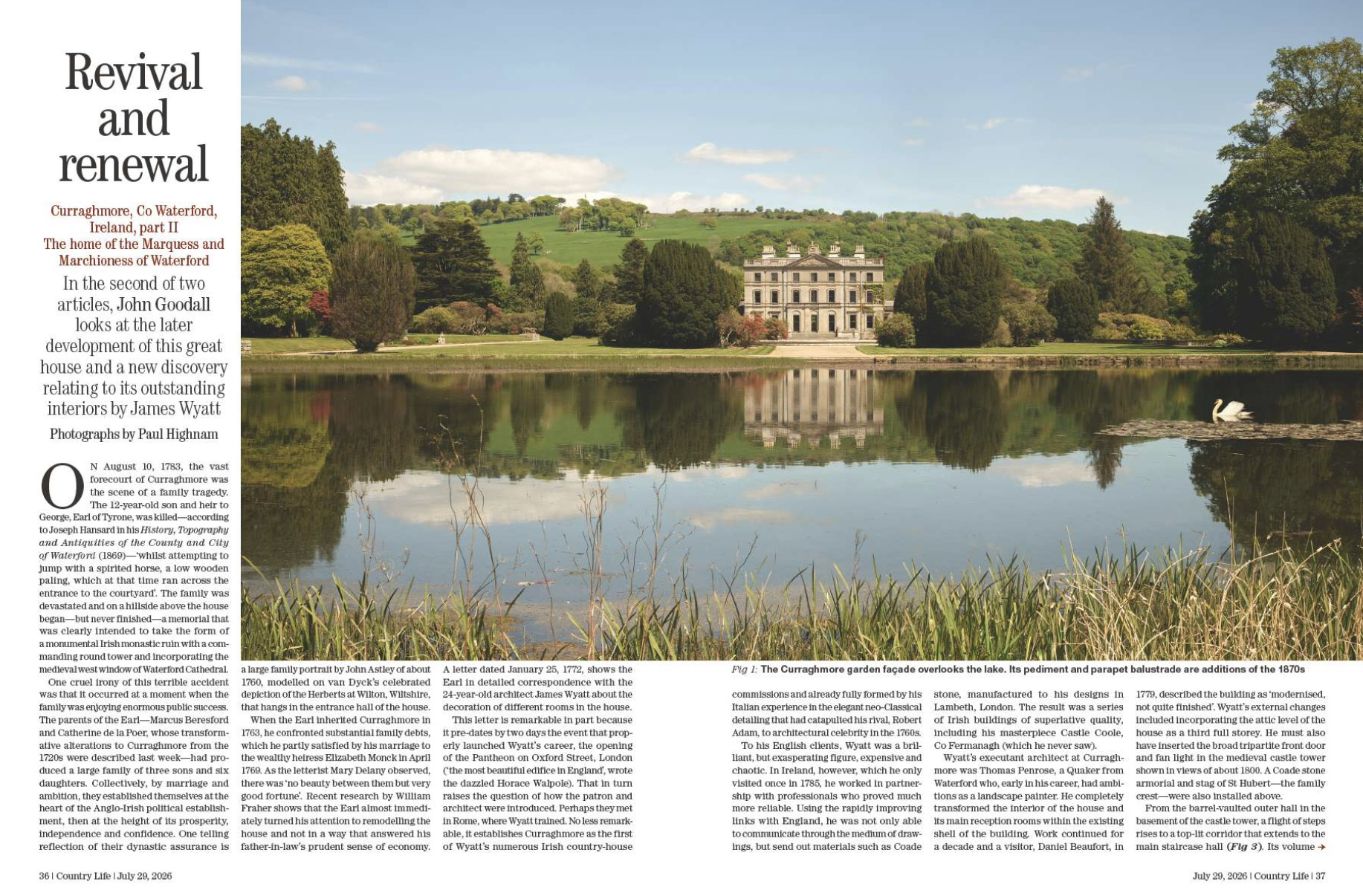
Revival and renewal
In the second of two articles, John Goodall explores James Wyatt’s influence on the interiors at Curraghmore in Co Waterford
The legacy
Kate Green lauds Benjamin Britten’s lasting impact on Arts and culture in his beloved Suffolk
Winging it
Mark Cocker examines the folklore and infamy of the magpie
Where there’s a grill, there’s a way
John Lewis-Stempel reads the smoke signals as a barbecue fires up Neolithic nostalgia
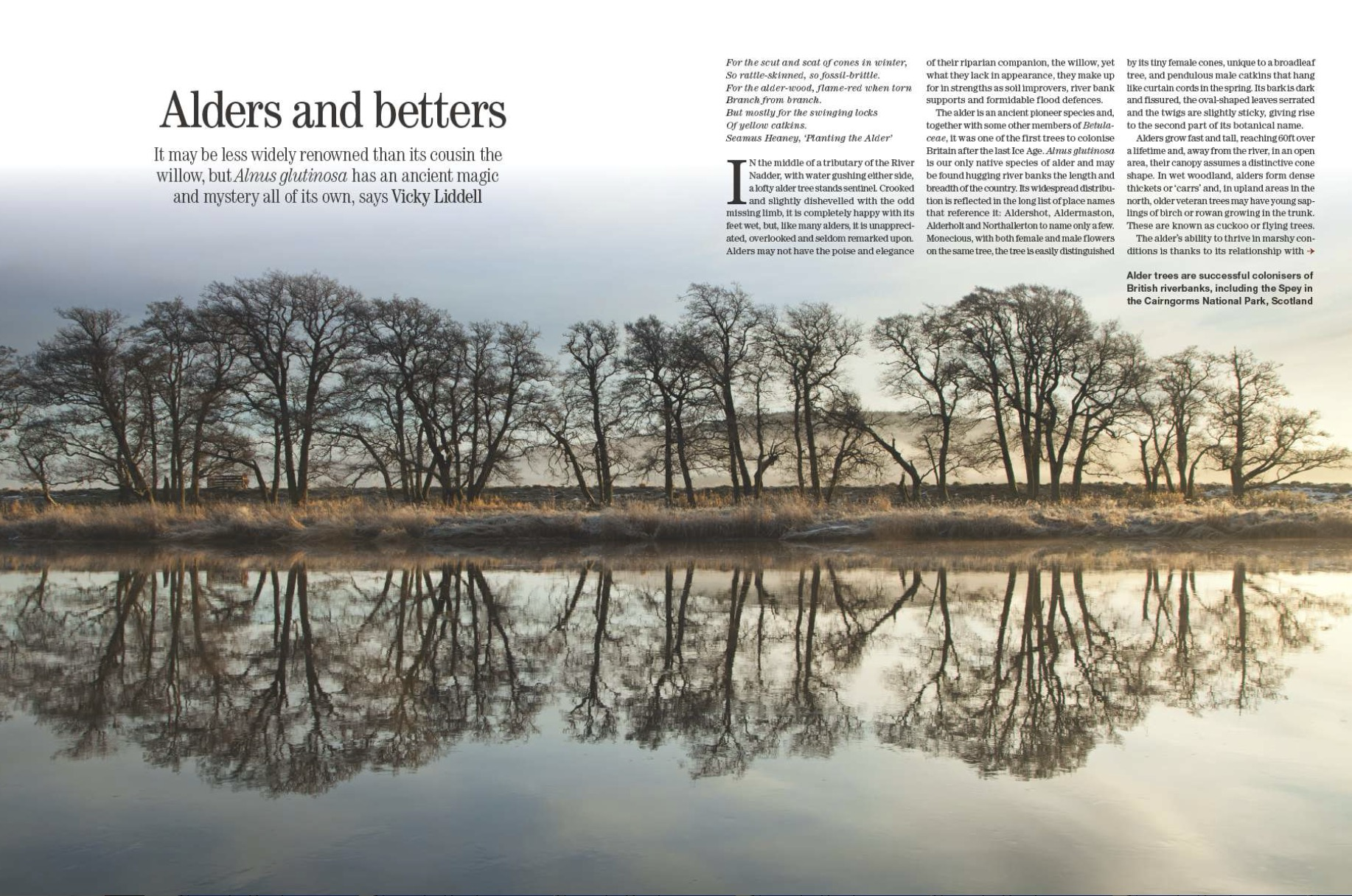
Alders and betters
Alnus glutinosa is an ancient pioneer species with a key role to play on our riverbanks, as Vicky Liddell discovers
Interiors
Arabella Youens admires the colour and comfort added to a Jersey farmhouse and a splash of zest is best for Amelia Thorpe
Travel
Rosie Paterson enjoys an island paradise off France’s Côte d’Azur
Arts & antiques
Grégoire the grey toad brings a wealth of pleasure to Frederick Fischer, Lalique UK managing director, as he tells Carla Passino
A kind of magic
Multi-talented, multi-disciplinary artist Es Devlin shares the secret of her success with Corinne Julius
And much more
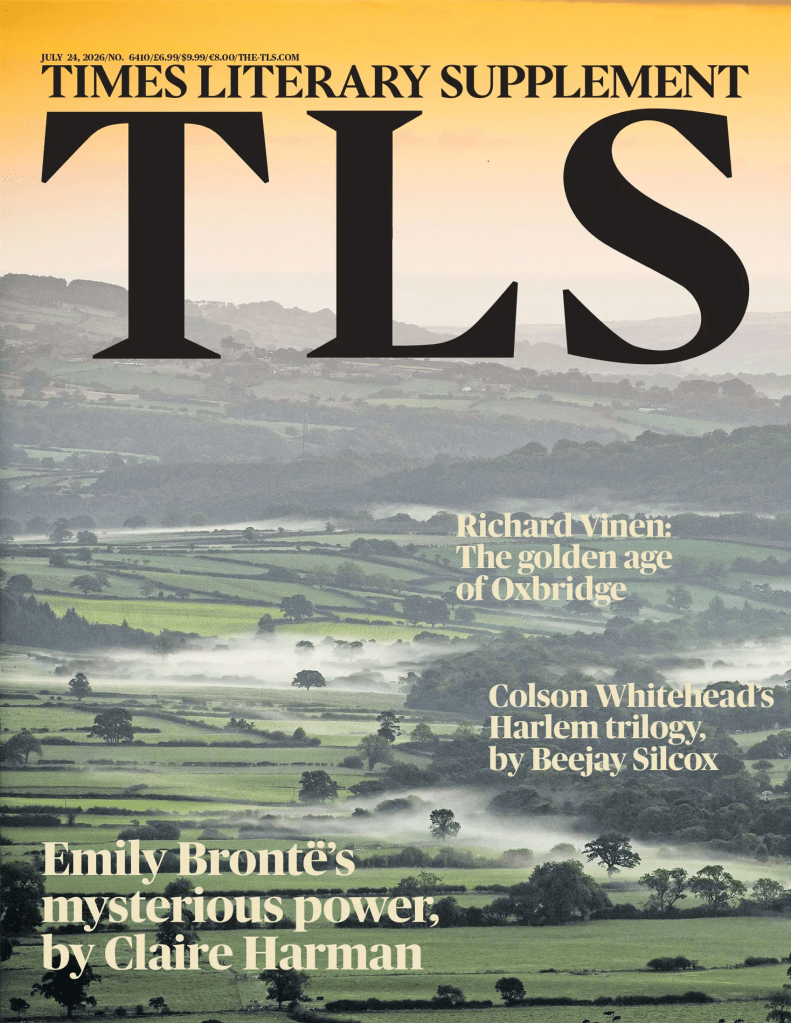
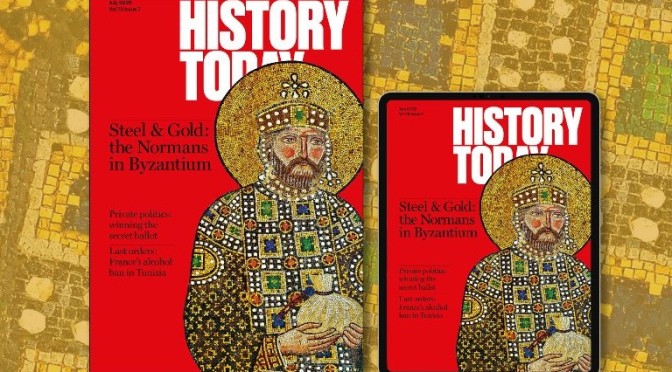
TIMES LITERARY SUPPLEMENT: The latest issue features ‘Emily Brontë’s mysterious power’….
Oxbridge in the postwar world By Richard Vinen
The awesome, mysterious work of Emily Brontë By Claire Harman
Silence in literature By Daniel Karlin
Should human life have a purpose? By Crispin Sartwell

It is the most powerful political party in the world, controlling China’s future as well as its past, but was the young CCP in control of its imperial destiny?
The potential implications of Charles Darwin’s theory of sexual selection did not sit well with Victorian gender mores – or with Darwin himself.
Empress Matilda: Queen of the Romans, Ruler of the English by Elisabeth van Houts is a sympathetic biography of the woman who would be king.
As ancient Rome was divided by civil war Cicero found himself torn. Caesar was his old adversary, but he was also powerful, and it was politically and personally expedient to support him.
Would St Augustine have considered the US attack on Iran a just war? The pope and the vice president are split on the matter.
Brazil’s first newspaper was published from London by an exiled Freemason on first-name terms with British royalty. Who was Hipólito da Costa and what was his news?
In August 1936 Franklin D. Roosevelt gave a boldly pacifist campaign speech, promising no American would have to go to war. It had seemed a realistic promise.
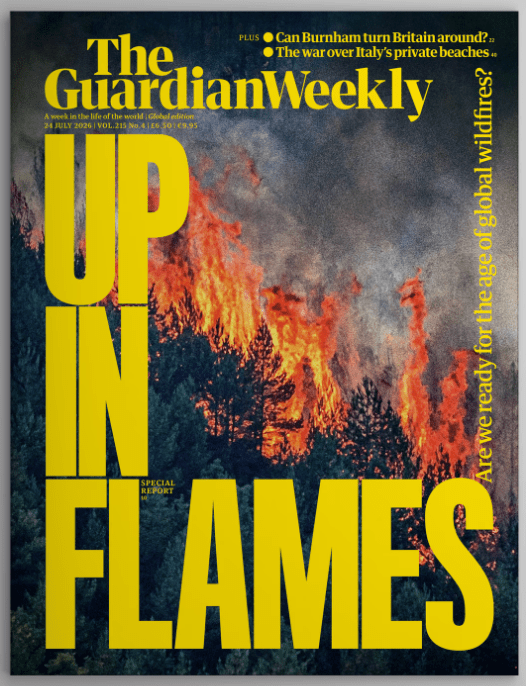
THE GUARDIAN WEEKLY: The latest issue features ‘Up In Flames’ – Are we ready for the age of global wildfires?
Across the globe, wildfires are on the move. Acrid smoke from huge Ontario fires choked major cities across Canada and the US last week, while in western Europe, France, Portugal and Spain have each been torched by a record-breaking number of blazes for this time of year.
In the UK, parched conditions after a hot dry summer have helped fuel blazes from national parks to cities. Last weekend, firefighters were tackling a blaze on Arthur’s Seat, the volcanic outcrop in the middle of Edinburgh. The week before, dozens of crews were confronted by a wildfire in north-east London.
Because of the climate crisis, fires are burning simultaneously in more places around the world – and they are often hotter, less predictable, and greater in number. For our big story, Ajit Niranjan surveys what seems to be a new normal and considers the impossible decisions specialist fire crews are making when multiple fires are burning in different parts of the world.
In Australia, bushfires have always been part of the country’s landscape. Graham Readfearn talks to some of those who have learned to live with the ever-present danger and asks what they can teach others in this rapidly changing world.
Spotlight | Trump is risking midterm disaster. Why?
Less than a month after hailing a ceasefire, Trump resumed strikes on Iran – a move experts warn could prolong the war and hurt Republicans in upcoming elections. Robert Tait asks what is going on
Science | Is the world facing a male reproductive crisis?
Reports of falling sperm counts and testosterone levels have fuelled fears over chemicals, pollution and modern lifestyles. Hannah Devlin investigates
Feature | The business of rewilding
Intensive farming has all but destroyed England’s ancient woodlands and freshwater wetlands. On a farm in Lincolnshire, a radical aristocrat hopes to show there’s money in protecting nature. Patrick Barkham went to find out
Opinion | What’s left after this World Cup? A kind of messy hope
Kazakhs cheering Uzbeks, Bengalis wild for Argentina … This tournament was once a playground for nationalism. Now it shows how flimsy that allegiance is, argues Jonathan Liew
Culture | All shook up: the return of Alabama Shakes
With Brittany Howard at the helm, the American three-piece band are back with a new album railing against the state of the US in 2026. Dave Simpson caught up with them

COUNTRY LIFE MAGAZINE: The latest issue features…
Meet Peggy, Britain’s naughtiest dog
Agnes Stamp meets the cereal-snaffling, bed-wrecking, turkey-wrangling miniature bull terrier who took the title—and rounds up the best (or worst) of the rest

The 39 steps to being a good dog owner
From clamping down on begging to sweetening bad breath, William Hanson presents his guide to modern pet-iquette
Ian Seath’s favourite painting
The Royal Kennel Club chairman chooses a work that celebrates canine collaboration with humans
Pup and coming
There have never been so many options for pampering your pooch. Mary Skipwith explores the rapidly evolving world of canine luxury

Country-house treasure
John Goodall marvels at the extensive 18th-century library at Powderham Castle in Devon
The legacy
Kate Green applauds Enid Blyton for dreaming up the spirited adventures of the Famous Five
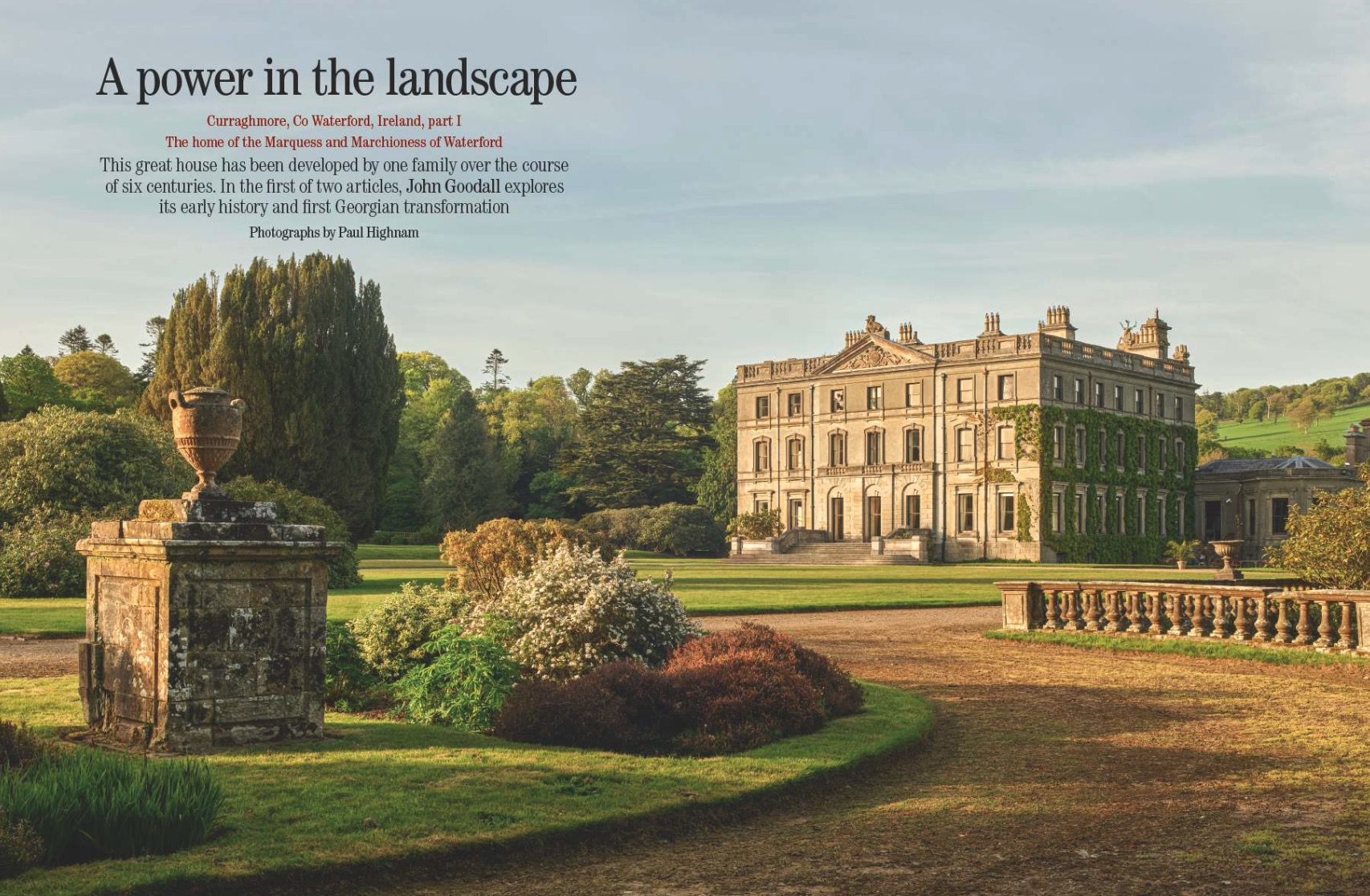
A power in the landscape
In the first of two articles, John Goodall explores the early history of Curraghmore in Co Waterford, one of Ireland’s great houses
Bone appétit
Why settle for discarded street snacks when there is succulent chicken on the menu, asks Jack Russell Maud Parker Bowles
Interiors
Arabella Youens investigates interiors designed with pets in mind and Amelia Thorpe shares accessories for the (dog) house
Winging it
Why can’t we learn to love the wood pigeon, asks Mark Cocker
You got me there
David Profumo pursues tricky brown trout in a day on the Test
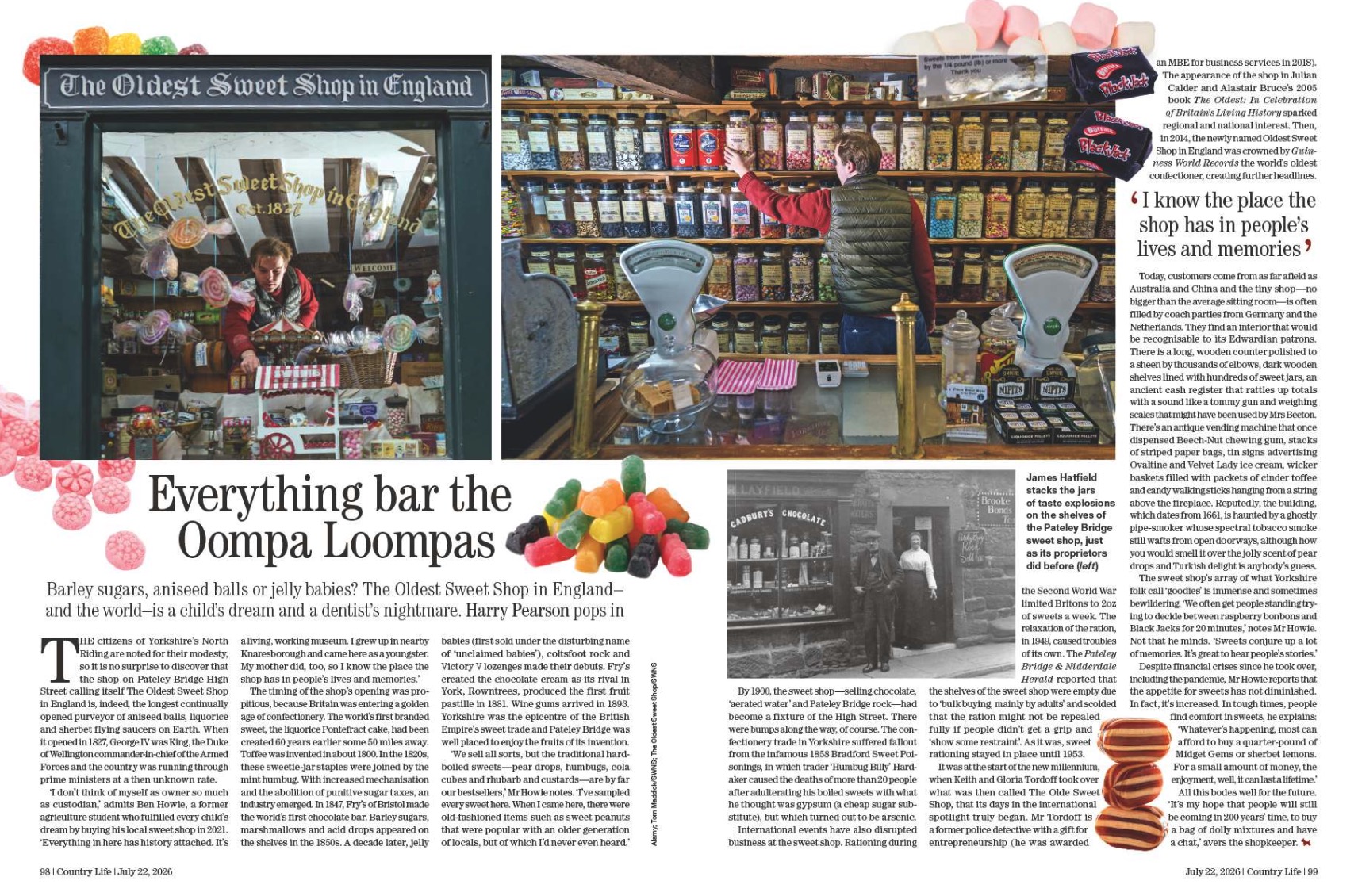
Everything bar the Oompa Loompas
Harry Pearson visits The Oldest Sweet Shop in England, which has traded in treats since 1827
Luxury
Fruity accessories offer rich pickings for Amie Elizabeth White
Colour for all seasons
Kathryn Bradley-Hole admires the spectacular successional planting in the new gardens of The Copper House in Kent
Travel
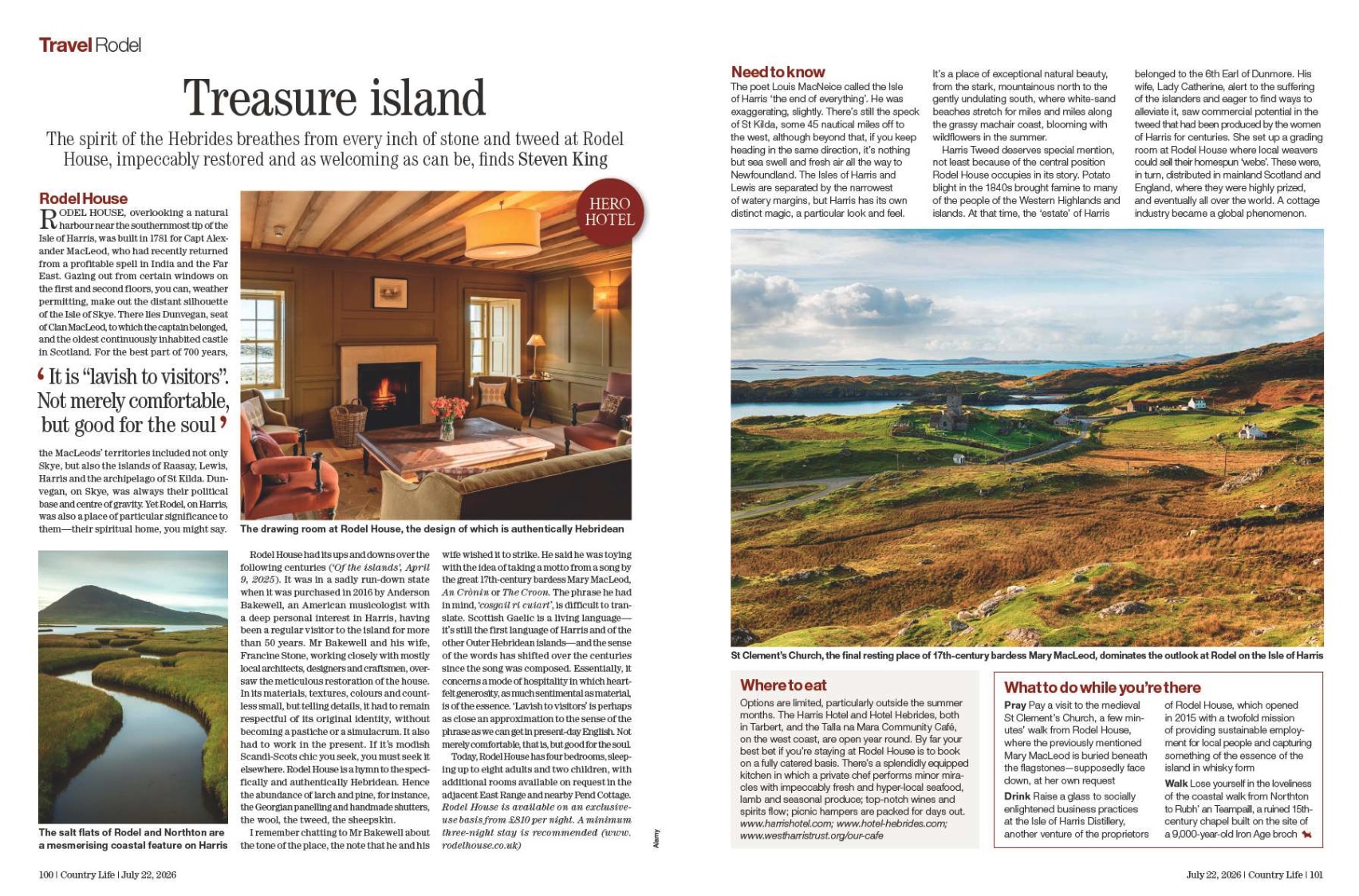
Steven King savours the spirit of the Hebrides and the natural beauty of the Isle of Harris during a stay at historic Rodel House
Arts & antiques
The rise of service à la russe in the 19th century turned the tables in upper-class British dining, discovers Carla Passino
To say nothing of the dog
Michael Prodger examines the history of canines on canvas and reveals how artists have warmed to Man’s best friend
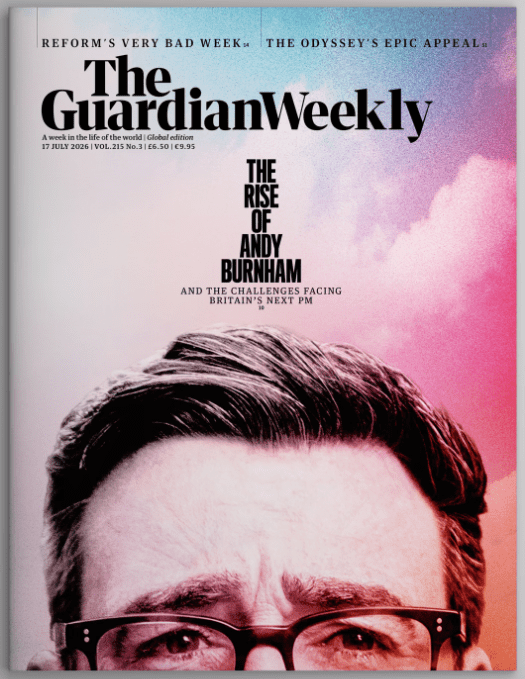
THE GUARDIAN WEEKLY: The latest issue features ‘Andy Burnham’s path to No 10″…
Andy Burnham is to become Britain’s seventh prime minister in a decade, having secured the Labour leadership with the landslide support of his party’s MPs.
The former Manchester mayor is now set to replace Starmer as Labour leader on Friday before walking through the doors of No 10 and becoming prime minister next Monday.
For our big story this week, Daniel Boffey looks at how Burnham charted the route from school politics to No 10, while Jessica Elgot runs through the bulging in-tray awaiting him when he steps into the new role. And Gaby Hinsliff examines how the PM-in-waiting might fare on the global stage, asking whether, unlike Keir Starmer, he has the skills to deal with Donald Trump.
Spotlight | A revolution in ruins
Discontent with Venezuela’s Trump-backed government is mounting as Chávez heirs struggle to respond to the earthquake disaster, writes Tom Phillips
Science | We’re going on a water bear hunt
Scientists hope DNA sequencing tardigrades – tiny yet virtually indestructible creatures – could help us understand the secrets of their superpowers. Patrick Barkham reports
Feature | The battle of the Bell hotel
Tim Burrows visits the town of Epping in Essex to hear from local people about the impact of last year’s far-right protests that centred on a hotel housing asylum seekers
Opinion | The real source of Trump’s power exposed
The Nato summit showed the US president’s willingness to violate all norms, rules and laws – and leave everyone else to pick up the pieces, argues Robert Reich
Culture | Never-ending story
With Christopher Nolan’s take on the Odyssey set to break box office records, Charlotte Higgins asks why a poem from 600BC holds a vice-like grip on pop culture
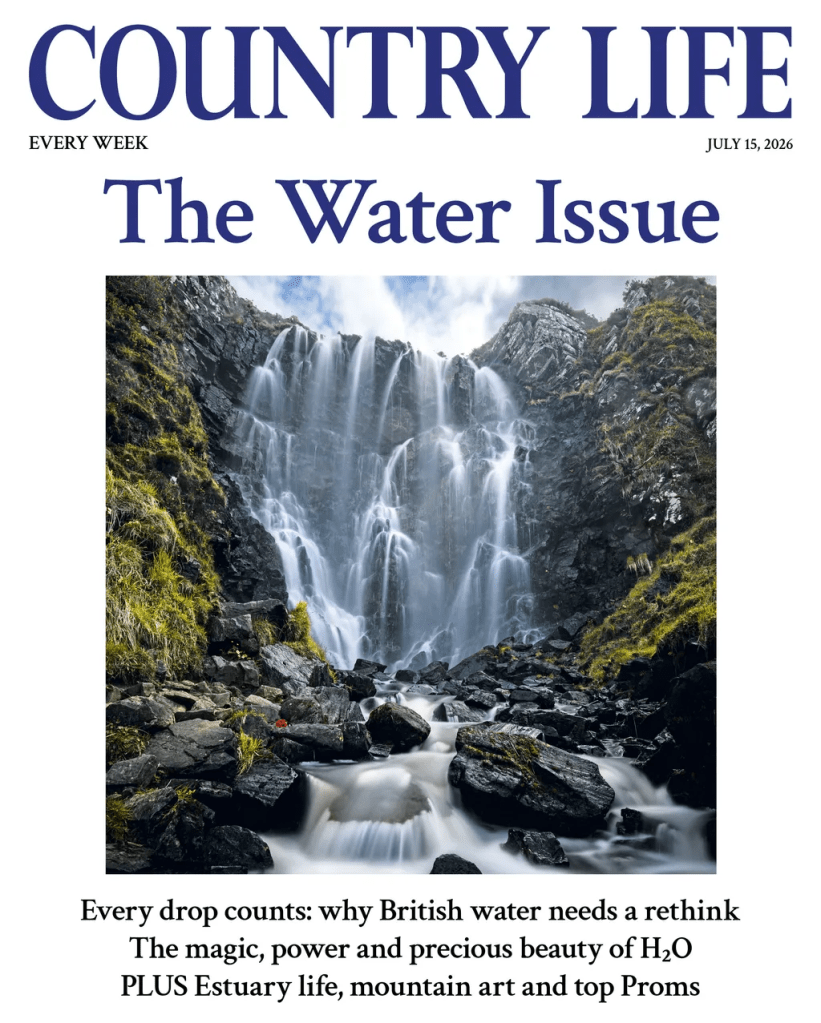
COUNTRY LIFE MAGAZINE: The latest issue features the magic, power and beauty of water, pays tribute to the king of British powerboating and enjoys the Victorian splendour of Scarborough.
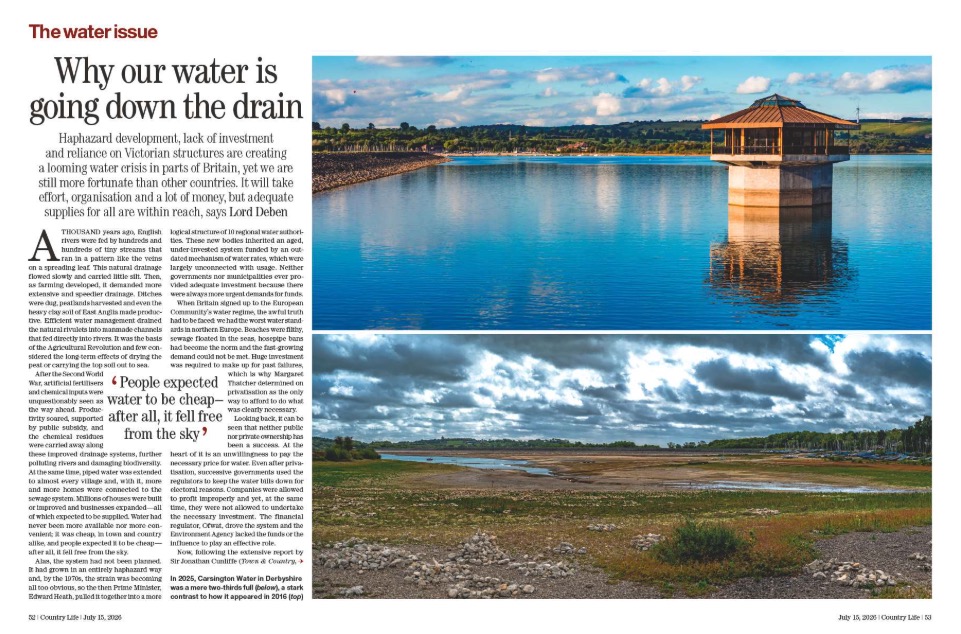
Why our water is going down the drain
Investment, organisation and effort can guarantee secure water supplies for everyone in Britain, argues Lord Deben
Kate Green surveys the surging strength of the Severn Bore, the haunting beauty of the flooded Somerset Levels, life on the edge at Dawlish and the capital’s mighty Thames Barrier.
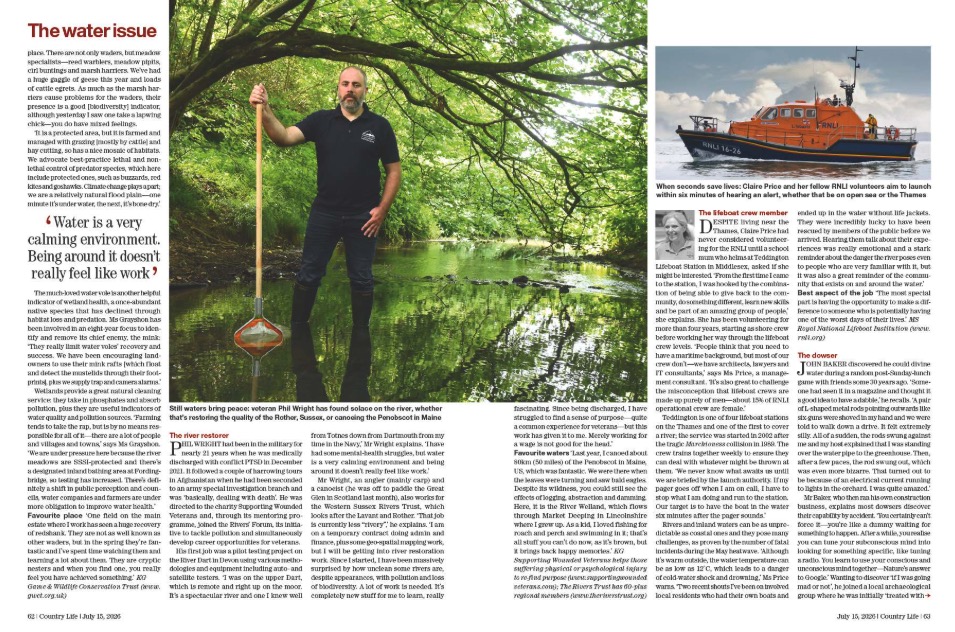
Why every drop counts
People who work with water tell Kate Green and Mary Skipwith why we need to reconnect with our most precious resource
Up with the gulls, to bed with the owl
Patrick Galbraith experiences an eventful day in the life of the ever-changing, but enduringly beautiful Cley estuary in Norfolk
On peak form
Artists such as Turner, Bierstadt and Wolf took painting to new heights with their depictions of mountains, finds Michael Prodger
Let all the world sing
The 2026 BBC Proms promises to be a truly global spectacle, as Henrietta Bredin discovers
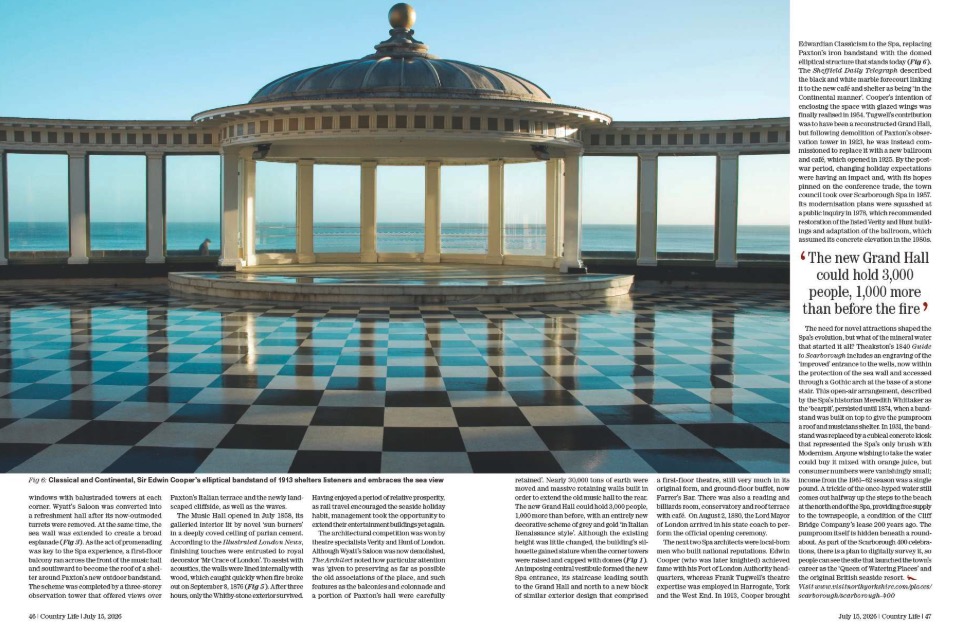
The queen of spas
Scarborough in North Yorkshire is the original Victorian seaside resort. Kathryn Ferry charts the development of its spa complex
The Revd Sam Wells’s favourite painting
The St Martin-in-the-Fields vicar chooses a painting where ‘magnificent humanity’ is laid bare
Country-house treasure
John Goodall unearths evidence of Bowood in Wiltshire’s wartime role as a ‘beacon of recovery’
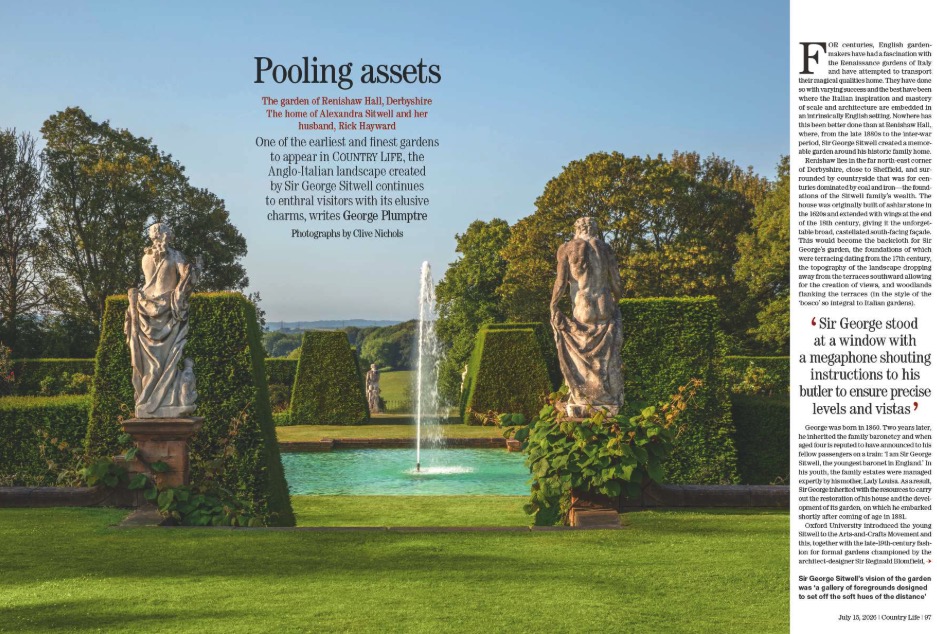
Pooling assets
George Plumptre is charmed by the Anglo-Italian landscape at Renishaw Hall in Derbyshire
The legacy
Agnes Stamp pays tribute to speed merchant Sir Max Aitken, the king of British powerboating
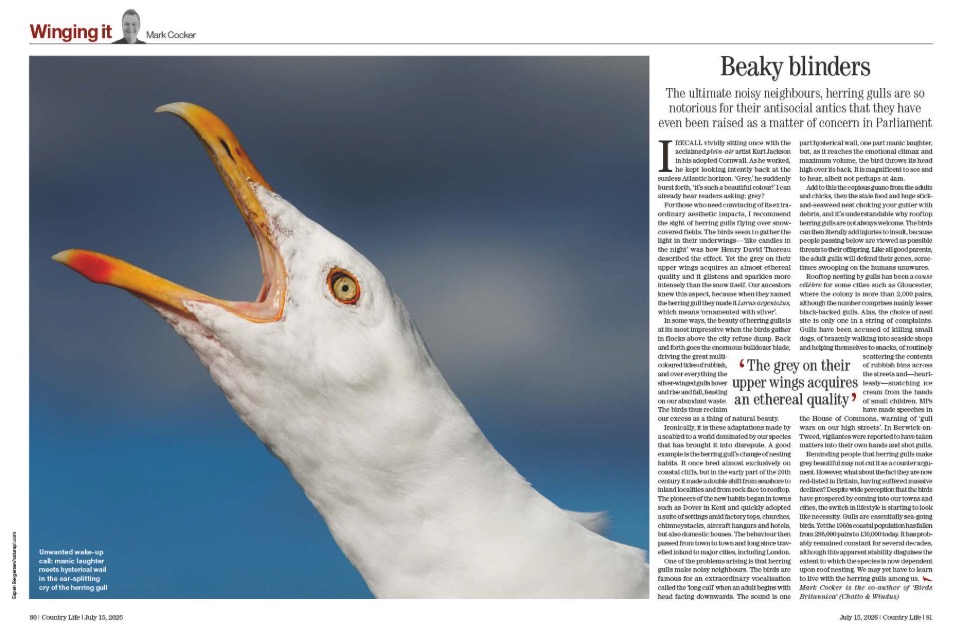
Winging it
Mark Cocker assesses the anti-social antics of the herring gull
Luxury
Jonathan Self ponders the power of fine jewellery and Amie Elizabeth White finds coral for all
Interiors
Arabella Youens visits a kitchen giving a nod to history, and reveals that chequerboard floors are back
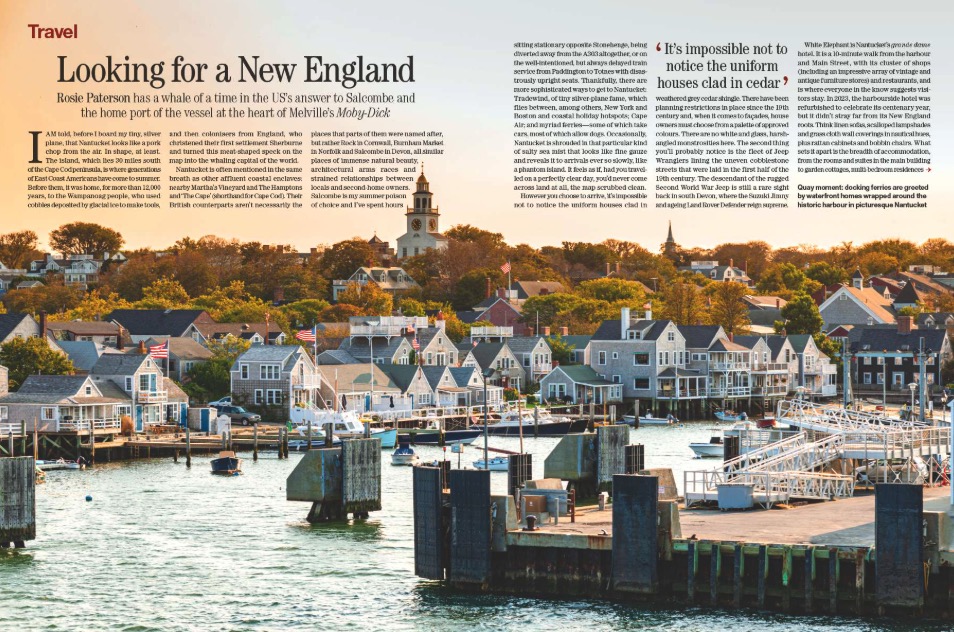
Travel
Rosie Paterson is looking for a New England in Nantucket
Arts & antiques
Carla Passino investigates the intriguing tale of ‘Mad Madge’, a pioneer of science-fiction
Truth, lies and somewhere in between
Michael Billington delves into a world of deceit and infidelity

 Boomers Daily