Tag Archives: Cars

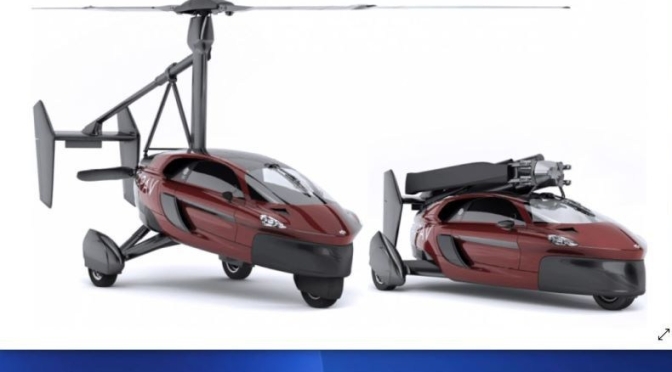
Technology: Dutch ‘PAL-V’ Is World’s First Certified Flying Car (Video)

The world’s first-ever commercial flying car was recently unveiled by Dutch vehicle manufacturer PAL-V. Here’s what that means for our roads (and our skies).

Starting with the undercarriage, which PAL-V credits as their main breakthrough. The company was looking for a three-wheeled design that could still be stable when turning at normal road-going speeds.

In 2005, they discovered the work of another Dutch company, Carver, which made 3-wheeled cars that tilted like motorcycles. A hydraulic tilting system like that could eliminate the need for a 4th wheel and also be useful to raise the whole vehicle up, giving it ground clearance for a rear-facing propeller. Then there was the matter of generating lift.

Fixed wing aircraft need air to move over their wings fast enough to stay aloft, otherwise they’ll stall. A fixed wing flying car has to compromise the size and shape of its wings in the name of practicality, meaning its risk of stalling is higher. So PAL-V chose a rotary wing design instead, but rather than make their flying car a helicopter, they decided it should be an autogyro.

This Flying Car Costs $599K—and It’s Now Street Legal in Holland https://singularityhub.com/2020/10/29…

“In driving mode the Liberty can go up to 99 miles per hour, and in flight mode its max speed is 112 miles per hour. For comparison’s sake, the average helicopter can go up to about 160 miles per hour.”

Tech: ‘2021 Toyota Mirai’ – Enhanced Hydrogen Fuel Cell Electric Car (Video)

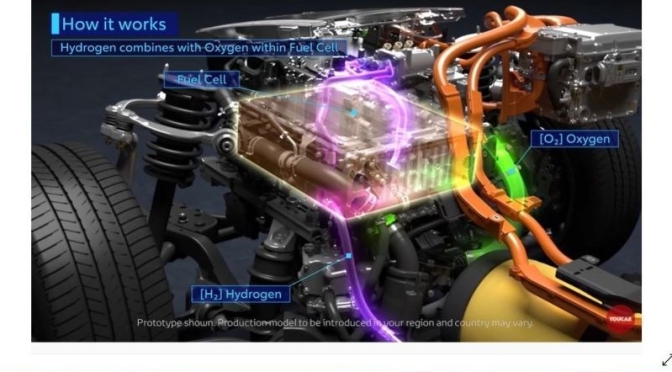
The 2021 Toyota Mirai is the second generation of zero emission hydrogen fuel cell electric sedan.

One of the principal aims for the new 2021 Mirai has been to give the car a stronger emotional appeal, making it a car that people will be attracted to by its looks and the way it drives, as well its eco-performance. The new GA-L platform and Toyota’s advances in FCEV technologies have made this possible. Toyota’s new fuel cell stack and fuel cell power converter (FCPC) have been developed specifically for use with the GA-L platform.

The designers have been able to bring all the elements together in the stack frame (including the water pumps, intercooler, air conditioning and air compressors and the hydrogen recirculation pump) with each part made smaller and lighter, while at the same time improving performance. The stack case itself has been made smaller by using Friction Stir Welding, reducing the gap between the fuel cell and casing.

The new Mirai is equipped with lithium-ion high-voltage battery in place of the current model’s nickel-metal hydride unit. Although smaller in size, it is more energy-dense, giving higher output and superior environmental performance. Containing 84 cells, it has a 310.8 rated voltage compared to 244.8, and a 4.0 Ah capacity, versus 6.5 Ah. Overall weight has been reduced from 46.9 to 44.6 kg. The output has improved from 25.5 kW x 10 seconds to 31.5 kW x 10 seconds.

The battery’s smaller dimensions have allowed it to be positioned behind the rear seats, avoiding intrusion in the load compartment. An optimised air-cooling path has been designed, with discreet inlets either side of the rear seats. The environmental benefit of driving the Toyota Mirai go beyond zero emissions to “negative emissions” – the car effectively cleans the air as it moves. A Toyota innovation, a catalyst-type filter is incorporated in the air intake.

As air is drawn into the vehicle to supply the fuel cell, an electric charge on the non-woven fabric filter element captures microscopic particles of pollutants, including sulphur dioxide (SO2), nitrous oxides (NOx) and PM 2.5 particulates. The system is effective in removing 90 to 100% of particles between 0 and 2.5 microns in diameter from the air as it passes into the fuel cell system.

Classic Car Restoration: ‘Eagle – Masters Of The Jaguar E-Type’ (Video)

Since its founding in 1984, the team behind Eagle has steadily worked their dedication into an obsession, with the outcome being the last word in the world of the Jaguar E-Type. Unlike many restoration specialists, Eagle keeps all the work in-house, and none of it is rushed.

Indeed Eagle CEO Henry Pearman says it takes the team nearly 4,000 hours to complete one of the company’s ground-up, full-on Eagle E-Types, and while they aren’t for those on a tight budget, there is clear evidence of the claim that the business is foremost driven by passion, not profits. A purely commercial endeavor would find ways to cut costs and hurry the process, but the completed cars—whether they be restorations or bespoke commissions—that leave Eagle’s countryside compound in Sussex are not just faultless E-Type specimens, they are examples of what can be achieved after decades of refinement and accumulated knowledge. Nobody knows these cars better, and in that same vein, nobody is building them better.

Classic Car Restorations: ‘2021 Alpha Romeo Giulia GT Electric’ By Totem Automobili, Italy (Video)

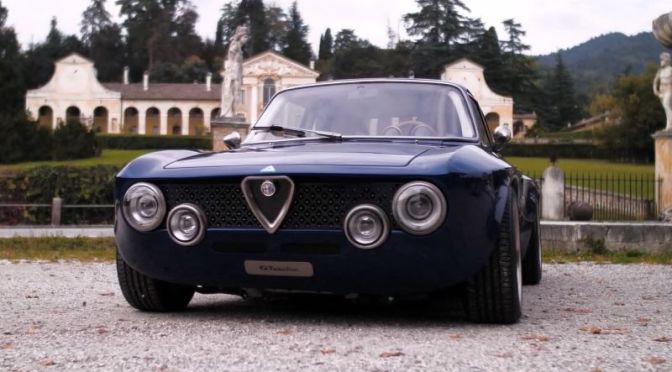
With the idea of revamping the car we elegantly redesigned the original lines giving the car a stunning shape whilst maintaining the authentic signature of the Giulia GTA.

Starting from one of the best iconic Italian cars of the 60’s & 70’s, the Alfa Romeo Giulia GTA, we have created one of the most advanced restomod in the business, producing the ever fastest and most fascinating Giulia GTA. The Giulia GTA was presented in 1965 and in the following seven years obtained a series of successes and prizes which led this car to be considered as a legend. Our goal was to rebuild a car which remembers in spirit and shape the victorious Alfa of the 60ies, emerging as a reference for sportsmanship and craftsmanship.

Website

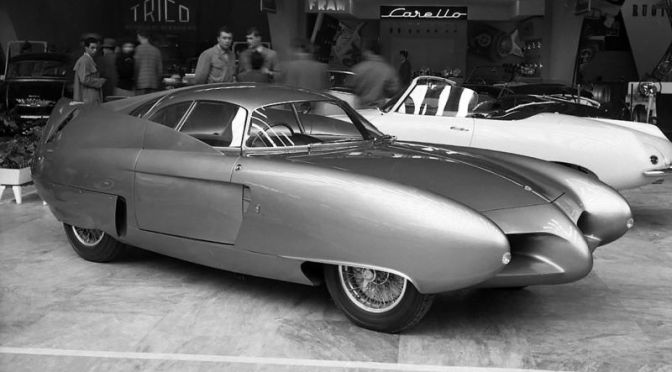
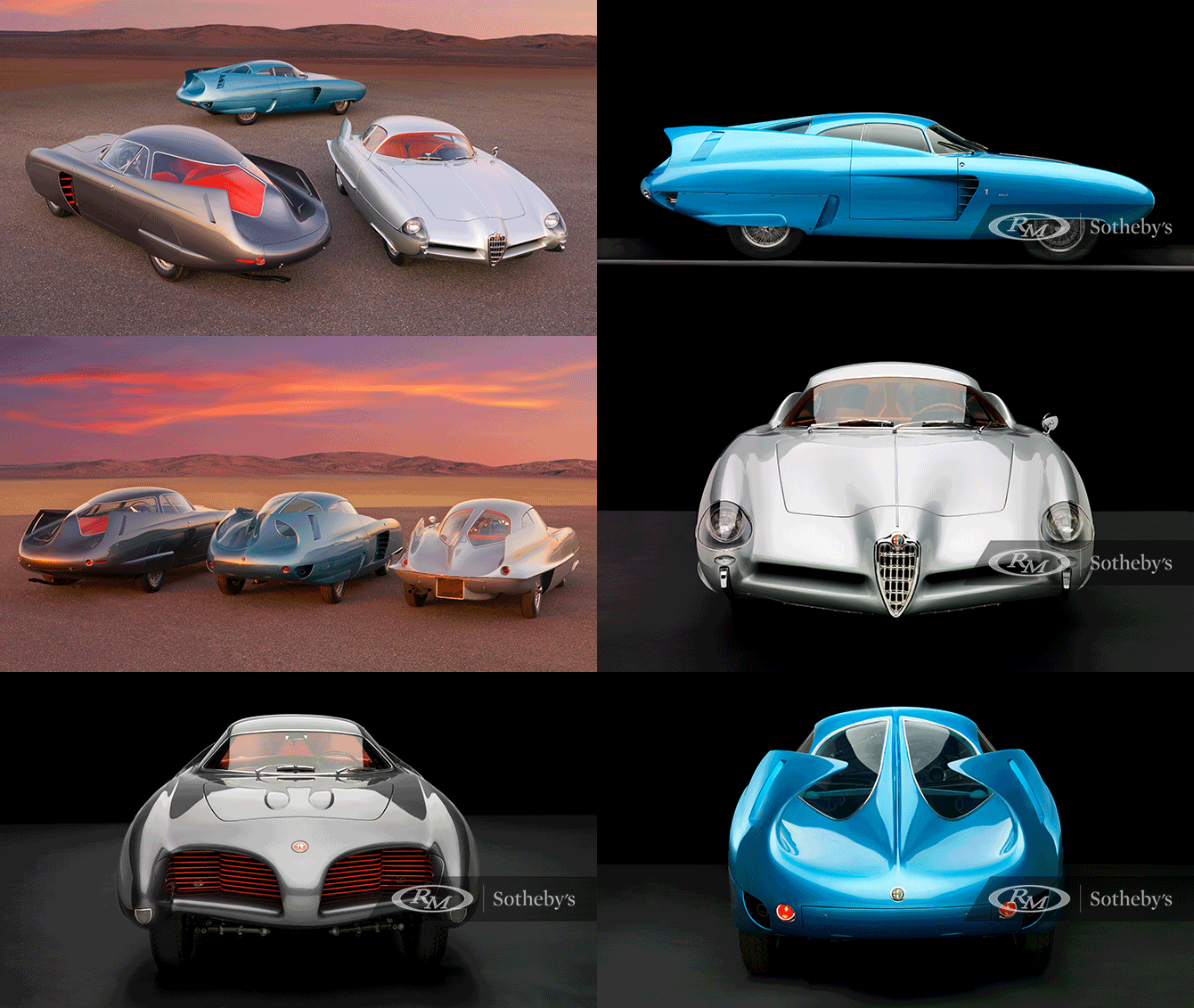
Legendary Automobiles: The ‘Alpha Romeo B.A.T. Concept Cars’ Of 1953-55

Perhaps the most incredible thing that could be said about the B.A.T. series is that the fantastical design is actually functional, with all three examples exhibiting drag coefficient figures that would still land them in the top ten most aerodynamic cars on sale today. Their extreme forms are, in fact, functional.

Predictably, the B.A.T. concepts made a huge splash on the international motor show circuit, leading to Scaglione’s two greatest hits in terms of production figures – the NSU Sport Prinz and Alfa Romeo Giulietta Sprint. Unfortunately, the B.A.T. concepts would also mark an inflection point for Bertone and Scaglione’s working relationship.

Scaglione’s daughter Giovanna describes it, “Bertone was a little bothered when it happened that in a magazine article they wrote about Franco Scaglione and not Bertone… For example, in an article speaking of one of his works [Scaglione’s] name was mentioned three times and the name of Bertone was mentioned only once…” Though Giovanna does not attribute her father’s sudden departure from the firm to this incident alone, it was clear that Scaglione wanted to strike out on his own, so that year, he handed over the title of chief stylist to Giorgetto Giugiaro and left Bertone for good.

Read more

Electric Vehicles: ‘Inside Tesla Gigafactory’ (Video)

Tesla is by far one of the most successful companies in modern history. They popularized fully electric cars and created a massive demand among the public. With a market cap of around 380 billion dollars, Tesla is growing by the day.

But to keep up with orders Tesla built a futuristic facility called the Gigafactory. Today we’re taking a look inside the Tesla Gigafactory. Tesla currently produces about 350,000 cars a year—far fewer than the public demands. But they have ambitions to ramp up production to more than 20 million cars a year.

This bold strategy will require numerous advances in their current chain of production, including several larger factories, which are currently being built all over the world. But the bedrock of Tesla’s production line is their Gigafactory in Sparks, Nevada. The company’s first fully built factory will serve as the model for what eventually could be a dozen massive Tesla factories globally.

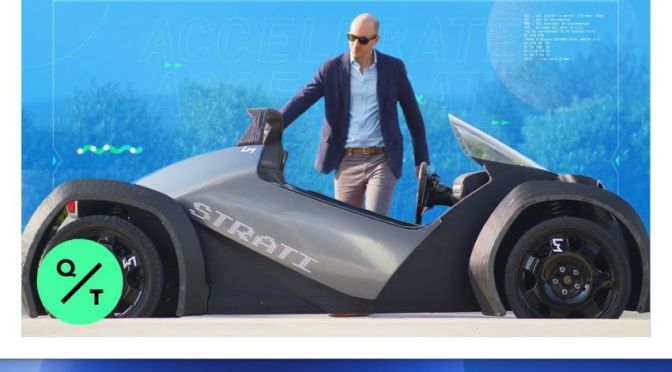
Technology Video: Is A 3D-Printed Car In The Future?

When 3D printing first appeared, it may have seemed like a fad–something to keep garage hobbyists busy. But over the past few years, it’s become a mainstream manufacturing process. Now, an independent automaker called Local Motors is applying the technology to cars, using 3D printing to make the chassis of its autonomous, electric vehicles at a small factory in Knoxville, Tennessee.

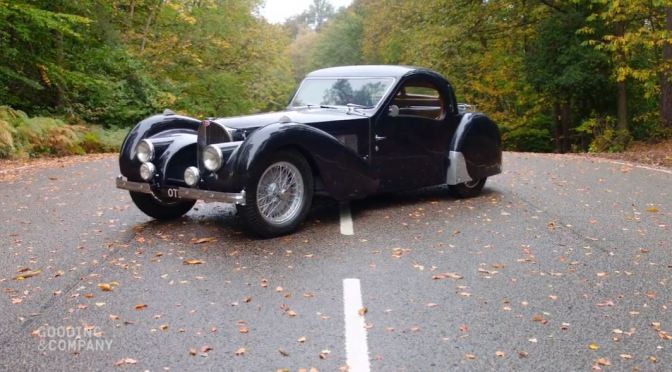
Classic Cars: “1937 Bugatti Type 57S Atalante” (Video)

One of the most sought after and desired Bugatti Type 57S variants was the Type 57S Atalante. The 57S Atalante sports the Jean Bugatti designed Atalante body style fitted to the lowered Type 57S chassis. With its 3.2L straight eight engine and its sleek aerodynamic design, the 57S Atalante was a world class performance car. It was common for Type 57S owners to fit the Bugatti supercharger (designated by the letter C), effectively upgrading their cars to Type 57SC specification.

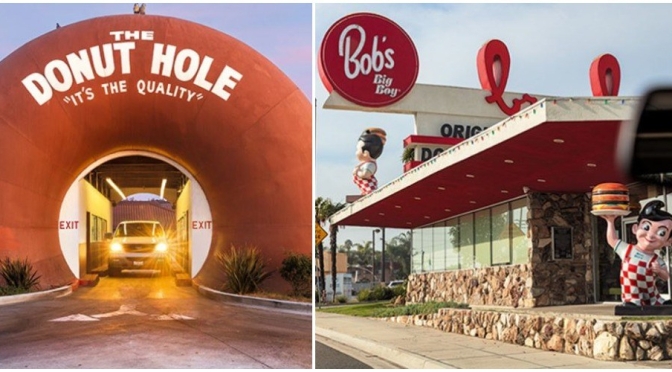
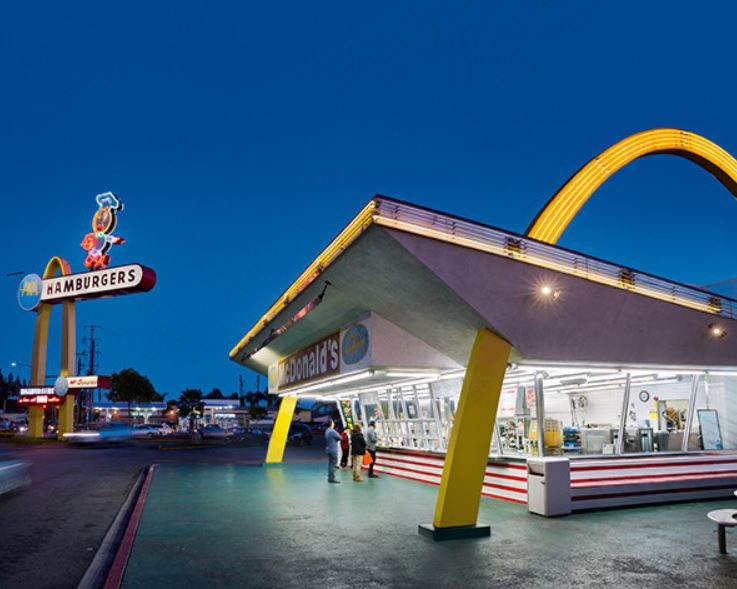
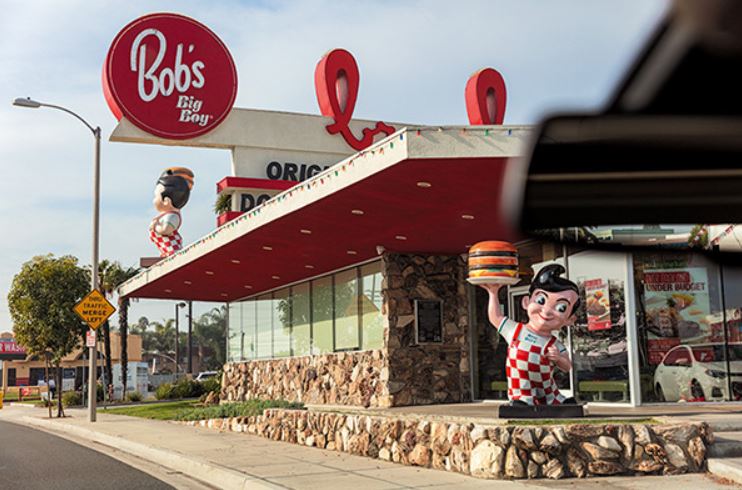
Nostalgia: “Gas And Glamour” In Los Angeles

I love cars and I love Los Angeles for being a city of cars. Over the last decade or so, I have been intrigued by L. A.’s love affair with the automobile, tracing back to a time when cars themselves were objects of beauty.

“Those cars are no longer on the streets today but the buildings from that era remain. As an architectural photographer, I wanted to capture L. A.’s car-culture-induced optimism and ambition reflected in polychromatic, starspangled coffee shops, gas stations, and car washes, that once lured the gaze of passing motorists.” (Ashok Sinha)

Ashok Sinha is an architectural and fine art photographer whose large-scale photographs capture a sense of place tied to both natural landscapes and built environments. His photographs have been published by editorial outlets such as The New York Times, Architectural Digest, Interior Design, and exhibited at The Museum of the City of New York, the International Center of Photography, and The Royal Photographic Society.

Website