Poised on the Californian peninsula, San Francisco is an energetic enclave with a storied libertine history, undeniable entrepreneurial fervor, and vibrant cultural patronage. It may be known for its thriving technology sector, but look beyond the numbers and you’ll find a dynamic urban offering, complete with easygoing charm and dramatic natural beauty.
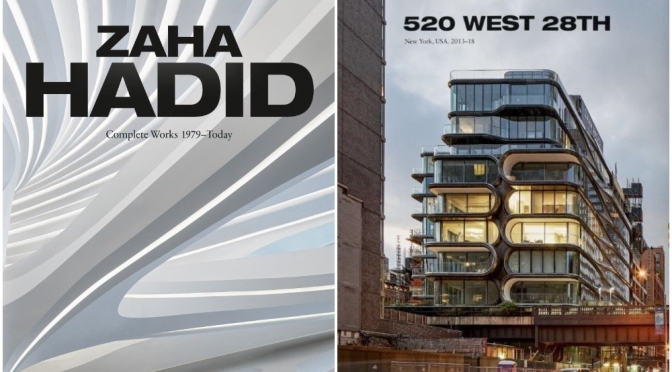
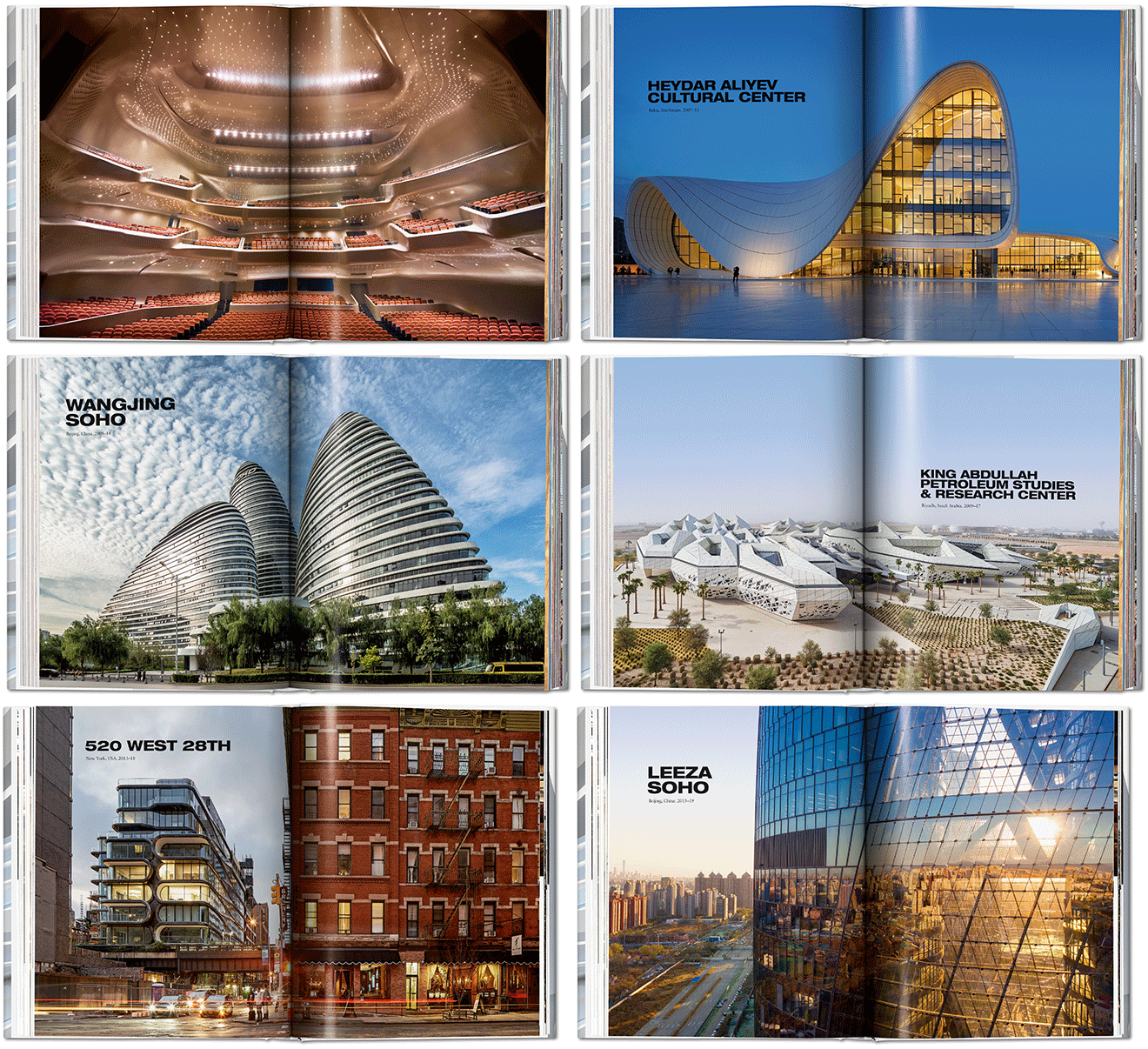
Zaha Hadid was a revolutionary architect. For years, she was widely acclaimed and won numerous prizes despite building practically nothing. Some even said her work was simply impossible to build. Yet, during the latter years of her life, Hadid’s daring visions became a reality, bringing a new and unique architectural language to cities and structures such as the Port House in Antwerp, the Al Janoub Stadium near Doha, Qatar, and the spectacular new airport terminal in Beijing.
By her untimely death in 2016, Hadid was firmly established among architecture’s finest elite, working on projects in Europe, China, the Middle East, and the United States. She was the first female architect to win both the Pritzker Prize for architecture and the prestigious RIBA Royal Gold Medal, with her long-time Partner Patrik Schumacher now the leader of Zaha Hadid Architects and in charge of many new projects.
Based on the massive TASCHEN monograph, this book is now available in an extensivelyupdated and accessible edition covering Hadid’s complete works, including ongoing projects. With abundant photographs, in-depth sketches, and Hadid’s own drawings, the volume traces the evolution of her career, spanning not only her most pioneering buildings but also the furniture and interior designs that were integrated into her unique, and distinctly 21st-century, universe.
The author
Philip Jodidio studied art history and economics at Harvard, and edited Connaissance des Arts for over 20 years. His TASCHEN books include the Architecture Now! series and monographs on Tadao Ando, Santiago Calatrava, Renzo Piano, Jean Nouvel, Shigeru Ban, Richard Meier, and Zaha Hadid.
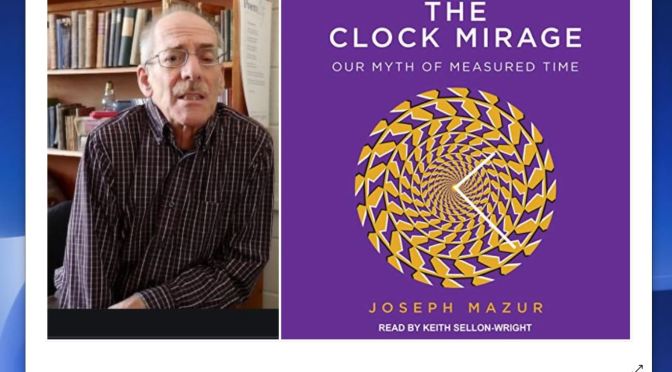
With a narrative punctuated by personal stories of time’s effects on truck drivers, Olympic racers, prisoners, and clockmakers, Mazur’s journey is filled with fascinating insights into how our technologies, our bodies, and our attitudes can change our perceptions. Ultimately, time reveals itself as something that rides on the rhythms of our minds. The Clock Mirage presents an innovative perspective that will force us to rethink our relationship with time, and how best to use it.
A tour of clocks throughout the centuries—from the sandglass to the telomere—to reveal the physical, biological, and social nature of time.
What is time? This question has fascinated philosophers, mathematicians, and scientists for thousands of years. Why does time seem to speed up with age? What is its connection with memory, anticipation, and sleep cycles?
Award‑winning author and mathematician Joseph Mazur provides an engaging exploration of how the understanding of time has evolved throughout human history and offers a compelling new vision, submitting that time lives within us. Our cells, he notes, have a temporal awareness, guided by environmental cues in sync with patterns of social interaction. Readers learn that, as a consequence of time’s personal nature, a forty‑eight‑hour journey on the space shuttle can feel shorter than a six‑hour trip on the Soyuz capsule, that the Amondawa of the Amazon do not have ages, and that time speeds up with fever and slows down when we feel in danger.
Slavoj Žižek is a Slovenian philosopher and writer whose vast catalogue of work has earned him celebrity status across the globe. A radical leftist, his work encompasses everything from psychoanalysis and political theory to art and film criticism.
Described as “the leading Hegelian of our time”, he speaks to Georgina Godwin about his latest book, ‘Hegel in a Wired Brain’, which is an evaluation of the German philosopher’s relevance in the 21st century that ties in with the 250th anniversary of his birth.
In celebration of the 250th anniversary of the birth of G.W.F. Hegel, Slavoj Žižek gives us a reading of the philosophical giant that changes our way of thinking about our new posthuman era. No ordinary study of Hegel, Hegel in a Wired Brain investigates what he might have had to say about the idea of the ‘wired brain’ – what happens when a direct link between our mental processes and a digital machine emerges. Žižek explores the phenomenon of a wired brain effect, and what might happen when we can share our thoughts directly with others. He hones in on the key question of how it shapes our experience and status as ‘free’ individuals and asks what it means to be human when a machine can read our minds.
With characteristic verve and enjoyment of the unexpected, Žižek connects Hegel to the world we live in now, shows why he is much more fun than anyone gives him credit for, and why the 21st century might just be Hegelian.
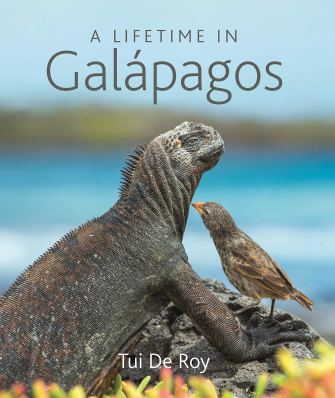
Featuring hundreds of breathtaking color photos, this stunning book guides you into labyrinthine mangroves to observe nesting herons, to misty cloud forests to glimpse flycatchers and orchids, high onto erupting volcanoes, and into the ocean to swim with hammerhead sharks.
A beautifully illustrated and deeply personal chronicle of De Roy’s lifelong connection with these spectacular islands
Tui De Roy was a year old in 1955 when her family left Europe, boarding a banana boat bound for the Pacific to lead a different sort of life in Galápagos, one of self-sufficiency and living close to nature. She grew up on the islands and returned to them often over the next five decades. Discovering photography at a young age, she has dedicated her life to recording the islands’ natural history in infinite detail. A Lifetime in Galápagos is De Roy’s intimate portrait of one of the most spectacular places on Earth, presenting the wildlife and natural wonders of Galápagos as you have never seen them before.
De Roy’s lens provides up-close encounters with orca and sperm whales, colonies of iguanas, and the giant tortoises of Alcedo Volcano. She paints unforgettable portraits of her childhood in Galápagos―the islands at night under the stars of the Milky Way, sea lions at play and on the hunt, the diverse birdlife of Galápagos, and much more.
Blending striking images with vivid prose, A Lifetime in Galápagos also discusses the threats that global warming and other environmental challenges pose to the archipelago’s unique wildlife and fragile habitats.
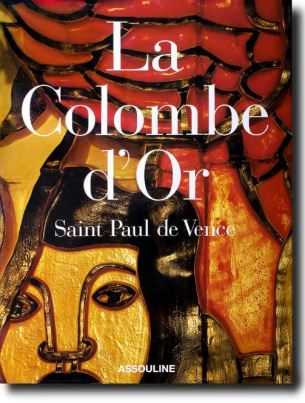
“Provence has a treasure; it’s a Colombe d’Or. It has the precious scent of thyme and nostalgia and the golden colour of olive oil and happy days. The Colombe is a part of my life. For me, it’s a place that’s as full of promise as of magnificent memories. The Colombe is indefinable, inimitable. I’m happy that today a book brings back the atmosphere of this place which is like no other in the world.”
La Colombe d’Or hotel and restaurant in the South of France is known all over the world as a privileged place where the Provençal art de vivre goes hand in hand with an astonishing private COLLECTION of modern art.
First opened in 1920 as Chez Robinson, a café-bar with an open-air terrace, it quickly became a very popular meeting place and expanded into a small hotel and restaurant. The friendly atmosphere together with owner Paul Roux’s deep interest in the arts attracted many artists of the day, and the walls were soon covered by paintings, often exchanged for a stay or a few meals. As regular visitors to this beautiful place, Matisse, Braque, Léger, Calder, César, and many other artists have left magnificent works that now form part of the unique setting, including splendid pages in the fascinating guest books—presented to the world for the first time in this volume—in which the greatest artists of our time have drawn and signed moments of happiness. The next generation of the Roux family continues to care for the Colombe d’Or, and the art COLLECTION is still growing today.
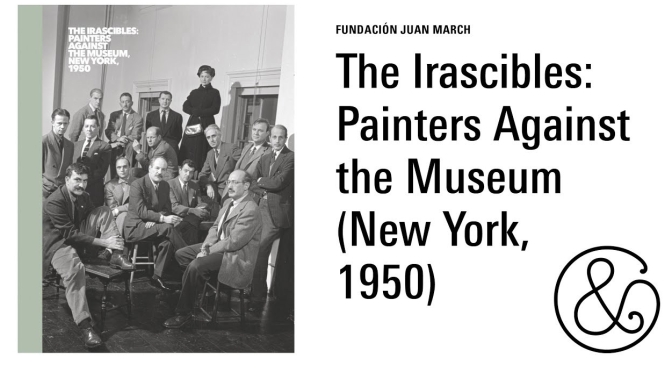
The first documentation of the legendary 1950 showdown between 18 leading abstract expressionists and the Metropolitan Museum of Art
In 1950, 18 American abstract painters signed an open letter addressed to the president of the Metropolitan Museum of Art to express their intense disapproval of the museum’s contemporaneous exhibit American Painting Today: 1950. The artists were William Baziotes, James Brooks, Fritz Bultman, Jimmy Ernst, Adolph Gottlieb, Hans Hofmann, Weldon Kees, Willem de Kooning, Robert Motherwell, Barnett Newman, Jackson Pollock, Richard Pousette-Dart, Ad Reinhardt, Mark Rothko, Theodoros Stamos, Hedda Sterne, Clyfford Still and Bradley Walker Tomlin.
This artistic coalition, which included many members of the New York School and is now considered a watershed movement in mid-20th-century American art history, challenged the museum’s policies for their narrow understanding of what made certain art worth exhibiting. Though they resisted being labeled as a collective, media coverage of the museum boycott, which included a now-famous group portrait in Life magazine taken by photographer Nina Leen, ultimately contributed to the success of the 18 “irascibles” in what became known as the abstract expressionist movement.
This publication collects 18 paintings by the artists, images from Leen’s photoshoot and extensive documentation of the letter-writing process with relevant catalogs and magazines. Featuring more than 230 illustrations alongside original essays by several art historians and curators that examine the complex history of the New York School, this volume serves as a time capsule of the exciting period of early abstract expressionism in the United States.
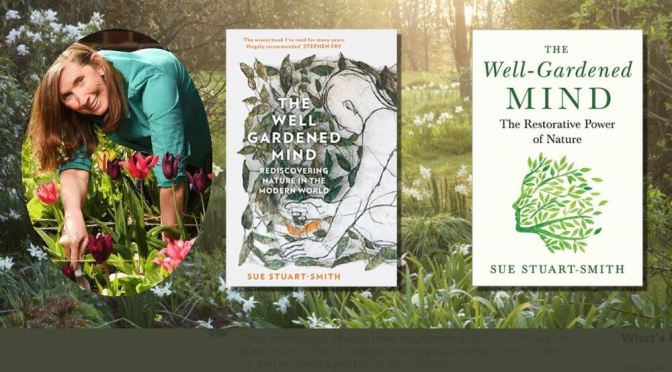
‘The Well-Gardened Mind’ provides a new perspective on the power of gardening to change people’s lives. Here, Sue Stuart-Smith investigates the many ways in which mind and garden can interact and explores how the process of tending a plot can be a way of sustaining an innermost self.
— Simon & Schuster Audio (@SimonAudio) July 8, 2020
A distinguished psychiatrist and avid gardener offers an inspiring and consoling work about the healing effects of gardening and its ability to decrease stress and foster mental well-being in our everyday lives.
The garden is often seen as a refuge, a place to forget worldly cares, removed from the “real” life that lies outside. But when we get our hands in the earth we connect with the cycle of life in nature through which destruction and decay are followed by regrowth and renewal. Gardening is one of the quintessential nurturing activities and yet we understand so little about it.
Stuart-Smith’s own love of gardening developed as she studied to become a psychoanalytic psychotherapist. From her grandfather’s return from World War I to Freud’s obsession with flowers to case histories with her own patients to progressive gardening programs in such places as Rikers Island prison in New York City, Stuart-Smith weaves thoughtful yet powerful examples to argue that gardening is much more important to our cognition than we think. Recent research is showing how green nature has direct antidepressant effects on humans. Essential and pragmatic, The Well-Gardened Mind is a book for gardeners and the perfect read for people seeking healthier mental lives.
With investigations into everything from black holes to exoplanets, the Hubble Telescope has changed not only the face of astronomy but also our very sense of being in the universe. On the 30th anniversary of its launch into low-earth orbit, this updated edition of Expanding Universe presents 30 brand new images, unveiling more hidden gems from the Hubble’s archives.
Ultra-high resolution and taken with almost no background light, these pictures have answered some of the most compelling questions of time and space while also revealing new mysteries, like the strange “dark energy” that sees the universe expanding at an ever-accelerating rate.
The collection is accompanied by an essay from photography critic Owen Edwards and an interview with Zoltan Levay, who explains how the pictures are composed. Veteran Hubble astronauts Charles F. Bolden, Jr. and John Mace Grunsfeld also offer their insights on Hubble’s legacy and future space exploration.
The contributors
Charles F. Bolden, Jr., Major General, USMC (Ret.), is a former Administrator of NASA, where he oversaw the completion of the International Space Station. He spent 14 years as a member of NASA’s Astronaut Corps, and commanded and piloted the Space Shuttle Discovery on STS-31, which launched the Hubble Space Telescope into orbit.
Owen Edwards has written about photography for more than 30 years for numerous publications including American Photographer, New York Times Magazine, and Smithsonian.
John Mace Grunsfeld, PhD, is an astrophysicist and a NASA astronaut. He has flown five times on the Space Shuttle, including three Hubble servicing missions. He has served as the Associate Administrator for the Science Mission Directorate, the NASA Chief Scientist, and as the Deputy Director of the Space Telescope Science Institute.
Zoltan Levay is a retired principle science visuals developer at the Space Telescope Science Institute, where he worked with astronomers and communicators worldwide to publicize science results from NASA’s Hubble Space Telescope.


 With a narrative punctuated by personal stories of time’s effects on truck drivers, Olympic racers, prisoners, and clockmakers, Mazur’s journey is filled with fascinating insights into how our technologies, our bodies, and our attitudes can change our perceptions. Ultimately, time reveals itself as something that rides on the rhythms of our minds. The Clock Mirage presents an innovative perspective that will force us to rethink our relationship with time, and how best to use it.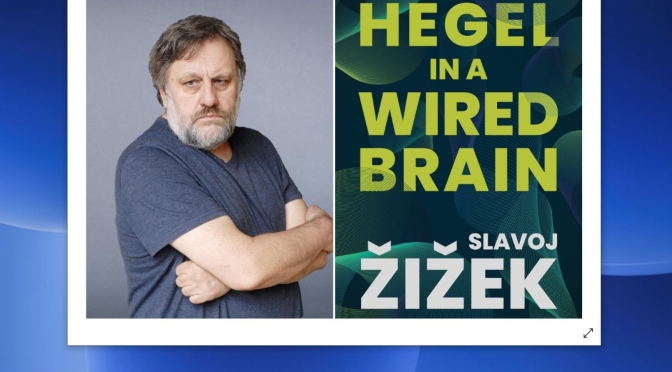
 Slavoj Žižek is a Slovenian philosopher and writer whose vast catalogue of work has earned him celebrity status across the globe. A radical leftist, his work encompasses everything from psychoanalysis and political theory to art and film criticism.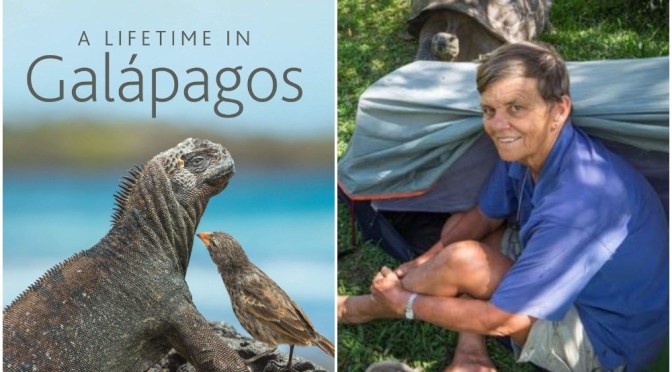
 Tui De Roy was a year old in 1955 when her family left Europe, boarding a banana boat bound for the Pacific to lead a different sort of life in Galápagos, one of self-sufficiency and living close to nature. She grew up on the islands and returned to them often over the next five decades. Discovering photography at a young age, she has dedicated her life to recording the islands’ natural history in infinite detail. A Lifetime in Galápagos is De Roy’s intimate portrait of one of the most spectacular places on Earth, presenting the wildlife and natural wonders of Galápagos as you have never seen them before.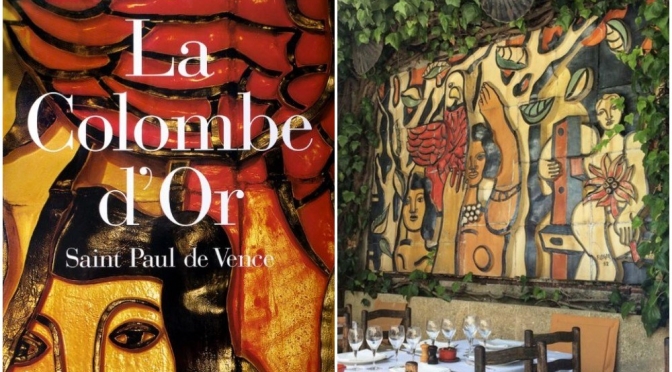
 “Provence has a treasure; it’s a Colombe d’Or. It has the precious scent of thyme and nostalgia and the golden colour of olive oil and happy days. The Colombe is a part of my life. For me, it’s a place that’s as full of promise as of magnificent memories. The Colombe is indefinable, inimitable. I’m happy that today a book brings back the atmosphere of this place which is like no other in the world.”
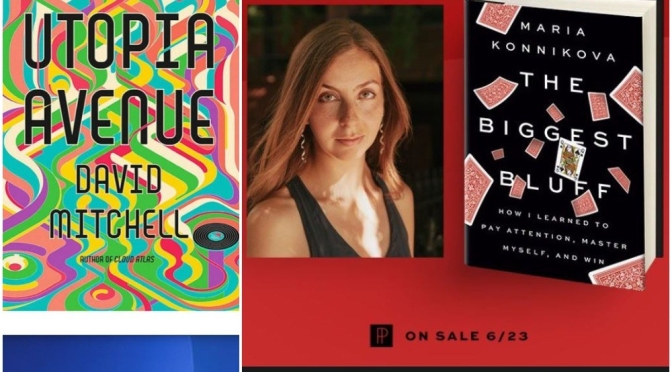
 Daniel Mendelsohn discusses Mitchell’s career and new novel, “Utopia Avenue,” and Maria Konnikova talks about “The Biggest Bluff.”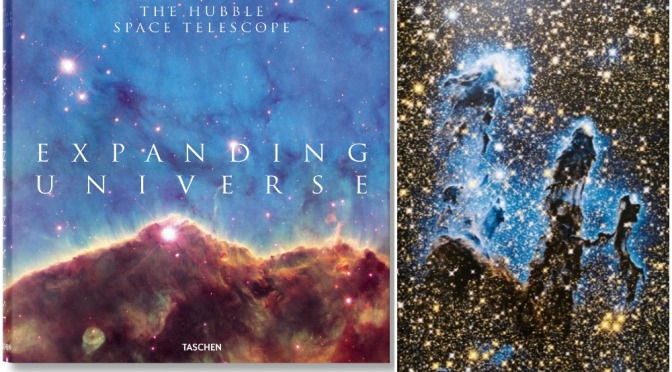

 Boomers Daily