
Peer through the lens of flourishing 17th-century Dutch technological innovation to witness wondrous advancements in science, including astronomy and medicine.
Harold J. Cook, John F. Nickoll Professor of History, Brown University

Peer through the lens of flourishing 17th-century Dutch technological innovation to witness wondrous advancements in science, including astronomy and medicine.
Harold J. Cook, John F. Nickoll Professor of History, Brown University
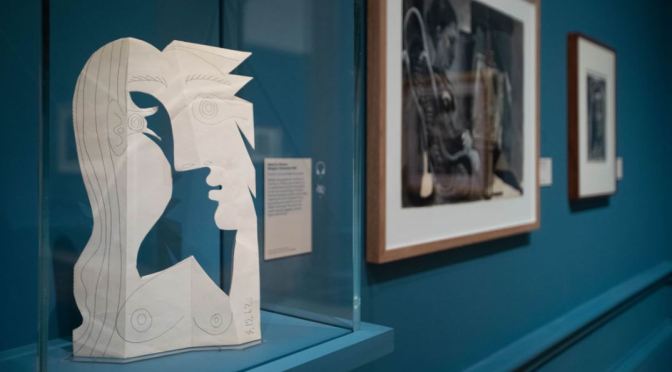
Join Curator Ann Dumas for a view inside the ‘Picasso and Paper’ exhibition, which features works spanning the artist’s entire career. Can you guess which work the artist made when he was just nine years old?
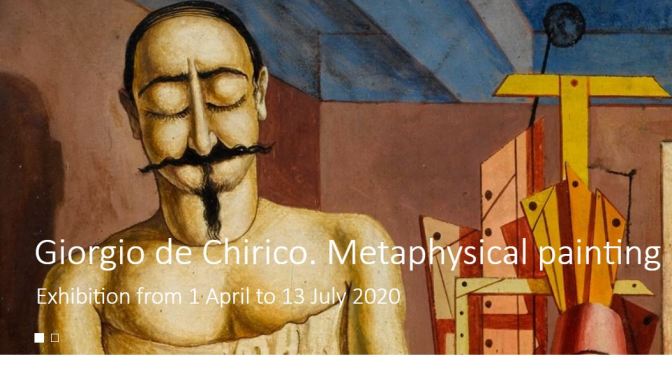
The exhibition Giorgio de Chirico. Metaphysical painting retraces the career and the artistic and philosophic influences of the artist Giorgio de Chirico from Munich to Turin, then to Paris where he discovered the artistic avant-garde of his era, and lastly Ferrare. The connections between the painter – discovered by Apollinaire and 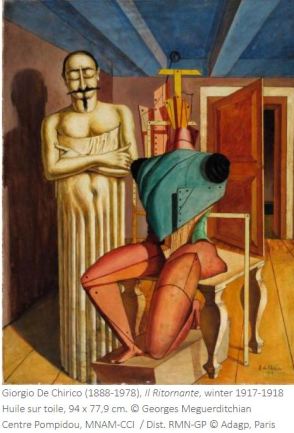 subsequently backed by the art dealer Paul Guillaume – and the Parisian cultural and literary circles will be highlighted as never before.
Born in Greece and trained in the fount of classical culture and late German Romanticism, de Chirico developed the foundations of a new artistic exploration alongside his younger brother Alberto Savinio. A student at the Academy of Fine Arts in Munich as of 1908, he discovered the thinking of Nietzsche and Schopenhauer as well as the works of Böcklin and Klinger. After travelling to Milan then Florence, it was in France, and more specifically Paris, as of autumn 1911, that he established his unique visual vocabulary through contact with the modernist artistic revolutions. He was quickly noticed by numerous artistic celebrities of the time, among whom Guillaume Apollinaire, Maurice Raynal, André Salmon, André Breton, Paul Éluard and Jean Paulhan were the first to take an interest in and promote his work.
 The exhibition thus comes into its own at the Musée de l’Orangerie alongside the figure of Paul Guillaume, the first art dealer to work with Giorgio de Chirico. On his return to Italy in 1915, he and his brother Savinio were sent to Ferrare for military reasons, where he continued his artistic research. This period (June 1915-December 1918) provided an opportunity for painters Carlo Carrà and Giorgio Morandi to get to know the two brothers, thus resulting in the creation of what was later to be known as the “metaphysical movement” which brings the exhibition to a close.
Exhibition organised by the Musée d’Orsay and the Musée de l’Orangerie, Paris and the Hamburger Kunsthalle, Hamburg
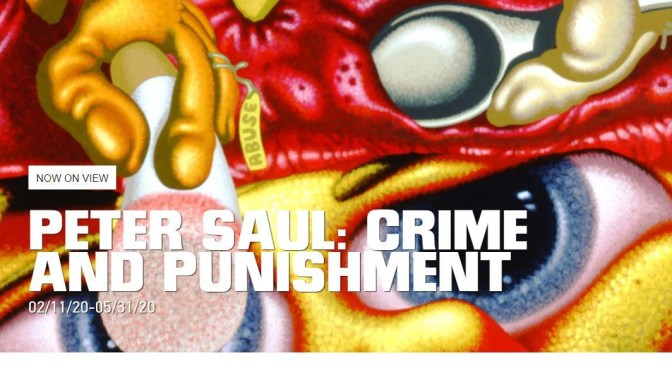
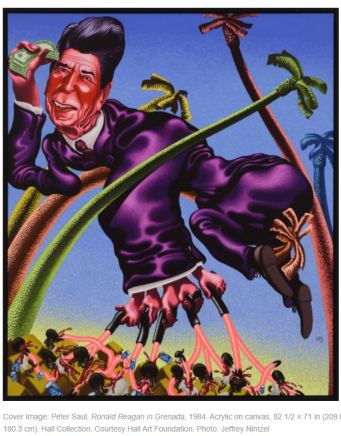 Beginning in the early 1960s, Peter Saul began to incorporate imagery borrowed from a range of pop-cultural sources into his exuberant, brightly colored paintings, adopting a style that has proven to be far ahead of its time. His work developed independently from concurrent art historical movements like Pop art, with which it shares some superficially similar concerns. Instead of the cool detachment of Andy Warhol and Roy Lichtenstein, however, Saul crafted his own unique blend of Surrealism, history painting, vernacular illustration, and the real-life shock and horror of current events.
Marking the artist’s first New York museum survey, this exhibition will bring together approximately sixty paintings from across his long career.
Saul’s earliest paintings, which he created in Paris, demonstrate a loose, gestural style of abstraction, yet he began to incorporate text, recognizable characters, and consumer products into his works as early as 1960. Around this time, he plucked figures like Donald Duck and Superman from the pages of comic books and deposited them into chaotic scenes representative of the avarice and violence of America. In the late 1960s and early 1970s, Saul created some of his most shocking and indelible works in response to the Vietnam War, with a series that captured the conflict’s grotesque brutality, racism, and destruction. A later group of paintings, which examines the chaotic sociopolitical fabric of urban life in California, reflects the dissolution of 1960s counterculture and the corruption, racism, and greed of US politics.
Saul extended his interrogation of American history in his portraits of infamous criminals like John Wayne Gacy, archetypes like cowboys and businessmen, and US presidents such as Ronald Reagan, George W. Bush, and Donald Trump, whom Saul depicts with disdain and condemnation. He has also looked further back to reimagine supposedly triumphant scenes from America’s past—including Columbus’s arrival in America, Washington crossing the Delaware, and Custer’s Last Stand—as moments of comical failure or disgrace. With a caustic sense of humor, Saul has continuously skewered America’s leaders, rendering their stretched, distorted bodies in Day-Glo colors. His disparate influences range from MAD magazine comics to Surrealist fantasies and American social realist painting from the 1930s.
Peter Saul is an American painter. His work has connections with Pop Art, Surrealism, and Expressionism. His early use of pop culture cartoon references in the late 1950s and very early 1960s situates him as one of the fathers of the Pop Art movement. He realised about 800 paintings during his career.
Mercedes-Benz and the upcoming “Avatar” films – what at first seemed to be an unexpected global partnership, turned into a unique interdisciplinary experience.

Inspired by the world of “Avatar”, the two partners created the astonishing VISION AVTR. In this exclusive behind-the-scenes feature, key team members from both parties share their thoughts on the cooperation process and provide fascinating insights into the concept vehicle itself.
Credits: ™ & © 20th Century Fox Film Corp.
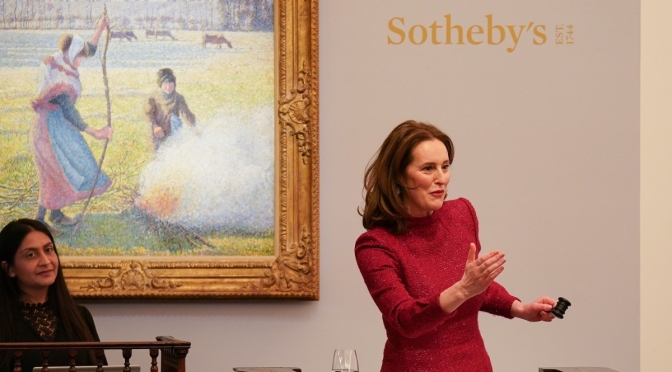
We are LIVE from our Impressionist, Modern & Surrealist Art Evening Sale in London. Watch as works by Van Gogh, Duchamp, Pissarro, Signac, Kirchner, Miro, Giacometti, Léger, Chagall and Picabia go under the hammer!
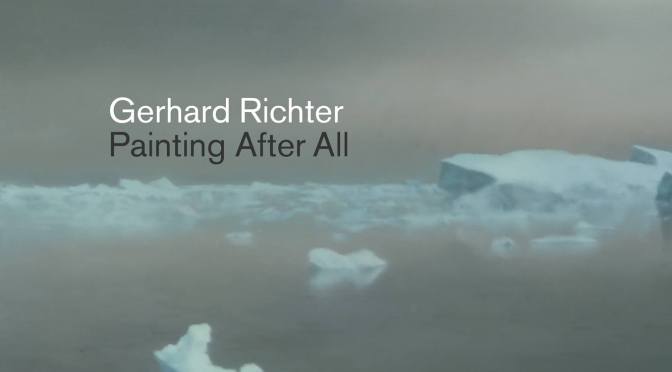
 Over the course of his acclaimed 60-year career, Gerhard Richter (b. 1932) has employed both representation and abstraction as a means of reckoning with the legacy, collective memory, and national sensibility of post–Second World War Germany, in both broad and very personal terms.
This handsomely designed book features approximately 100 of his key canvases, from photo paintings created in the early 1960s to portraits and later large-scale abstract series, as well as select works in glass.

 New essays by eminent scholars address a variety of themes: Sheena Wagstaff evaluates the conceptual import of the artist’s technique; Benjamin H. D. Buchloh discusses the poignant Birkenau paintings (2014); Peter Geimer explores the artist’s enduring interest in photographic imagery; Briony Fer looks at Richter’s family pictures against traditional painting genres and conventions; Brinda Kumar investigates the artist’s engagement with landscape as a site of memory; André Rottmann considers the impact of randomization and chance on Richter’s abstract works; and Hal Foster examines the glass and mirror works. As this book demonstrates, Richter’s rich and varied oeuvre is a testament to the continued relevance of painting in contemporary art.
Metropolitan Museum of Art website
Gerhard Richter was born in Dresden on 9th February 1932, the first child of Horst and Hildegard Richter. A daughter, Gisela, followed four years later. They were in many respects an average middle-class family: Horst worked as a teacher at a secondary school in Dresden and Hildegard was a bookseller who liked to play the piano.1 In an interview with Robert Storr, Richter described his early family life as “simple, orderly, structured – mother playing the piano and father earning money.”2
“Hélène Binet has emerged as one of the leading architectural photographers in the world. Every time Hélène Binet takes a photograph, she exposes architecture’s achievements, strength, pathos and fragility.”
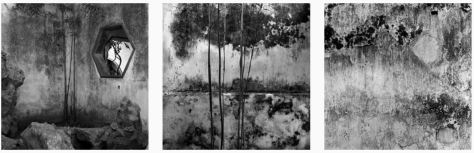
Hélène Binet was born in 1959 in Sorengo and is of both Swiss and French background. She currently lives in London with her husband Raoul Bunschoten and their two children, Izaak and Saskia. She studied photography at the Instituto Europeo di Design in Rome, where she grew up, and soon developed an interest in architetural photography.
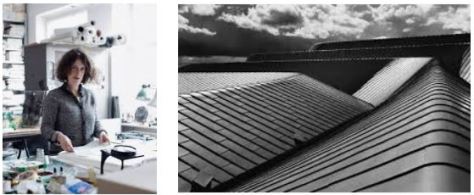
Over a period of twenty-five years Hélène Binet has photographed both contemporary and historical architecture. Her list of clients include architects Raoul Bunschoten, Caruso St John, Zaha Hadid, Daniel Libeskind, Studio Mumbai, Peter Zumthor and many others. While following the work of contemporary architects – often from construction through completion – Hélène Binet has also photographed the works of past architects as Alvar Aalto, Geoffrey Bawa, Le Corbusier, Sverre Fehn, John Hejduk, Sigurd Lewerentz, Andrea Palladio and Dimitris Pikionis. More recently, Hélène Binet has started to direct her attention to landscape photography, wherein she transposes key concerns of her architectural photography. Hélène Binet’s work has been published in a wide range of books, and is shown in both national and international exhibitions.
Hélène Binet is an advocate of analogue photography and therefore she exclusively works with film.
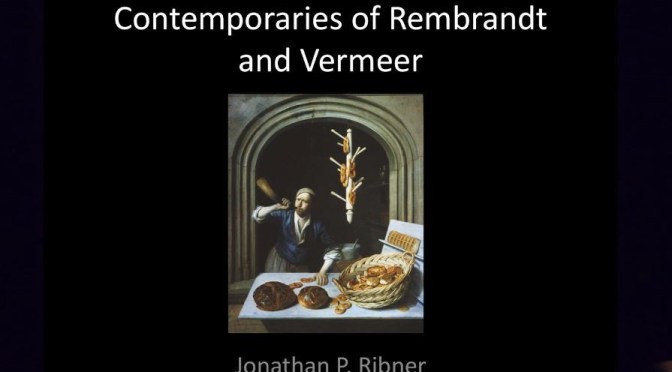
Jonathan Ribner, associate professor; director of Graduate Admissions, Department of History of Art and Architecture, Boston University.
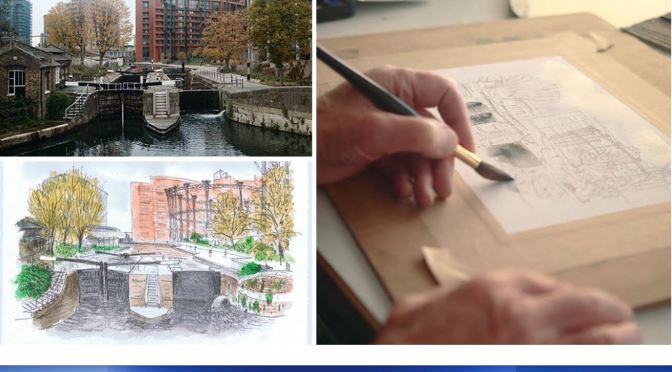
David Gentleman is an iconic British illustrator and designer who has lived a lifetime in London. Drawing from over sixty years of engagement with this most 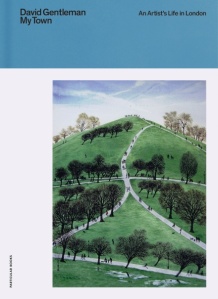 well-known capital city, his most recent book,
My Town presents London as it was and as it is today. His beautiful and intricate work – of the Thames, Hampstead Heath, Camden Town (where David Gentleman has lived in the same house for fifty years), London’s parks and sights – offers us the pleasure of looking again at the everyday.
Accompanied by reflections on the work of an artist, commentary on the possibilities of ink, pen and paint and personal thoughts on the ever-changing city, this is a delight for all those who flock to London.
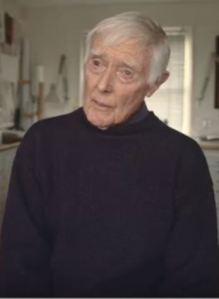
David William Gentleman is an English artist. He studied illustration at the Royal College of Art under Edward Bawden and John Nash. He has worked in watercolour, lithography and wood engraving, at scales ranging from platform-length murals for Charing Cross Underground Station in London to postage stamps and logos. (Wikipedia)


 Boomers Daily