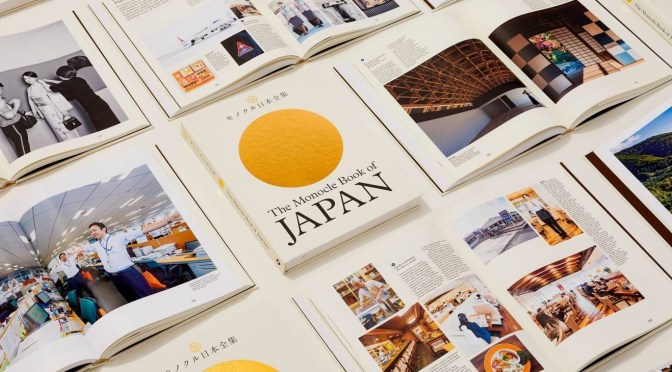
To celebrate our forthcoming book about Japan, we are presenting a new film series that dives into the intriguing ecosystem that has preserved Japanese traditional skills over centuries. Meet the people who are future-proofing the age-old know-how.

To celebrate our forthcoming book about Japan, we are presenting a new film series that dives into the intriguing ecosystem that has preserved Japanese traditional skills over centuries. Meet the people who are future-proofing the age-old know-how.
My paintings on clay panels begin with thin veils of paint that drip, pool and congeal, and like nature, move out of my control, beautifully mysterious. I work intuitively within these initial drips and pools, searching for structure. Each successive stroke of paint or pencil mark continues to build a dreamlike otherworldly place. The mood is one of nature untamed, enchanting and rife with hidden secrets.
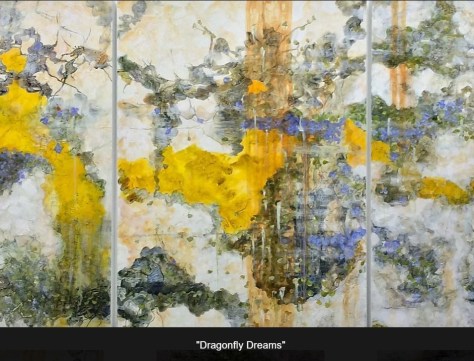
My paintings are my connection to the Earth, its nature and beautiful mysteries.  There is a sadness as I witness the loss of our last wild places. My paintings are an attempt to keep alive those places and offer my audience a sanctuary in which to reflect.
Riitta Klint is from Helsinki, Finland and currently lives in Fort Worth, Texas and maintains a studio in nearby Aledo. Between these two places is a lifetime spent traveling the world thanks to her father’s career with IBM. Living in her native Finland, as well as in Iran, Portugal, Indonesia, Germany, Mexico, and the United States, together with extensive travel in Asia and Europe has shaped her unique vision and palette. Her work offers the viewer a front seat to that journey, and a threshold to cross over into their own imagination.
Klint works primarily in acrylic and pencil on Claybord™, smooth kaolin clay covered panels that offer the ideal surface for her manipulation of color and medium.
Born in Victoria, Australia, Martin Lewis was a printmaker who is known for his scenes of urban life in New York during the 1920s and 1930s. As a youth Lewis held a variety of jobs that ranged from working on cattle ranches in the Australian Outback, in logging and mining camps, to being a sailor. In 1898, he moved to Sydney for two years where he received his only formal art training. During this period he may have been introduced to printmaking; a local radical paper, The Bulletin, published two of his drawings.
Lewis left Australia in 1900 and first settled in San Francisco. He eventually worked his way eastward to New York. Little is known about his life during the following decade except that he made a living as a commercial artist and produced his first etching in 1915. Lewis’ skill as an etcher was noticed by Edward Hopper, who became a lifelong friend. In 1920, dissatisfied with his job, Lewis used his entire savings to study art and to sketch in Japan. He returned to New York after a two-year stay and resumed his commercial art career, but also pursued his own work as a painter and printmaker.
During the Depression, Lewis moved to Newtown, Connecticut, but later returned to Manhattan, where he helped establish a school for printmakers. From 1944-1952 Lewis taught a graphics course at the Art Students League in New York.
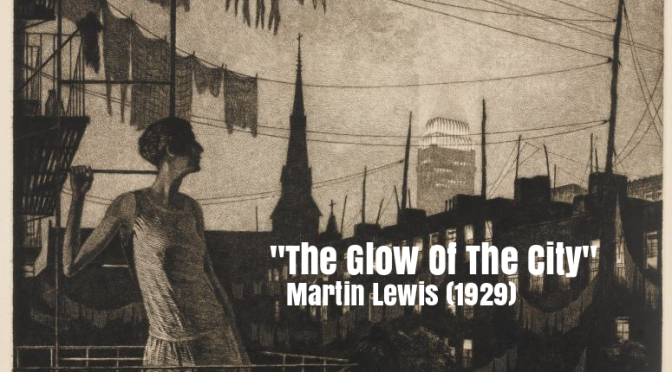
During his thirty-year career, Lewis made about 145 drypoints and etchings. His prints, like Shadow Dance and Stoops in Snow, were much admired during the 1930s for their realistic portrayal of daily life and sensitive rendering of texture. The artist’s skill in composition and his talent in the drypoint and etching media have received renewed attention in recent years. Lewis is one of the few printmakers of this era who specialized in nocturnal scenes. Some scholars consider his print Glow of the City his most significant work because of the subtlety of handling. A minute network of dots, lines, and flecks scratched onto the plate creates the illusion of transparent garments hanging in the foreground, while the Chanin Building, an art deco skyscraper, towers over the nearby tenements.
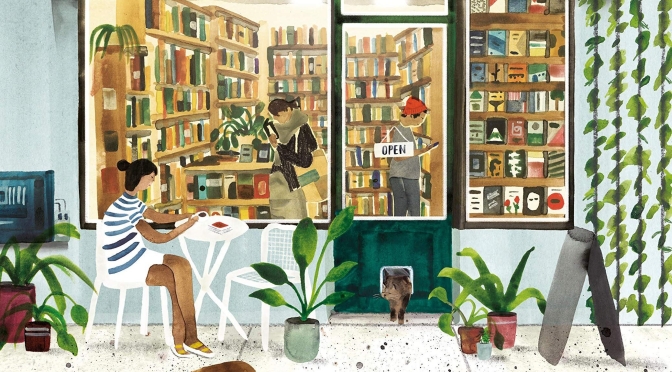
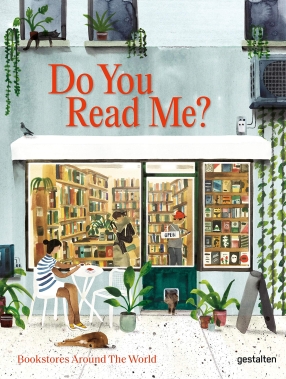 From Daikanyama Tsutaya Books in Tokyo to Kosmos Buchsalon in Zurich, Do You Read Me? travels the globe to discover these gems and some of the people behind them, who turn an ordinary trip to the bookstore into an extraordinary experience.
Bookstores are more than just places that sell books. They are focal points of communities, a warm welcome to a city, a place for first-time visitors and longtime residents alike to gather in a shared love of the written word. They are places where time moves a little slower, where customers can get lost in the pages of a book, or enjoy readings, concerts, and events that bring together like-minded individuals with a thirst for knowledge.
Each bookstore is as unique as the diverse customers who frequent them. There are the secret ones tucked away with stacks reaching floor to ceiling; there are minimalist concept stores; there are dazzling book temples. There are ones in apartments, on boats, and in Gothic cathedrals.
Travel writer Marianne Julia Strauss has scoured the globe for the past decade in search of the top bookstores. In Do You Read Me? she has collected a selection of the ones you need to include in your next itinerary.
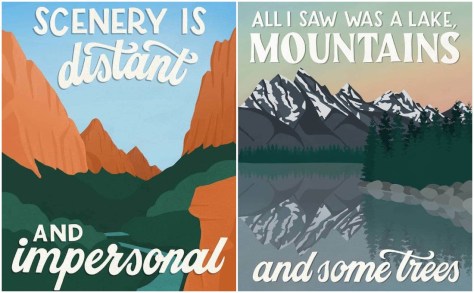
Subpar Parks is a snarky love letter to the National Parks System. When I discovered that there were 1-star reviews for every single one of the 62 national parks, I set out to illustrate each park along with a hand lettered 1-star review as a way to put a positive, fun spin on such a negative mindset.

 In this episode, Sidney talks about how Gemini GEL got started and grew into the organization it is today, sharing stories about the artists he’s worked with along the way.
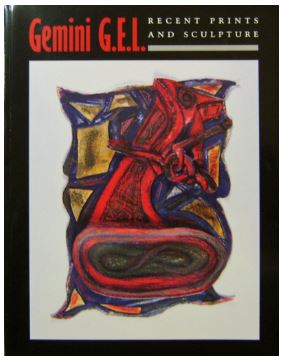 In 1966, at the age of forty-one, Sidney Felsen moved from the world of accounting to that of art, founding the artists’ workshop and fine-art print publisher Gemini GEL in Los Angeles. With Gemini GEL, Sidney quickly got to work with some of the biggest artists of the twentieth century: Man Ray, Josef Albers, Jasper Johns, and Robert Rauschenberg, to name a few. And Gemini GEL continues its work with new generations of artists, including Julie Mehretu, Tacita Dean, and David Hammons.
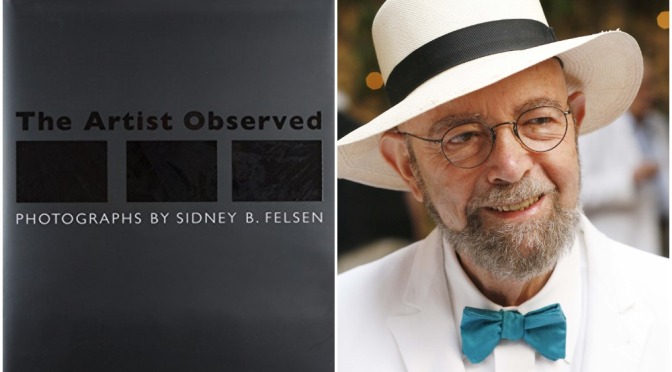
Sidney Felsen is the co-founder of Gemini G.E.L., a printmaking studio in Los Angeles that has been operating since 1965. Some of his photographs documenting the artists at work at Gemini are collected in the book The Artist Observed.
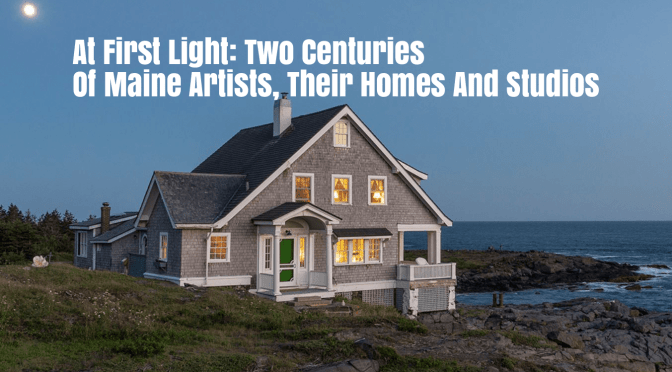
 At First Light chronicles twenty-six extraordinary artists of the last two hundred years who have lived and worked in Maine. Published to coincide with the state’s bicentennial in 2020, the volume considers the significant contributions artists have made to a deeper and more profound understanding of Maine’s history, its land and its peoples. Maine’s unique and breathtaking landscape–from its rugged coastline, quaint harbors, majestic mountains, and verdant forests–continues to have a powerful effect on the artists who are drawn to its shores.
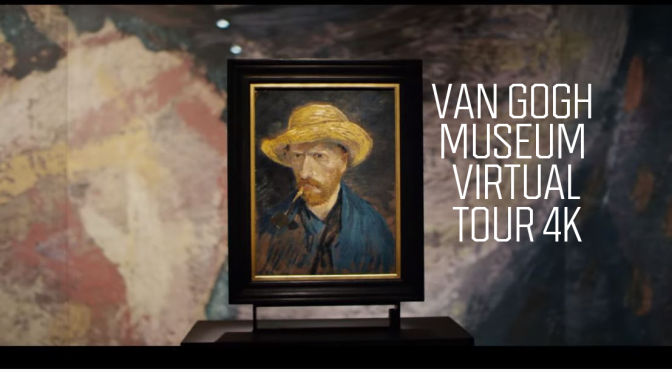
Van Gogh Museum Tour in 4K. Have you always wanted to be alone in the Van Gogh Museum? Step into Vincent’s world and enjoy the private video tour. (Episode 1)
From a Deadline online article (March 9, 2020):
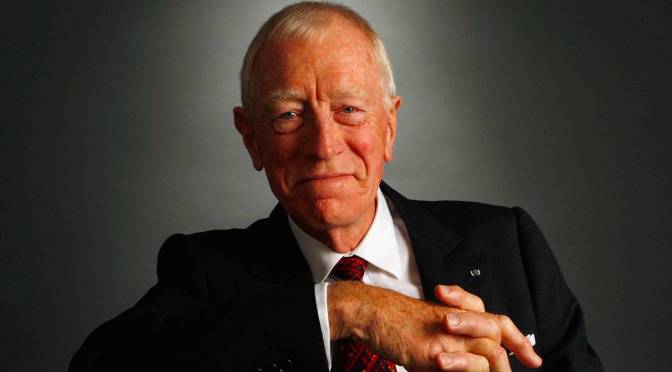
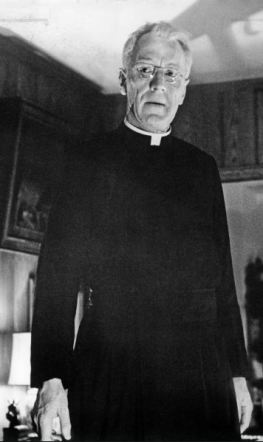 Born in Lund, Sweden, von Sydow studied at Stockholm’s Royal Dramatic Theatre before getting his start in the film business through his work with mentor Ingmar Bergman. The pair’s credits included world cinema classic The Seventh Seal, in which he portrays a man who plays a chess game with Death, the Oscar-nominated Wild Strawberries, and the Oscar-winning The Virgin Spring.
Max von Sydow, the Sweden-born French actor whose credits included Ingmar Bergman’s The Seventh Seal, William Friedkin’s The Exorcist, and the role of Emperor Ming in Flash Gordon, has died at the age of 90.
The actor’s 65-year career spanned acclaimed arthouse, Hollywood blockbusters, and television. In recent years, he played Lor San Tekka in Star Wars: The Force Awakens, the Three-Eyed Raven in Game Of Thrones, and voiced a character on The Simpsons.
 The British Galleries are reopening with almost 700 works of art on view, including a large number of new acquisitions, particularly works from the 19th century that were purchased with this project in mind. This is the first complete renovation of the galleries since they were established (Josephine Mercy Heathcote Gallery in 1986, Annie Laurie Aitken Galleries in 1989). A prominent new entrance provides direct access from the galleries for medieval European art, creating a seamless transition from the Middle Ages to the Renaissance.
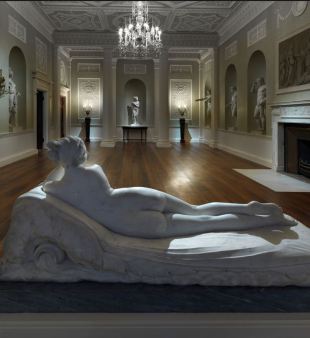 A highlight of The Metropolitan Museum of Art’s 150th anniversary in 2020 is the opening, on March 2, of the Museum’s newly installed Annie Laurie Aitken Galleries and Josephine Mercy Heathcote Gallery—11,000 square feet devoted to British decorative arts, design, and sculpture created between 1500 and 1900. The reimagined suite of 10 galleries (including three superb 18th-century interiors) provides a fresh perspective on the period, focusing on its bold, entrepreneurial spirit and complex history. The new narrative offers a chronological exploration of the intense commercial drive among artists, manufacturers, and retailers that shaped British design over the course of 400 years. During this period, global trade and the growth of the British Empire fueled innovation, industry, and exploitation. Works on view illuminate the emergence of a new middle class—ready consumers for luxury goods—which inspired an age of exceptional creativity and invention during a time of harsh colonialism.



 Boomers Daily