
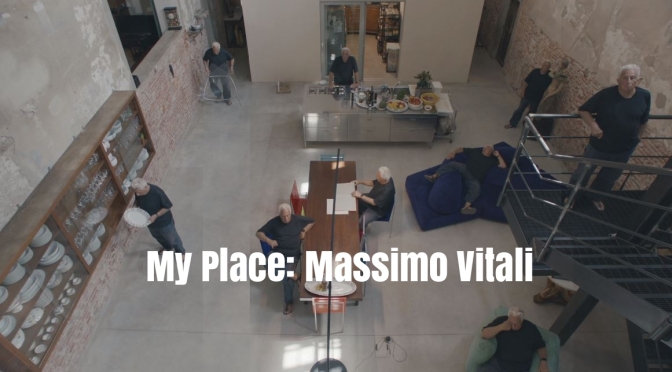
Directed by: Barbara Anastacio
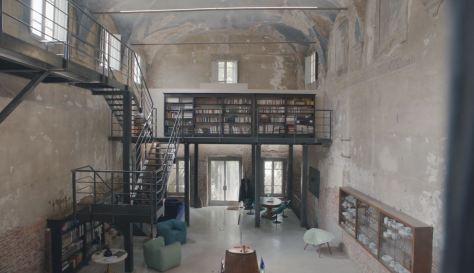
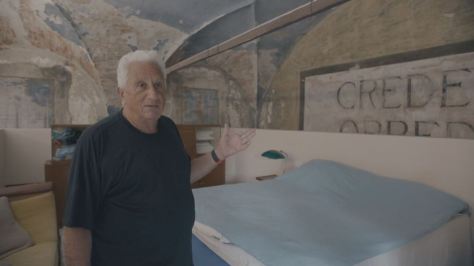
Even though the image-maker’s large color works are held in galleries around the world, Vitali chooses not to display any photography in his home. Instead, the crumbling walls, sky blue vaulted ceilings, eroded slogans, frescoes and marble archways of the church provide as much narrative as any image.
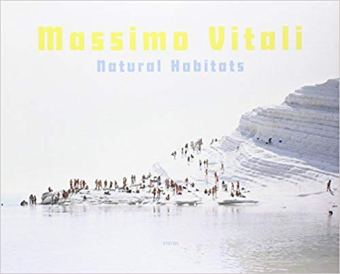 An assortment of inflatable alligators, damp bodies and candy cane-colored umbrellas typify Italian photographer Massimo Vitali’s ongoing Beach Series, which he began in 1995. Born in Como, Italy in 1944 Vitali’s internationally recognized panoramas of busy ski resorts, clubs, pools and piazzas explore the multilayered stories present in communal leisure places.
“Vitali’s choice of home reflects his intrigue in the spaces that people chose to congregate in”
This Barbara Anastacio-directed episode takes us away from the crowds and into the tranquil Tuscan city of Lucca where Vitali lives with his wife and son. The photographer’s home is a fourteenth-century church, which—in one of it’s most recent incarnations—was used a boxing and fencing gym for young fascists during the Mussolini years.
To read more: https://www.nowness.com/series/my-place/massimo-vitali-barbara-anastacio
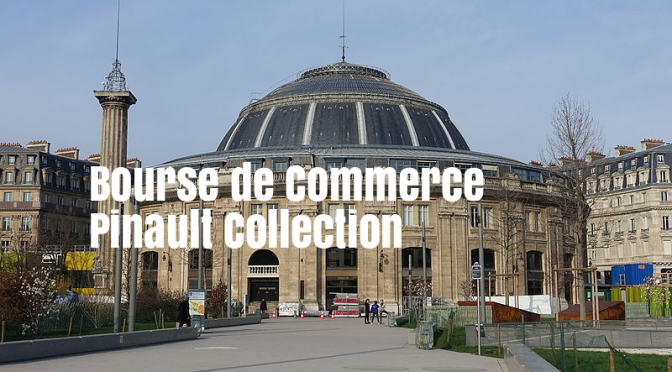
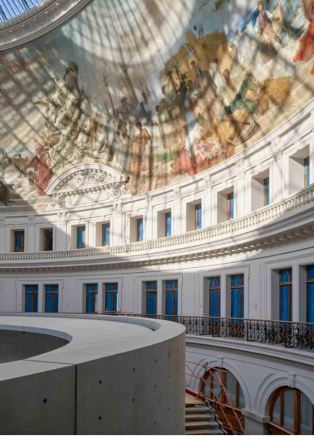 The plans for the venue were previously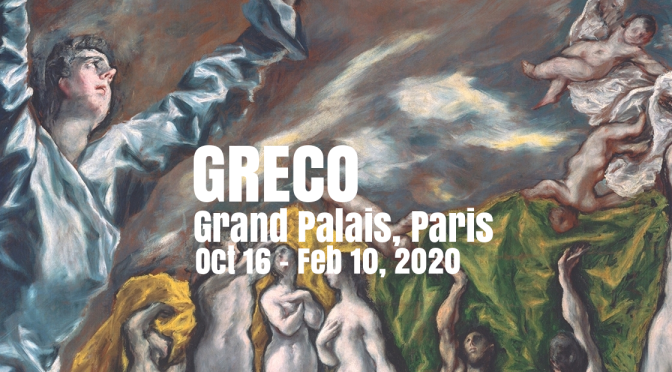
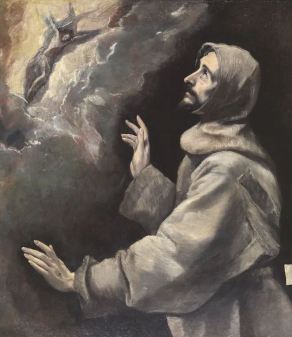 Rediscovered in the late 19th century, celebrated by authors, acknowledged and embraced by the 20th century avant-garde, the artist has enjoyed the dual prestige of tradition and modernity, linking Titian to the Fauvists and Mannerism to Cubism, Expressionism, Vorticism and Abstraction up to the Action painting.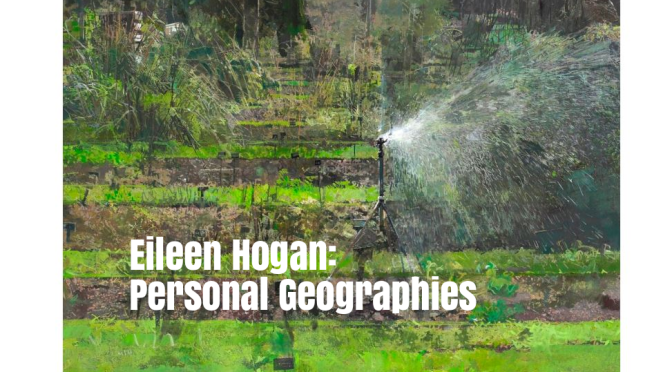
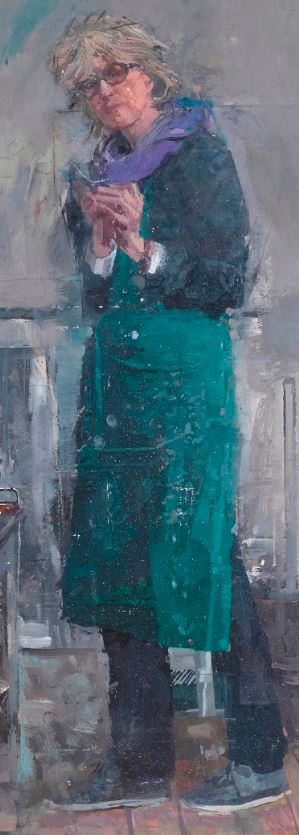 I describe myself as an urban-based painter who is interested in green spaces. Painting and drawing have been seen as profoundly unfashionable for most of my working life, and I have felt sometimes that it was quite eccentric to be a figurative painter with conventional subject matter. Looking back, my insistence on maintaining my practice as a figurative painter now seems more radical than conventional.
 I was very blessed to have the opportunity to catch up with Hogan ahead of her Mayfair exhibition. I find myself entranced by her vibrant paintings that are dense with detail, filling the canvas from edge to edge with layers upon layers of paint. She has also established portraiture practice, her commissions including HRH The Prince of Wales. In a unique style, Hogan paints her sitters whilst they are deep in conversation, capturing unguarded gestures and expressions to create intricate portraits of both honesty and intimacy.
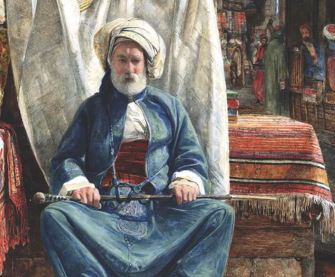 Things take an even stranger turn when he gets to Egypt, and his own features still appear again and again; not, as before, as a barely significant detail in an otherwise busy composition, but as a principal element. In a series of fine single-figure paintings brought together at the Watts Gallery, Lewis represents himself as a Syrian sheikh scanning the horizon of the Sinai desert; as the suave ‘bey’ of a Cairene household, lowering his eyelids as his servant offers him a water pipe; as an impassive carpet-seller in the Bezestein bazaar
 After a great British breakfast, hopped on the Tube at Tower Hill and headed for the South Kensington station. Arrived at the Victoria & Albert Museum as it opened at 10.



















 Édouard Manet was a provocateur and a dandy, the Impressionist generation’s great painter of modern Paris. This first-ever exhibition to explore the last years of Manet’s short life and career reveals a fresh and surprisingly intimate aspect of this celebrated artist’s work. Stylish portraits,
  luscious still lifes, delicate pastels and watercolors, and vivid café and garden scenes convey Manet’s elegant social world and reveal his growing fascination with fashion, flowers, and his view of the parisienne—a feminine embodiment of modern life in all its particular, fleeting beauty.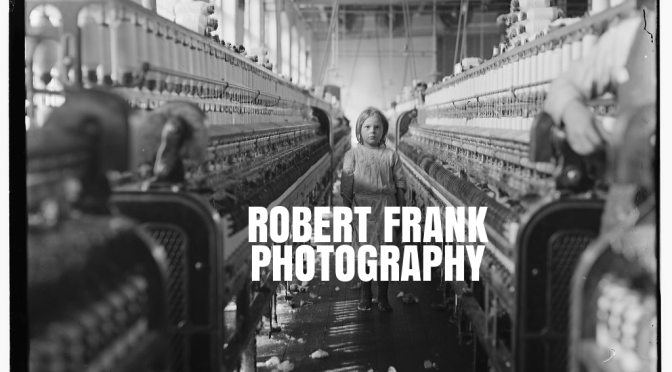
 Rigorously unsentimental in his attitude to the world around him, Mr. Frank deviated from form in 1950, taking what was arguably his most romantic picture. He had his reasons. He was in love. The year before he had met artist Mary Lockspeiser, who became his first wife. In “Tulip/Paris,” he photographed a young man who is holding behind his back a tulip — presumably intended for the woman standing in the background. An old man, at the other end of life’s arc, approaches the viewer. It is a classic romantic Paris street photograph.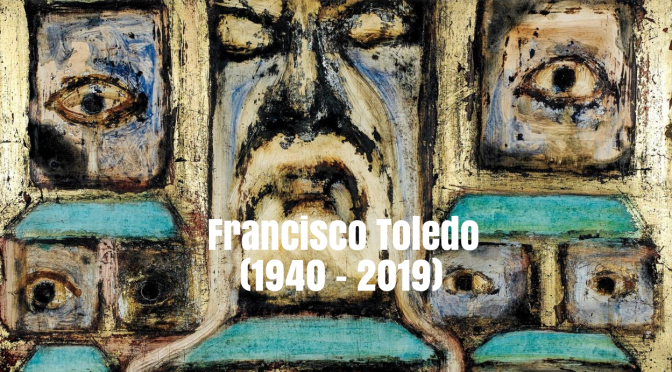
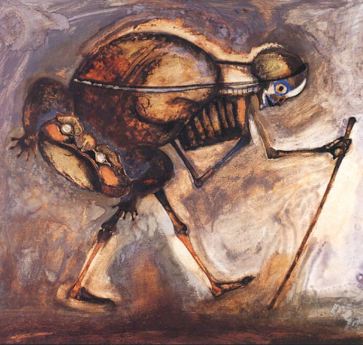 Though his paintings and sculptures sell all over the world for fabulous prices, he has not enriched himself. He lives simply, with his wife, Trine Ellitsgaard Lopez, an accomplished weaver, in a traditional house in the middle of Oaxaca, and has used his considerable profits to found art centers and museums, an ethnobotanical garden and at least three libraries.
 Toledo, whose origins were obscure and inauspicious, was the son of a leatherworker—shoemaker and tanner. He was born in Mexico City, but the family soon after moved to their ancestral village near Juchitán de Zaragoza in the Isthmus of Tehuantepec, nearer to Guatemala than to Mexico City—and being ethnically Zapotec, nearer culturally to the ancient pieties of the hinterland too.
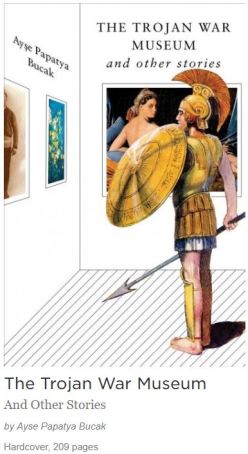 That’s the kind of astonishing illumination you’ll find in The Trojan War Museum, Ayşe Papatya Bucak’s debut story collection. These are stories that reflect the author’s Turkish heritage and a curiosity about our human search for meaning as profound as it is lyrical. The stories are music. They beguile and illuminate with narratives about yearning and desire, circumstance and courage, resilience and discovery. Reading them, while the reading lasts, replaces seeing.
 Boomers Daily