Tag Archives: Architecture

Tours: ‘Lew House’ – A 1958 Mid-Century Modern In Los Angeles By Architect Richard Neutra (Video)

Richard Neutra designed the Lew House in 1958 to suit his clients’ entertaining lifestyle with an open floor plan, wall-to-wall glazing, and a gleaming glass carport. High up and overlooking Downtown Los Angeles, this legendary home features stunning views, an innovative floor plan, and a minimalist, but warm interior. Dwell’s own executive editor Jenny Xie gives us a tour.

The Lew House is an exquisite, four-bedroom luxury residence in Hollywood about a mile from Sunset Strip. Designed by Richard Neutra, renowned pioneer of midcentury modern architecture, the villa is practically a museum of modernist design and contemporary art, while welcoming deluxe relaxation and festive entertainment in its stunning indoor and outdoor living areas.

The tri-level villa overlooks gorgeous views of the Hollywood Hills from multiple balconies and terraces. Savor luxurious days bathing in the swimming pool, soaking in the lovely hot tub, and sipping refreshing drinks in the Southern California sun. Fire up the grill for a delicious barbeque as the kids play in the yard and playground below; then gather for an alfresco lunch. In the late afternoon, savor a delicious cocktail on the veranda.
Home Tours: ‘Tree House’ In Bronte Beach, Sydney, Australia’ By Madeleine Blanchfield Architects

Madeleine Blanchfield – Architect

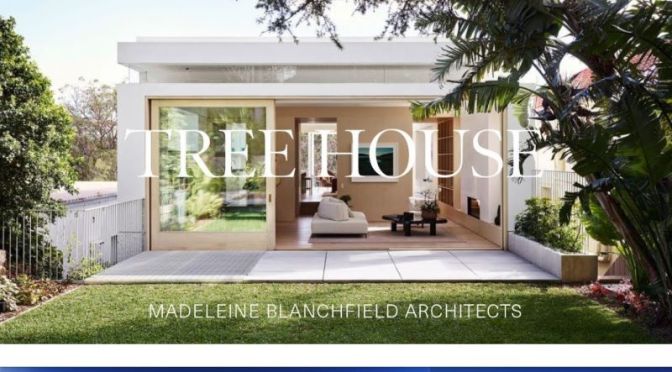
Tree House by Madeleine Blanchfield Architects is a light-filled family home near Bronte Beach in Sydney. As the architect’s own home, the project exemplifies the studio’s experiential design approach, which sees light, form and materiality coalesce to create an experience of place.

The architecture and interiors evoke mood and respond to the changes in light over the course of the day, while the elevated position within the treetops that gives Tree House its name creates a calming atmosphere. With the living space located at the top floor of the architect’s own home, a journey is created through the architecture via a sculptural staircase.

The sculptural forms created by the spiral staircase are balanced by the more pared back interiors, which take their cues from the natural setting. Pale timber, concrete and terracotta tiles, along with the careful approach to both natural and artificial light, reflect the design’s connection to the garden that surrounds it and the nearby beach. This use of few materials detailed to create a highly refined architectural response is characteristic of an architect’s own home.

It highlights how Madeleine Blanchfield Architects has created an experiential home in which simple elements such as materials, details, and changes in light can enhance the mood of a space, resulting in a family home whose architecture, interiors and garden work together to create a sense of lightness and calm.

For More from The Local Project: Website – https://thelocalproject.com.au/

Tours: “Stunning” Spanish Renaissance Revival Home In San Francisco, CA (AD)

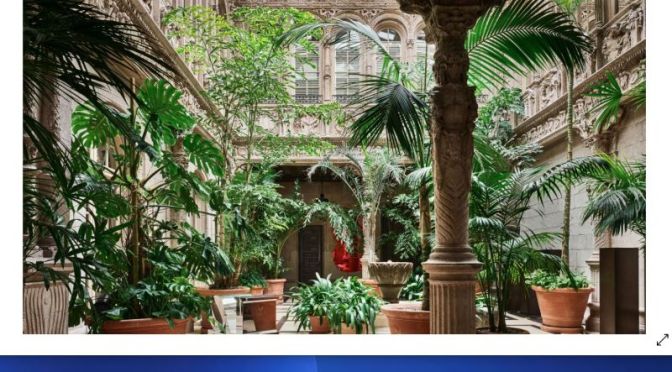
“You just sort of gulp,” Marino explains of projects like the sprawling 1916 San Francisco mansion that he labored on for more than three years, overhauling its nearly two dozen rooms for effervescent East Coast transplants with three teenagers, two French bulldogs, and a passion for pedigreed real estate.

“It was a Herculean task,” Marino continues. “There was no roof, the exterior walls were under boarding, and there were no floor slabs. It all looks so pretty now, but it was painful.” And, he quips with a laugh, “if there’s an earthquake anywhere in North America, from Vancouver to Teotihuacán, for God’s sake run here.”

Not only is the house in the city’s Pacific Heights enclave, one of the most theatrical residences ever conceived by the genius society architect Willis Polk, the Spanish Renaissance Revival palacio—wrapped around a two-story courtyard crowned with a vast glass roof—had long been home to one of Marino’s friends, Georgette “Dodie” Rosekrans.

The husband and wife also possessed phenomenal sangfroid, accepting with barely a blink the seismic requirements that demanded gutting the house and driving concrete pilings 30 feet into the ground.

She was a tiny, couture-clad movie-theater heiress, while her husband, John, was a Spreckels sugar–fortune scion who also manufactured, of all things, Hula Hoops and Frisbees. As for the four-story house where they lived from 1979 until their respective deaths (his in 2001, hers in 2010), it’s been described, with good reason, as the most beautiful house in America.

Read full article

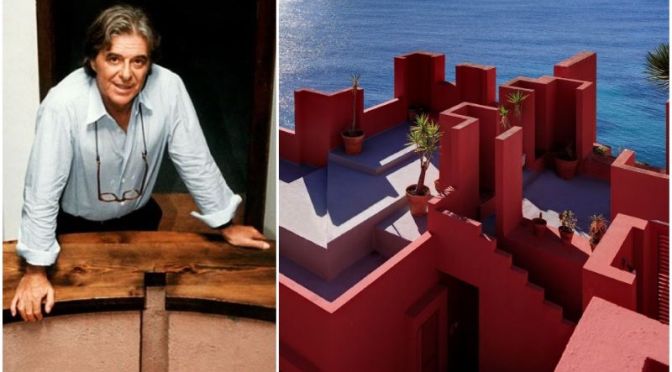
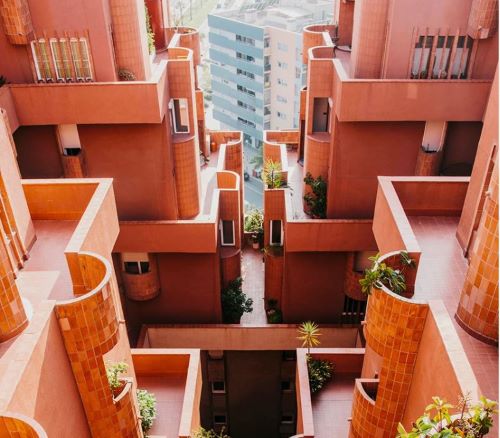
Profile: Spanish Architect & Designer Ricardo Bofill – ‘Dreamer Of Modernity’

December 2, 2020

What Bofill creates with exceptional mastery are spaces or the sense of space. He describes this ability, probably jokingly, as being an escape from the claustrophobia of his childhood in Barcelona, living in bourgeois apartments crammed floor to ceiling with decorative objects.

Postmodernity in the work of Bofill does not have to be the abolishing of rules or the death of history. In his own words, postmodernity “breaks with cultural hegemony to adapt models to different cultures, considering the place and its history.” It is more of a reaction against the uniformity of modern architecture.

Ricardo Bofill was born on December 5, 1939, in Barcelona. The son of a contractor, in the dullest hours of the Franco regime. As he explains himself, the feeling of being, not in the middle of the world but the outskirts, in a periphery—a Catalonia that was not just physically isolated from the cultural capitals but also far from national, political decision-making—sparked dreams of freedom and faraway lands, and was probably what later inspired his nomadic lifestyle. The importance of the vernacular, it’s engagement with classicism, Bofill’s sense of atemporal elegance—all find their roots in this early period.

Read more

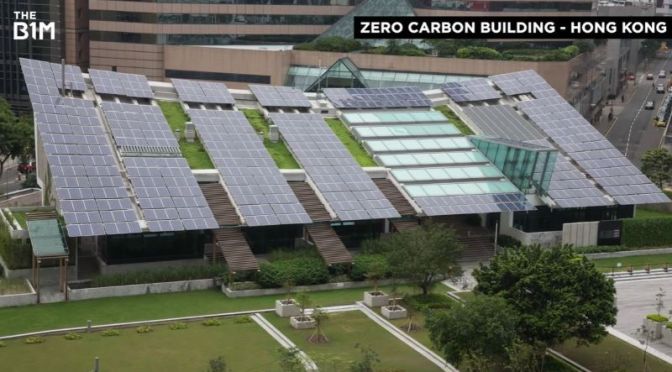
Net-Zero Tech: ‘Buildings Producing More Energy Than They Use’ (Video)

What if our buildings produced more energy than they used? From the United States to Hong Kong, these projects prove it can be done.

zero-energy building (ZE), also known as a zero net energy (ZNE) building, net-zero energy building (NZEB), net zero building is a building with zero net energy consumption, meaning the total amount of energy used by the building on an annual basis is equal to the amount of renewable energy created on the site,[1][2] or in other definitions by renewable energy sources offsite, using technology such as heat pumps, high efficiency windows and insulation, and solar panels.

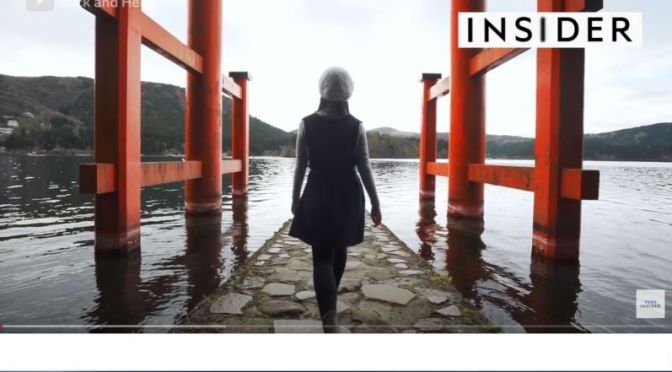
Culture: The Food, Sights & Architecture Of Japan

From wandering between Tateyama’s Snow Wall to spending a night in a Koyasan temple, we take you through Japan’s travel spectrum showing the best food places, architecture, sights, thrills, and shopping experiences.

Food – Dotonbori District: The Dotonbori district is the most colorful area in Osaka. When visiting you must try takoyaki and okonomiyaki. Shin-Yokohama Raumen Museum: Taste nine different types of ramen at the world’s first food-themed amusement park.

Architecture – Koyasan: Temples and shrines can be found all throughout Japan. Tourists can experience Buddhist lifestyle through traditional practices by spending a night in a Koyasan temple. Reversible Destiny Lofts: The space is meant to challenge your mind and body to interact with your living space in a new way to allow new possibilities daily. It is made up of only three shapes. Shirakawa-go Village: Declared a UNESCO World Heritage site in 1995 for its gassho-zukuri houses, the thatched roofs without nails are symbolic of hands pressed together in prayer.

Sights – Tateyama Snow Wall: The Snow Corridor of Tateyama rises up to 65 feet. Bonin Islands: During the second world war, the islands were used as military bases, so if you enjoy diving, you are likely to see many shipwrecks. Nagano’s Jigokudani Monkey Park: In Nagano’s Jigokudani Monkey Park there are no barriers. These monkeys are the only ones in the world that enjoy bathing in hot springs.

Thrills – Hokkaido: Hokkaido has light, powdery snow perfect for snowboarding or skiing in the winter. Yonaguni: Nevertheless, the Yonaguni monument requires a 9 to 52 foot dive to reach the bottom, and it is recommended that you have at least 100 hours of logged diving experience.

Shopping – Kanazawa: This city is most famous for its teahouses and geisha and samurai districts, along with its gold leaf production. Akihabara: Akihabara, also known as Electric Town, is a hub for all things electronics, game paraphernalia, anime, and manga. Canal City: Called a city within a city, Canal City is a large shopping mall and entertainment center in Fukuoka.

Top Architectural Tours: ‘Shelter Island, New York’

91 Ram Island Drive is the culmination of twenty years of work by internationally renowned architect William Pedersen. A triumph of contemporary design and expertly crafted by Wright and Company Construction, the house sits on almost 3 acres of rolling native meadow that gently slopes onto over 220 feet of pristine beach, with Gardiners Bay beyond.

Based on a multi-axis linear framework and emphasizing the contrasting textures of the primary building materials of concrete, wood, copper and bluestone, the structure is at once both awe-inspiring and effortlessly comfortable. Set at the convergence of three distinct landmarks – the lighthouse in Gardiners Bay, Gardiners Island and the entrance to Coecles Harbor – an unparalleled 360-degree panoramic view unfolds in front of the property.

The house itself seems to rise like an island from the water, as was the conceptual inspiration for the design. Clad in stone and sheets of standing seam copper, the 3-bedroom residence offers an open flow between the public spaces at the heart of the home, the expansive outdoor entertaining areas that define the summer lifestyle and the long passageway of the private bedroom wing. Singular in design and function, 91 Ram Island Drive is, in every sense, a habitable work of art.

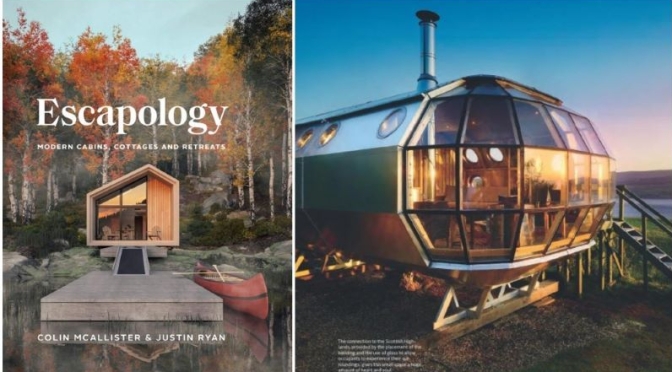
New Architecture Books: ‘Escapology – Modern Cabins & Cottages’ (2020)

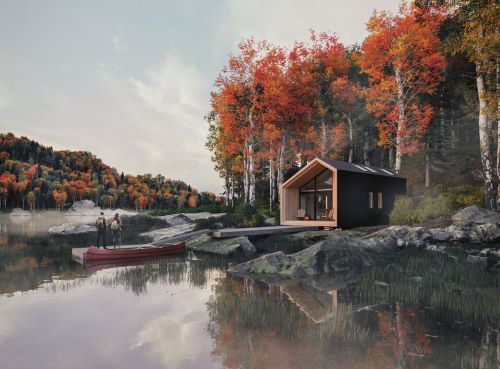
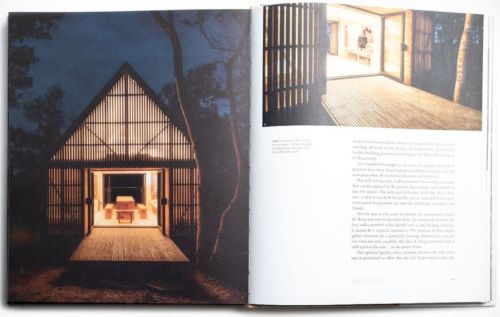
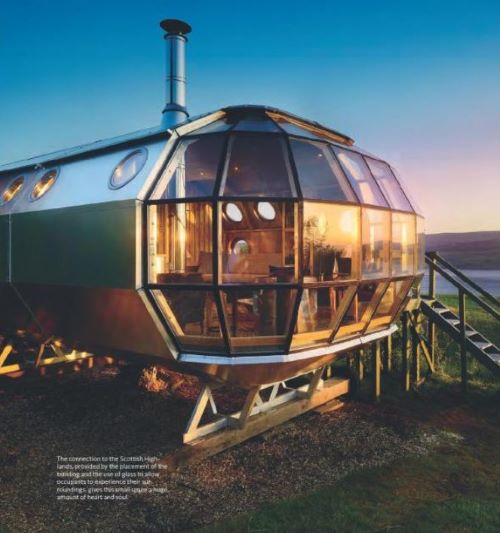
Escape from 2020 and give your mind a getaway with Escapology: Modern Cabins, Cottages and Retreats. Curated by Colin McAllister and Justin Ryan, the 265-page book takes you to 24 dreamy homes around the world where you can mentally cozy up around a wood-burning fire and immerse yourself in mother nature.

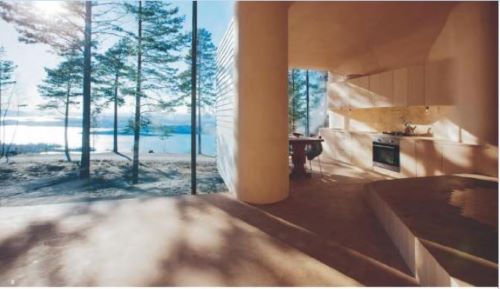
One minute you’ll be in a rugged mountain lodge and the next you’re held up in a minimal Scandinavian cabin surrounded by foilage. The duo even highlights their own retreat on Ontario’s Drag Lake. Filled with impressive photographs, this book might even inspire you to turn your own abode into your dream retreat.

Colin McAllister and Justin Ryan―Scottish interior designers, TV hosts, and property speculators―are cabin aficionados who divide their time between homes in Canada and their beloved Scotland. iEscapology: Modern Cabins, Cottages and Retreats is a stunning book of modern-day retreats―bucolic weekend escapes by the sea, remote getaways in the woods, and rustic mountain hideouts―to inspire peaceful and quiet living. The authors genuinely believe that cabin time has a remarkably positive impact on our health, wellbeing and our happiness.

Whether it’s a rustic cottage nestled deep within a Nordic forest, a robust mountain lodge in Montana, a breathtaking treehouse in Canada, or a steel-walled, one-room “hotel” in Denmark, these retreats share one vital aspect in common: they proffer the chance to escape and to and live in harmony with nature, far from the madding crowd. Part style bible and lifestyle manual, the book features a beautiful collection of classic and contemporary cottages and cabins, each accompanied by an informative design profile and beautifully photographed images.

And of course, the book is also packed with practical building and design advice that fans of Colin and Justin have grown to love. You’ll find relevant information about different types of dwelling styles, builds, sustainability/off-grid living, tiny homes, renovation on a budget, room zonings, décor and everything in between.

Read more

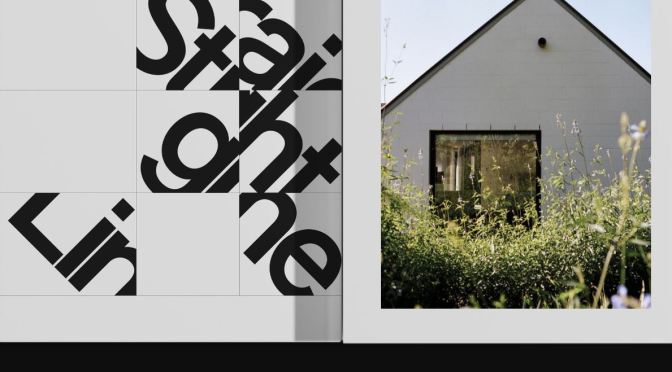
1960’s New Zealand Homes: ‘I never met a straight line I didn’t like’ (Book review)

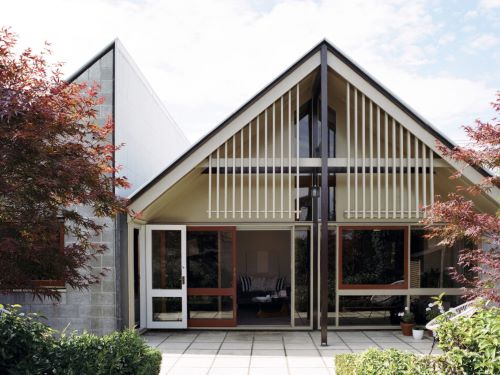
During the 1960s, Christchurch, New Zealand exploded with a creative force which developed into a distinct style of architecture that was widely admired and imitated and remains influential today.

This is a book about a modern architectural movement that bubbled up in a small, conservative city at the bottom of the world.

For a decade Christchurch architects worked with a potent energy and urgency, creating hundreds of homes (and many of New Zealand’s best public and commercial buildings) in a regional style that is arguably the closest thing the country has to a modern indigenous style of architecture. 

The 12 homes illustrated in the book are just a small representation of the style and architects of the period. They remain as intact examples of the ideas, materials and optimism of the time.

Article reviewing book

Read more or purchase book

Books: ‘Out Of The Woods – Architecture & Interiors Built from Wood’ (2020)

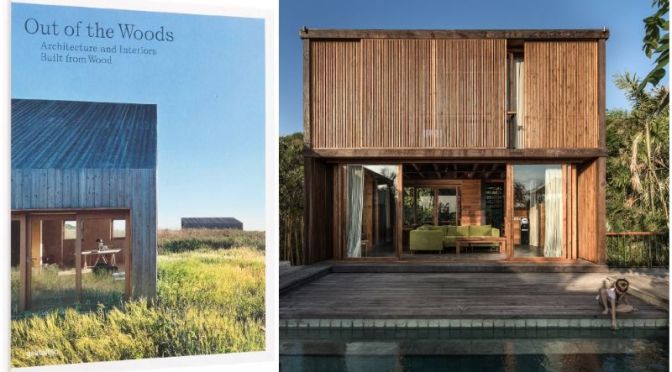
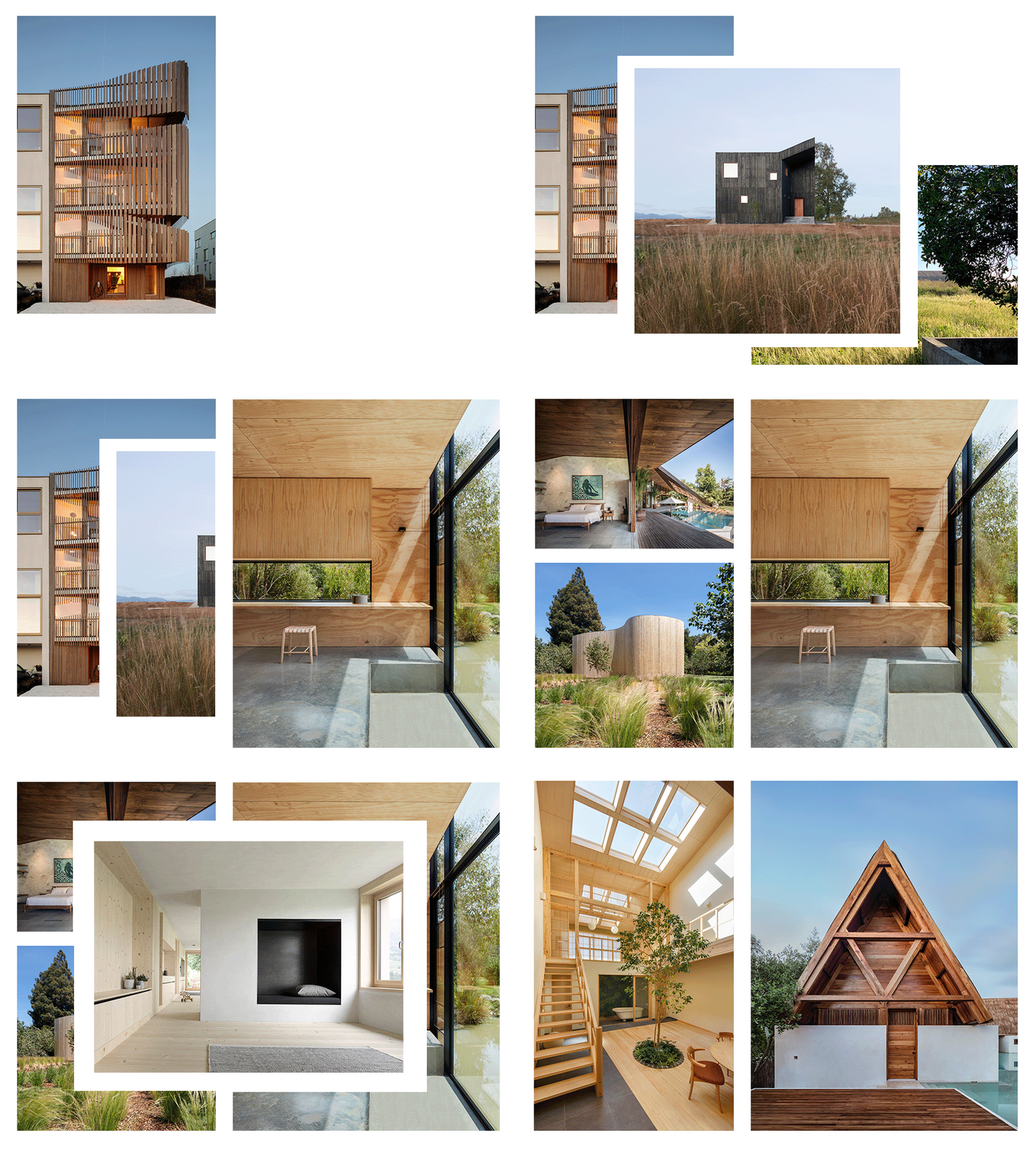
This book explores the innovative and inspiring ways architects are using this universal building material. Spanning grand Alpine escapes to tropical getaways, plywood penthouses to mass timber high-rises, Out of the Woods documents their progressive and inspiring creations from the foundations up.

Humans have been building homes from wood for thousands of years, and yet, in a contemporary world of option and innovation, the most primitive resource could in fact be the most pertinent.

Stretching back to historic Japanese houses, becoming synonymous with resort accommodation, and intertwining itself in the modern trend of hygge, its tactility and warmth have influenced countless architectural design movements. Timber is fast emerging as a viable material of choice, a safe, sturdy, and sustainable alternative to concrete. Architects are rediscovering wood’s universal appeal, thanks to recent technological advances.

Read and see more