Tag Archives: 20th Century

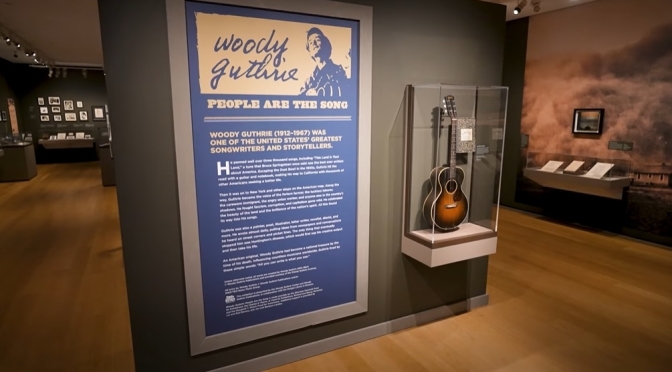
Exhibits: ‘Woody Guthrie – People Are The Song’ At The Morgan Library, NYC

The author of more than three thousand folk songs, Woody Guthrie (1912–1967) is one of the most influential songwriters and recording artists in American history. He is an icon of the Depression era and wrote the world’s most famous protest song, “This Land Is Your Land.”

But he was not only a songwriter, and his subject matter extended well beyond labor politics. The full corpus of his creativity—including lyrics, poetry, artwork, and largely unpublished prose writings—encompassed topics such as the environment, love, sex, spirituality, family, and racial justice. Guthrie created a personal philosophy that has impacted generations of Americans and inspired musician-activists from Pete Seeger and Bruce Springsteen to Ani DiFranco and Chuck D. As Bob Dylan noted of Guthrie, “You could listen to his songs and actually learn how to live.”
20th Century: Was Francis Bacon The Best Painter?

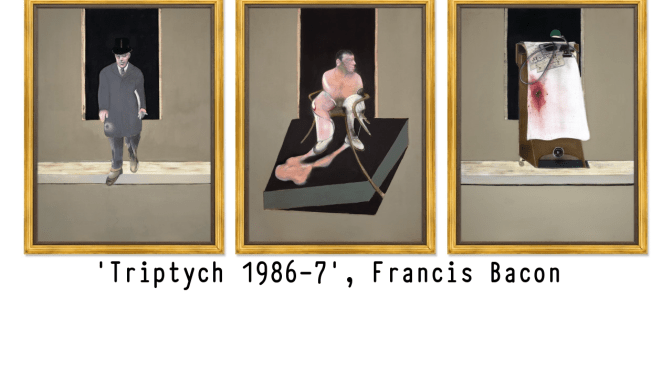
Is Francis Bacon really the greatest painter of the 20th century?

Triptych 1986-7 (detail)

It was not an enormous surprise that an exhibition of works by Francis Bacon at the Royal Academy that is supported by Christie’s should swiftly be followed by an announcement of the auction house offering a large work for sale. Triptych 1986-7, whose central panel depicts the artist’s partner John Edwards, with Woodrow Wilson on one side and the assassinated Trotsky’s study on the other, is being offered in the sale that takes place on 1 March with an estimate of £35m–£55m. Nor is it a surprise that an auction house should drum up interest in one of their lots using superlatives. But Rakewell was a little taken aback by the claim on Instagram from a Christie’s specialist that ‘Francis Bacon is unmistakably on of the greatest painters of the 20th century.’

Read more

Christmas Tours: The Elms In Newport, Rhode Island

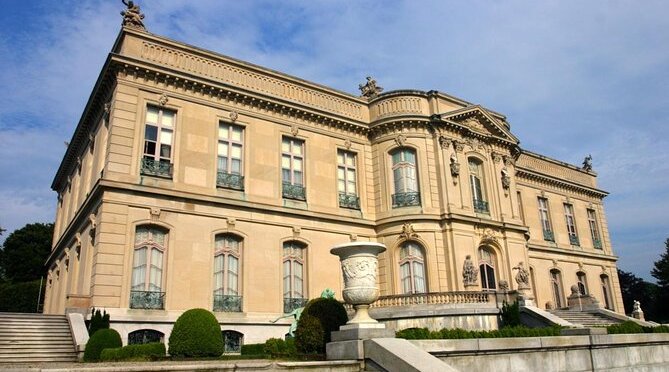
The Elms was the summer residence of Mr. and Mrs. Edward Julius Berwind of Philadelphia and New York. Mr. Berwind made his fortune in the coal industry. In 1898, the Berwinds engaged Philadelphia architect Horace Trumbauer to design a house modeled after the mid-18th century French chateau d’Asnieres (c.1750) outside Paris.

Construction of The Elms was completed in 1901 at a cost reported at approximately $1.4 million. The interiors and furnishings were designed by Allard and Sons of Paris and were the setting for the Berwinds’ collection of Renaissance ceramics, 18th century French and Venetian paintings, and Oriental jades.

The elaborate Classical Revival gardens on the grounds were developed between 1907 and 1914. They include terraces displaying marble and bronze sculpture, a park of fine specimen trees and a lavish lower garden featuring marble pavilions, fountains, a sunken garden and carriage house and garage. These gardens were recently restored.

Mrs. Berwind died in 1922, and Mr. Berwind invited his sister, Julia, to become his hostess at his New York and Newport houses. Mr. Berwind died in 1936 and Miss Julia continued to summer at The Elms until her death in 1961, at which time the house and most of its contents were sold at public auction. The Preservation Society of Newport County purchased The Elms in 1962 and opened the house to the public. In 1996, The Elms was designated a National Historic Landmark.

Mid Century Modern: 1956 Desert Sun House, Rancho Mirage, California (Video)

Architect Richard Leitch from the USC School of Architecture isn’t spoken about too often however his work speaks volume. From The Hillsides of Altadena to the dry landscapes of the desert you can find some of Richard’s work throughout Southern California. Avid Car lover Joe Tseng found himself entrenched in a year-long restoration/Remodel of his current home ‘ The Desert Sun House’, a project which he wanted to share with his son Tyler. They’ve saved and transformed the home into what you see today, A classic home filled with rich History and thoroughly enjoyed by its new owners.

Books: “The Grand Tour – The Golden Age Of Travel”

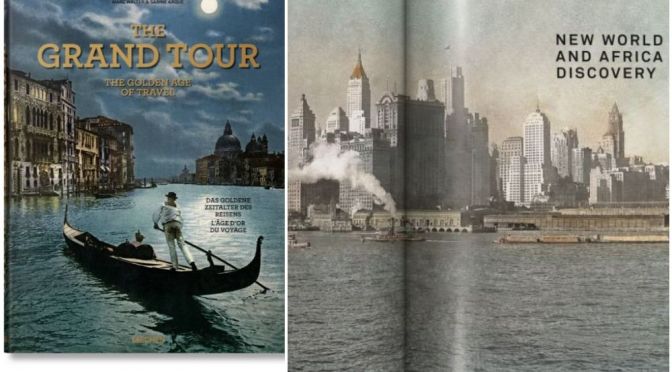
This richly illustrated volume charts the travel heyday of 1869 to 1939. Bedecked with ephemera and precious turn-of-the-century photochroms, it follows six classic tours favored by Western adventurers in the prewar era, including such famous traveler-writers as Charles Dickens, Jules Verne, F. Scott Fitzgerald, Mark Twain, and Goethe. 

The Grand Tour

Rediscover the golden age of adventure

Global travel can be a wearying business: mass tourism, overcrowded planes, chaotic airports, heightened security, cookie-cutter hotel chains, well-worn tourist trails. Finding even a sliver of adventure can sometimes feel impossible. But take heart: for all of us with an unfulfilled spirit of wanderlust, The Golden Age of Travel evokes an era when traveling the world was a thrilling new possibility for those with the resources, time, imagination, and daring.

 From the Grand Tour of Europe, a traditional rite of passage for young English aristocrats, to the Far East, barely touched by Western influence, to the famous Trans-Siberian Railway, we follow each journey through its itinerant stops and various modes of transport: trains, boats, cars, planes, horses, donkeys, and camels.

With pages brimming with archival travel posters, guides, tickets, leaflets, brochures, menus, and luggage stickers, the book evokes all the romance, elegance, not to mention the sheer sense of novelty, that enthralled these golden-age passengers. Through decadent new cities, or wild, rugged terrains, this is your passport to a long-lost epoch of adventure and wide-eyed wonder at the world.

Read more

Profiles: British Painter William Lee-Hankey – ’19th Century Rural France’

William Lee Hankey RWS, RI, ROI, RE, NS was a British painter and book illustrator. He specialised in landscapes, character studies and portraits of pastoral life, particularly in studies of mothers with young children such as “We’ve Been in the Meadows All Day”. 

Architectural Views: ‘The Seagram Building’ By Mies Van Der Rohe (NYC, 1956)

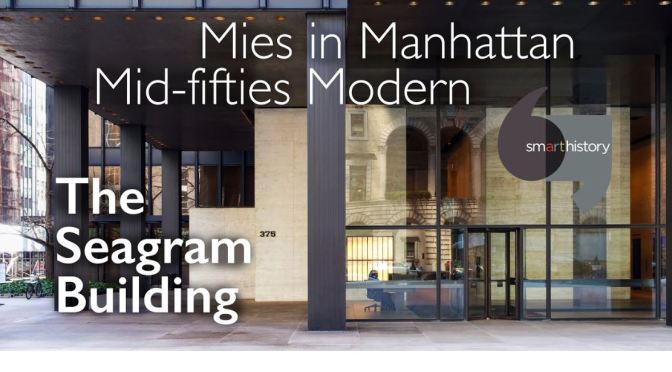
The Seagram Building is a skyscraper at 375 Park Avenue, between 52nd and 53rd Streets, in Midtown Manhattan, New York City. The building, completed in 1958, stands 515 feet tall with 38 stories and a large plaza. 

Ludwig Mies van der Rohe was a German-American architect. He was commonly referred to as Mies, his surname. Along with Alvar Aalto, Le Corbusier, Walter Gropius and Frank Lloyd Wright, he is regarded as one of the pioneers of modernist architecture.

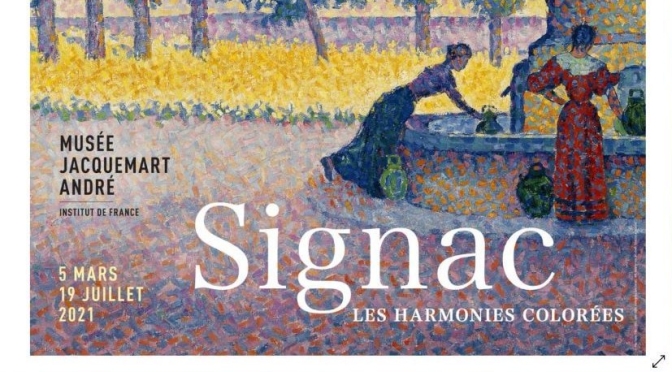
Paris Exhibitions: ‘Signac – The Colored Harmonies’ Musée Jacquemart-André

Signac, Colored Harmonies – From March 26 to July 19, 2021

In 2021, discover the work of Paul Signac (1863 – 1935), master of landscape and main theorist of neo-impressionism, through nearly 70 works from the finest collection of neo-impressionist works in private hands. Alongside 25 of his paintings such as Avant du Tub (1888), Saint-Briac. Les Balises (1890), Saint-Tropez. After the storm (1895), Avignon. Matin (1909) or Juan-les-Pins, Soir (1914) and around twenty watercolors, the exhibition will present more than twenty works by Georges Seurat, Camille Pissarro, Maximilen Luce, Théo Van Rysselberghe, Henri-Edmond Cross , Louis Hayet, Achille Laugé, Georges Lacombe and Georges Lemmen.

The entire exhibition will follow a chronological route, from the first impressionist paintings painted by Signac under the influence of Claude Monet to the brightly colored works produced by the artist in the 20th century, including his meeting with Georges Seurat in 1884. The exhibition, which will retrace the life of Signac and his work to liberate color, will also evoke the history of neo-impressionism.

Website

Candy Business: ‘How Wrigley’s Dominated Chewing Gum’ (Video)

Gum lines the pockets of most Americans and has been a staple in American culture for centuries. For some, gum is all about flavor, and for others, it’s about fear of bad breath, curbing hunger, or alleviating anxiety. For nearly 130 years, the brand Wrigley’s has become synonymous with chewing gum.

Since its start, the gum maker has dominated the chewing gum market, spawning brands from Juicy Fruit to Orbit to 5 Gum. But it hasn’t always been smooth sailing for the William Wriglely Jr. Co.; over its storied past, the brand has faced turbulent years. Since the early 2000s, the chewing gum market has seen a decline in public sentiment, which hurt significant players. In 2006, the company ended its long-standing tradition of being a family run business with William Wrigley Jr. stepping down as CEO.

By 2008, Wrigley’s faced increasing global competition and was acquired by Mars along with Warren Buffett’s Berkshire Hathaway. According to Euromonitor International, the gum industry’s market value hit $18.6 billion in 2020. Since 2015, Mars Wrigley has held 25% of the global brand share for chewing gum and a 40% portion in the U.S. The Covid-19 pandemic since it began in March 2020 has negatively impacted gum’s most prominent players and could negatively affect Mars Wrigley gum brands’ future.