Tag Archives: 17th Century

SILENCE AFTER THE BELL

Bashō’s narrow road, re-imagined in ink and light

By Michael Cummins, Editor, September 24, 2025

In the spring of 1689, Matsuo Bashō set out from Edo with his inkstone and his disciple, walking north through Japan’s interior. This essay imagines the painter Ogata Kōrin at his side, brush catching what haiku left unsaid: the lantern’s glow, a fox’s mischief, the silence after sound.

The morning I left Edo, the sky was thick with petals. Cherry blossoms fell in sudden gusts, scattering across canals and clinging to the backs of merchants. Someone in the crowd said my name. “Bashō—the man of stillness.” The words felt like a shroud. Stillness was not peace. Stillness was suffocation.

I carried only a robe, a small pack, and my inkstone. I gave no notice, offered no farewell. A poet should know the difference between an entrance and an exit, and Edo was drowning in entrances—recitations in smoky salons, verses pinned to pillars, applause echoing in courtyards. To slip away silently was my only true poem.

Sora, my disciple, waited by the gate, his journal tied at his side. Beside him stood Ogata Kōrin, carrying brushes wrapped in cloth, a small box of pigments, and sheets of fine paper. He was famed for painting bold pines and cranes against gold, but he wanted to walk with us, to see if paint could keep pace with words.

“You walk for silence,” he said as we stepped into the road.

“And you?” I asked.

“I will paint the sound.”


A crow on a bare branch—
autumn evening.

Walking unstitched illusions. You cannot hurry rain. You cannot plead with a mountain. Each step was a reminder of smallness.

Oku—the interior—was more than geography. It was the hidden chamber within things. To walk north into deep country was to step into the interior of myself.

The road gave humility: a thin robe against spring wind, an empty belly by sundown, blistered feet in straw sandals. Hunger was not a lack but a space for the world to fill. Only when stripped of comfort could I hear the world breathe.


By the second month, rains thickened. Each evening Sora dried our sandals by the inn’s hearth, though by morning they were heavy again.

At a mountain temple, a monk struck the great bell. The sound swelled, then emptied into air.

“Not the ringing,” he whispered, “the silence after—that is the true temple.”

Kōrin ground his ink and left behind a circle fading into white paper. I looked at it and felt the hush expand. His first gift of the journey.

Pine shadow—
the road bends
to meet it.


Summer pressed down like a hand. Cicadas shrieked in the trees, their chorus burning itself away. At a roadside inn, a farmer’s wife handed me a bowl of barley and salt.

“Why walk in this heat?” she asked.

“To see what words cannot hold,” I said. She laughed, shaking her head.

That night, I listened to the cicadas outside the window. Kōrin painted their wings in silver strokes. Sora struggled to describe them, blotting his brush, sighing. Not every moment can be pinned to the page.

One afternoon, a girl chased dragonflies, sleeves spread like wings. She caught none, but her laughter rang sharper than capture. Kōrin caught her mid-flight in vermilion. He pressed the paper into Sora’s hands. “If you cannot hold it with words,” he said, “let color remind you.”


We reached Matsushima, where pine-covered islets scattered like jewels across the bay. Some places do not need words. Kōrin’s blues and greens glowed even at dusk.

That night, fireflies pressed against the paper walls of our hut, their glow brighter than the lamp. I set down my brush. Some nights call for silence more than lines.

Later, in a fishing village, I collapsed with fever. A fisherman’s wife placed cloths on my brow and whispered prayers to the sea.

When I woke, Kōrin held out a small painting of a lantern’s glow against dark waves. The flame was steadier than I had felt in days.

Lantern flickers—
the sea’s hush louder
than my pulse.


By August, the barley fields had turned gold. The harvest moon rose red above the stubble. Villagers poured sake and sang. A boy ran over with a cup. “Drink, master!”

“The moon is already enough,” I said.

Snow still lingered in the high passes. The mountain does not flatter. It does not care if a man is poet or beggar. It accepts only attention.

Winter gust—
even the inkstone
holds the wind.


Crossing a frozen river, I slipped. A peasant caught my arm. “Careful, master. The ice breaks without warning.”

“So does the self,” I said.

Even in silence, the self lingered like a shadow. I imagined my words drifting northward, reaching readers yet unborn. But the further I walked, the thinner that dream became. What immortality is there in syllables, when rivers change their course and mountains crumble?

In Edo, applause had filled the air like thunder. On the road, there was only silence. Silence wounds, but it also heals.

The answer came not in thunder but in a sparrow’s wing. Write not to endure, but to attend. Not for tomorrow, but for now.


Near a riverbank, a boy approached with a scroll of verses. “Master, how do I make my poems last?”

“Write what you see,” I said. “Then write what you feel when you see it. Then tear it up and walk.”

The boy bowed. Kōrin added, softly: “Or paint the emptiness left behind.”

River mist—
the boy’s scroll
left unopened.


In the mountains I met a man from the north whose dialect I could not follow. He pointed to the sky, then to the river, then to his chest. We shared tea in silence. I realized then that language is not the vessel, but the gesture. Poetry lives in the space between.

One morning, I watched a fox dart through a field, a rice ball clutched in its mouth. The farmer cursed, but I laughed. Even hunger has mischief. Kōrin’s brush caught the moment in quick ink.

Fox in the field—
the rice ball warmer
than the sun.


Toward the end of our walk, Sora counted the ri that remained. “Two thousand and more behind us,” he said. His journal pages were full of weather, distances, small observations.

“I counted shadows,” I told him. “I counted pauses.”

Kōrin smiled. “I painted both.”

At last, beneath a cedar, I placed the inkstone on my lap and listened. Snow weighed heavy on the branches. The air was sharp with winter. The wind moved through ridges and needles and into the hollow of the stone. For a moment it seemed the ink itself stirred.

I wrote one last haiku, not as conclusion but as surrender. The road has no end. Only pauses where breath gathers.

Wind in the cedar—
the inkstone deepens
into silence.


When these fragments later formed Oku no Hosomichi, I wondered what I had left behind. Not a record of steps, but a trace of listening. The form belonged not to me but to the rhythm of walking.

Kōrin returned to Edo with his scrolls. I with my scattered lines. Yet three small works stayed with me: the fading bell, the glowing lantern, the fox with his rice ball. They were his haiku in color, brief offerings to impermanence.

If others take their own narrow roads, let them not follow our footsteps but their own shadows. The road is never the same twice. Neither traveler nor mountain remains unchanged.

Perhaps one day, a traveler will walk with a pen of light, or a scroll made of glass. They will pause beneath a cedar, not knowing my name, not knowing Kōrin’s brush, but feeling the same hush. The road will whisper to them, as it did to us. And they will listen—not to the words, nor the colors, but to the breath between.

Digital ink—
the silence still.

THIS ESSAY WAS WRITTEN AND EDITED UTILIZING AI
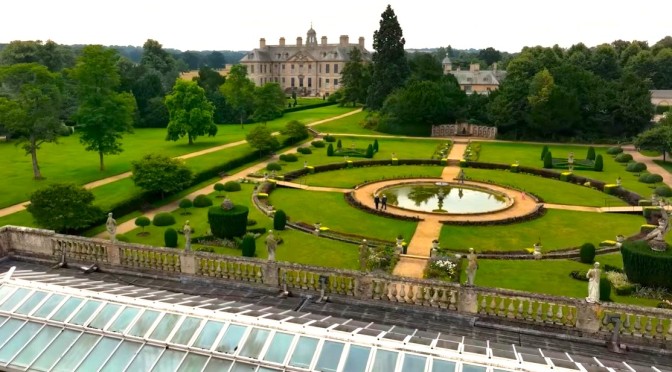
Historic Tours: Belton House In Lincolnshire, UK

National Trust (August 23, 2023) – A behind the scenes at Belton House in Lincolnshire, built between 1685 and 1687 by Sir John Brownlow, which is looked after by the National Trust.

A filming location for Queen Charlotte: a Bridgerton Story, this 17th-century home has been used as a set for many popular TV series and movies. Belton can be seen in the 1995 production of Pride and Prejudice starring Colin Firth and, most recently, has featured as King George III’s palace in the Bridgerton universe.

Along with a tour of some familiar scenes from the silver screen, you’ll take a closer look at a jewel in the furniture collection – a one-of-a-kind lapis lazuli cabinet. A deep blue gemstone, lapis lazuli has been used as decoration for centuries – perhaps most notably in the funerary mask of Tutankhamun. For a cabinet to be almost entirely covered in the material makes it an extremely rare object.

English Country Estates: A Tour Of Denham Place

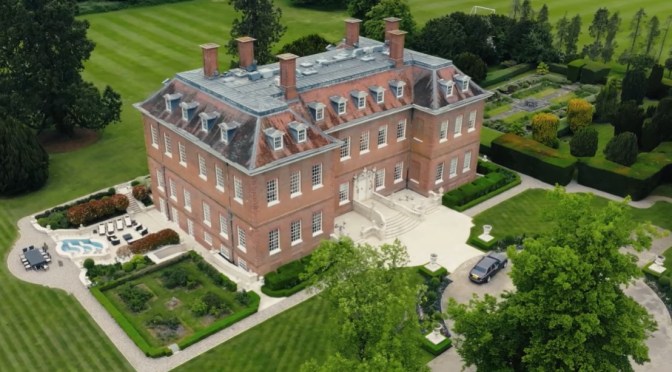
Architectural Digest (July 6, 2023) – A tour of Denham Place, a 17th-century country estate situated just 30 minutes from central London. Built in 1688, this historic property is on the market for £75,000,000 and has just completed an extensive 8-year restoration.

An incredible 12 reception rooms, 12 bedrooms, 14 bathrooms, and grounds inspired by Versailles, make this stately home palatial–and with past residents including the Bonaparte Imperial family, it is a house truly fit for royalty.

The house was constructed in 1688–1701 for Sir Roger Hill, and the architect was probably William Stanton. 

English Country Homes: ‘Compton End’, Hampshire

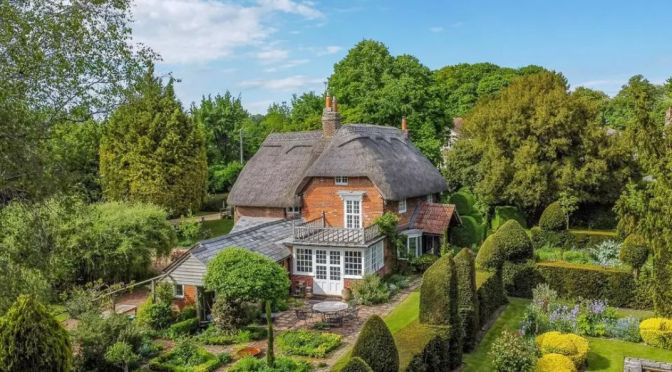
Country Life Magazine (June 8, 2023) – Originally built in the 17th century, Compton End in the village of Compton caught the eye of the architect George Herbert Kitchin, who extended the house in the late 19th century and created the magnificent Arts-and-Crafts garden. He lived at the property until his death in 1951.

The gardens are marked by a combination of formality and informality. Clipped yew hedges and topiary contrast with abundant naturalistic planting. Vistas lead through rectangular areas with straight paths and borders, a pond, and then a croquet lawn, to fields and woods beyond. Less formal areas have winding pathways and there are also wildflower meadows and fruit trees. The rendered brick summer house has fine views from all sides. Next to the house is a recently rebuilt timber framed barn for use as a garage and workshop. There is ample parking on the gravel drive.

Winchester is a city in the county of Hampshire, on the edge of England’s South Downs National Park. It’s known for medieval Winchester Cathedral, with its 17th-century Morley Library, the Winchester Bible and a Norman crypt. Nearby are the ruins of Wolvesey Castle and the Winchester City Mill, a working 18th-century corn mill. The Great Hall of Winchester Castle houses the medieval round table linked to King Arthur. 

READ MORE

Waterway Travel: Hotel Barge ‘Renaissance’ On The Canal de Briare In France

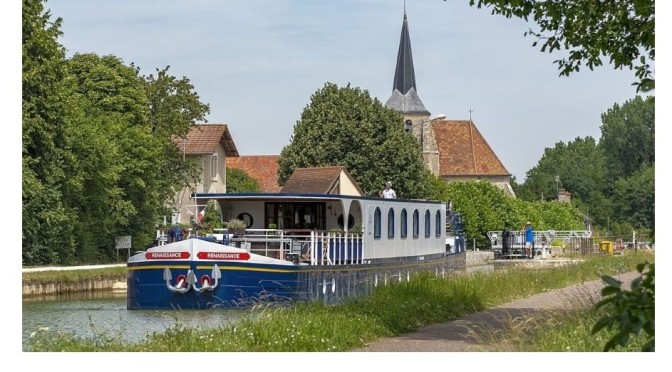
European Waterways – Luxury hotel barge Renaissance has been designed to carry 8 guests in ultimate luxury along the Canal de Briare, France’s oldest canal, completed in 1642 and steeped in history on a cruise route that features elegant châteaux, small countryside villages and the famed wine-growing region of Sancerre.

She is a very spacious hotel barge and the beautifully appointed saloon with its wooden beams, classic dining furniture and artwork, invokes the atmosphere of a classic French manor house. The comfortable leather sofas and hand-built bar where you can enjoy your pre-dinner aperitif, add to the feeling of onboard opulence. The ‘Renaissance mood’ extends to the four very generously sized twin- or double-bedded bedroom suites, (approx. average 250sq ft including en suite), each one fully air-conditioned and complemented by a large en suite shower room.

Outside, the large forward deck includes a covered roof extension with a circular table for alfresco dining, comfortable hardwood sun loungers and a heated spa pool. With her refined onboard ambience, Renaissance is the perfect vessel on which to cruise a historic canal and experience the splendour of landmarks en route, including Gustav’s Eiffels’s aqueduct across the mighty River Loire.

CRUISE HIGHLIGHTS:

  • – Visit the “time capsule” studio home of 19th century artist Rosa Bonheur and lunch in her salon
  • – Tour of the privately-owned Château de La Bussière, including a cooking demonstration using seasonal produce from the gardens
  • – 7-lock flight at Rogny-Les-Sept-Ecluses, a national historic monument – Cruise across the aqueduct at Briare, built by Gustave Eiffel over the River Loire
  • – Private wine tasting at the renowned Sancerre winery of La Perriere – Excellent opportunities for walking and biking. Biking Plus option available

Read more

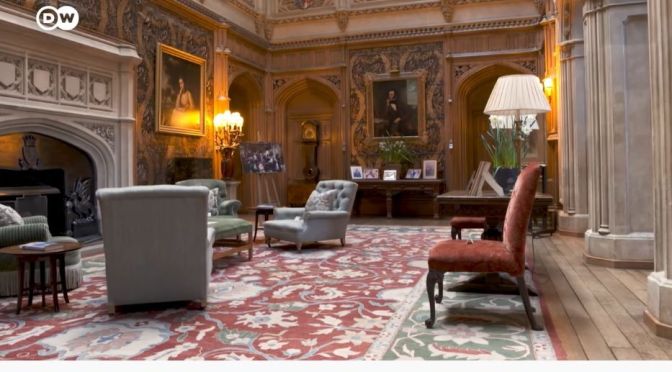
Tours: Highclere Castle Of ‘Downton Abbey’ Fame

Downton Abbey has become THE British cult series. The story about the fate of a noble family and their servants at the beginning of the 20th century in Yorkshire, England, is even set in a real palace: Highclere Castle. There aren’t servants anymore, but it still has a countess. The lady of the house takes us on an exclusive tour of the castle where Downton Abbey has been shot. Some of the locations may look familiar, especially since the second film is now being released after six successful seasons on TV.

Highclere Castle is a Grade I listed country house built in 1679 and largely renovated in the 1840s, with a park designed by Capability Brown in the 18th century. The 5,000-acre estate is in Highclere in Hampshire, England, about 5 miles south of Newbury, Berkshire, and 9.5 miles north of Andover, Hampshire.

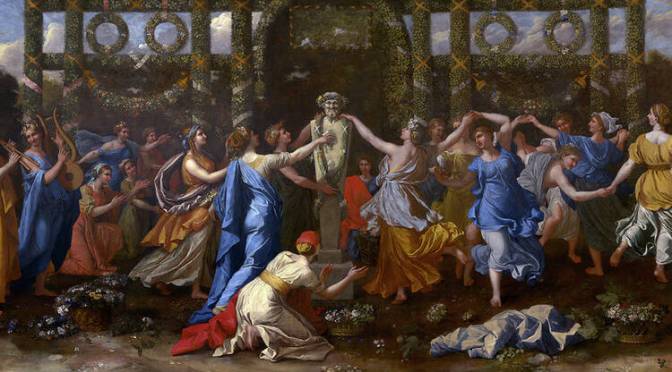
Art History: ‘Poussin And The Dance’ (The Getty)

“One of the hopes of this exhibition was really to try to enlist visitors’ bodily experience in their understanding of these works of art that can sometimes seem a little bit like they live entirely in our heads, a little bit intellectualized.”

Although Nicolas Poussin is widely regarded as the most influential painter of the 17th century—the father of French classicism—he is not as well-known as many of his contemporaries, such as Rembrandt, Rubens, and Caravaggio. This is due, in part, to Poussin’s austere painting style and erudite subject matter, which often came from Roman history or the Bible. As a result, his work can sometimes feel a bit cold or remote to today’s audiences.

But earlier in his career, Poussin was inspired by dance. His paintings of wild revelry, filled with dancing satyrs and nymphs, emerged as his signature genre from that time. Poussin and the Dance, organized by the Getty Museum and the National Gallery in London, is the first exhibition to explore the theme of dance in Poussin’s work. By supplementing his delightful dancing pictures with new dance films by Los Angeles–based choreographers—this unique exhibition invites viewers into the world of Poussin in a fresh, relatable way.

In this episode, Emily Beeny, curator in charge of European paintings at the Fine Arts Museums of San Francisco and curator of Poussin and the Dance, joins Sarah Cooper, public programs specialist at the Getty, to delve into Poussin’s process and love of dance.

The exhibition, which received generous support from the Leonetti/O’Connell Family Foundation and is sponsored by City National Bank, is on view at the Getty Center through May 8, 2022.

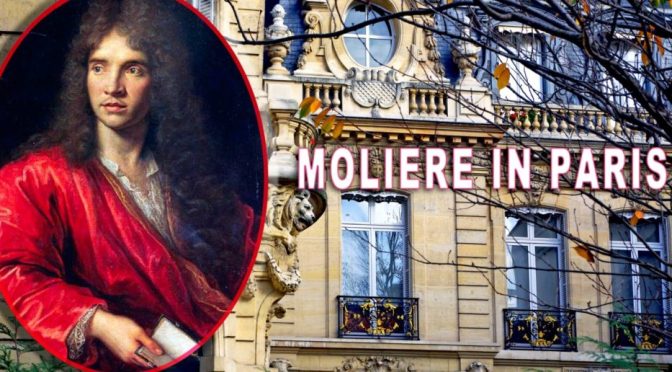
History: Legacy Of French Playwright Molière

He’s known as the father of French #theatre, but the influence of #Molière goes well beyond France. His impact is still felt today all over the world. To mark the 400th #anniversary of the famed playwright’s birth, we speak to Georges Forestier, professor at the Sorbonne and a specialist in the works of Molière. We also take you on a tour of Molière’s Paris.

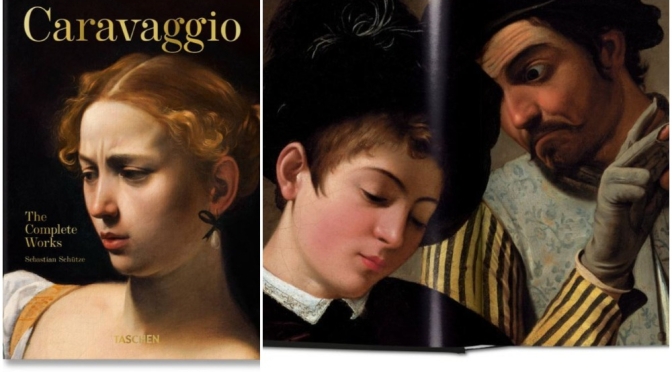
Art Books: ‘Caravaggio – The Complete Works’

Caravaggio, or more accurately Michelangelo Merisi da  Caravaggio  (1571–1610), was always a name to be reckoned with. Notorious bad boy of Italian painting, the artist was at once celebrated and controversial: violent in temper, precise in technique, a creative master, and a man on the run. Today, he is considered one of the greatest influences in all art history.

This edition offers a neat and comprehensive Caravaggio catalogue raisonné. Each of his paintings is reproduced from recent top-quality photography, allowing for a vivid encounter with the artist’s ingenious repertoire of looks and gestures, as well as numerous detail shots of his boundary-breaking naturalism. Five accompanying chapters trace the complete arc of Caravaggio’s career from his first public commissions in Rome through to his growing celebrity status and trace his tempestuous personal life, in which drama loomed as prominently as in his canvases.

The author

Sebastian Schütze was a longtime research fellow at the Bibliotheca Hertziana (Max Planck Institute for Art History) in Rome. He is a member of the academic board of the Istituto Italiano per gli Studi Filosofici in Naples, and a member of the Österreichische Akademie der Wissenschaften. From 2003 to 2009 he held the Bader Chair in Southern Baroque Art at Queen’s University in Kingston. In 2009 he was appointed professor of early modern art history at Vienna University.

New Art Books: ‘Vermeer – The Complete Works’

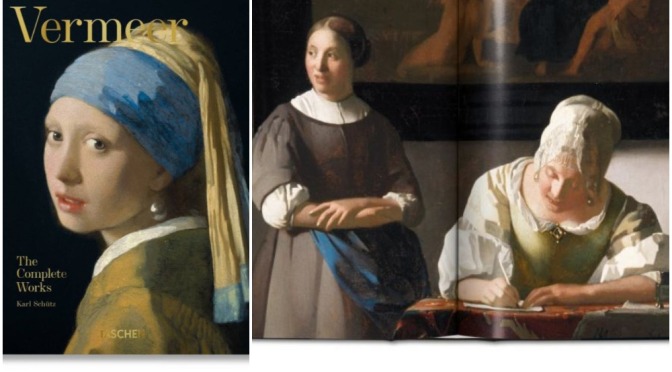
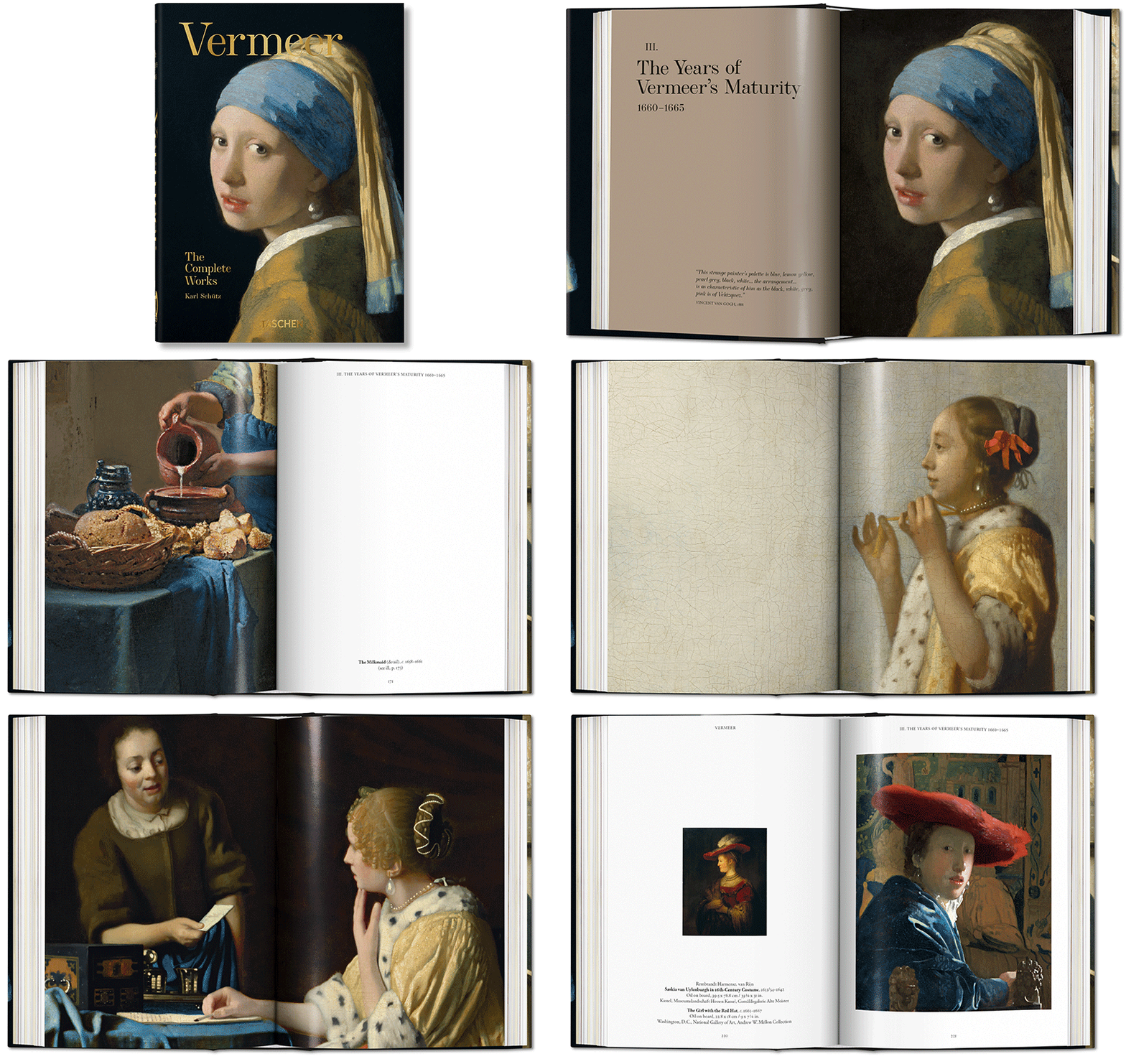
In his lifetime, however, the fame of Johannes Vermeer (1632–1675) barely extended beyond his native Delft and a small circle of patrons. After his death, his name was largely forgotten, except by a few Dutch art collectors and dealers. 

TASCHEN

Despite numbering at just 35, his works have prompted a New York Times best seller; a film starring Scarlett Johansson and Colin Firth; record visitor numbers at art institutions from Amsterdam to Washington, DC; and special crowd-control measures at the Mauritshuis, The Hague, where thousands flock to catch a glimpse of the enigmatic and enchanting Girl with a Pearl Earring, also known as the “Dutch Mona Lisa”.

Outside of Holland, his works were even misattributed to other artists. It was not until the mid-19th century that Vermeer came to the attention of the international art world, which suddenly looked upon his narrative minutiae, meticulous textural detail, and majestic planes of light, spotted a genius, and never looked back.

This 40th anniversary edition showcases the complete catalog of Vermeer’s work, presenting the calm yet compelling scenes so treasured in galleries across Europe and the United States into one monograph of utmost reproduction quality. Crisp details and essays tracing Vermeer’s career illuminate his remarkable ability not only to bear witness to the trends and trimmings of the Dutch Golden Age but also to encapsulate an entire story in just one transient gesture, expression, or look.

The author

After completing his studies of art history and archaeology at the University of Vienna, Karl Schütz joined the staff of the Gemäldegalerie of the city’s Kunsthistorisches Museum, serving from 1972 as a curator and from 1990 to 2011 as its director. His particular scholarly interests include Netherlandish and Flemish painting, early-16th-century German painting, courtly portraiture, and the history of the Gemäldegalerie collection.

Read more