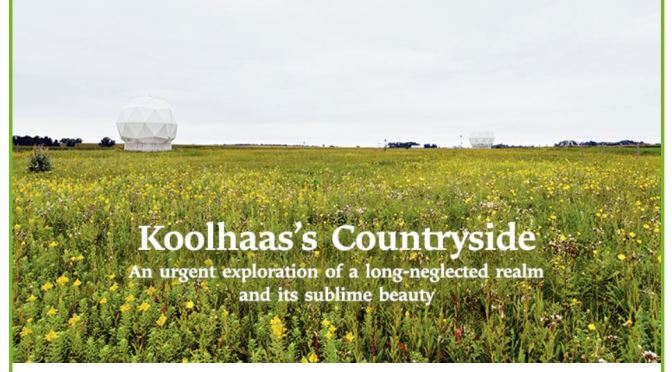
The rural, remote, and wild territories we call “countryside”, or the 98% of the earth’s surface not occupied by cities, make up the front line where today’s most powerful forces―climate and ecological devastation, migration, tech, demographic lurches―are playing out. Increasingly under a ‘Cartesian’ regime―gridded, mechanized, and optimized for maximal production―these sites are changing beyond recognition.
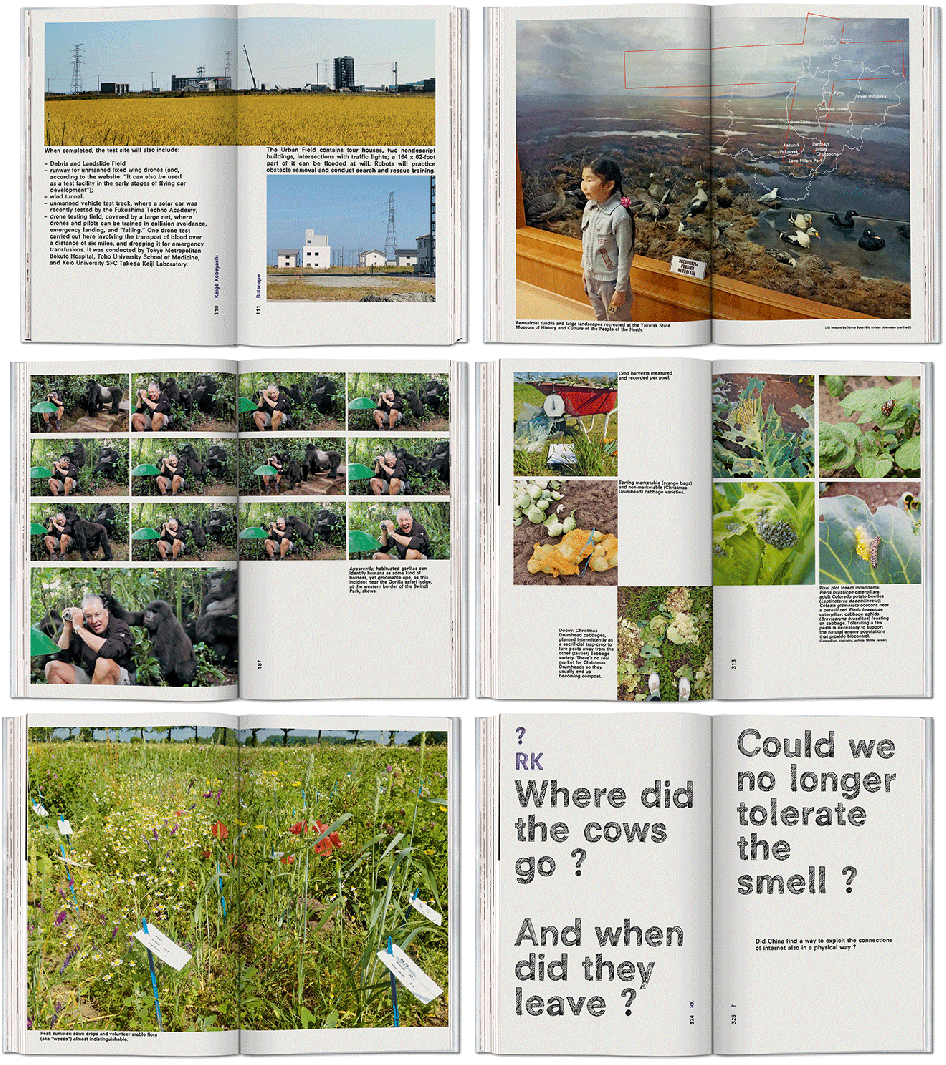
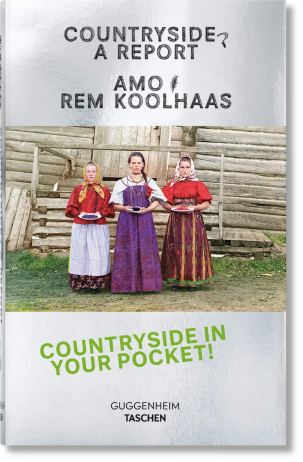 In his latest publication, Rem Koolhaas explores the rapid and often hidden transformations underway across the Earth’s vast non-urban areas.Countryside, A Report gathers travelogue essays exploring territories marked by global forces and experimentation at the edge of our consciousness: a test site near Fukushima, where the robots that will maintain Japan’s infrastructure and agriculture are tested; a greenhouse city in the Netherlands that may be the origin for the cosmology of today’s countryside; the rapidly thawing permafrost of Central Siberia, a region wrestling with the possibility of relocation; refugees populating dying villages in the German countryside and intersecting with climate change activists; habituated mountain gorillas confronting humans on ‘their’ territory in Uganda; the American Midwest, where industrial-scale farming operations are coming to grips with regenerative agriculture; and Chinese villages transformed into all-in-one factory, e-commerce stores, and fulfillment centers.
This book is the official companion to the Guggenheim Museum exhibition Countryside, The Future. The exhibition and book mark a new area of investigation for architect and urbanist Rem Koolhaas, who launched his career with two city-centric entities: The Office for Metropolitan Architecture (1975) and Delirious New York (1978). It’s designed by Irma Boom, who drew inspiration for the book’s pocket-sized concept, as well as its innovative typography and layout, from her research in the Vatican library.
The book brings together collaborative research by AMO, Koolhaas, and students at the Harvard Graduate School of Design; the Central Academy of Fine Arts, Beijing; Wageningen University in the Netherlands; and the University of Nairobi. Contributors also include Samir Bantal, Janna Bystrykh, Troy Conrad Therrien, Lenora Ditzler, Clemens Driessen, Alexandra Kharitonova, Keigo Kobayashi, Niklas Maak, Etta Madete, Federico Martelli, Ingo Niermann, Dr. Linda Nkatha Gichuyia, Kayoko Ota, Stephan Petermann, and Anne M. Schneider.
Read more or purchase

 “The finding in two randomised trials that advice to use ibuprofen results in more severe illness or complications helps confirm that the association seen in observational studies is indeed likely to be causal. Advice to use paracetamol (acetaminophen) is also less likely to result in complications.”
 Ian Jones, a professor of virology at the University of Reading, said that ibuprofen’s anti-inflammatory properties could “dampen down” the immune system, which could slow the recovery process. He added that it was likely, based on similarities between the new virus (SARS-CoV-2) and SARS I, that covid-19 reduces a key enzyme that part regulates the water and salt concentration in the blood and could contribute to the pneumonia seen in extreme cases. “Ibuprofen aggravates this, while paracetamol does not,” he said.
 At First Light chronicles twenty-six extraordinary artists of the last two hundred years who have lived and worked in Maine. Published to coincide with the state’s bicentennial in 2020, the volume considers the significant contributions artists have made to a deeper and more profound understanding of Maine’s history, its land and its peoples. Maine’s unique and breathtaking landscape–from its rugged coastline, quaint harbors, majestic mountains, and verdant forests–continues to have a powerful effect on the artists who are drawn to its shores.
 Monocle’s Charlie Jermyn talks us through the rich and varied culinary delights on offer in Ireland’s second city.
 Nathan Pritikin was a college dropout who became an entrepreneur. While doing research for the government during World War II, he observed that populations that had extremely limited food availability because of the war had substantially reduced mortality from cardiovascular disease—something unexpected at a time when cardiovascular disease was thought to be due to stress.
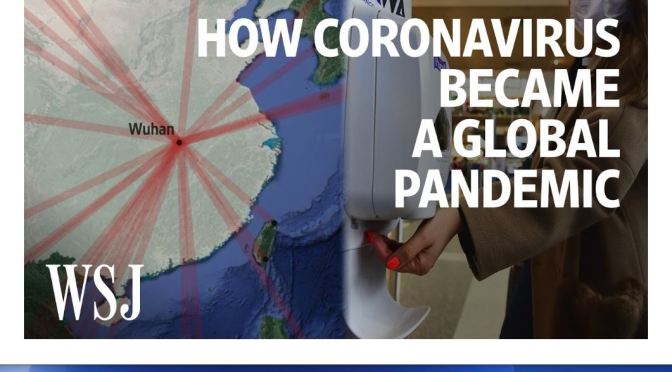
 In this Podcast Extra, we hear from epidemiologists, genomicists and social scientists about how they’re working to tackle the coronavirus and what they’ve learned so far.
 Boomers Daily