
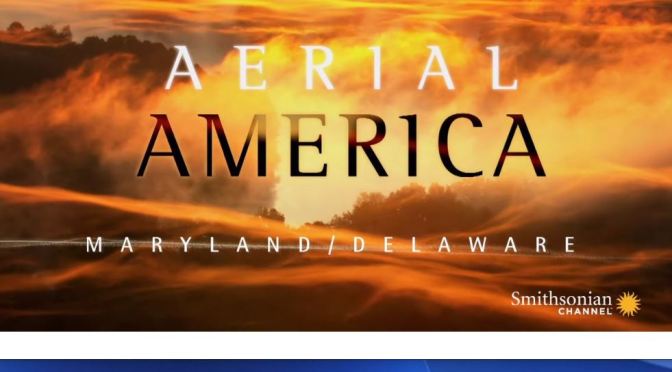
Maryland and Delaware are two small states of great historical significance. Highlighted by the great bays of the eastern seaboard: Chesapeake and Delaware, both states are defined by the legacies of their colonial pasts. This aerial journey reveals their giant stature in the history of America.
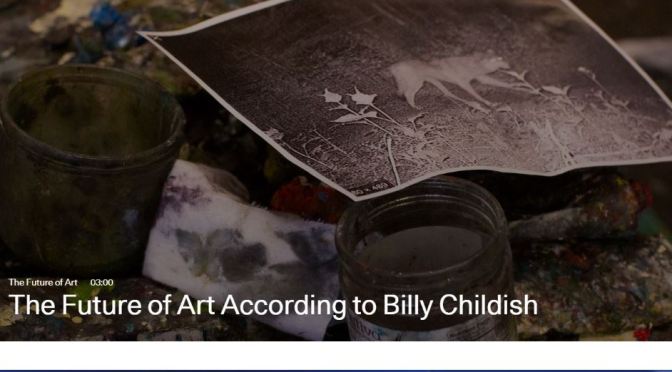
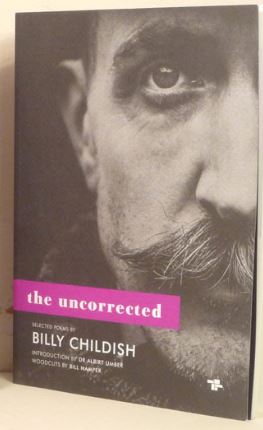 “The art world is the same as the rest of the world,” says British artist, writer, and punk-rocker Billy Childish. “What it requires is new, more, and now.” Childish has worked defiantly and prolifically outside of the mainstream since his expulsion from art school in the early 1980s. To the polymath—whose paintings, poems, novels, and music draw heavily from his autobiography—art is a deeply personal experience that should not rely on external validation, whether from critics or audiences. From his painting studio located on a historic dockyard in Kent, United Kingdom, Childish speaks passionately about the freedom that comes with self-validation. When asked about his perspective on the future of art, he demurs. “People think we’re continually ascending a mountain to success or to enlightenment,” he says. “It’s here and now and this is it.”
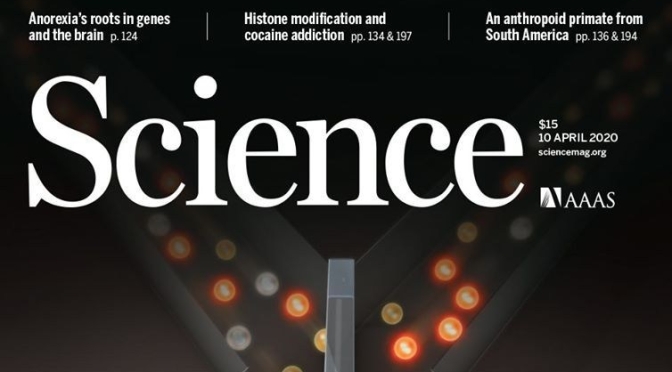
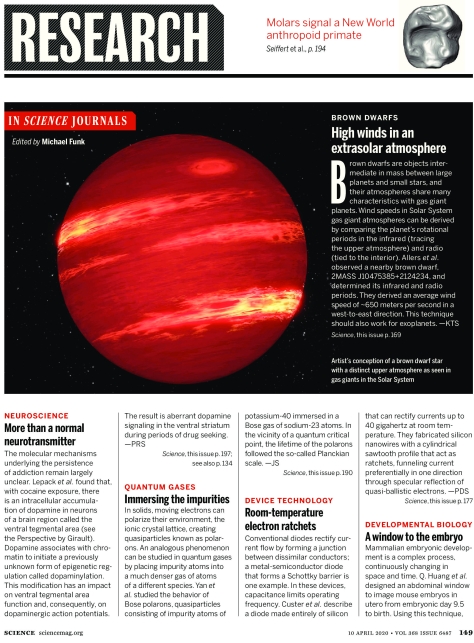
 On this week’s show, Staff Writer Robert Service talks with host Sarah Crespi about a new National Academy of Sciences report that suggests the novel coronavirus can go airborne, the evidence for this idea, and what this means for the mask-wearing debate.
Also this week, Staff Writer Jennifer Couzin-Frankel joins Sarah to talk about a burgeoning understanding of the biological roots of anorexia nervosa—an eating disorder that affects about 1% of people in the United States. From genetic links to brain scans, scientists are finding a lot more biology behind what was once thought of as a culturally driven disorder.
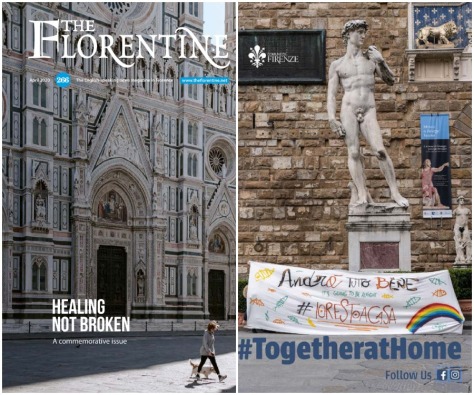
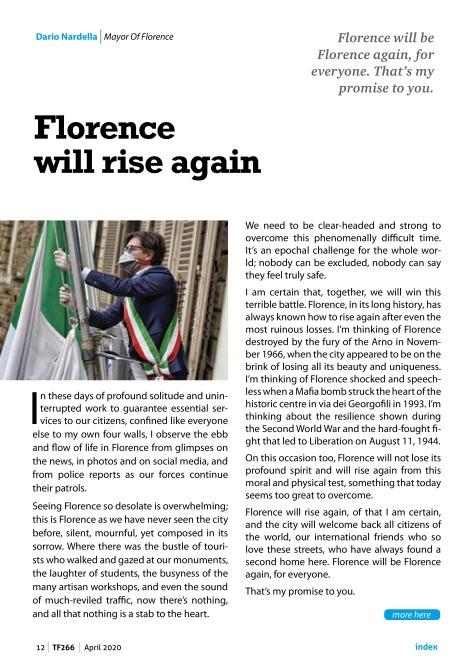
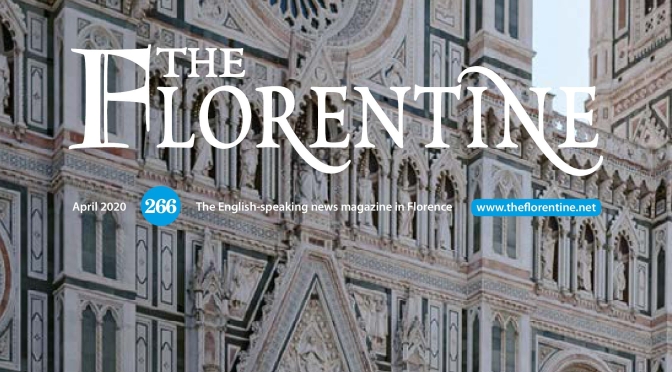
In this special Covid-19 edition of The Florentine, rejoice in a renewed humanism from Florence, of learning, words, thoughts and creativity, with articles, poems and short stories penned by the city’s international community, plus ideas and considerations for the future from Tuscany’s leaders and institutional figures, all interspersed with iconic photography of Florence at its most restful.
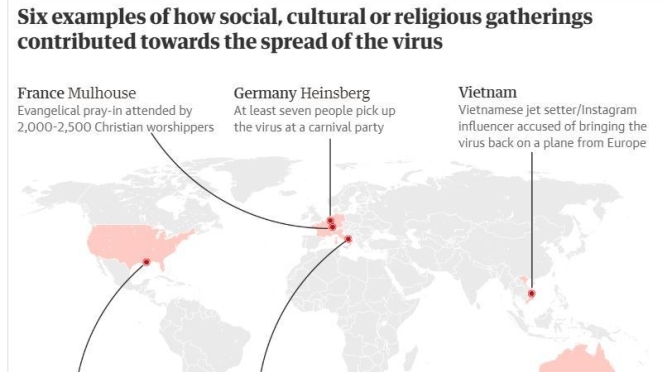
From a The Guardian article (April 9, 2020):
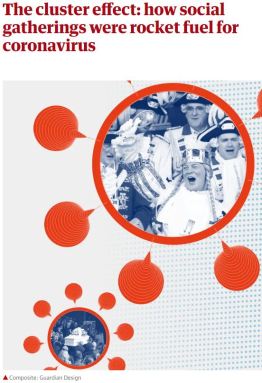 A hundred days after a Chinese government website announced the discovery of a “pneumonia of unknown cause”, it has become clearer that the dynamics behind the virus’s rapid expansion across the globe has relied heavily on such “cluster effects”.
Each of the countries most heavily hit by the pandemic has reported similar stories of social, cultural or religious gatherings where large numbers spent numerous hours in close company – holding hands, kissing, sharing drinks from the same glass – which then turbo-charged the spread of the pandemic.
“Most infections didn’t take place in supermarkets or restaurants,” Streeck said of his preliminary findings. In Heinsberg, his team of coronavirus detectives could find scant evidence of the virus being transmitted via the surfaces of door handles, smart phones or other objects.
Neil deGrasse Tyson details how and why Bees communicate through math and coordinates.
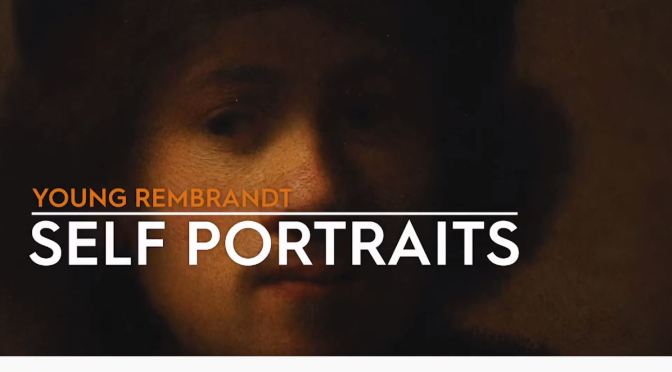
Curator An Van Camp tells us about Rembrandt’s obsession with self portraits and how he improved his skill throughout his life.
Rembrandt Harmenszoon van Rijn; 15 July 1606 – 4 October 1669) was a Dutch draughtsman, painter, and printmaker. An innovative and prolific master in three media, he is generally considered one of the greatest visual artists in the history of art and the most important in Dutch art history. Unlike most Dutch masters of the 17th century, Rembrandt’s works depict a wide range of style and subject matter, from portraits and self-portraits to landscapes, genre scenes, allegorical and historical scenes, and biblical and mythological themes as well as animal studies. His contributions to art came in a period of great wealth and cultural achievement that historians call the Dutch Golden Age, when Dutch art (especially Dutch painting), although in many ways antithetical to the Baroque style that dominated Europe, was extremely prolific and innovative and gave rise to important new genres. Like many artists of the Dutch Golden Age, such as Jan Vermeer of Delft, Rembrandt was also an avid art collector and dealer.
From Wikipedia
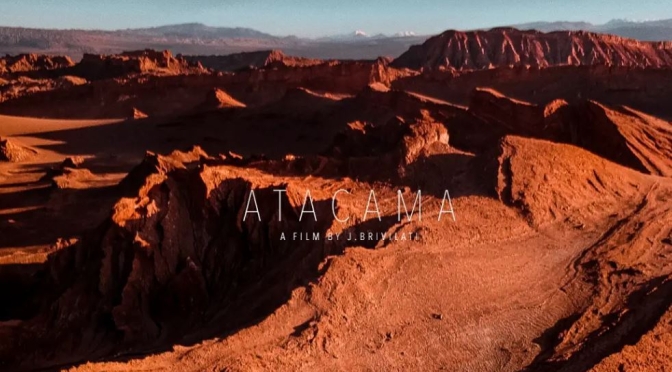
Directed by: J. Brivilati
“It’s like waking up from a dream. And then you begin wondering ‘where am I going?’ And to answer that question you have to try and find out what you want. ‘What do I want to happen? How far we could go?’ – Alan Watts”
A short film I made about my last trip to Atacama, Chile, in 2020. There’s a kind of effect, something magical that happens to you in the middle of the desert. To have nothing to listen to if not the mixing of wind and your breath it forces you to look inside, to talk to your soul. This trip meant a new opportunity to learn about my experience on this planet, to learn about humility and to connect with Mother Earth.
The Atacama Desert (Spanish: Desierto de Atacama) is a desert plateau in South America covering a 1,000 km (600 mi) strip of land on the Pacific coast, west of the Andes Mountains. The Atacama Desert is one of the driest places in the world, as well as the only true desert to receive less precipitation than the polar deserts. According to estimates, the Atacama Desert occupies 105,000 km2 (41,000 sq mi), or 128,000 km2 (49,000 sq mi) if the barren lower slopes of the Andes are included. Most of the desert is composed of stony terrain, salt lakes (salares), sand, and felsic lava that flows towards the Andes.
The desert owes its extreme aridity to a constant temperature inversion due to the cool north-flowing Humboldt ocean current and to the presence of the strong Pacific anticyclone. The most arid region of the Atacama Desert is situated between two mountain chains (the Andes and the Chilean Coast Range) of sufficient height to prevent moisture advection from either the Pacific or the Atlantic Ocean, a two-sided rain shadow.(From Wikipedia)


 Boomers Daily