
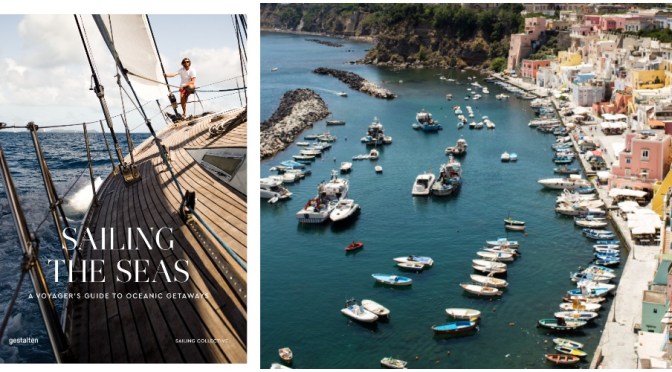
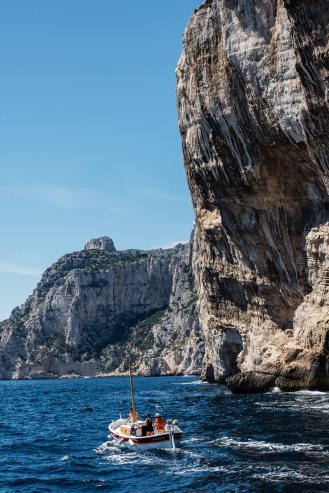
 Sailing the Seas will take readers on a series of nautical adventures across the globe, from the coast of the USA down to the Caribbean, through classic Mediterranean voyages and on trips in far-flung locations such as Thailand and French Polynesia. Presenting a fresh, younger side of sailing, this volume reveals the sights, sounds, tastes, and experiences that can be had on board a boat.
Since the dawn of time, exploring the world by boat has been seen as the pinnacle of freedom. There is no greater adventure than setting sail, at the mercy of the wind, being sprayed by salty water as you voyage from island to island and sea to sea, discovering new landscapes and cultures.
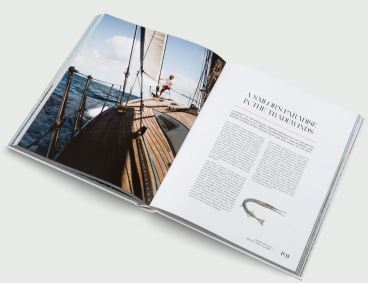 With beautiful photos of locations, detailed itineraries, and “Captain’s Notes” filled with useful tips and insights on destinations, Sailing the Seas will inspire novice sailors and “old salts” alike to take to the waves.
Text and preface by Dayyan Armstrong and Ross Beane
Sailing Collective is comprised of an energetic group of captains, culinary artists, and explorers with a shared enthusiasm for adventure. Their passion lies in curating journeys to the world’s most exotic locations, captained and crewed by talented professionals.

 This week, researchers make diamonds tough, and evidence of incest in a 5,000 year old tomb.
 Compelled to chronicle the life and world around her, Abigail Faye McBride paints with the heart of a poet. Her oil paintings and charcoal drawings bear witness to a time, person or passing glimmer of light. Abigail paints landscape, figure and still life working interchangeably with brush and palette knife. Collectors, nationally and internationally, appreciate the color, mood and elegance of her work.







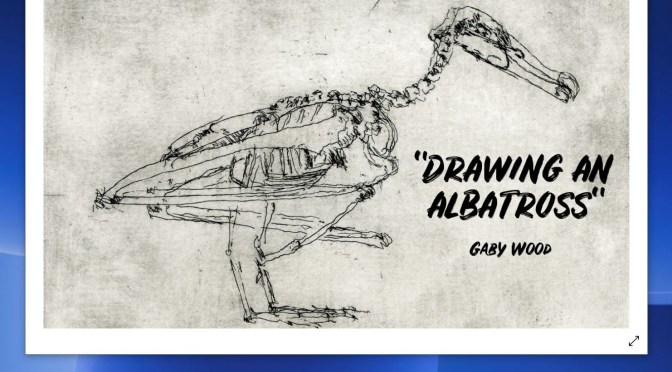
 By the time I used the camera lucida in the museum, I’d spent several months grappling with the strange proposition offered by its prism. I’d read that the image was sharper if you held it over a dark drawing surface, but that didn’t make any sense to me until the smoked metal etching plate was beneath my hand. Suddenly the albatross skeleton appeared on it: bright, spectral. The process was different from the way I’d imagined it. There was a drag, almost a dance, under the needle – a tiny jump of resistance in the copper. Without seeing what you were doing, you could feel it more keenly. It wasn’t like ice-skating at all.
 A camera lucida is an optical device used as a drawing aid by artists. The camera lucida performs an optical superimposition of the subject being viewed upon the surface upon which the artist is drawing. The artist sees both scene and drawing surface simultaneously, as in a photographic double exposure.

 Boomers Daily