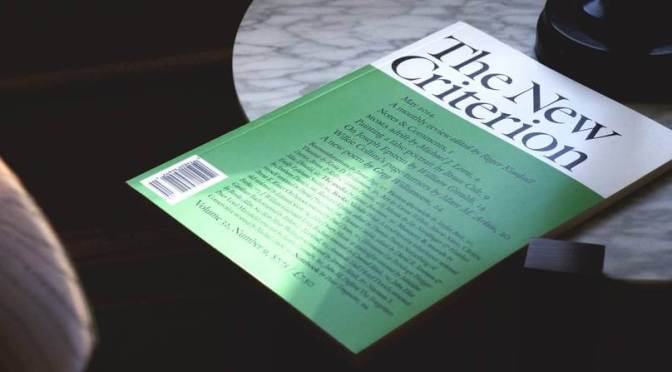


Monocle on Sunday (December 15, 2024): Nina dos Santos and Andrew Tuck join Monocle’s editorial director, Tyler Brûlé, to discuss the week’s key topics in this festive programme from Monocle’s Christmas market in London. Plus: a chat with Fiona Wilson, Monocle’s Tokyo bureau chief.
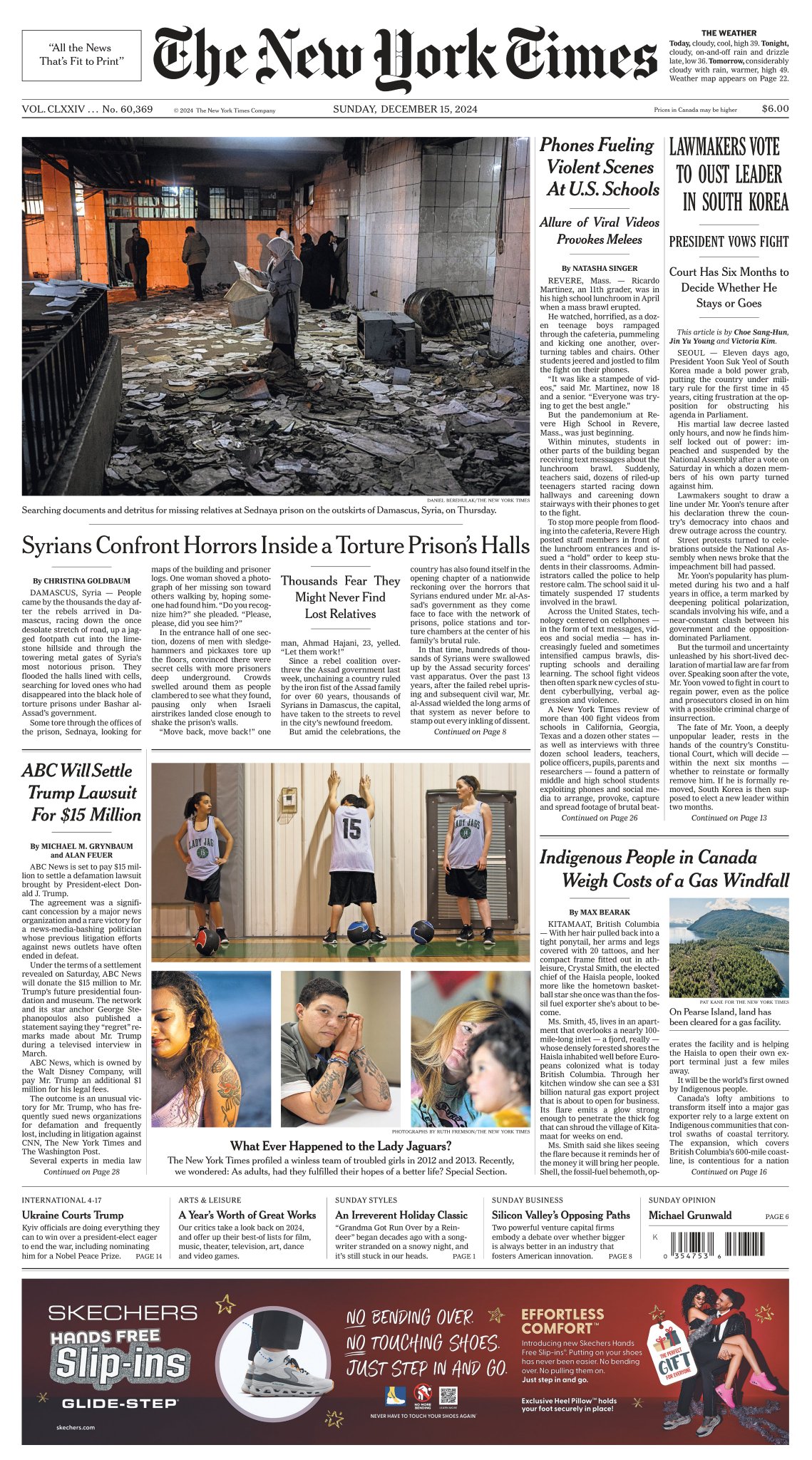
At the country’s most notorious prison, Syrians confront their worst fears: that they will never know what happened to the loved ones who disappeared.
Some members of President Yoon Suk Yeol’s own party helped remove him from office. But the political uncertainty is far from over.
When we met them a dozen years ago, they were teenagers in trouble, playing for a basketball team that always lost. Did they find a way to win at life?
New export terminals along the rugged Pacific coastline have reignited a generations-old debate over identity and environmental stewardship.
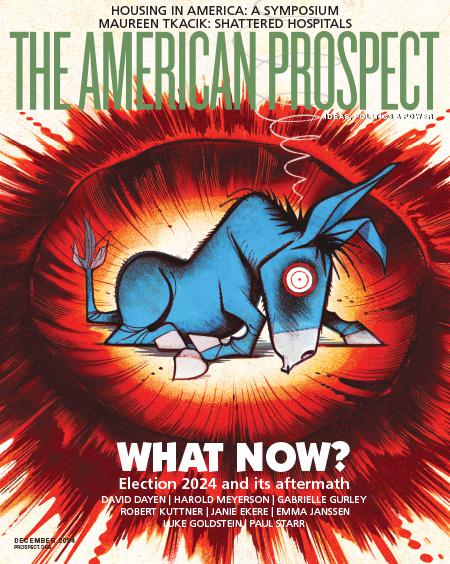

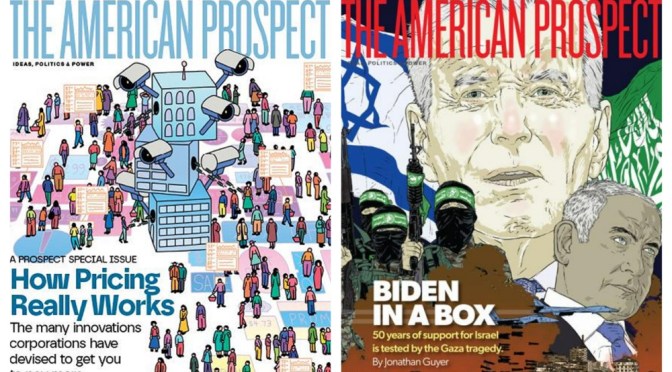
The American Prospect (December 14, 2024): The latest issue features ‘What Now?’ – Election 2024 and its aftermath….
It’s time to go after the nation’s real elite—not the Republicans’ largely fictitious one. Harold Meyerson
A decade of depression in construction led to a concentrated, sclerotic industry. Ryan Cooper
The Yes In My Backyard, or YIMBY, movement believes that solving the housing shortage entails removing impediments to adding supply. Robert Cruickshank


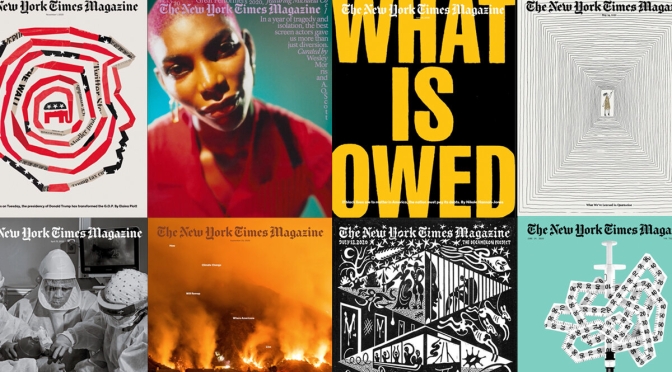
THE NEW YORK TIMES MAGAZINE (December 14 2024): The 12.15.24 issue features ‘The Silence of Alice Munro’…
The Nobel-winning author’s husband was a pedophile who targeted her daughter and other children. Why did she stay silent?
In Louisa, an unbearable social crisis has become the main source of economic opportunity.
Officials in Oklahoma are laying the groundwork to push Christianity into public schools.

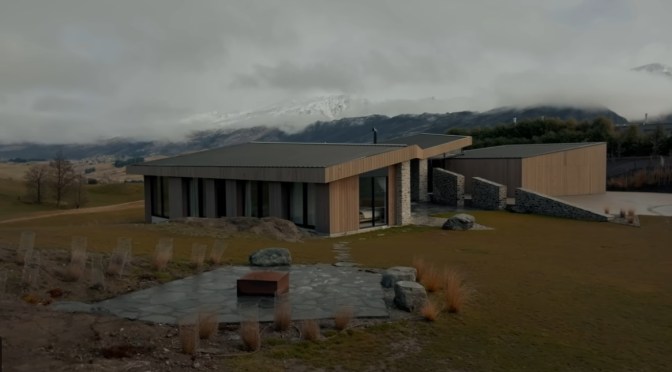
00:00 – Introduction to the Most Breathtaking Home 01:12 – The Location Centred Brief 02:36 – Approaching the Home 03:09 – Walkthrough of the House 04:11 – Restrained Interior Styling 05:44 – The Kitchen Design and Appliances 07:21 – A Balanced Material Palette 08:29 – Curating The Views 09:21 – Proud Moments
What defines it, however, is the site’s staggering 360-degree views to The Remarkables, Coronet Peak and the Crown Range, and the architects’ response to these multifaceted aspects. “We’ve done a few houses in this area and, over the years, we’ve developed an approach that’s firstly about identifying the significant views,” says Richard Naish, founder of RTA Studio.
Though Naish acknowledges that the perspectives are a gift, he believes good architecture is more about the control and release of views. This philosophy underscored RTA Studio’s approach to crafting the most breathtaking home shaped by nature. The roof lines played heavily into this idea; designed to follow the contours of the land and echo the surrounding topography, the roof dips in parts and soars in others, creating views both vast and precise.

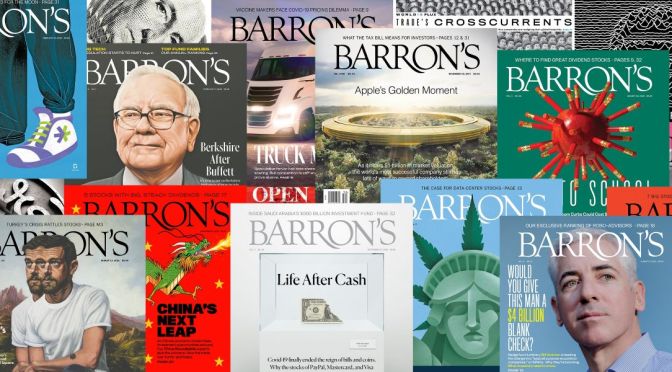
BARRON’S MAGAZINE (December 7, 2024): The latest issue features ‘Outlook 2025’….
Wall Street’s market forecasts are too tepid. The S&P 500 could rally next year on a combination of AI growth and deregulation. But investors should prepare for a wilder ride.
The Federal Reserve could find it harder to balance growth and inflation next year, given the incoming Trump administration’s policies. So far, the forecast looks sunny.
Millennials see real estate as a speculative asset. That makes them less apt to buy than their parents did at similar ages.
Wringing savings from the program could result in worse customer service. What you need to know.
Monocle on Saturday (December 14, 2024): Join Georgina Godwin, Tyler Brûlé, and Latika Bourke for a roundup of the week’s news and culture in this Christmas special, broadcast live from our festive market. Plus: a conversation with Monocle’s Paris bureau chief, Simon Bouvier.
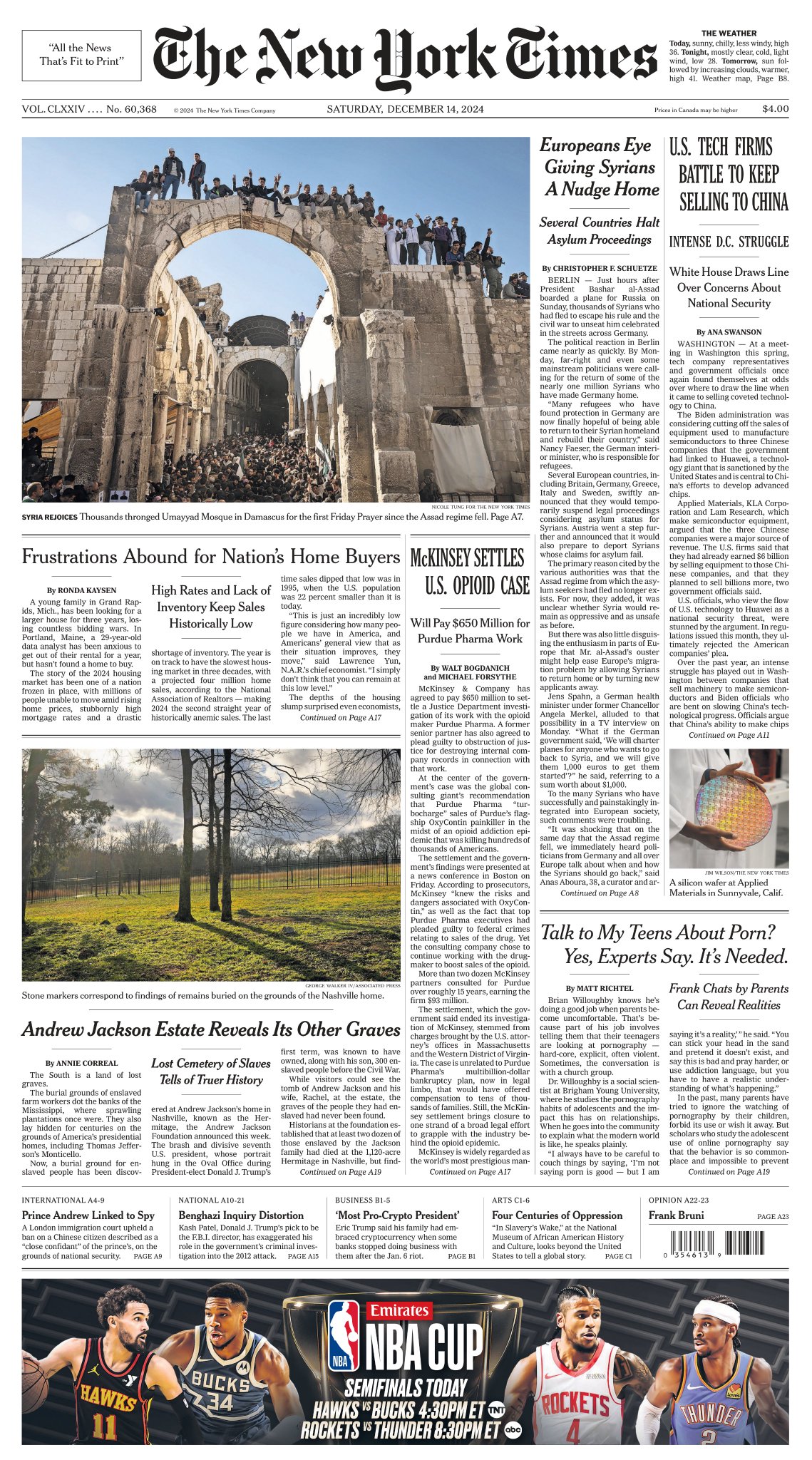
An intense struggle has unfolded in Washington between companies and officials over where to draw the line on selling technology to China.
In an impoverished, war-ravaged country, the first prayers after the fall of a brutal regime drew jubilant crowds, even in areas seen as regime strongholds.
Nearly a million Syrians in Germany alone have made new lives. But after the fall of Bashar al-Assad, some politicians across the continent have suggested that refugees could return home.
A former senior partner will also plead guilty to obstruction of justice after destroying company documents.

‘
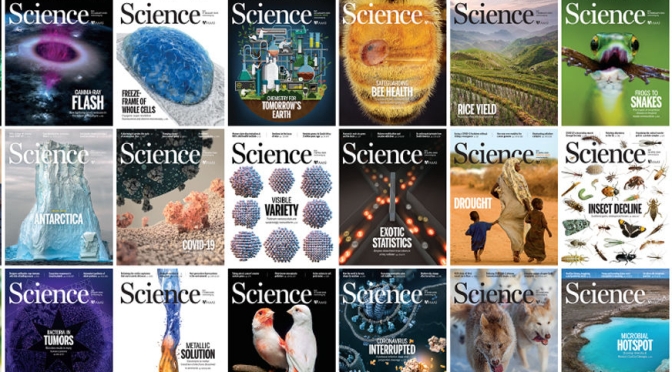
An injectable HIV drug with a novel mechanism shows remarkable ability to prevent infection
When the forces of plate tectonics tear continents apart, it’s an incredibly violent process, unfolding in slow motion. It was also thought to be very local: Magma from hot, rising mantle rock seeds volcanoes along the rift zone, while the far-removed cold interiors of continents remain intact.
Microscopic algalike fossils from China reported early this year astounded evolutionary biologists with their extreme age. Dated at 1.6 billion years old, the specimens suggest one of the hallmarks of complex life—multicellularity—arose far earlier than previously thought.
For 98 years, physicists knew of two types of permanently magnetic materials. Now, they’ve found a third. In familiar ferromagnets such as iron, unpaired electrons on neighboring atoms spin in the same direction, magnetizing the material so that, for example, it sticks to a refrigerator. Antiferromagnets such as chromium have zero overall magnetism, but they possess an atomic-scale magnetic pattern, with neighboring electrons spinning in opposite directions. Novel altermagnets—hypothesized 5 years ago—share aspects of both.


 Boomers Daily