

The gondola cableway has a capacity of up to 1,200 persons per hour with a travelling time of approximately 25 minutes. Aside from the gondola cableway, Firstbahn AG also has three chairlifts and two ski lifts.

The gondola cableway has a capacity of up to 1,200 persons per hour with a travelling time of approximately 25 minutes. Aside from the gondola cableway, Firstbahn AG also has three chairlifts and two ski lifts.

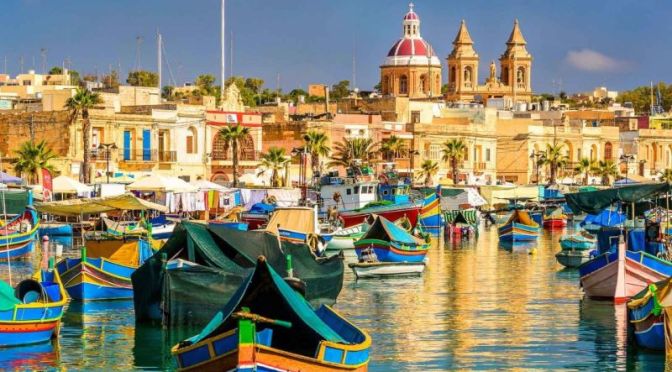
Video timeline: 00:00 Gozo Island 07:36 Island of Comino 10:09 Island of Malta 14:54 Valletta and The Three Cities 21:06 More from the Island of Malta
With a history spanning over eight thousand years, the archipelago boasts not only a rich cultural heritage but also stunning landscapes. The seven megalithic temples in Malta were built between 6,000 to 4,500 years ago.
Over the centuries, the Maltese islands have been ruled by various powers, including the Phoenicians, Carthaginians, Greeks, Romans, Arabs, Normans, Aragonese, the Order of the Knights of St John, French, and British. Malta has three Unesco Heritage Sites and seven on the Tentative List.

Video timeline: 0:00 ‘Axis of Resistance’ 0:37 Iran’s allies 1:44 Iran’s history 3:22 U.S. in the Middle East 4:14 Attacks since Oct. 7
WSJ explains what to know about the alliance that includes Hamas in Gaza, Hezbollah in Lebanon and the Houthis in Yemen.

Video timeline: 01:07 AI is changing the music business 04:09 How big data revolutionised entertainment industries 05:20 Can AI predict a film’s success? 09:26 How generative AI is creating new opportunities 12:36 What are the risks of generative AI?

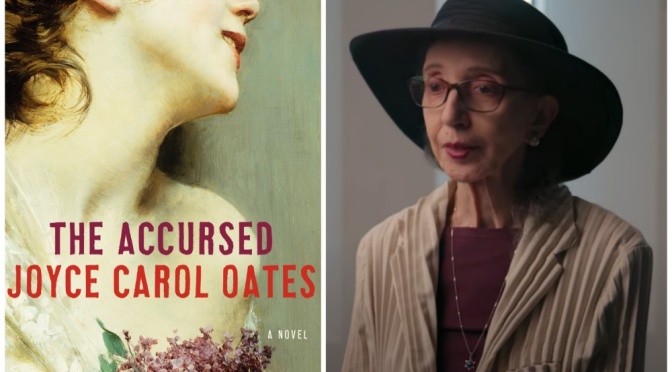
Video timeline: 0:00 On preferred subjects for writing 3:20 On Karen Blixen /Isak Dinesen 4:24 On families 6:54 On the mother figure 9:00 On the novel ‘Babysitter’ 17:27 On the novel ‘Night. Sleep. Death. And the Stars’ 22:48 How traveling resembles writing 28:47 On Donald Trump
“What is so exciting about the novel is that it mimics life and that you end up doing something you never thought you would do,” says Joyce Carol Oates, one of America’s greatest living novelists, when looking back on a life of writing.
It might be a violent event or something politically relevant, or it could be a racist experience that sets off a novel. In her storytelling, Oates finds it interesting to focus on girls at the beginning of puberty: “There’s a kind of wonderful neutrality of childhood that gets conditioned out when girls get to be 12 – 14 years old. And then, from that point on, when they’re so shaped by what we call the male gaze and the expectations of others that they grow into being someone who is this female image.”
But today, the family is very different and there are all kinds of families: “There are families of same-sex couples who got married and they may adopt a child or they may have a child of their own, but then there may be families that are like communes where people are living, sharing a house, but they are a family and they may have dogs and cats who know who they are. […] The so-called nuclear family – which is just a father, mother, and children – still exists, of course, but it’s not the only example of any longer, which is wonderful. It all begins with the emancipation of women”, Joyce Carol Oates concludes.
Oates feels attracted to writing because writing is storytelling and “what’s interesting about storytelling is that you have to have revelations. That you start off with a situation, and a little bit of a mystery evolves, and then you have to follow the tendrils and the roots of that mystery, like an investigator. And then there has to be a revelation.” This means that Oates focuses a lot in her writing on the pacing and the suspense and the movement, like “how long is a paragraph, how short is the dialogue, and how much dialogue is there in proportion to the exposition, and the craftsman side of writing is actually where many people write.“

Video timeline: 00:00 – 2024 military goals 01:35 – Why he won’t negotiate
Volodymyr Zelensky is angry; not about the successes of his enemies (he sees none) nor even about his own army’s lack of progress on the battlefield. Instead, Ukraine’s president is exasperated by the wobbles of some of his allies as well as the detachment among some of his compatriots. And he wants you to know it.
Hardened by the pressures of war, a year of negative headlines and the failure of a counter-offensive that promised so much at the start of 2023, he has shed the lightness and humour that characterised our earlier meetings with him. Seated in his situation room and speaking to The Economist via Zoom (you can watch the video here), he punches out his message as if trying to break through the computer screen.
A New Year’s interview with Volodymyr Zelensky: https://econ.st/48A4Nim

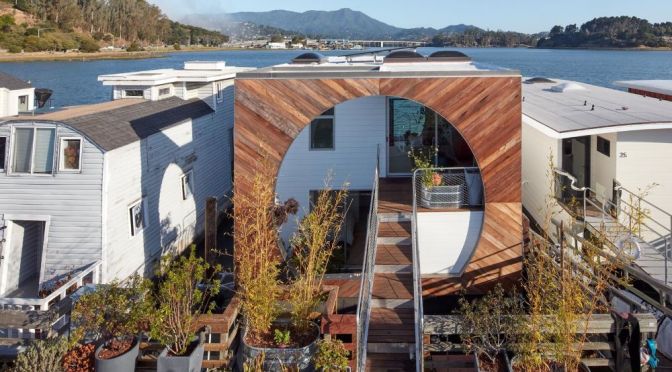
Video timeline: 00:00 – Introduction to the World’s Best House Boat 00:40 – The House Boat Community and its History 01:02 – A Spacious Brief 02:03 – A Walkthrough of the House Boat 02:46 – The Layered Design Approach 03:23 – A Simplistic Material Palette 03:50 – Accounting for the Climate 04:23 – Satisfying and Favourite Aspects
Located just north of San Francisco, the home is situated in a small house boat community of Sausalito. In World War II, Liberty ships were once predominantly built in the area, however, after the war, it was abandoned for residential use. As such, a community was established and house boats were built, creating a truly memorable location for a home. Working closely with the client – who wanted something spacious – Craig Steely Architecture took to designing a house boat that went against the typical aesthetic and design of others.
Additionally, the house boat is clad in décor that will accommodate the weather and surrounds, using materials such as old red wood from another project that does not have any finish but remains sturdy. Thinking about the dock, the ocean, the views and the Sausalito Bay surrounds, Craig Steely Architecture created a home that was reactive and connected the interior space to the outdoors. However, when the client and architect discovered the lot, they found a sinking barge but, deeply interested with the history of the space, they took to designing a house boat that referenced the bohemian history.

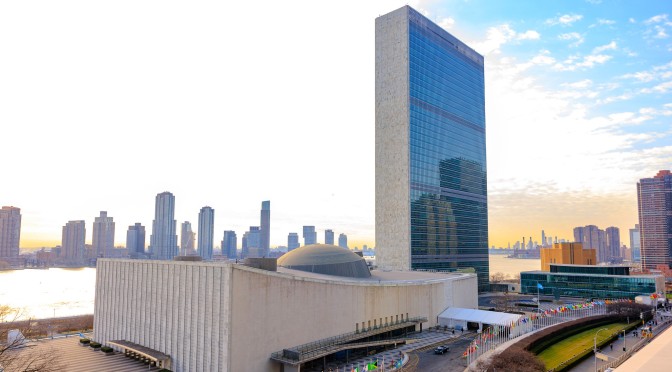
Founded in 1945, the UN now comprises 193 member states, all of whom assemble at their modernist headquarters on the bank of the East River in NYC. The birthplace of international diplomacy, the United Nations became the first major building in New York to represent International Style architecture.

In Japan, garden making is considered a high art, akin to the arts of calligraphy and ink painting. Traditionally, the art of garden making was passed from sensei to apprentice through oral transmission.




 Boomers Daily