

From 0 to 100 km/h in 2.4 seconds – that’s how fast the Elektrus can accelerate, making it one of the fastest electric cars in the world. It’s just one of the many exceptional cars in Michael Fröhlich’s collection. The German multi-millionaire collects and designs cars of all types; from vintage vehicles to curious custom-builds that more resemble works of art. He even owns one of the Queen’s old Rolls Royces, but he’s deliberately letting that fall apart…
Category Archives: Profiles
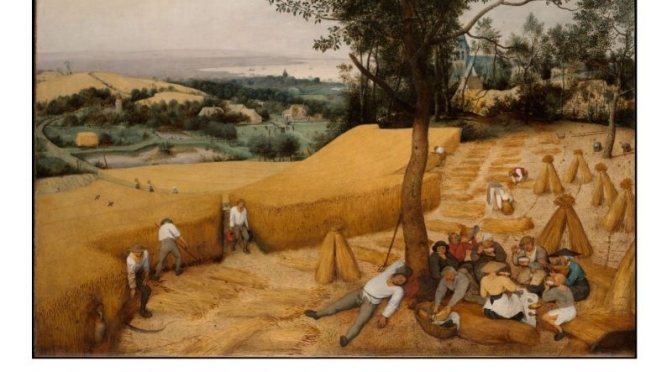
Artwork: ‘The Harvesters’ By Dutch Renaissance Painter Pieter Bruegel The Elder, 1525-1569 (Video)
Artist: Pieter Bruegel the Elder (Netherlandish, Breda ca. 1525–1569 Brussels) Title: The Harvesters
The Harvesters is an oil painting on wood completed by Pieter Bruegel the Elder in 1565. It depicts the harvest time, in the months of July and August or late summer. Nicolaes Jonghelinck, a merchant banker and art collector from Antwerp, commissioned this painting.
On view at Metropolitan Museum: https://www.metmuseum.org/art/collect…
Pieter Bruegel the Elder was the most significant artist of Dutch and Flemish Renaissance painting, a painter and printmaker, known for his landscapes and peasant scenes; he was a pioneer in making both types of subject the focus in large paintings.

Profile: Chef Jonathan Brincat Of Restaurant Noni In Malta (Video)
The MICHELIN Guide takes you to Malta to discover the treasures of the island: its chefs, its products and producers. Following the launch of the first MICHELIN Guide Malta in February 2020, we take a closer look at Noni, One-Star restaurant, and its chef, Jonathan Brincat. At the crossroads of cultures, the Maltese gastronomic scene is a reflection of its rich past which marries culinary influences from Italy, Mediterranean countries, North Africa, and Great Britain – not to mention contemporary trends.
At Noni, Chef-Owner Brincat passionately brings a modern approach to traditional Maltese and Mediterranean cuisine. The attentive staff are happy to make recommendations from the concise menu, showcasing quality seasonal products in well-balanced dishes, all cooked with an eye for detail.
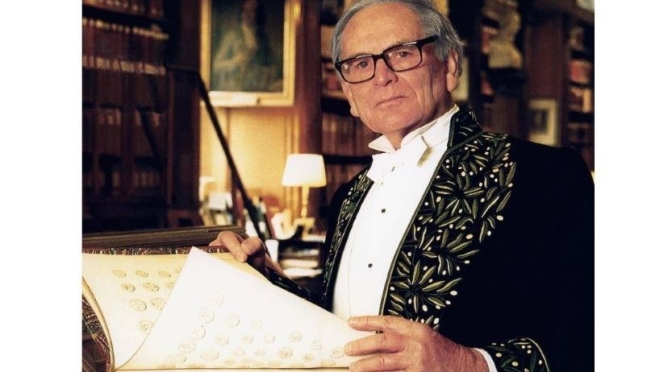
Tributes: French Fashion Designer Pierre Cardin Dies At 98 (Video)
Legendary French fashion designer Pierre Cardin died Tuesday at the age of 98 at a hospital in Neuilly in western Paris, his family told AFP.
Pierre Cardin, was an Italian-born naturalised-French fashion designer. He is known for what were his avant-garde style and Space Age designs. He preferred geometric shapes and motifs, often ignoring the female form. He advanced into unisex fashions, sometimes experimental, and not always practical.
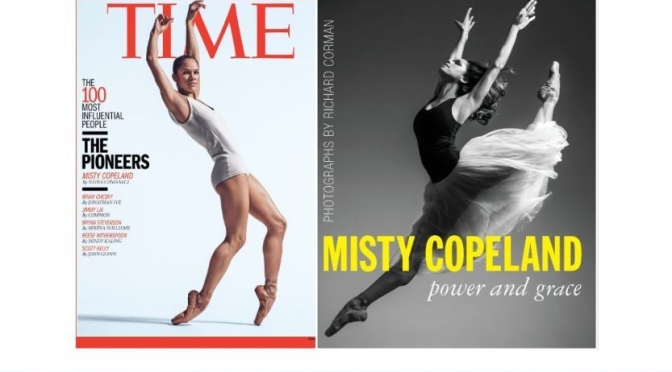
Interviews: Ballet Dancer Misty Copeland (Podcast)

Was the first black principal dancer at the American Ballet Theatre earlier denied roles because of her skin colour? She tells host, Anne McElvoy, how dance saved her from a difficult childhood and about her first performance in a classic Christmas production. And, which ballets would she remove from the repertoire?
Misty Danielle Copeland is an American ballet dancer for American Ballet Theatre, one of the three leading classical ballet companies in the United States. On June 30, 2015, Copeland became the first African American woman to be promoted to principal dancer in ABT’s 75-year history

Artwork: ‘The Orange Chair, 1944’ By British Painter Cedric Morris
Sir Cedric Lockwood Morris, 9th Baronet was a British artist, art teacher and plantsman. He was born in Swansea in South Wales, but worked mainly in East Anglia. As an artist he is best known for his portraits, flower paintings and landscapes

Video Profiles: Asha Deliverance And Her ‘Fabric-Welded Domes’
In 1979 Asha Deliverance sewed her first geodesic dome on an old Singer sewing machine, finishing it in time to become her eldest child’s first home. Motivated by the work of Buckminster Fuller, she continued to build dome homes for friends until she responded to increasing demand and opened the country’s first retail dome company in 1980.
Today, Asha has stopped sewing and relies on her team at the Pacific Domes headquarters in Ashland, Oregon to fabric weld her domes. The company provides shelters for families, glamping sites, greenhouses, climbing, events (e.g. Coachella) and extreme outposts. “To test some of the possible challenges of living on Mars, NASA joined forces with Pacific Domes in early in 2013 to erect a 44-foot geodesic-engineered dome on the northern slope of Mauna Loa, Hawaii.”
The company offers DIY dome kits starting at $5,500 for a 16 foot (5 meter) shelter that can be erected with their manual in a couple of days (instructions for the deck are included). When we asked Deliverance about the frustrations of some dome builders like Shelter Publications’ Lloyd Kahn she explained that in the ‘60s people were building domes out of wood which required sealing multiple joints, but that using fabric has made all the difference.

Video Profiles: French Nobel Prize Author Albert Camus (1913 -1960)
This week, we’re putting the focus on Nobel Prize-winning French author Albert Camus. As 2020 saw France mark 60 years since his death in a car crash, Camus’s seminal work “The Plague” was unexpectedly thrust back into the spotlight by the Covid-19 pandemic.
From the UK to Japan, the 1947 novel established itself as a global sensation, topping sales charts and pushing publishers into a rushed reprint. But Camus’s prolific and multi-faceted career extends far beyond this viral hit. We tell you more about the author’s life, starting with his humble beginnings in French-ruled Algeria.
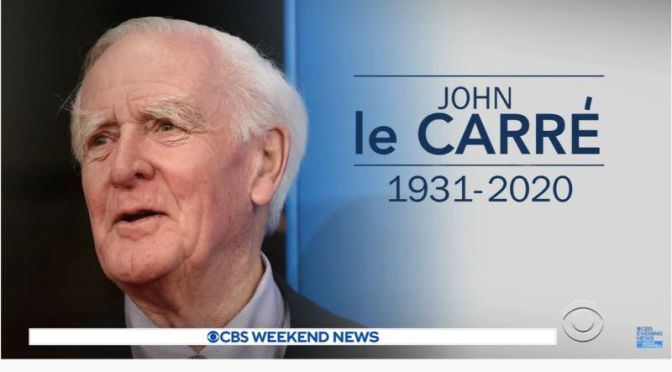
Tributes: British Author John le Carré (1931-2020)
John le Carré, who forged thrillers from equal parts of adventure, moral courage and literary flair, has died aged 89.
Le Carré explored the gap between the west’s high-flown rhetoric of freedom and the gritty reality of defending it, in novels such as The Spy Who Came in from the Cold, Tinker Tailor Soldier Spy and The Night Manager, which gained him critical acclaim and made him a bestseller around the world.
On Sunday, his family confirmed he had died of pneumonia at the Royal Cornwall Hospital on Saturday night. “We all deeply grieve his passing,” they wrote in a statement.
His longtime agent Jonny Geller described him as “an undisputed giant of English literature. He defined the cold war era and fearlessly spoke truth to power in the decades that followed … I have lost a mentor, an inspiration and most importantly, a friend. We will not see his like again.”
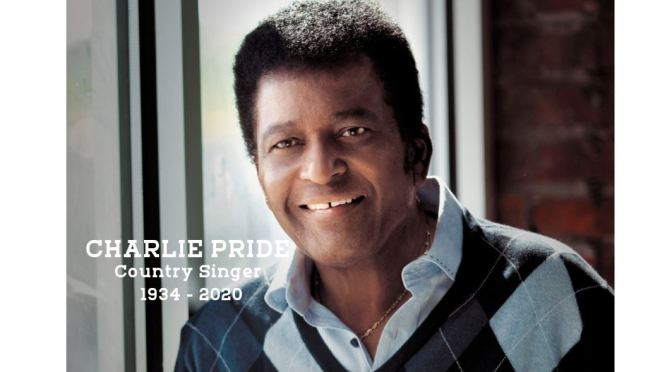
Tributes: Country Singer Charlie Pride (1934-2020)

We remember Charley Pride, one of the first African Americans to become popular as a country artist. Pride died yesterday at the age of 86, of complications from COVID-19.
Charley Frank Pride (March 18, 1934 – December 12, 2020) was an American singer, guitarist, and professional baseball player. His greatest musical success came in the early to mid-1970s, when he was the best-selling performer for RCA Records since Elvis Presley.[1] During the peak years of his recording career (1966–87), he had 52 top 10 hits on the Billboard Hot Country Songs chart, 30 of which made it to number one. He won the Entertainer of the Year award at the Country Music Association Awards in 1971.
Pride was one of three African-American members of the Grand Ole Opry (the others are DeFord Bailey and Darius Rucker). He was inducted into the Country Music Hall of Fame in 2000.
Rise to fame
While he was active in baseball, Pride had been encouraged to join the music business by country stars such as Red Sovine and Red Foley, and was working towards this career. In 1958, in Memphis, Pride visited Sun Studios and recorded some songs.[14]
He performed his music solo at clubs and with a four-piece combo called the Night Hawks during the time he lived in Montana.[11] His break came when Chet Atkins at RCA Victor heard a demonstration tape and got Pride a contract. In 1966, he released his first RCA Victor single, “The Snakes Crawl at Night”.[11] Nashville manager and agent Jack D. Johnson signed Pride. Atkins was the longtime producer at RCA Victor who had made stars out of country singers such as Jim Reeves, Skeeter Davis, and others. Pride was signed to RCA Victor in 1965. “The Snakes Crawl at Night” did not chart. On the records of this song submitted to radio stations for airplay, the singer was listed as “Country Charley Pride”. Pride disputes that the omission of a photo was deliberate; he stated that getting promoters to bring in a black country singer was a bigger problem: “people didn’t care if I was pink. RCA signed me… they knew I was colored…They decided to put the record out and let it speak for itself.”[11] While living in Montana, he continued to sing at local clubs, and in Great Falls had an additional boost to his career when he befriended local businessman Louis Allen “Al” Donohue, who owned radio stations including KMON, the first stations to play Pride’s records in Montana.[11]
Soon after the release of “The Snakes Crawl at Night”, Pride released another single called “Before I Met You”, which also did not chart. Not long afterwards, his third single, “Just Between You and Me”, was released. This song finally brought Pride success on the country charts. The song reached number nine on Hot Country Songs on February 25, 1967.[15]
According to a news item by the Associated Press, Pride made this comment in a 1992 interview: “They used to ask me how it feels to be the ‘first colored country singer’ .. Then it was ‘first Negro country singer;’ then ‘first black country singer.’ Now I’m the ‘first African-American country singer.’ That’s about the only thing that’s changed”. [16]
Career peak
“Pride’s amazing baritone—it hints at twang and melisma simultaneously, and to call it warm is to slight the brightness of its heat”
–Christgau’s Record Guide: Rock Albums of the Seventies (1981)
The success of “Just Between You and Me” was enormous. Pride was nominated for a Grammy Award for the song the next year. In the late summer of 1966, on the strength of his early releases, he was booked for his first large show, in Detroit‘s Olympia Stadium. Since no biographical information had been included with those singles, few of the 10,000 country fans who came to the show knew Pride was black, and only discovered the fact when he walked onto the stage, at which point the applause trickled off to silence. “I knew I’d have to get it over with sooner or later,” Pride later remembered. “I told the audience: ‘Friends, I realize it’s a little unique, me coming out here—with a permanent suntan—to sing country and western to you. But that’s the way it is.’ ”[18]
The show became the first of a long and active career playing to large audiences, his race soon becoming a minor detail compared to his success. In 1967, he became the first black performer to appear at the Grand Ole Opry since founding member DeFord Bailey, who had last appeared in 1941.[19] Between 1969 and 1971, Pride had eight singles that reached number one on the US Country Hit Parade and also charted on the Billboard Hot 100: “All I Have to Offer You (Is Me)“, “(I’m So) Afraid of Losing You Again“, “I Can’t Believe That You’ve Stopped Loving Me“, “I’d Rather Love You“, “Is Anybody Goin’ to San Antone“, “Wonder Could I Live There Anymore“, “I’m Just Me“, and “Kiss an Angel Good Mornin’“. The pop success of these songs reflected the country/pop crossover sound that was reaching country music in the 1960s and early 1970s, known as “Countrypolitan“. In 1969, his compilation album, The Best of Charley Pride, sold more than one million copies, and was awarded a gold disc.[20] Ultimately, Elvis Presley was the only artist who sold more records than Pride for RCA Victor.[11]
Pride performed “All His Children“, featured in the film Sometimes a Great Notion (1971).[21] The film received two Oscar nominations in 1972, one for “All His Children”.[22]
“Kiss an Angel Good Mornin'”
In 1971, Pride released what would become his biggest hit, “Kiss an Angel Good Mornin'”, a million-selling crossover single. The same year, he won the Country Music Association‘s entertainer of the year award, as well as its top male vocalist award in 1971 and 1972.[23]
“Kiss an Angel Good Mornin'” became Pride’s signature tune. Besides being a five-week country number one in late 1971 and early 1972, the song was also his only pop top-40 hit, hitting number 21, and reaching the top 10 of the Adult Contemporary charts, as well.
 Boomers Daily