Medicare for All? ACA? Another option? This event will explore health insurance proposals during the 2020 Presidential election year. Webcast, Jan 13, noon-1pm ET.

Medicare for All? ACA? Another option? This event will explore health insurance proposals during the 2020 Presidential election year. Webcast, Jan 13, noon-1pm ET.
From a
 Cell phone–related injuries to the head and neck have increased steeply over the recent 20-year period, with many cases resulting from distraction. Although the disposition of most cases is simple, some injuries bear a risk of long-term complications. Many of these injuries occurred among those aged 13 to 29 years and were associated with common activities, such as texting while walking. These findings suggest a need for patient education about injury prevention and the dangers of activity while using these devices.
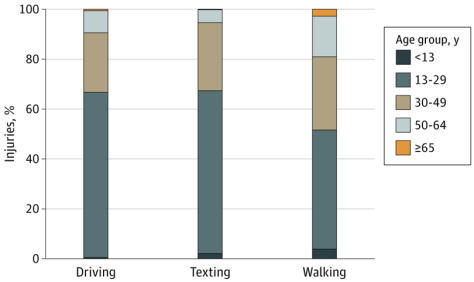
Since their invention, cell phones have played a major role in the daily lives of American adults. Approximately 96% of Americans own a cell phone, provoking interest in their role in causing injury. Given that head and neck traumas make up approximately 5% of emergency department (ED) visits in the United States, cell phone use in relation to such injuries could be of public health concern, in particular because of the psychological and financial burdens such injuries may entail. In addition, knowledge of the mechanism of injury is vital for patient risk stratification and trauma management,and understanding the mechanisms of common cell phone–related injuries can aid health care professionals in assessing patient needs. Health care professionals and public safety officials also must be aware of the epidemiologic nature of such injuries in order to provide adequate counseling and give input for legislation to protect the population.
Syndicated columnist Mark Shields and New York Times columnist David Brooks join Amna Nawaz to discuss the week in politics, including how the Trump administration and Congress have handled conflict with Iran, indications House Speaker Nancy Pelosi is preparing to send articles of impeachment to the Senate for a trial of the president and what all the tumult means for 2020 Democrats.
From a Food and Wine online article:
 But it’s Beaujolais Nouveau that he is most famous for, the annual celebration, on the third Thursday of November, of the first red wine to be released from the region. It’s a tradition that dates back to the 19th century, but his efforts played a definitive role in making it the international celebration it is today, so much so that he was known as the “king of Beaujolais.” Over the years, Les Vins Georges Duboeuf has expanded their Beaujolais Nouveau offerings to include a rosé and a Beaujolais-Villages Nouveau (which was particularly lovely this past year, and is still drinking beautifully).
 There are a handful of names in the world of wine that have broken through the barriers of the business and come to signify an entire region, or style or more elementally, the deeply felt joy that drinking it evokes. Georges Duboeuf, who passed away on January 4, at home in Romanèche-Thorins, managed to achieve all three—and then some.
Faraday Future has been a consistent presence at the Consumer Electronics Show over the past five years. Founded in 2014, the luxury electric automaker unveiled the FFZero concept car in 2016 and its all-electric FF91 in 2017, but has faced an uphill climb getting those vehicles on the road and into the hands of consumers. Adweek got to take a ride along in the preproduction version of the FF91, which has been updated since its debut three years ago—and boasts an impressive range for an electric car.
From a BMJ online article:
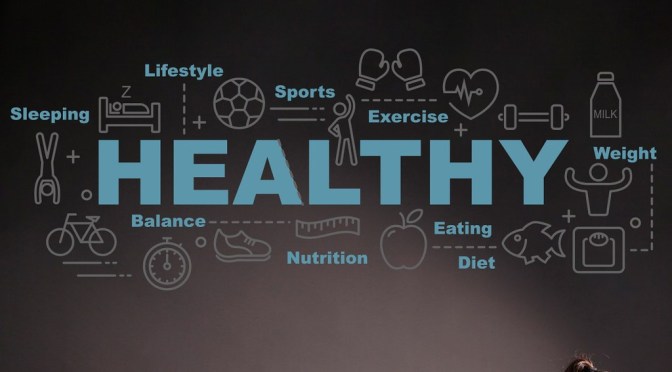
We derived a healthy lifestyle score based on information on five lifestyle factors—diet, smoking, physical activity, alcohol consumption, and body mass index (BMI).
 Our findings suggest that promotion of a healthy lifestyle would help to reduce the healthcare burdens through lowering the risk of developing multiple chronic diseases, including cancer, cardiovascular disease, and diabetes, and extending disease-free life expectancy. Public policies for improving food and the physical environment conducive to adopting a healthy diet and lifestyle, as well as relevant policies and regulations (for example, smoking ban in public places or trans-fat restrictions), are critical to improving life expectancy, especially life expectancy free of major chronic diseases.
The average life expectancy in the world has increased substantially in the past few decades. The aging of the population has led to a high prevalence of chronic diseases such as diabetes, cardiovascular disease, and cancer. Although people live longer, older individuals often live with disabilities and chronic diseases. People with chronic diseases including cancer, cardiovascular disease, and diabetes have a shorter life expectancy than do their peers without these chronic conditions. Estimates of the loss in life years due to these chronic conditions range from 7.5 to 20 years, depending on the methods used and the characteristics of the study population.
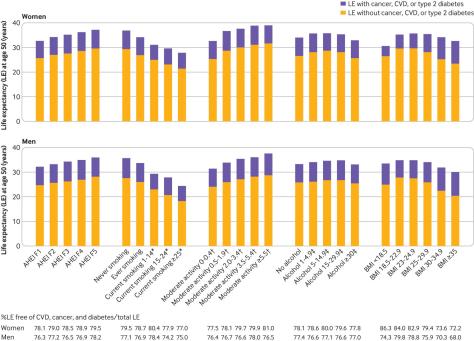
Modifiable lifestyle factors including smoking, physical activity, alcohol intake, body weight, and diet quality affect both total life expectancy and incidence of chronic diseases. Studies have shown that smoking, inactivity, poor diet quality, and heavy alcohol consumption contribute up to 60% of premature deaths and 7.4-17.9 years’ loss in life expectancy. Nevertheless, little research has looked at how a combination of multiple lifestyle factors may relate to life expectancy free from the major diseases of diabetes, cardiovascular disease, and cancer.
We’ve talked about the latest in vehicle tech all year, but at CES 2020, we got to show you. On the show floor, vehicle and automotive companies demonstrated the innovations driving the consumer tech industry forward more safely and effectively.
Media experts share their experiences from the show floor. Guests Anthony Elio, Associate Editor, Innovation & Tech Today Dana Wollman, Editor in Chief, Engadget Matt Swider, Managing Editor, Tech Radar.
 Getting into an MRI machine can be a tight fit for just one person. Now, researchers interested in studying face-to-face interactions are attempting to squeeze a whole other person into the same tube, while taking functional MRI (fMRI) measurements. Staff Writer Kelly Servick joins host Sarah Crespi to talk about the kinds of questions simultaneous fMRIs might answer.
Also this week, Sarah talks with Igor Grossman, director of the Wisdom and Culture Lab at the University of Waterloo, about his group’s Science Advances paper on public perceptions of the difference between something being rational and something being reasonable.
From an Innovation In Aging online release:
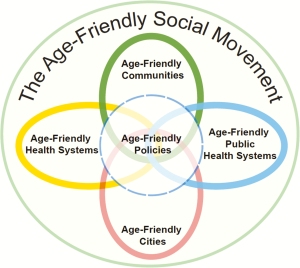 Becoming an Age-Friendly Health System entails reliably acting on a set of four evidence-based elements of high-quality care and services, known as the “4Ms,” for all older adults. When implemented together, the 4Ms represent a broad shift to focus on the needs of older adults:
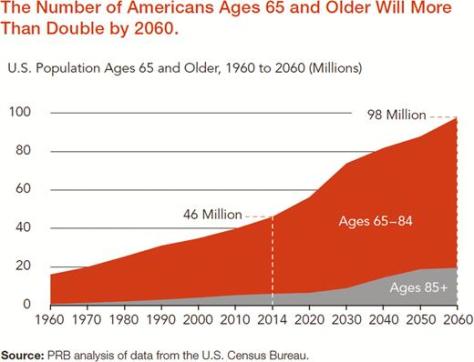
The Age-Friendly Health Systems movement, initiated in 2017, recognizes that an all-in, national response is needed to embrace the health and well-being of the growing older adult population. Like public health, health systems, including payers, hospitals, clinics, community-based organizations, nursing homes, and home health care, need to adopt a new way of thinking that replaces unwanted care and services with aligned interventions that respect older adults’ goals and preferences. Becoming an Age-Friendly Health System entails reliably acting on a set of four evidence-based elements of high-quality care and services, known as the “4Ms,” for all older adults.
From a Hollywood Reporter online release:
 “Turman, Nichols and I related to The Graduate in exactly the same way,” Henry told Vanity Fair. “We all thought we were [the book’s protagonist] Benjamin Braddock. Plus, it’s an absolutely first-class novel, with great characters, great dialogue, a terrific theme. Who could resist it? I read it and I said, ‘Yes, let’s go.'”
Henry landed his first Oscar nom for the screenplay (he came up with the word “plastics” and had a small role in the film) and received a second nom for co-directing (with Warren Beatty) the reincarnation comedy Heaven Can Wait, a remake of the 1941 film Here Comes Mr. Jordan.
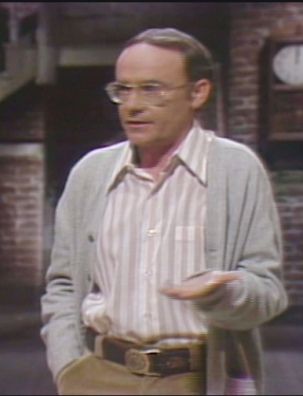
Buck Henry, the impish screenwriter whose wry, satirical sensibility brought comic electricity to The Graduate, What’s Up, Doc?, To Die For and TV’s Get Smart, has died. He was 89.
Henry, a two-time Oscar nominee who often appeared onscreen — perhaps most memorably as a 10-time host (all in the show’s first four years) on Saturday Night Live — died of a heart attack Wednesday at a Los Angeles hospital, his wife, Irene, told The Washington Post. He had suffered a stroke in November 2014.







 Boomers Daily