
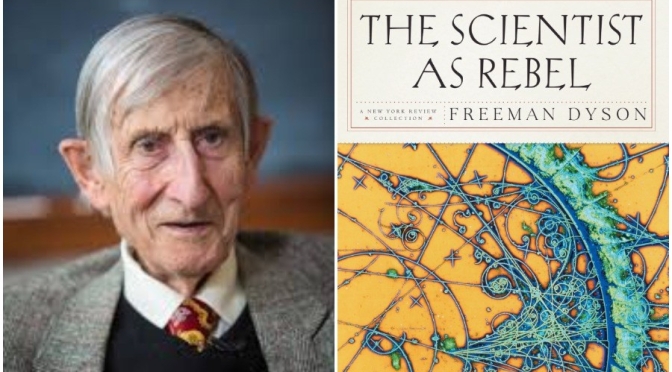
Excerpts from a New York Times article (Feb 28, 2020):
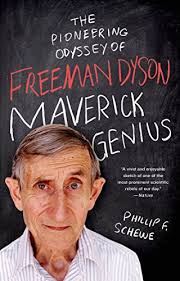 “Life begins at 55, the age at which I published my first book,” he wrote in “From Eros to Gaia,” one of the collections of his writings that appeared while he was a professor of physics at the Institute for Advanced Study — an august position for someone who finished school without a Ph.D. The lack of a doctorate was a badge of honor, he said. With his slew of honorary degrees and a fellowship in the Royal Society, people called him Dr. Dyson anyway.
Freeman J. Dyson, a mathematical prodigy who left his mark on subatomic physics before turning to messier subjects like Earth’s environmental future and the morality of war, died on Friday at a hospital near Princeton, N.J. He was 96.
As a young graduate student at Cornell University in 1949, Dr. Dyson wrote a landmark paper — worthy, some colleagues thought, of a Nobel Prize — that deepened the understanding of how light interacts with matter to produce the palpable world. The theory the paper advanced, called quantum electrodynamics, or QED, ranks among the great achievements of modern science.
 In this edition of Backchat we take a deep dive into Nature’s coverage of coronavirus. As cases climb, what are some of the challenges involved in reporting on the virus?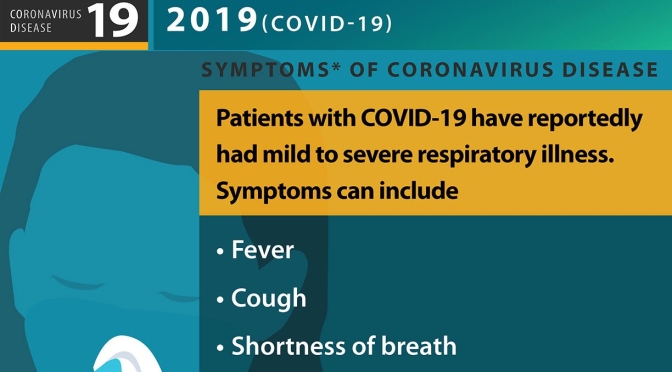
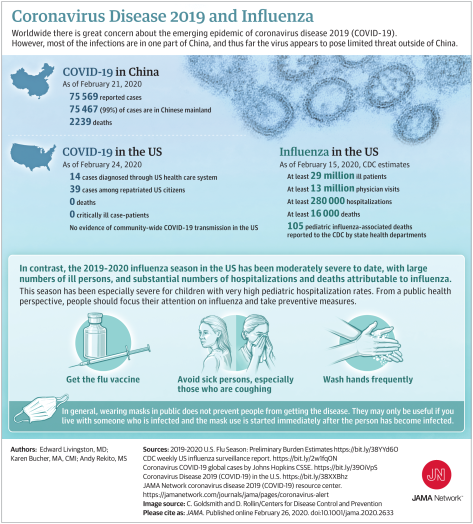
 In public health, honesty is worth a lot more than hope. It has become clear in the past week that the new viral disease, covid-19, which struck China at the start of December will spread around the world. Many governments have been signalling that they will stop the disease. Instead, they need to start preparing people for the onslaught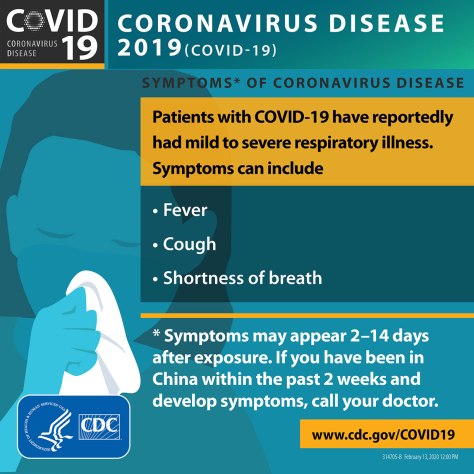
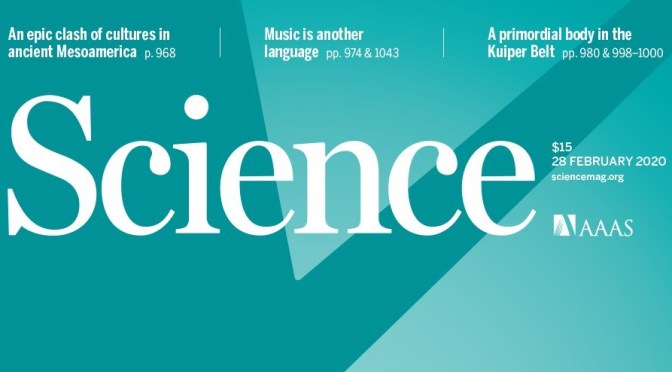

 This week on the podcast, Contributing Correspondent Lizzie Wade joins host Sarah Crespi to discuss a turning point for one ancient Mesoamerican city: Tikal. On 16 January 378 C.E., the Maya city lost its leader and the replacement may have been a stranger. We know from writings that the new leader wore the garb of another culture—the Teotihuacan—who lived in a giant city 1000 kilometers away.
 The study shows that wearable sensors coupled with machine learning analytics have predictive accuracy comparable to implanted devices.
 Boomers Daily