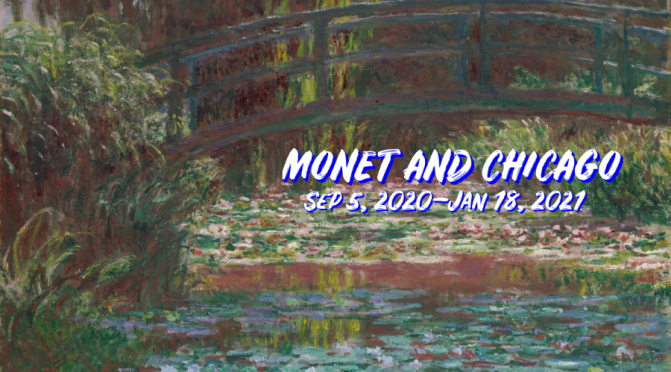
Monet And Chicago Sep 5, 2020–Jan 18, 2021
Learn how the changes Monet made to this painting captured the seaside town he remembered from his youth rather than the tourist destination it had since become.

Learn how the changes Monet made to this painting captured the seaside town he remembered from his youth rather than the tourist destination it had since become.
The celebration of Ludwig van Beethoven’s 250th birthday this year is reaching a crescendo in Germany. The composer and pianist was born in Bonn on December 16, 1770, and his musical legacy carries on. In this reel, we meet concert pianists putting a new spin on Beethoven’s work. Susanne Kessel, for one, put out a call to composers for 250 new piano pieces inspired by Beethoven and is now in the midst of performing them. Elsewhere, the duo known as Pianotainment is using humor and serious piano chops to make the work of the likes of Beethoven accessible to all. We wrap up this ode to Beethoven with a visit to a museum full of self-playing musical instruments. And, yes, some of them even play Beethoven.
This Great Big Story was made possible by the German National Tourism Board and BTHVN2020: https://www.germany.travel/beethoven2020
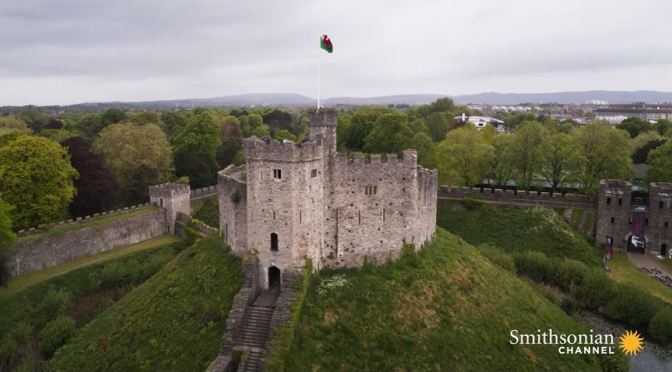
Despite being built around the time of William the Conqueror almost a thousand years ago, Cardiff Castle, with its 150-foot-tall clock tower, remains an iconic feature of the Welsh capital.
Cardiff is a city and the capital of Wales. It is the United Kingdom’s eleventh-largest city. As Wales’ chief commercial centre, Cardiff is the base for the Senedd, most national cultural institutions and Welsh media.
From the Series: Aerial Britain: Wales https://bit.ly/3gT9ucv

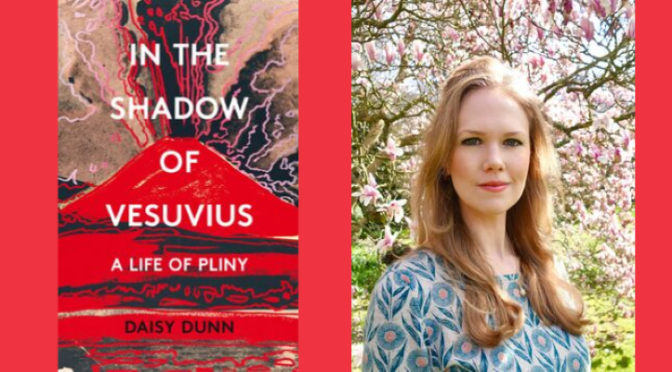
In the year 79 CE, Pliny the Elder set out to investigate a large cloud of ash rising in the sky above the Bay of Naples. It was the eruption of Vesuvius, and Pliny did not survive.
“I think we can all empathize with someone who’s like a son, or in this case, an adopted son, trying to kind of make his own mark and escape the shadow of his father, and leave something on the world of his own.”
A trailblazing naturalist, he is best remembered today for his multivolume encyclopedia of Natural History,and we are able to retrace his final hours thanks to a vivid account by his nephew, Pliny the Younger. Inspired by his beloved uncle, the young Pliny became a lawyer, senator, poet, and representative of the emperor. His published letters are fascinating reflections on life and politics in the Roman Empire.
In this episode, Daisy Dunn, classicist and author of The Shadow of Vesuvius: A Life of Pliny,and Kenneth Lapatin, curator of antiquities at the Getty Museum, discuss the two Plinys and their profound impact on our understanding of ancient Rome.
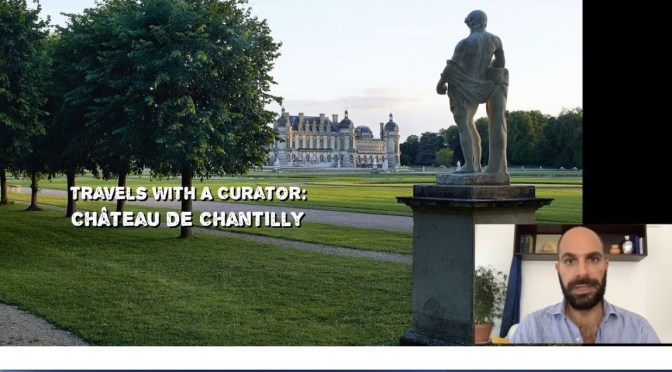
In this week’s episode of “Travels with a Curator,” Deputy Director and Peter Jay Sharp Chief Curator Xavier F. Salomon takes viewers on a journey through the grand halls of the Château de Chantilly, one of his favorite places in France. Like the Frick, Chantilly began as an opulent residence and was once the home of the Grand Condé, a cousin of Louis XIV. Today, the château houses one of the best collections of European paintings in France as well as the world-famous illuminated manuscript “Très Riches Heures du Duc de Berry.” Watch closely for a guest appearance by Jadwiga, Xavier’s kitten.
The Château de Chantilly is a historic French château located in the town of Chantilly, Oise, about 50 kilometres north of Paris.
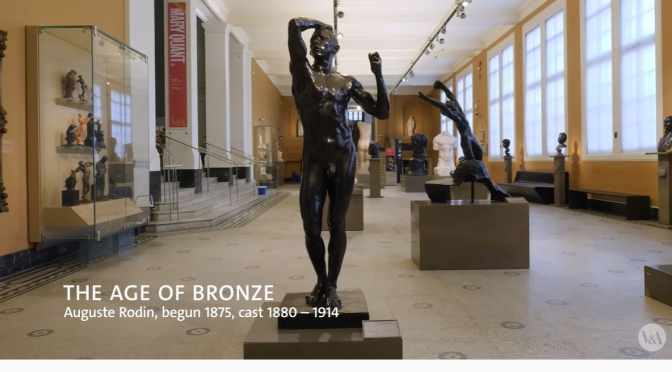
The V&A holds 23 sculptures by French sculptor Auguste Rodin. Between the 1870s and the 1890s he came to challenge traditional notions of beauty and appropriateness – and paved the way for modern sculpture.
This film, presented by V&A curator Alicia Robinson, shows in detail 6 works by Rodin – exploring his earlier work inspired by classical sculpture, Michelangelo and Donatello, and his development into spectacular explorations of patina, light and emotion.
In 1914 Rodin gave his work to the V&A as a symbol of the friendship between the people of France and Great Britain.
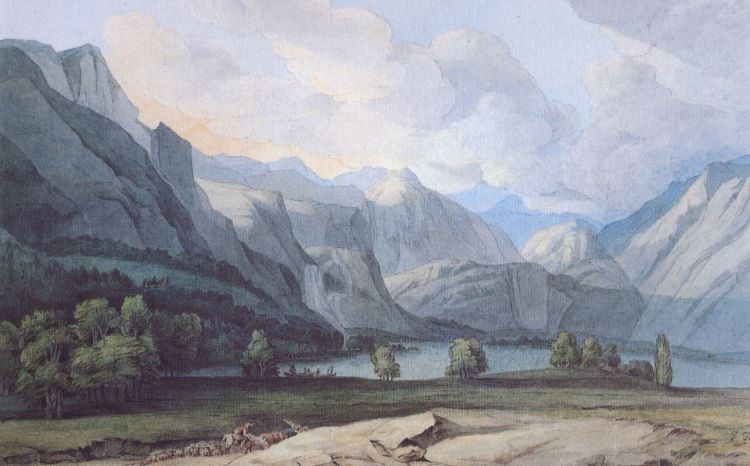
NEWSTATESMAN (August 26, 2020) – Towne (1739-1816) was born on the fringes of London and apprenticed to a coach painter, a skill that demanded the type of precise brushwork that was to become evident in all his later work. He went on to study at William Hogarth’s St Martin’s Lane Academy, Britain’s foremost school of art prior to the establishment of the Royal Academy in 1768. By a quirk of geography, the greatest British landscapist and fellow chronicler of the Lake District, JMW Turner, would be born just 100 yards away in 1775.
In 1780 he made a lengthy drawing trip to the Continent but it wasn’t until 1786 that he visited the Lake District. He proved indefatigable, making 100 drawings and watercolours over the course of two weeks: he often put brief details on the back of his work (“½ past 7 O clock/The sky a Clear warm light/mountains a solemn purple tint/the Lake reflecting the sky, the/Sun in the picture”) and so we know that on 17 August alone, for example, he made seven drawings.
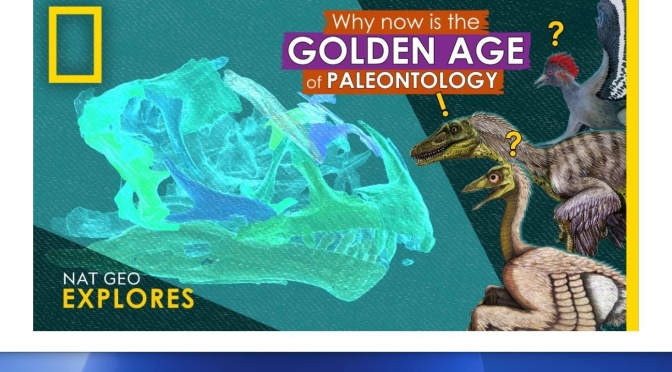
With advancements in technology and access to areas once considered unreachable, the field of paleontology is experiencing a golden age of discovery. Roughly 50 new dinosaur species are found each year, giving us a closer look at their prehistoric world like never before. Our previous understandings of how dinosaurs looked and evolved are being revolutionized, especially in regards to evidence that modern birds descended from dinosaurs. But while it’s exciting to see how incredibly far paleontology has come from the previous generations, it’s equally as thrilling to imagine what new discoveries lie just ahead.
Archaeologists are searching for the tomb of Amenhotep III and in the process they find pottery from the ancient Egyptian celebration of the dead.
About Lost Treasures of Egypt: An immersive, action-packed and discovery-led series following International teams of Egyptologists as they unearth the world’s richest seam of ancient archaeology – Egypt’s Valley of the Kings. For a full season of excavations and with unprecedented access to the teams on the front line of archaeology, we follow these modern-day explorers as they battle searing heat and inhospitable terrain to make the discoveries of a lifetime. Using innovative technology and age-old intuition in their quest to uncover the secrets of these ancient sites, can the team’s discoveries re-write ancient history?
In this week’s episode of “Cocktails with a Curator,” Curator Aimee Ng explores the history behind one of the audience favorites at the Frick, Jean-Auguste-Dominique Ingres’s “Comtesse d’Haussonville.” Sometimes referred to as the “poster girl” of The Frick Collection, the subject of this celebrated portrait led a fascinating life, taking piano lessons from Chopin and writing biographies of Lord Byron and the Irish revolutionary Robert Emmet. (She published the books anonymously to avoid a scandal.) This week’s complementary cocktail calls for an ounce of absinthe, an anise-flavored spirit invented in Switzerland, the country of her birth.






 Boomers Daily