
Category Archives: Food

Studies: ‘Coffee’ – Machine Learning Review Shows Benefits Of Drinking It

“It may be good for you,” says Dariush Mozaffarian, dean of the Friedman School of Nutrition Science and Policy at Tufts University. “I think we can say with good certainty it’s not bad for you.” (Additives are another story.)

After the link appeared between coffee intake and a reduced risk of heart failure in the Framingham data, Kao confirmed the result by using the algorithm to correctly predict the relationship between coffee intake and heart failure in two other respected data sets. Kosorok describes the approach as “thoughtful” and says that it “seems like pretty good evidence.”

Should you drink coffee? If so, how much? These seem like questions that a society able to create vaccines for a new respiratory virus within a year should have no trouble answering. And yet the scientific literature on coffee illustrates a frustration that readers, not to mention plenty of researchers, have with nutrition studies: The conclusions are always changing, and they frequently contradict one another.
Read full article in the New York Times

Video Profile: How Danny Meyer Built ‘Shake Shack’

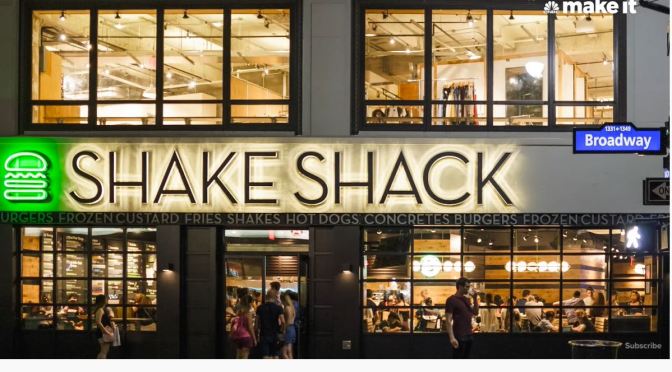
It’s hard to think of a bigger restaurant success story over the last decade than Shake Shack. The high-end burger chain began as a hot dog cart in 2001 in New York City’s Madison Square Park by famed restaurateur Danny Meyer. The menu was handwritten written by Meyer on a single sheet of paper in about 10 minutes and is about 85 percent the same today.

But there’s so much more to this story. Like for three years after 9/11 that hot dog cart paid the bills at the crown jewel of Meyer’s restaurant empire, Eleven Madison Park. Or how he wasted over a million developing a line of French fries only to throw them away out of pure pride. If Danny Meyer is the heart and soul of Shake Shack, its longtime CEO Randy Garutti is the engine that powers it. Here’s how they built Shake Shack.

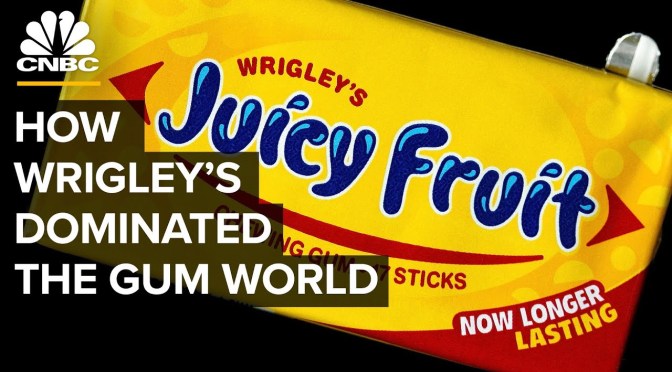
Candy Business: ‘How Wrigley’s Dominated Chewing Gum’ (Video)

Gum lines the pockets of most Americans and has been a staple in American culture for centuries. For some, gum is all about flavor, and for others, it’s about fear of bad breath, curbing hunger, or alleviating anxiety. For nearly 130 years, the brand Wrigley’s has become synonymous with chewing gum.

Since its start, the gum maker has dominated the chewing gum market, spawning brands from Juicy Fruit to Orbit to 5 Gum. But it hasn’t always been smooth sailing for the William Wriglely Jr. Co.; over its storied past, the brand has faced turbulent years. Since the early 2000s, the chewing gum market has seen a decline in public sentiment, which hurt significant players. In 2006, the company ended its long-standing tradition of being a family run business with William Wrigley Jr. stepping down as CEO.

By 2008, Wrigley’s faced increasing global competition and was acquired by Mars along with Warren Buffett’s Berkshire Hathaway. According to Euromonitor International, the gum industry’s market value hit $18.6 billion in 2020. Since 2015, Mars Wrigley has held 25% of the global brand share for chewing gum and a 40% portion in the U.S. The Covid-19 pandemic since it began in March 2020 has negatively impacted gum’s most prominent players and could negatively affect Mars Wrigley gum brands’ future.

Healthy Aging: Ikaria – A Small Greek Island With Oldest Life Expectancy

Ikaria, a tiny island in the Aegean sea, is known as a blue zone, a special place where life expectancy is much higher than the rest of the world. We travel there to explore just what it is that makes the island so special.

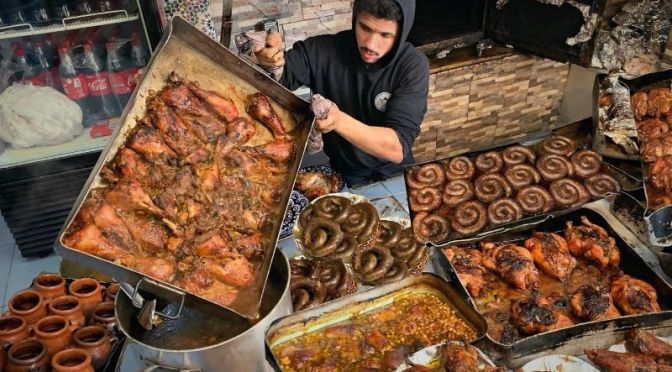
Culinary Travel: ‘Street Food In Oujda, Morocco’

The array of street food in Morocco is quite vast and includes tea time and breakfast sweets, simple snacks, sandwiches, soups, grilled meats and seafood, fried fish and hearty main dishes such as stewed lentils, rotisserie chicken and classic tagines. The recipes below are all foods that can found while walking Moroccan streets and souks.

Oujda is a city in northeast Morocco, near the Algerian border. It’s known for its Great Mosque, built in the late 13th century, with intricate carved wood and mosaic tiling. The mosque is in the old town, or medina, behind ramparts and the imposing Sidi Abdelouahab gate. Numerous shops and souks sell fruit, spices, jewelry and traditional clothing. The Art Gallery of Oujda shows modern and traditional Eastern art. 

Morocco, a North African country bordering the Atlantic Ocean and Mediterranean Sea, is distinguished by its Berber, Arabian and European cultural influences. Marrakesh’s medina, a mazelike medieval quarter, offers entertainment in its Djemaa el-Fna square and souks (marketplaces) selling ceramics, jewelry and metal lanterns. The capital Rabat’s Kasbah of the Udayas is a 12th-century royal fort overlooking the water.

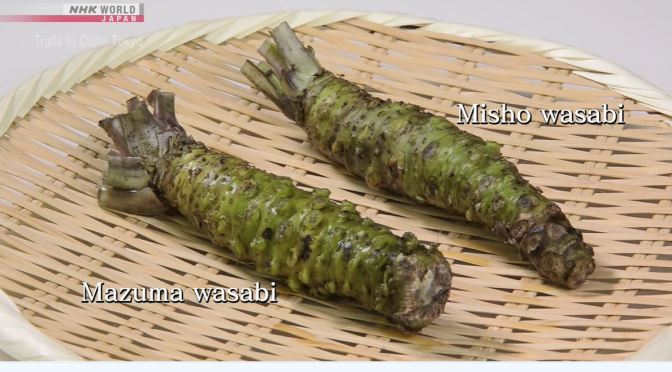
Food Insider: ‘Wasabi – Japanese Horseradish’

See what’s up with wasabi (Japanese horseradish), the root with a pungent punch that plays an important role in Japanese cuisine.

Wasabi or Japanese horseradish is a plant of the family Brassicaceae, which also includes horseradish and mustard in other genera. A paste made from its ground rhizomes is used as a pungent condiment for sushi and other foods. 

Analysis: ‘Food Delivery Apps vs Restaurants’ (WSJ)

Demand for food delivery has soared amid the pandemic, but restaurants are struggling to survive. In a fiercely competitive industry, delivery services are fighting to gain market share while facing increased pressure to lower commission fees and provide more protection to their workers. Video/Photo: Jaden Urbi/WSJ

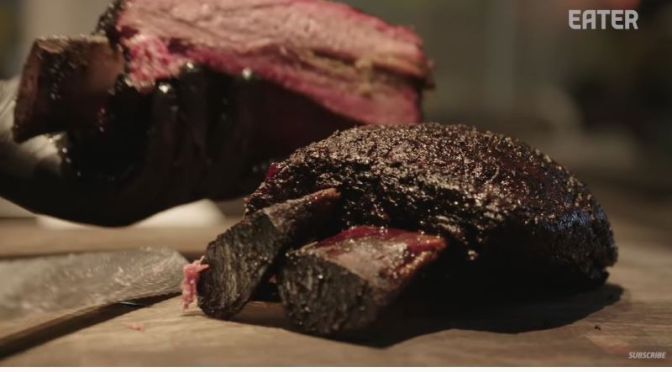
Profile: Pitmaster Matt Horn Perfects ‘West Coast-Style BBQ’ (Video)

Horn Barbecue pitmaster Matt Horn fell in love with barbecue from a young age, when he learned to get a feel for how to make juicy, tender, and smoky brisket, ribs, and other meats from his grandfather’s smoker without even using a thermometer. Now, he cultivates his “West Coast-style” barbecue, inspired by a combination of Central Texas barbecue, traditions from the deep south, and Horn’s Bay Area roots, at his restaurant in Oakland.