
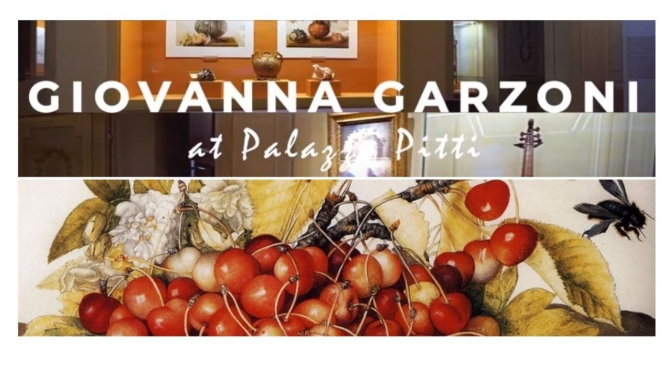
Hosted in the Andito degli Angiolini space at Palazzo Pitti, “The Immensity of the Universe in the Art of Giovanna Garzoni” exhibition encompasses 100 floral compositions, still lives and miniatures by the Baroque, Marche-born painter friend of Artemisia Gentileschi.
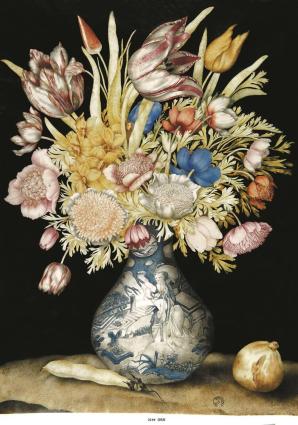 The show has been curated by Sheila Barker of The Medici Archive Project and the Advancing Women Artists foundation is running a challenge to inspire the creation of contemporary art based on Garzoni’s oeuvre. While her role in the evolution of scientific illustration is widely acknowledged, Giovanna Garzoni is less familiar as an illustrator of geographical fantasy in the age of the Baroque.
In harmonic and often relatively small compositions, the painter combines exotic objects of extremely varied provenance such as Chinese porcelain, Pacific nautili, Mexican marrows and flowers, South American plants and English lapdogs, in an effort both to astonish and to amuse.
Turning her back on the conventional role reserved for women in her day, Garzoni travelled in Italy, and possibly also in France, gaining access to the most important collections of curios of her era. The exhibition showcases her works collected by the Medici and still owned by the Gallerie degli Uffizi, alongside targeted loans illustrating the artist’s field of action and her prowess as a portraitist.
On the basis of a previously untapped inventory, a section of the exhibition reconstructs Vittoria della Rovere’s Wunderkammer, once hosted in the Sala dell’Aurora in the villa of Poggio Imperiale, thus indirectly shedding light also on a leading member of the grand ducal family.


 Monocle’s Charlie Jermyn talks us through the rich and varied culinary delights on offer in Ireland’s second city.

 The British Galleries are reopening with almost 700 works of art on view, including a large number of new acquisitions, particularly works from the 19th century that were purchased with this project in mind. This is the first complete renovation of the galleries since they were established (Josephine Mercy Heathcote Gallery in 1986, Annie Laurie Aitken Galleries in 1989). A prominent new entrance provides direct access from the galleries for medieval European art, creating a seamless transition from the Middle Ages to the Renaissance.
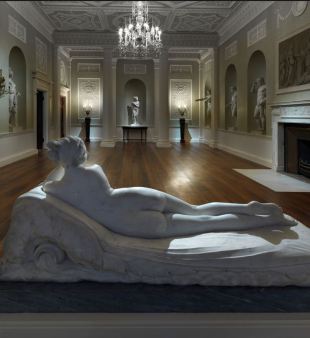 A highlight of The Metropolitan Museum of Art’s 150th anniversary in 2020 is the opening, on March 2, of the Museum’s newly installed Annie Laurie Aitken Galleries and Josephine Mercy Heathcote Gallery—11,000 square feet devoted to British decorative arts, design, and sculpture created between 1500 and 1900. The reimagined suite of 10 galleries (including three superb 18th-century interiors) provides a fresh perspective on the period, focusing on its bold, entrepreneurial spirit and complex history. The new narrative offers a chronological exploration of the intense commercial drive among artists, manufacturers, and retailers that shaped British design over the course of 400 years. During this period, global trade and the growth of the British Empire fueled innovation, industry, and exploitation. Works on view illuminate the emergence of a new middle class—ready consumers for luxury goods—which inspired an age of exceptional creativity and invention during a time of harsh colonialism.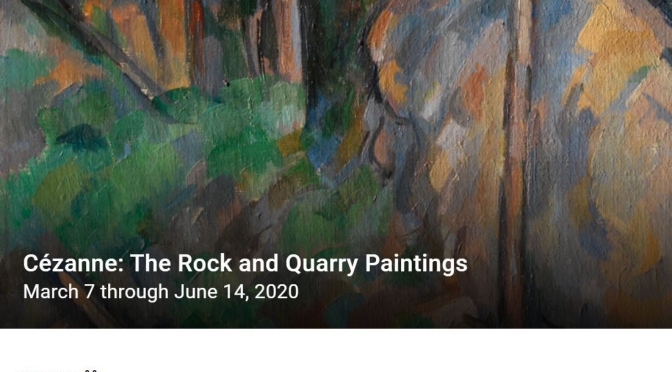
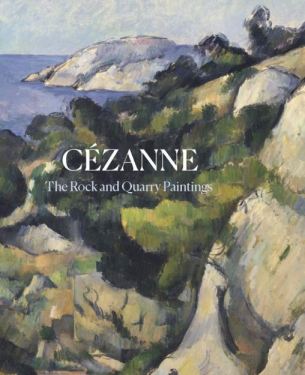 Cézanne: The Rock and Quarry Paintings is the first major exhibition to examine an essential but understudied aspect of the revolutionary French painter’s work: his profound interest in rock and geological formations.
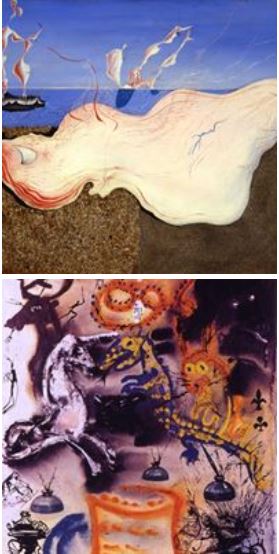 Masson, a founding Surrealist, saw the movement as an immersion “into what the German romantics call the night side of things.” However, “towards 1930,” Masson wrote, “a formidable disaster appeared in its midst: the demagogy of the irrational.” “Midnight in Paris” touches on Surrealism’s highs and lows, its darkness, poetry, beauty and banalities, reminding viewers—at the heart of the Dalí Museum, no less—that the movement is much, much more than melting watches.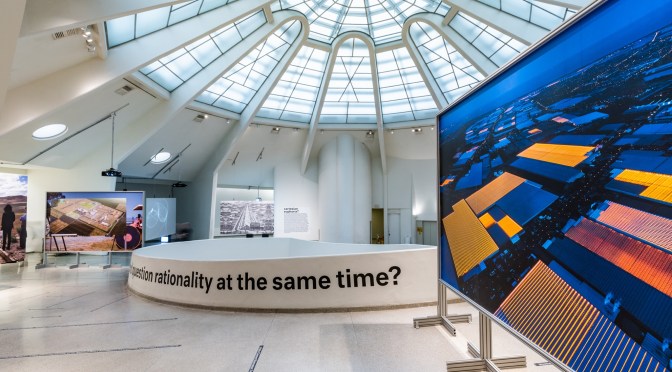
 by AMO, Koolhaas, with students at the Harvard Graduate School of Design; the Central Academy of Fine Arts, Beijing; Wageningen University, Netherlands; and the University of Nairobi. The exhibition will examine the modern conception of leisure, large-scale planning by political forces, climate change, migration, human and nonhuman ecosystems, market-driven preservation, artificial and organic coexistence, and other forms of radical experimentation that are altering landscapes across the world.
 Boomers Daily