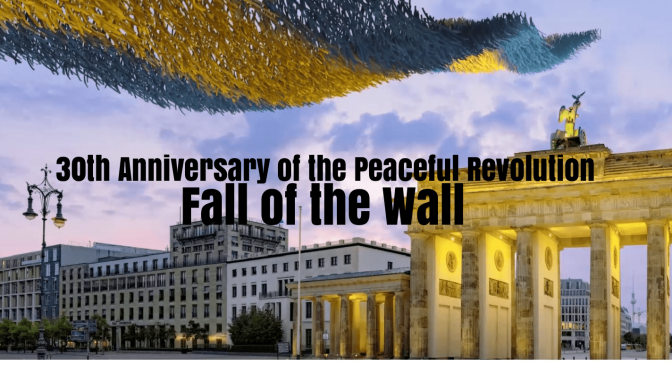
“History is best told at the original locations,” Moritz van Dülmen, CEO of event organizer Kulturprojekte Berlin, says in a press release. “To better understand the Peaceful Revolution and to celebrate the anniversary of the fall of the Wall, we will recount the events of 1989/90 precisely where they took place.”
his November, Germany’s capital is set to celebrate the 30th anniversary of the Berlin Wall’s fall with a festival featuring large-scale video projections, concerts, open-air exhibitions, an augmented reality app that temporarily resurrects the fractious barrier between east and west, and a floating art installation made up of 30,000 handwritten messages.
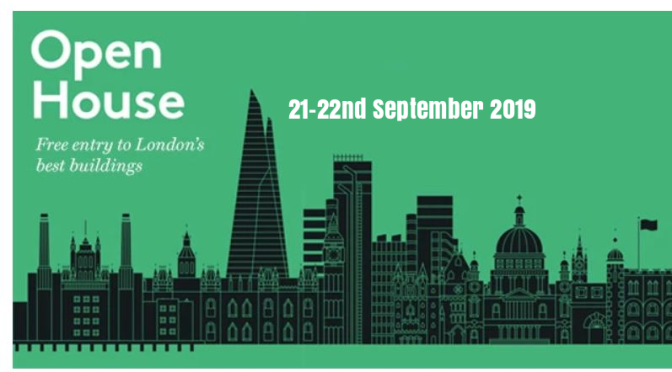
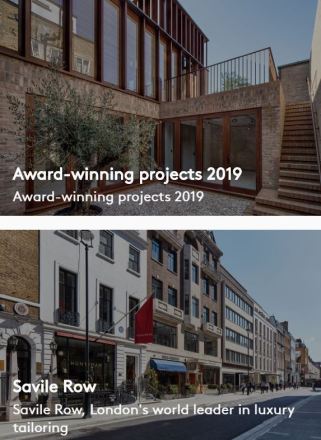
Running the course of a weekend, from Saturday 21st to Sunday 22nd September, Open House London gives the public free access to over 800 buildings in all of the capital’s 32 boroughs, ranging from the iconic (10 Downing Street, Barbican Centre) to the prosaic (a tour of Southwark Integrated Waste Management Facility, anyone?). To help you plan your weekend, here’s our edit of what to see at Open House London 2019.
Goldfinger’s London In the 53 years Hungarian-born Ernő Goldfinger spent in London, from his arrival in 1934 to his death in 1987, the man who unwittingly gave his name to one of Ian Fleming’s villains (so notorious was his temperament) made a profound and lasting contribution to the city’s built environment. Any exploration of his legacy should begin with a trip to the home he built for his family in Hampstead, 2 Willow Road, an efficient, well-proportioned modernist vision crammed with artworks by Duchamp, Moore and Ernst.
Tissot consistently defied convention in both his professional and personal life. His contributions to the academy and the avant-garde are documented by participation at diverse venues such as the Paris Salon as well as London’s Royal Academy and the Grosvenor and Dudley Galleries. This exhibition explores his multifaceted career with a fresh perspective and original scholarship and will also question where and how Tissot should be situated in narratives of the nineteenth-century canon.
Tissot was arguably a painter of modern life although he did not formally belong to the Impressionist circle and never exhibited in their group shows, despite an invitation from Edgar Degas.
The Fine Arts Museums of San Francisco and the Musée d’Orsay, Paris are co-organizing James Tissot: Fashion & Faith, the first major reassessment of the artist’s career in over 20 years. In San Francisco, this international retrospective will examine approximately 60 paintings, additional works on paper, and cloisonné enamels by Tissot. Exhibition highlights are drawn from the permanent collections of the Fine Arts Museums of San Francisco, including Tissot’s Self Portrait (ca. 1865) as well as prints and photographs from the Achenbach Foundation for Graphic Arts. New scholarship on the artist presented in this collaboration demonstrates that even Tissot’s most ebullient society paintings reveal rich and complex commentary on topics such as nineteenth-century society, religion, fashion, and politics, rendering him an artist worthy of reexamination in the twenty-first century.
Dubbed “The Father of American Surrealism,” Clarence John Laughlin (American, 1905-1985) was the most important Southern photographer of his time and a singular figure within the burgeoning American school of photography. Known primarily for his atmospheric depictions of decaying antebellum architecture that proliferated his hometown of New Orleans, Laughlin approached photography with a romantic, experimental eye that diverged heavily from his peers who championed realism and social documentary.
On view through November 10, 2019
The exhibition surveys Laughlin’s signature bodies of work made between 1935 and 1965, emphasizing his inventiveness, artistic influences, and deep connection to the written word. The High began collecting Laughlin’s work in 1974 and Strange Light: The Photography of Clarence John Laughlin is the first major presentation of Laughlin’s photographs by the High Museum following a landmark acquisition of his work in 2015.
The more than one hundred works in this exhibition attest to Laughlin’s innovative approach and prescience for the future of the photographic medium. From allegorical social commentary, to expertly constructed narratives, to bizarre material experimentation, Laughlin’s effort to access a higher artistic potential for photography is evident throughout his career. His desire to push the limits of photographic possibility paved the way for generations of artists and the growth of the medium into a tool of magical potential.
Comprising 55 Gauguin masterworks on loan from Copenhagen’s Ny Carlsberg Glyptotek, as well as some 35 objects from the collection of the Saint Louis Art Museum, “Paul Gauguin: The Art of Invention,” now on view in St Louis, offers a superb overview and deep insight into the life, thought and art of this quasi-mythological being whose shadow looms large not only over artistic Modernism but over the very romantic notion of the artist who sacrifices everything for art.
Along with many other artists in every discipline, Gauguin has been reappraised in recent years. His freedom and devotion to art above all came at a steep cost to others: the wife and children he left behind in Europe, the Native child brides he took in the South Seas and the children they bore him and hosts of friends – Van Gogh and Pissarro among them – who felt the sting of his wrathful restlessness.
French art historian Jean Leymarie, in his short, perfect essay on Paul Gauguin, published in the gorgeous dusty columns of the 1962 Encyclopedia of Art, sums up the birth of Modernism: “Painters no longer attempted to represent the external world by creating the illusion of an image, but rather to suggest their interior dreams through allusive symbols and the multiplication of decorative forms; line and color were invested with the role of expressive vehicles and became the abstract equivalents of sensation. This change, amounting to the overthrow of the empirical and optical vision that had come down from the Renaissance, was perhaps the most violent about-face in modern art. The way, from that time, was open, and we know how boldly Gauguin proceeded.”
The 200 pages on display at the Queen’s Gallery, Buckingham Palace, have been together since the artist’s death. They were bound by the sculptor Pompeo Leoni in about 1590 and entered the Royal Collection during the reign of Charles II. Some of his most iconic images are here, including his study of a foetus in the womb, made as part of a treatise on anatomy that came close to being finished, but was never published.
Leonardo da Vinci: A Closer Look is a revolutionary re-examination of Leonardo da Vinci’s drawings, of his techniques and of his creative thinking process. It showcases 80 of Leonardo’s finest works on paper from the Royal Collection, using specialist photographic techniques to examine his working practices. One by one, Leonardo’s processes of creation are revealed, from his choice of paper and the composition of the specialist grounds used for his drawings, to his first touches in chalk, ink or metalpoint, and on to the finished compositions.
Many of these features are of course invisible to the naked eye, and have been so for centuries, ever since Leonardo took his pen from the paper. Infrared images reveal underdrawings unseen for 500 years, published here for the first time. Ultraviolet photography brings back to life now-vanished metalpoint sketches; while spectrographic analysis allows us to explore the origin and precise chemistry of Leonardo’s papers and grounds.
The Denver Art Museum will be home to the most comprehensive U.S. exhibition of Monet paintings in more than two decades. The exhibition will feature more than 120 paintings spanning Monet’s entire career and will focus on the celebrated French impressionist artist’s enduring relationship with nature and his response to the varied and distinct places in which he worked.
Monet traveled more extensively than any other impressionist artist in search of new motifs. His journeys to varied places including the rugged Normandy coast, the sunny Mediterranean, London, the Netherlands, and Norway inspired artworks that will be featured in the presentation. The exhibition will uncover Monet’s continuous dialogue with nature and its places through a thematic and chronological arrangement, from the first examples of artworks still indebted to the landscape tradition to the revolutionary compositions and series of his late years.
Andy Warhol: Portraits features over 120 paintings, prints, photographs, and films that depict the artist’s favorite genre: the portrait. This exhibition presents a snapshot of New York’s art and social scene from the 1960s through the 1980s through portraits of Warhol’s friends and patrons, movie stars and musicians, and celebrities of the day that range in style from the pristinely-idealized to the heartbreakingly-raw. Personalities who populated Warhol’s inner circle are represented; some widely recognized names include Joan Collins, Debbie Harry, Dennis Hopper, Mick Jagger, Robert Rauschenberg, and Andy Warhol himself. The presentation takes a multi-dimensional approach to the work, exploring the formal, conceptual, social, and political implications of portraiture, identity, and fame. Andy Warhol: Portraits invites the viewer into Warhol’s world, by examining the artist’s personal life, studio process, and use of a variety of mediums.
Alphonse Mucha, born in Bohemia, came to Paris in 1887. Over the next 8 years, he emerged from obscurity to become the most celebrated graphic designer of the Art Nouveau movement. His intricate designs and gorgeous subjects were so popular that he produced pattern books for fellow designers and students, and his publishers repurposed his advertisements for hundreds of other products.
“I predict you will be famous”
—Sarah Bernhardt
But his style and status all started when he met the legendary Sarah Bernhardt, the most famous actress of her day. Mucha’s first poster for her not only launched his graphic design career, but elevated her fame, as the public buzz for the image was completely unprecedented.

 Running the course of a weekend, from Saturday 21st to Sunday 22nd September,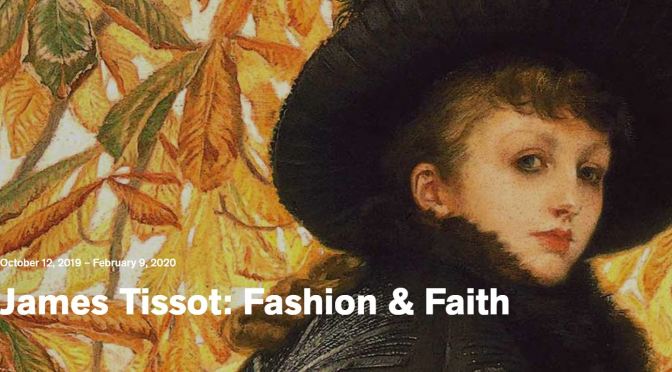
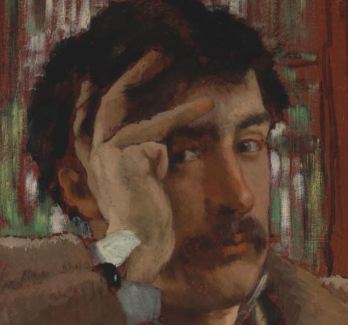 Tissot consistently defied convention in both his professional and personal life. His contributions to the academy and the avant-garde are documented by participation at diverse venues such as the Paris Salon as well as London’s Royal Academy and the Grosvenor and Dudley Galleries. This exhibition explores his multifaceted career with a fresh perspective and original scholarship and will also question where and how Tissot should be situated in narratives of the nineteenth-century canon.
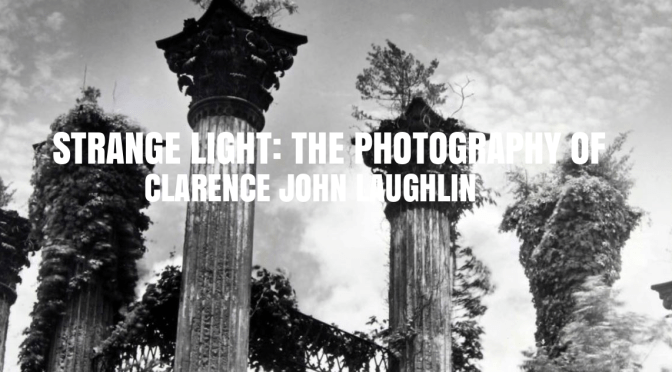
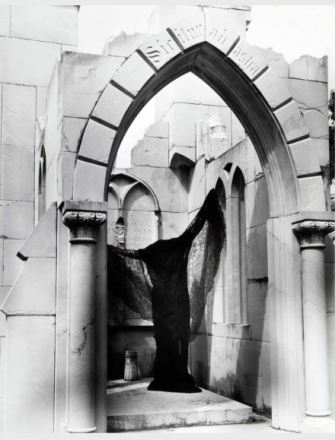 Dubbed “The Father of American Surrealism,” Clarence John Laughlin (American, 1905-1985) was the most important Southern photographer of his time and a singular figure within the burgeoning American school of photography. Known primarily for his atmospheric depictions of decaying antebellum architecture that proliferated his hometown of New Orleans, Laughlin approached photography with a romantic, experimental eye that diverged heavily from his peers who championed realism and social documentary.
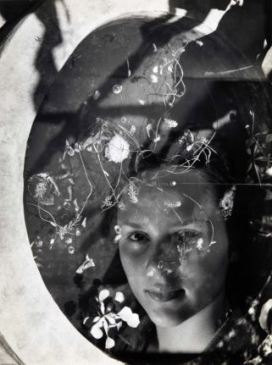 The exhibition surveys Laughlin’s signature bodies of work made between 1935 and 1965, emphasizing his inventiveness, artistic influences, and deep connection to the written word. The High began collecting Laughlin’s work in 1974 and Strange Light: The Photography of Clarence John Laughlin is the first major presentation of Laughlin’s photographs by the High Museum following a landmark acquisition of his work in 2015.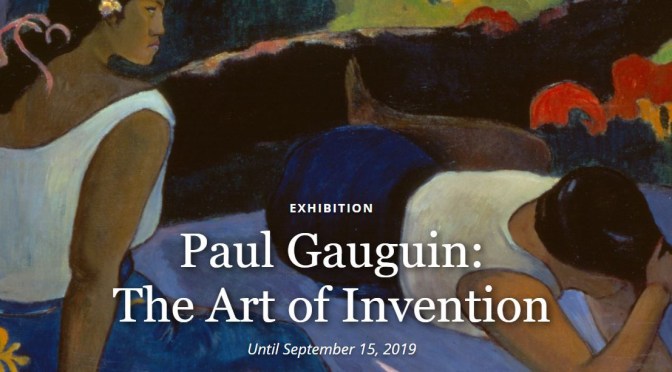
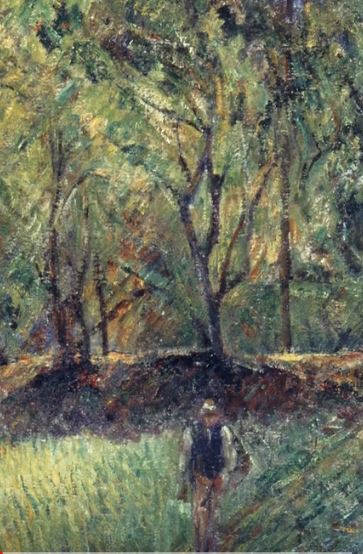 Comprising 55 Gauguin masterworks on loan from Copenhagen’s Ny Carlsberg Glyptotek, as well as some 35 objects from the collection of the Saint Louis Art Museum, “Paul Gauguin: The Art of Invention,” now on view in St Louis, offers a superb overview and deep insight into the life, thought and art of this quasi-mythological being whose shadow looms large not only over artistic Modernism but over the very romantic notion of the artist who sacrifices everything for art.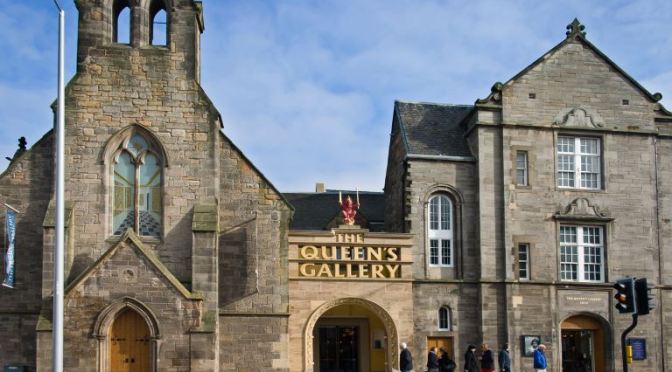
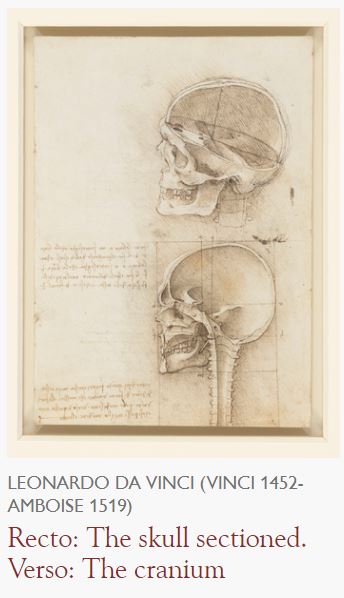 The 200 pages on display at the Queen’s Gallery, Buckingham Palace, have been together since the artist’s death. They were bound by the sculptor Pompeo Leoni in about 1590 and entered the Royal Collection during the reign of Charles II. Some of his most iconic images are here, including his study of a foetus in the womb, made as part of a treatise on anatomy that came close to being finished, but was never published.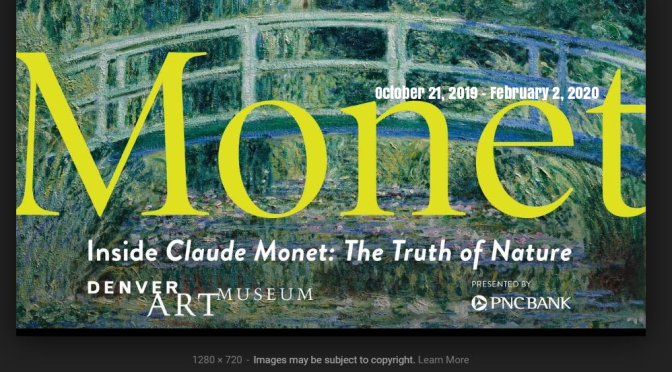
 The Denver Art Museum will be home to the most comprehensive U.S. exhibition of Monet paintings in more than two decades. The exhibition will feature more than 120 paintings spanning Monet’s entire career and will focus on the celebrated French impressionist artist’s enduring relationship with nature and his response to the varied and distinct places in which he worked.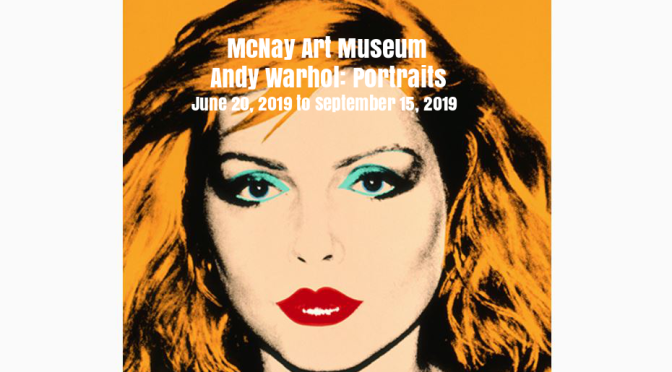
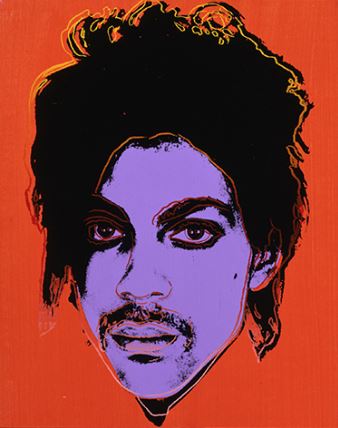 Andy Warhol: Portraits features over 120 paintings, prints, photographs, and films that depict the artist’s favorite genre: the portrait. This exhibition presents a snapshot of New York’s art and social scene from the 1960s through the 1980s through portraits of Warhol’s friends and patrons, movie stars and musicians, and celebrities of the day that range in style from the pristinely-idealized to the heartbreakingly-raw. Personalities who populated Warhol’s inner circle are represented; some widely recognized names include Joan Collins, Debbie Harry, Dennis Hopper, Mick Jagger, Robert Rauschenberg, and Andy Warhol himself. The presentation takes a multi-dimensional approach to the work, exploring the formal, conceptual, social, and political implications of portraiture, identity, and fame. Andy Warhol: Portraits invites the viewer into Warhol’s world, by examining the artist’s personal life, studio process, and use of a variety of mediums.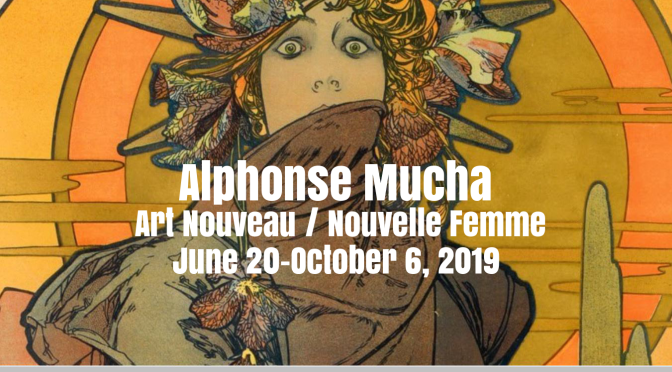
 Alphonse Mucha, born in Bohemia, came to Paris in 1887. Over the next 8 years, he emerged from obscurity to become the most celebrated graphic designer of the Art Nouveau movement. His intricate designs and gorgeous subjects were so popular that he produced pattern books for fellow designers and students, and his publishers repurposed his advertisements for hundreds of other products.
 Boomers Daily