
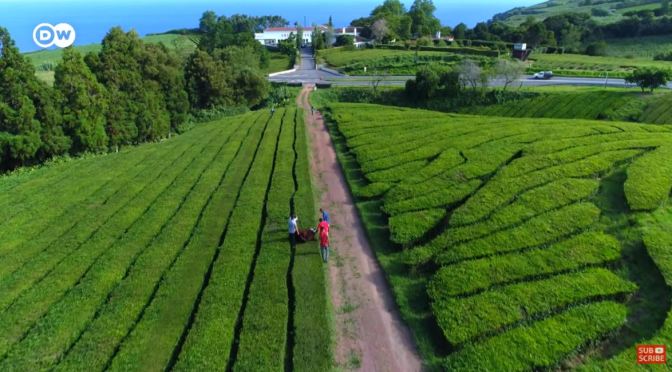
There are few parts of Europe that produce tea. The Azores, a Portuguese archipelago, are one of them. Here, tea is cultivated and processed without the use of chemicals. Chá Gorreana, located on the largest of the islands, is Europe’s oldest tea plantation. The family-run business has been producing black and green tea since 1883. DW reporter Hendrik Welling visited the plantation to learn about the fine art of producing Azores tea.
Category Archives: Culture

Train Travel: Countryside Around ‘Mt. Fuji, Japan’
Take a trip back in time and trace the paths of past travelers in the post towns and sacred spaces found in the majestic mountains of the Japanese countryside.
Japan’s Mt. Fuji is an active volcano about 100 kilometers southwest of Tokyo. Commonly called “Fuji-san,” it’s the country’s tallest peak, at 3,776 meters. A pilgrimage site for centuries, it’s considered one of Japan’s 3 sacred mountains, and summit hikes remain a popular activity. Its iconic profile is the subject of numerous works of art, notably Edo Period prints by Hokusai and Hiroshige.
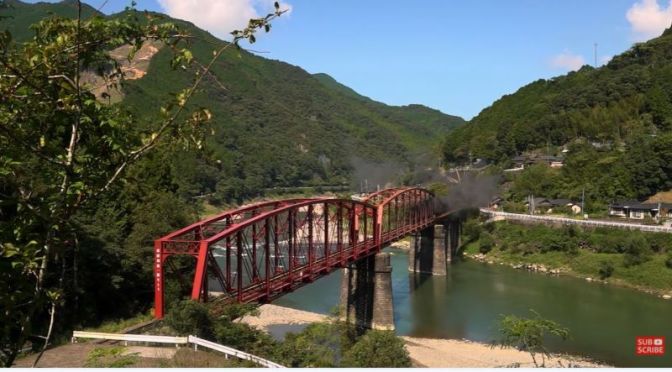
Train Travel: ‘Kyushu – Southern Japan’ (Video)
Kyushu is said to be the wellspring of Japanese civilization. Yet few tourists visit the southernmost of Japan’s main islands. This documentary contrasts modern Japanese cities with traditional customs in the countryside.
The rail journey begins in Fukuoka – a city with a metro population of 2.5 million – and ends at the southern tip of the island, in the city of Ibusuki. As the train rolls along, it travels through time – and reveals the amazing diversity and contrasts of the most southerly of Japan’s four main islands. The trip provides spectacular landscape views, as well as deep insight into a foreign culture, and its ancient traditions and modern lifestyles. In the West, Kyushu is one of the lesser-known regions in the “Land of the Rising Sun.”
Even for the Japanese, the green, mountainous island is seen mostly as a holiday spot. Europeans rarely visit this part of the country – but there are plenty of restaurants and cafes that have names like “Wolfgang,” “Bavaria,” or “Côte d’Azur.” Travel guides say that these words sound “European” to Japanese.
The family of the emperor, or Tenno, comes from Kyushu as well. This is also where the dynasties of the proud warrior class, the samurai, have their roots. And there are a number of active volcanoes on Kyushu. One of the most famous is Mount Aso. Its caldera – the cauldron-like hollow at the top — has a circumference of about 120 kilometers.
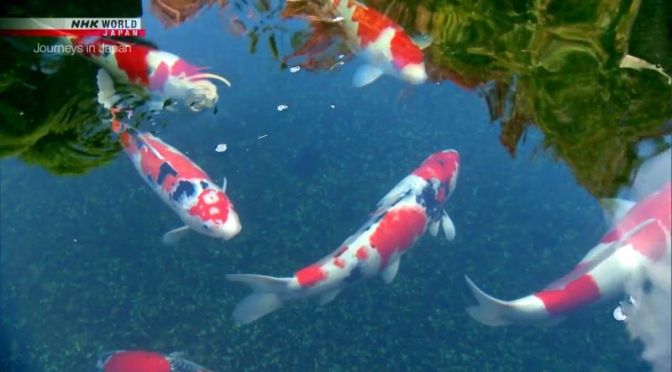
Travel & Culture: The ‘Nishikigoi’ – Koi Fish Of Ojiya, Japan (Video)
Scoop up the rich tapestry of traditional culture and natural beauty of Ojiya, a small city in Niigata Prefecture’s snowy mountains that’s had to scale back as it steers through a global pandemic.
Koi or more specifically nishikigoi, are colored varieties of the Amur carp that are kept for decorative purposes in outdoor koi ponds or water gardens. Koi is an informal name for the colored variants of C. rubrofuscus kept for ornamental purposes.
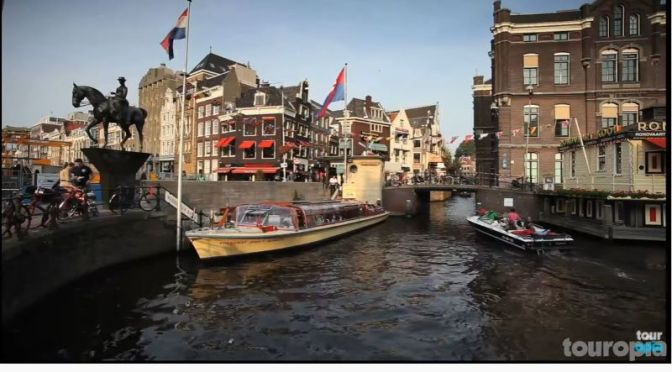
Travel: ‘Ten Best Places To Visit In The Netherlands’
The Netherlands is a densely populated country in part reclaimed from the sea with about half of its land lying below sea level. Many tourist only come to the Netherlands to visit Amsterdam. But Holland has plenty to offer outside its capital. Crisscrossed with canals, the flat landscape is perfect for cycling with historic town centers and classic windmills sprinkled across the country. During springtime the flower gardens become great tourist attractions providing a bold spectacle of vivid colors. Here’s a look at the best places to visit in the Netherlands.
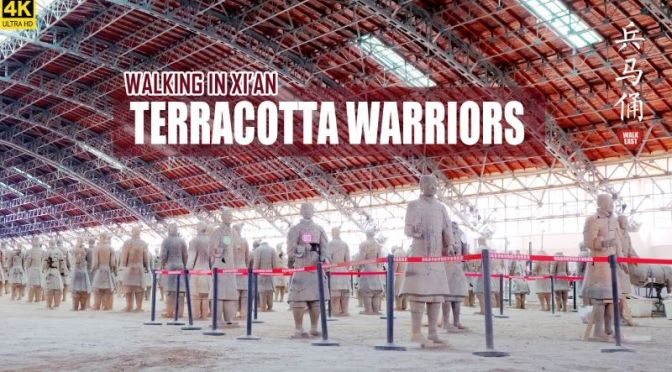
Travel & Archaeology: ‘Terracotta Warriors’ in Xi’an, China (4K Video)
The Terracotta Army is a collection of terracotta sculptures depicting the armies of Qin Shi Huang, the first Emperor of China. It is a form of funerary art buried with the emperor in 210–209 BCE with the purpose of protecting the emperor in his afterlife.
There Are 8,000 Known Terracotta Warriors. But Archaeologists in China Just Found More Than 200 Others. The discovery helps paint a clearer picture of how the Chinese military once operated.
Xi’an is a large city and capital of Shaanxi Province in central China. Once known as Chang’an (Eternal Peace), it marks the Silk Road’s eastern end and was home to the Zhou, Qin, Han and Tang dynasties’ ruling houses. At archaeological sites in Xi’an’s surrounding plains are the famed Bingmayong (Terra Cotta Army), thousands of life-size, hand-molded figures buried with China’s first emperor, Qin Shi Huang.
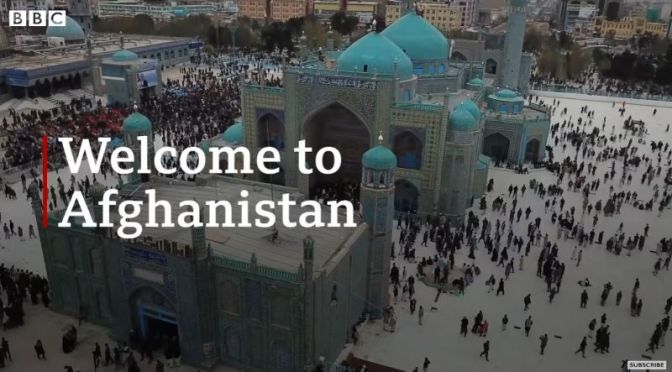
Travel Tour: ‘Welcome To Afghanistan’ (BBC Video)
Afghanistan was once a firm fixture on the backpacker trail, but decades of war and violence have crossed it off the destination list for almost all tourists. Most governments advise against travel there. But American blogger Drew Binksy is one traveller bucking the trend. He says he has a coronavirus test before travelling to new countries, and follows local measures in the places he visits.
Video produced by the BBC’s Suhrab Sirat and Kawoon Khamoosh
Afghanistan, officially the Islamic Republic of Afghanistan, is a landlocked country at the crossroads of Central and South Asia. Afghanistan is bordered by Pakistan to the east and south; Iran to the west; Turkmenistan, Uzbekistan, and Tajikistan to the north; and China to the northeast.

New Magazines: ‘Monocle December / January 2021’
Our annual Soft Power Survey reveals the countries whose cultural ambassadors, diplomatic missions, skilled messaging and tasty food have seen them make the grade in 2020. The December/January double issue also looks ahead to a new era of US foreign policy, goes on a culinary tour of Switzerland and wraps up in the season’s coolest coats. Available now at The Monocle Shop: https://monocle.com/shop/product/1849…
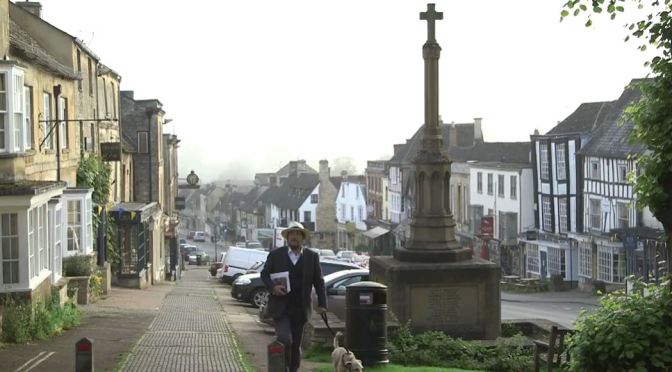
Travel In The Cotswolds: ‘Stroud To Tetbury’ (Video)
We’re continuing our journey south in this episode, having been to Painswick and the Slad Valley in episode five. We begin in Stroud, and move through the golden valley to Minchinhampton, high up on the escarpment and then down to Cirencester, before moving through Malmesbury and onto Tetbury.
Stroud is a market town and civil parish in the centre of Gloucestershire, England. It is the main town in Stroud District. Situated below the western escarpment of the Cotswold Hills at the meeting point of the Five Valleys, the town is noted for its steep streets, independent spirit and cafe culture.
Tetbury is a town and civil parish inside the Cotswold district in England. It lies on the site of an ancient hill fort, on which an Anglo-Saxon monastery was founded, probably by Ine of Wessex, in 681.
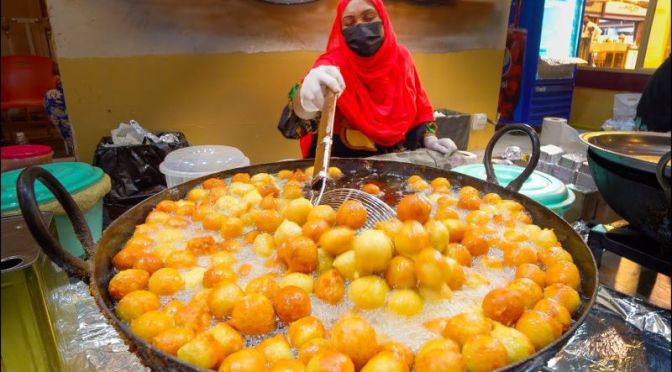
Culinary Travel: ‘Street Food’ In Dubai, UAE (Video)
Dubai is a city and emirate in the United Arab Emirates known for luxury shopping, ultramodern architecture and a lively nightlife scene. Burj Khalifa, an 830m-tall tower, dominates the skyscraper-filled skyline. At its foot lies Dubai Fountain, with jets and lights choreographed to music. On artificial islands just offshore is Atlantis, The Palm, a resort with water and marine-animal parks.
This is our 2nd video from our STREET FOOD in DUBAI series. This time we are taking you to some of the BEST local restaurants and street foods that Dubai has to offer! We are starting the day with a delicious Egyptian hummus with beef and pine nuts and specialty foul (fava beans) at a shop called Foul w Hummus. They serve unlimited bread and a dish of pickles with the dishes. This restaurant has amazing quality food for a good price. Those that can’t afford the food can eat for free. After breakfast, we visited the Public Beach. It is a great place to view the Burj Al Arab, but also locals and tourists visit to swim, surf and enjoy the weather. It was especially nice in December, where it wasn’t too hot. For lunch, we visited a famous restaurant for seafood. Bu Qtair specialized in fish and prawns. The fresh fish and prawns are marinated in a mixture of spices and then are fried. They are served with rice and a curry. Next, we head to the Burj Khalifa (tallest building in the world) which is one of Dubai’s top attraction. The Burj Khalifa has unobstructed views over Dubai, but is quite expensive to enter. We recommend seeing it from the base, which is free and equally awesome. For dinner, we head to a restaurant which has a reputation for having the BEST Pakistani food in Dubai, Ravi Restaurant. There are many dishes to try, but we chose to try their dal fry, mutton Peshawari and chicken tikka. The naan served with the meal was DELICIOUS! Finally for dessert, we wanted to try an Emirati specialty – luqaimat. Luqaimat are small balls of dough which are fried until golden brown. You can get a variety of toppings, but the traditional topping is a thick date syrup and sesame seeds. These are served across the UAE, but we visited the shop in Global Village. This isn’t the most authentic version, but it was interesting to watch the women make this dessert.
 Boomers Daily